Lung Volumes and Capacities Overview

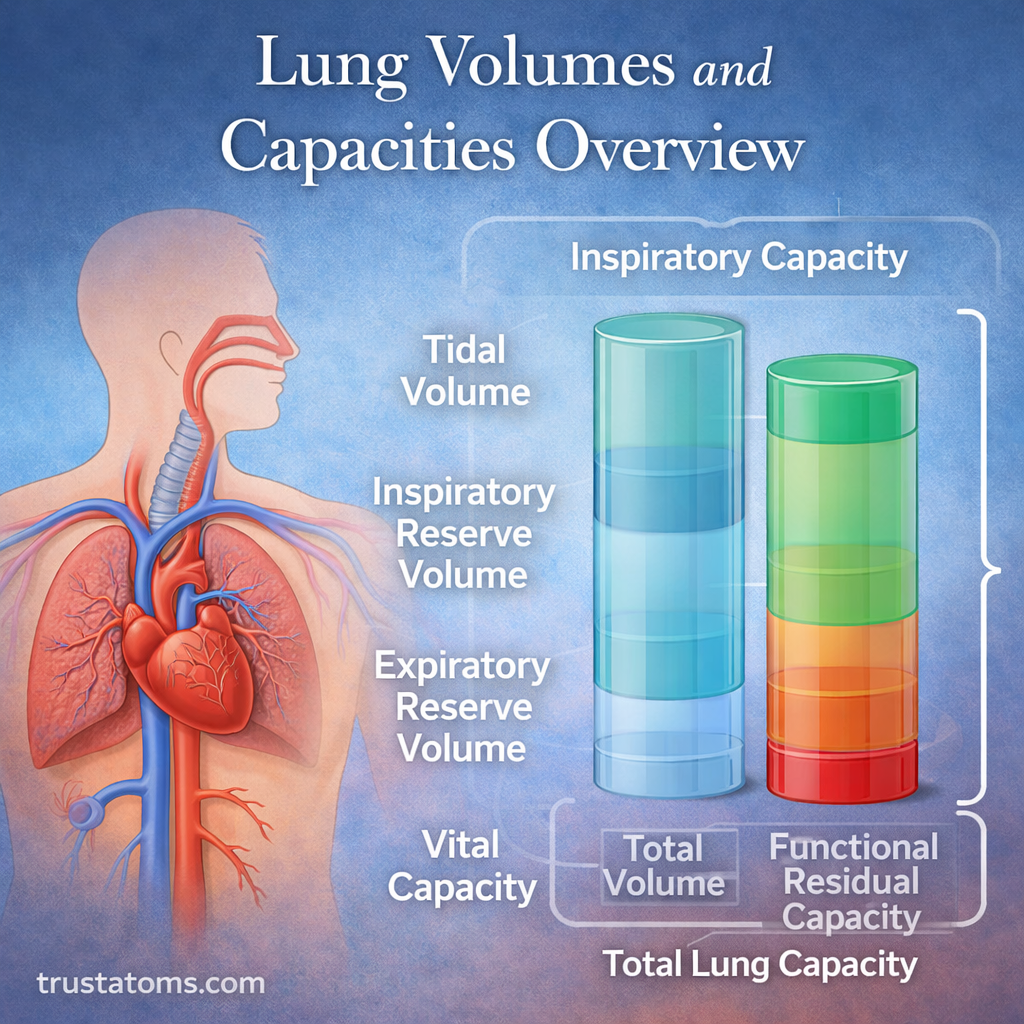
Diagram showing lung volumes and capacities including tidal volume, inspiratory reserve, expiratory reserve, and functional residual capacity.
Lung volumes and capacities illustrate how air moves and is stored within the respiratory system. trustatoms.com.

Lung volumes and capacities describe how much air your lungs can hold and how air moves during breathing. These measurements are essential for understanding respiratory health, diagnosing lung conditions, and evaluating overall lung function.

Whether you’re at rest or exercising, your lungs constantly adjust how much air they take in and release. Knowing how these volumes work gives insight into how efficiently your respiratory system performs.

Continue reading “Lung Volumes and Capacities Overview”
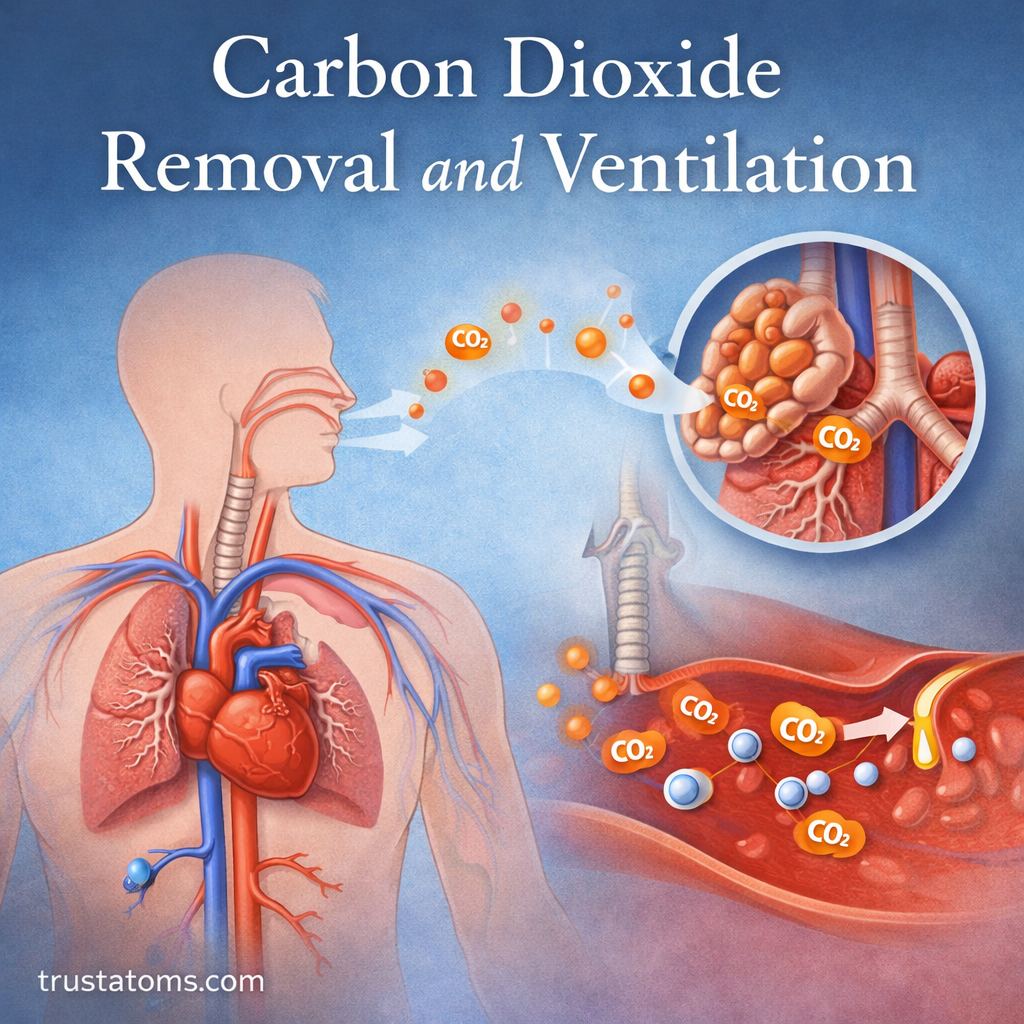
Carbon Dioxide Removal and Ventilation

Illustration showing carbon dioxide traveling from body tissues to the lungs and being exhaled during ventilation.
Carbon dioxide is transported from tissues to the lungs and removed through breathing. trustatoms.com

Carbon dioxide (CO₂) removal is just as important as oxygen delivery in maintaining a stable internal environment. Every time your cells produce energy, they generate carbon dioxide as a waste product. If this gas is not efficiently removed, it can disrupt blood pH and impair normal body function.

Ventilation—the process of breathing—plays a central role in clearing carbon dioxide from the body and maintaining balance.

Continue reading “Carbon Dioxide Removal and Ventilation”

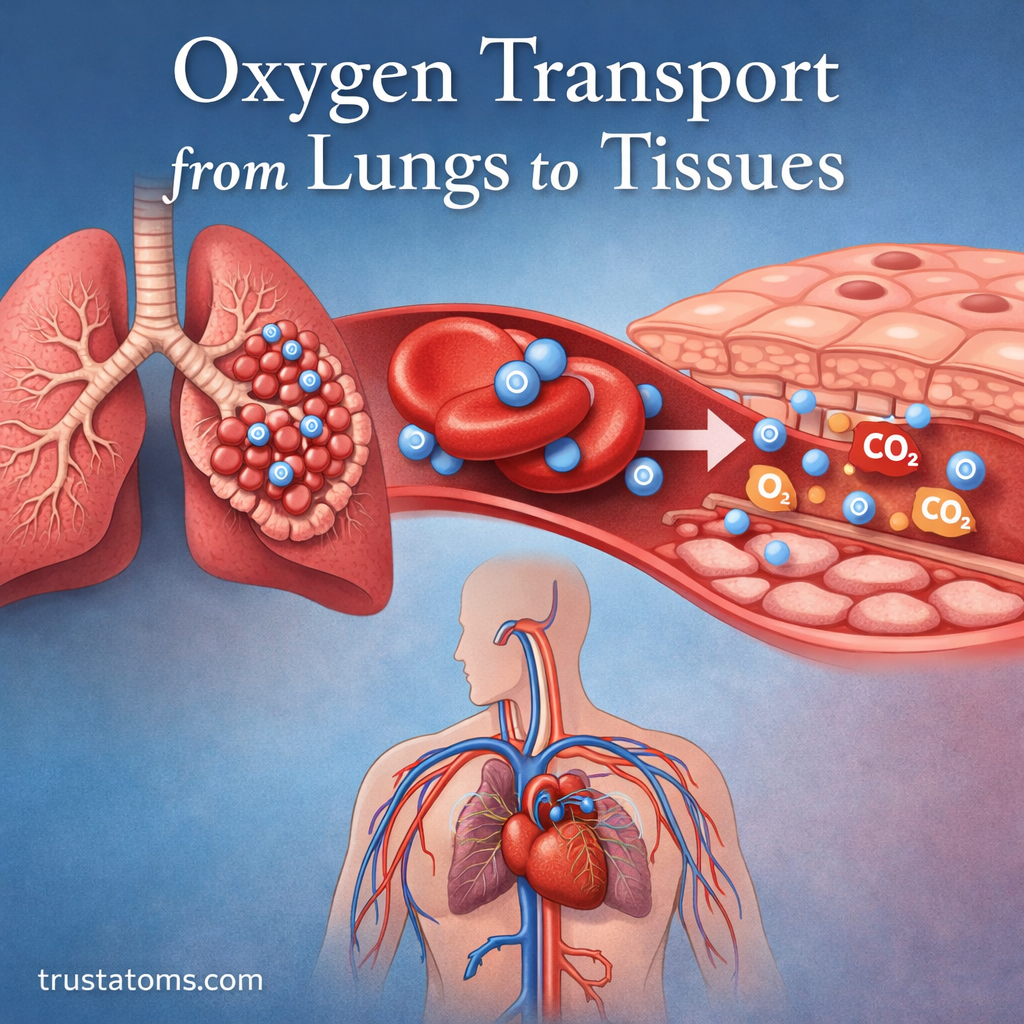
Oxygen Transport from Lungs to Tissues

Illustration showing oxygen transport from the lungs through the bloodstream to body tissues.
Oxygen moves from the lungs into the blood and is delivered to tissues throughout the body. trustatoms.com.

Oxygen transport is a vital process that keeps every cell in your body functioning. From the moment you inhale, oxygen begins a carefully coordinated journey—from the lungs, into the bloodstream, and ultimately to tissues that depend on it for energy production.

Understanding how oxygen moves through the body helps explain everything from exercise performance to how diseases affect breathing and circulation.

Continue reading “Oxygen Transport from Lungs to Tissues”

Gas Exchange in the Alveoli

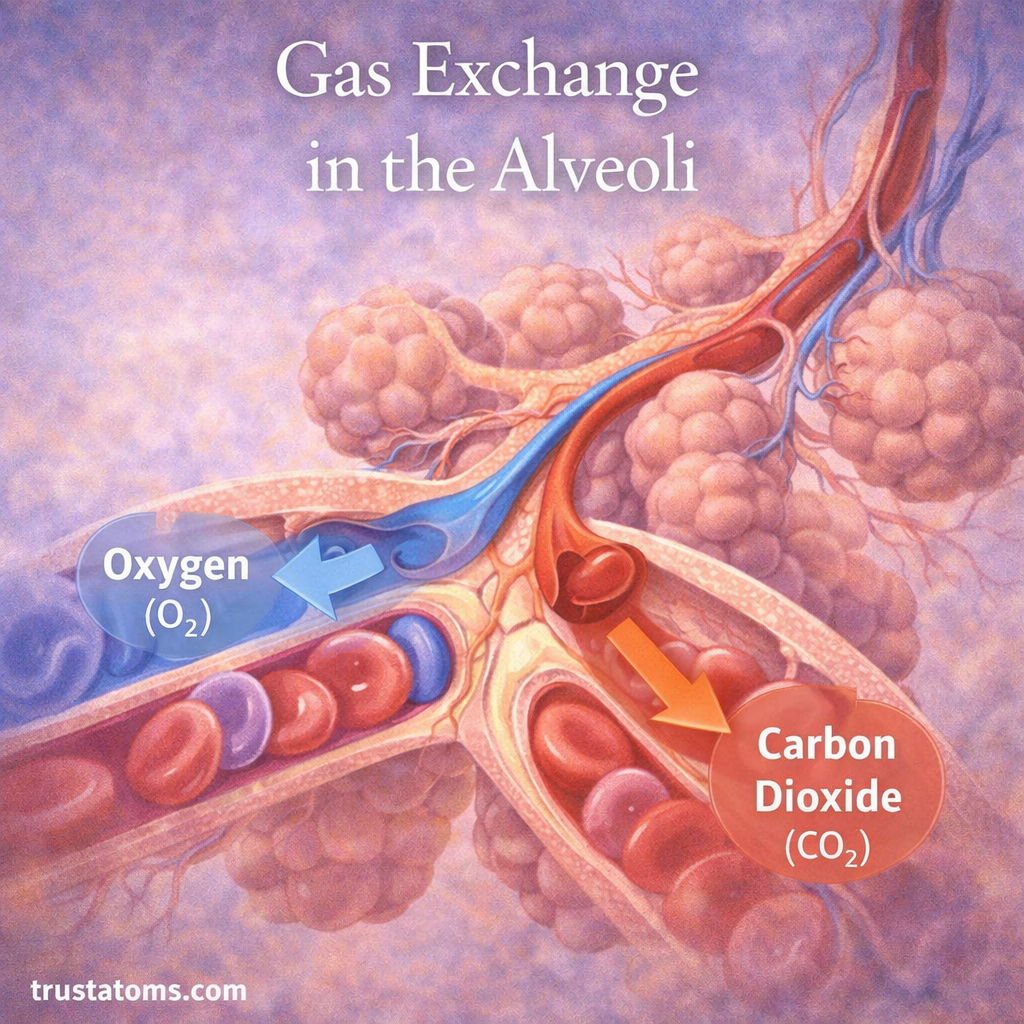
Diagram of alveoli showing oxygen entering the bloodstream and carbon dioxide leaving through surrounding capillaries during gas exchange.
Illustration of gas exchange in the alveoli showing oxygen entering the blood and carbon dioxide being removed. trustatoms.com.

Gas exchange in the alveoli is one of the most critical processes in the human body. It is where oxygen enters the bloodstream and carbon dioxide is removed. This exchange supports cellular respiration—the process that allows your cells to produce energy.

Although it happens at a microscopic level, this process occurs continuously and efficiently with every breath you take.

Continue reading “Gas Exchange in the Alveoli”

Diaphragm Function in Ventilation

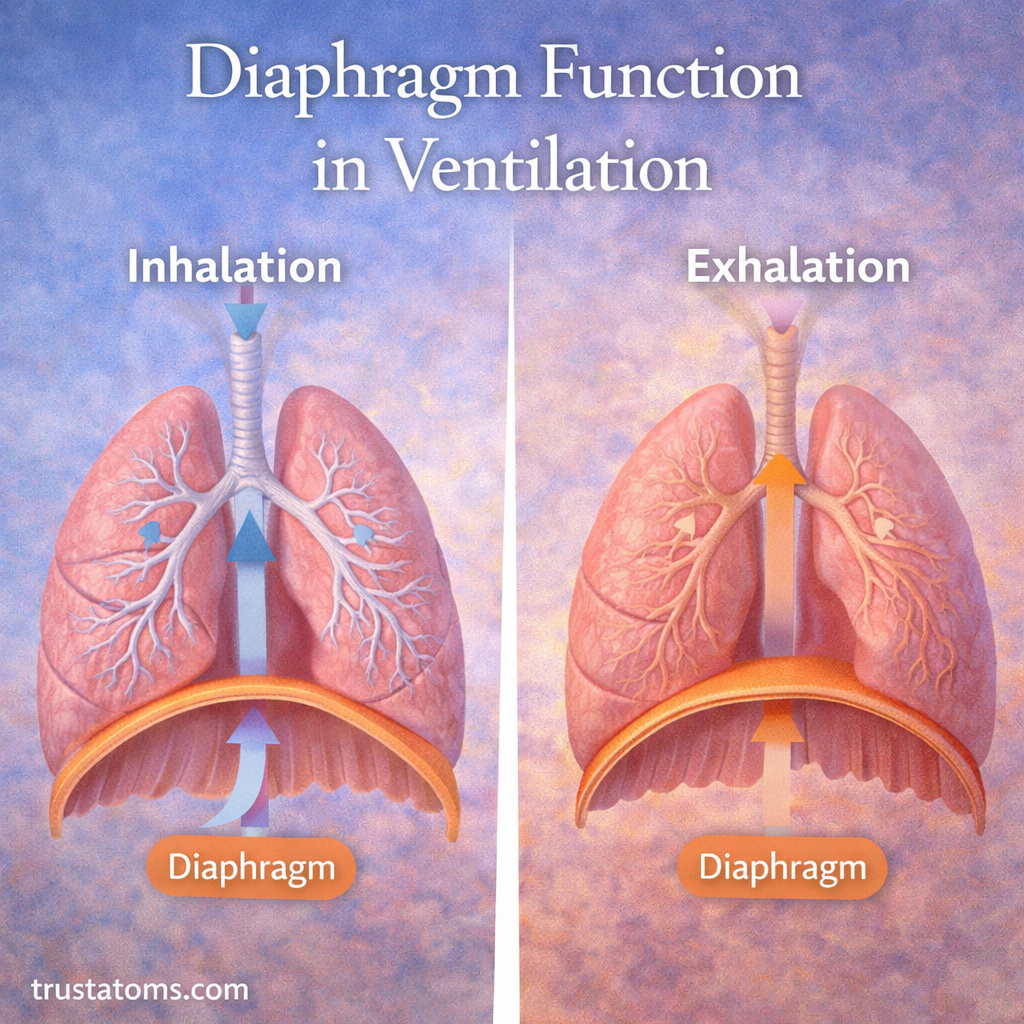
Diagram showing diaphragm movement during inhalation and exhalation, illustrating how the diaphragm contracts and relaxes to move air in and out of the lungs.
Illustration showing how the diaphragm functions during inhalation and exhalation to control airflow in the lungs. trustatoms.com.

The diaphragm is the primary muscle responsible for breathing. It plays a central role in ventilation—the process of moving air into and out of the lungs. Every time you inhale or exhale, the diaphragm works automatically to regulate airflow and maintain proper oxygen and carbon dioxide levels in the body.

Understanding how the diaphragm functions helps explain how breathing occurs and why this muscle is essential for life.

Continue reading “Diaphragm Function in Ventilation”

Hemodynamics in Large Vessels

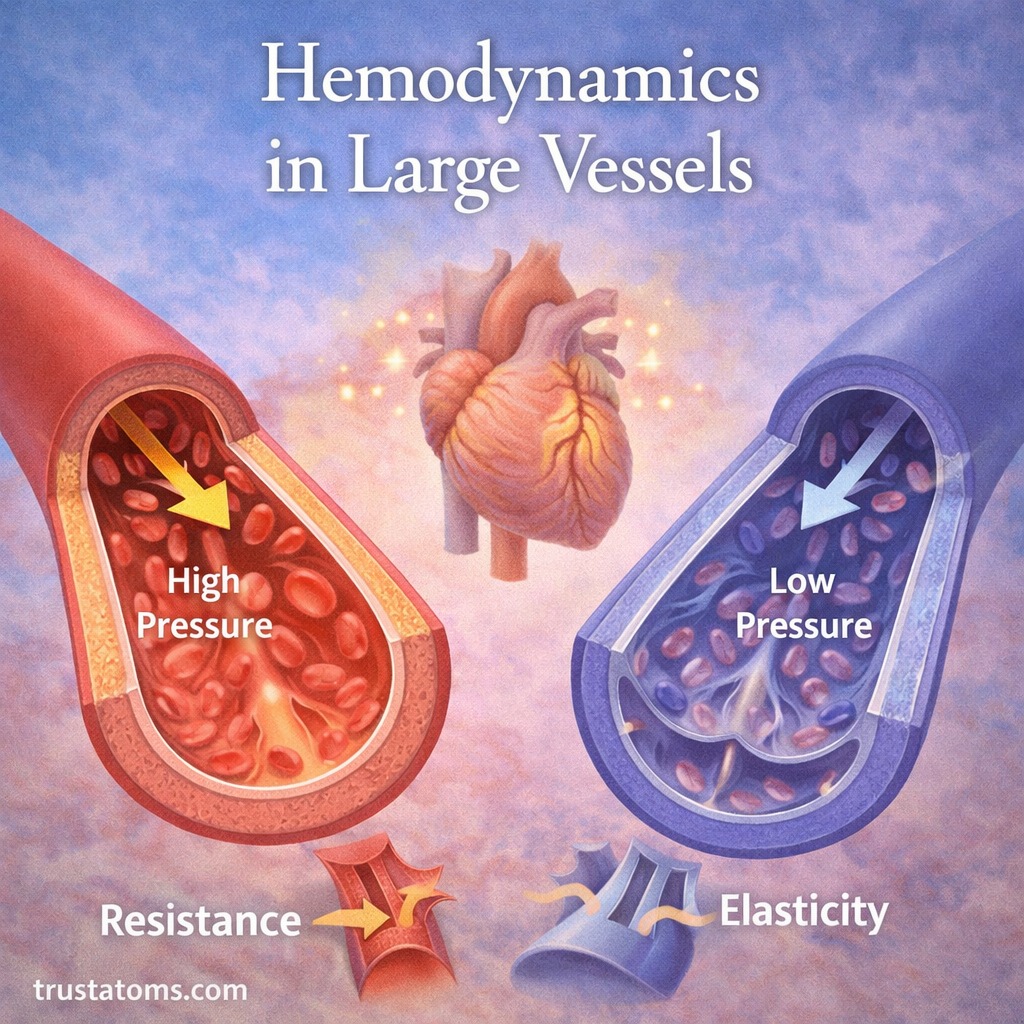
Diagram showing hemodynamics in large vessels with artery and vein comparison, including high pressure in arteries and low pressure in veins.
Illustration of hemodynamics in large vessels comparing arterial and venous blood flow, pressure, and vessel structure. trustatoms.com.

Hemodynamics is the study of how blood flows through the circulatory system. In large vessels—such as arteries and veins—this flow is critical for delivering oxygen, nutrients, and hormones throughout the body while removing waste products.

Understanding how blood moves through these major vessels helps explain how the cardiovascular system maintains pressure, supports organ function, and adapts to different physical demands.

Continue reading “Hemodynamics in Large Vessels”

How Breathing Works: Inhalation and Exhalation

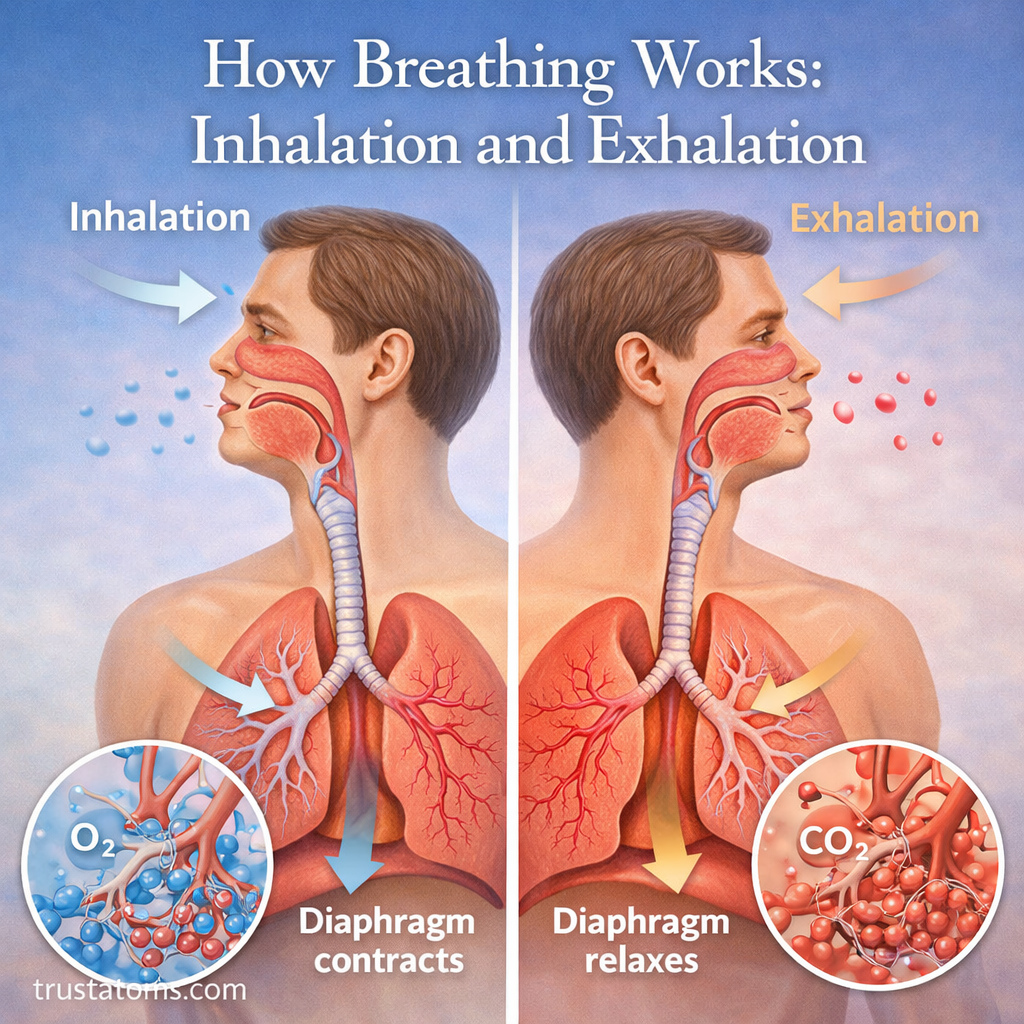
Diagram showing inhalation and exhalation with airflow into the lungs, diaphragm movement, and oxygen and carbon dioxide exchange in the alveoli.
Illustration showing how inhalation and exhalation work, including airflow, diaphragm movement, and gas exchange in the lungs. trustatoms.com.

Breathing is a continuous process that keeps your body supplied with oxygen and removes carbon dioxide. It happens automatically, controlled by the brain and supported by the lungs, diaphragm, and chest muscles.

This process has two main phases: inhalation (breathing in) and exhalation (breathing out). Together, they allow the body to exchange gases and maintain life.

Continue reading “How Breathing Works: Inhalation and Exhalation”

Airway Anatomy: Nose to Alveoli

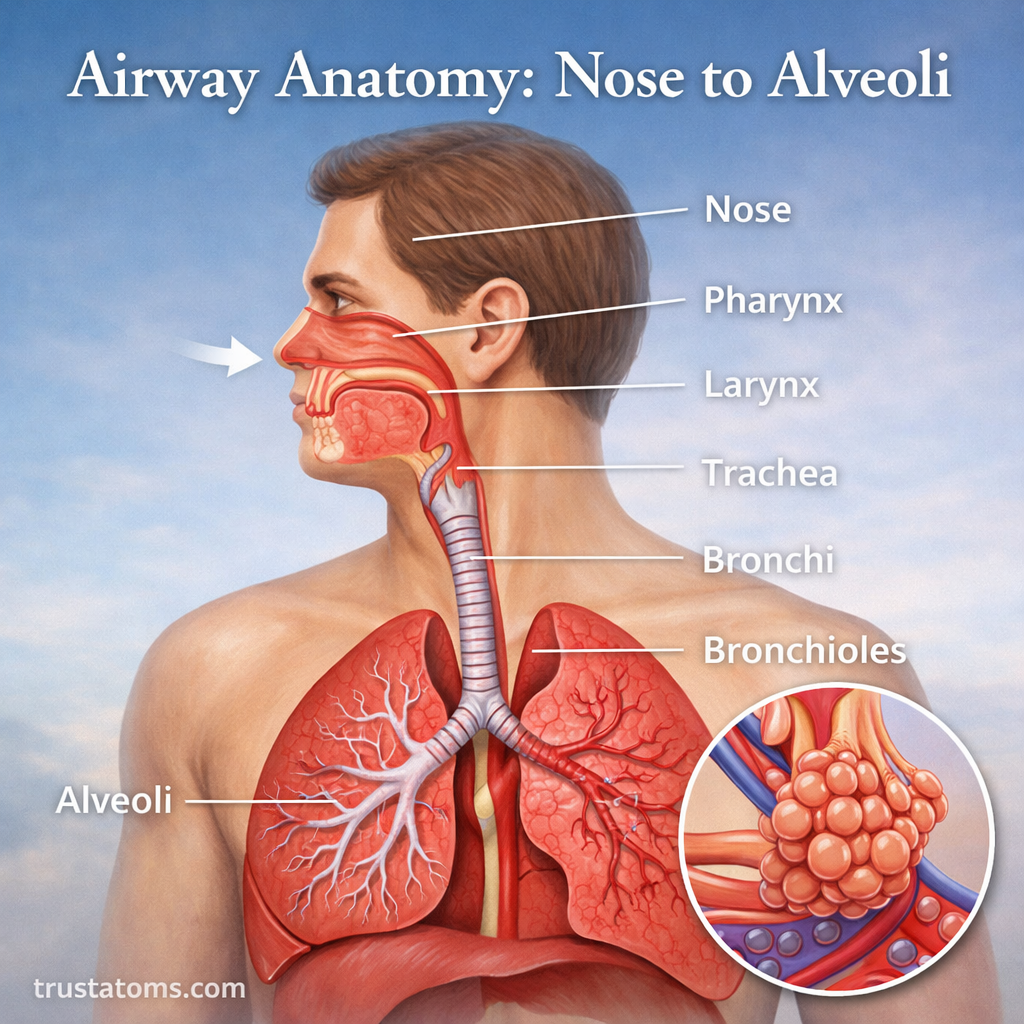
Diagram of airway anatomy showing the path of air from the nose through the pharynx, larynx, trachea, bronchi, and into the alveoli in the lungs.
Illustration of airway anatomy from the nose to the alveoli showing how air travels through the respiratory system. trustatoms.com.

Airway anatomy refers to the structures that carry air from the outside environment into the lungs, where oxygen enters the bloodstream and carbon dioxide is removed. This pathway—from the nose to the alveoli—is carefully designed to filter, warm, and transport air efficiently.

Understanding how each part of the airway works helps explain how the body breathes, protects itself from harmful particles, and supports overall health.

Continue reading “Airway Anatomy: Nose to Alveoli”

What Is the Respiratory System?

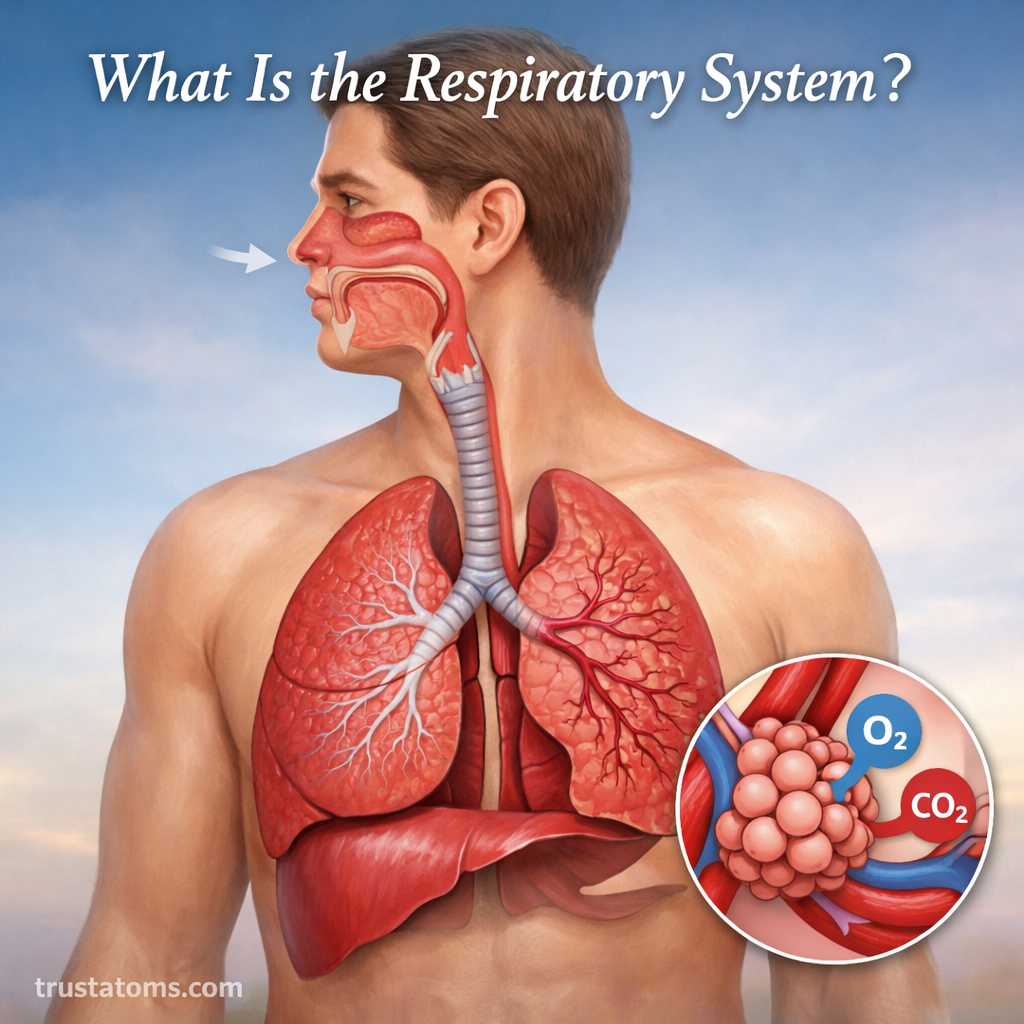
Illustration showing the human respiratory system including nose, trachea, lungs, and alveoli with oxygen and carbon dioxide exchange.
Simple diagram of the human respiratory system showing how oxygen enters the body and carbon dioxide exits. trustatoms.com.

The respiratory system is the body’s network of organs and tissues responsible for breathing. Its main job is to bring oxygen into the body and remove carbon dioxide, a waste gas produced by cells. This process is essential for survival because every cell depends on oxygen to produce energy.

From the moment you take your first breath, your respiratory system works continuously—often without you even noticing.

Continue reading “What Is the Respiratory System?”

Circulatory Adaptations During Exercise: How Your Body Responds to Physical Activity

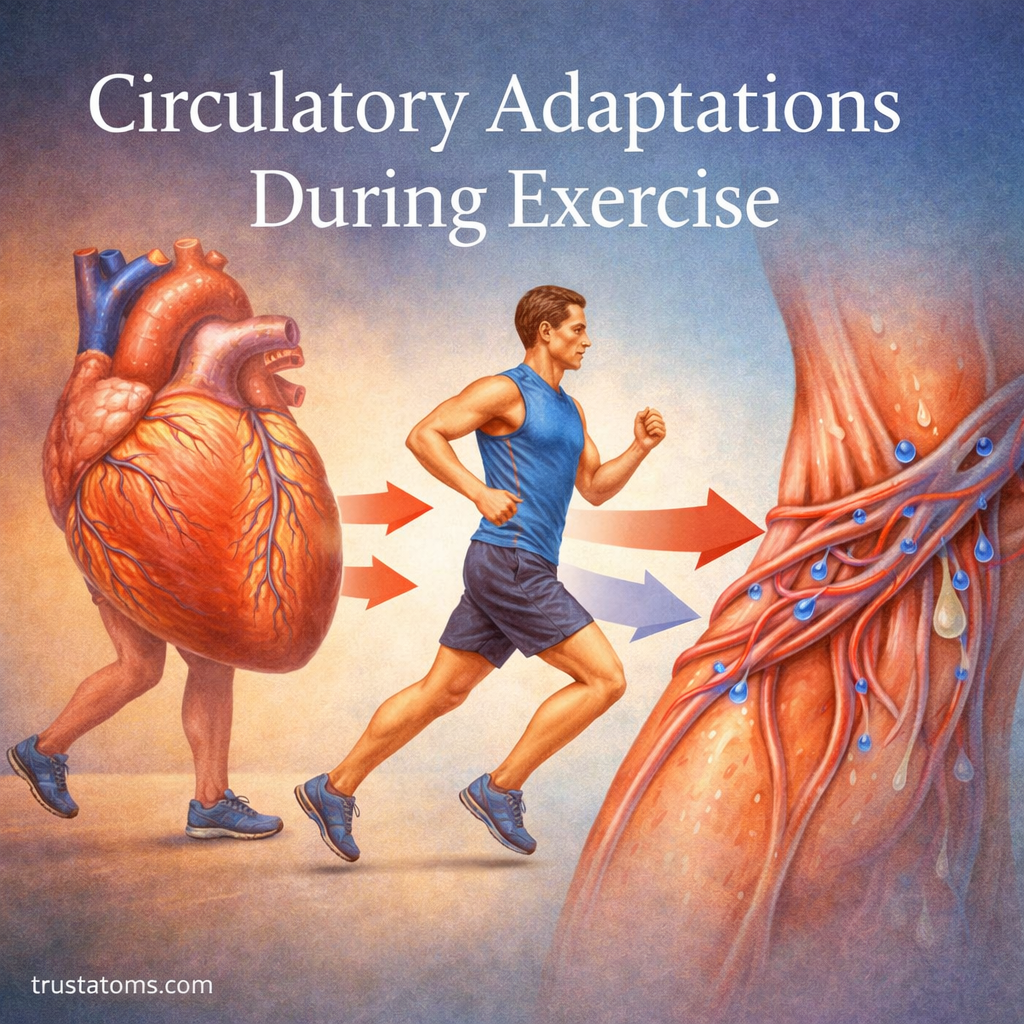
Illustration showing increased heart activity, blood flow to muscles, and oxygen delivery during exercise.
Visual representation of how the circulatory system adapts during exercise to increase blood flow and oxygen delivery. trustatoms.com.

When you exercise, your body undergoes rapid and coordinated changes to meet increased energy demands. One of the most important systems involved is the circulatory system, which adjusts to deliver more oxygen and nutrients to working muscles.

In this guide, you’ll learn how the circulatory system adapts during exercise, why these changes happen, and how they improve performance and overall health.

Continue reading “Circulatory Adaptations During Exercise: How Your Body Responds to Physical Activity”