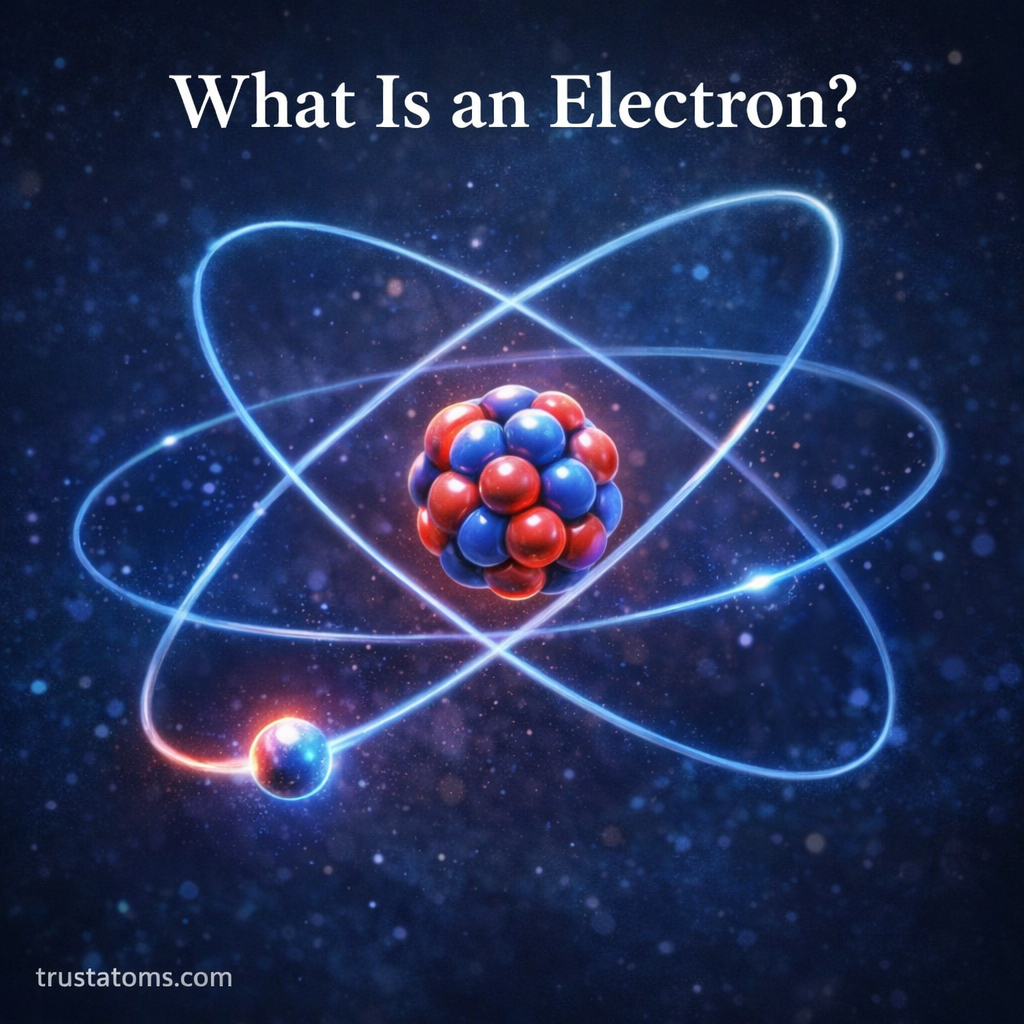
What Is an Electron?

Educational atomic illustration showing electrons orbiting a nucleus to explain what an electron is in basic chemistry.
Illustration of an atom showing electrons moving around a central nucleus, representing the structure of atoms and the role of electrons. trustatoms.com.

Electrons are one of the fundamental building blocks of matter. Every atom contains electrons, and their behavior determines how atoms interact, bond, and form the substances around us.

Although electrons are extremely small and invisible to the naked eye, they play a major role in chemistry, electricity, and modern technology. Understanding what electrons are and how they behave helps explain everything from chemical reactions to how electronic devices work.

Continue reading “What Is an Electron?”
Physical vs Chemical Properties

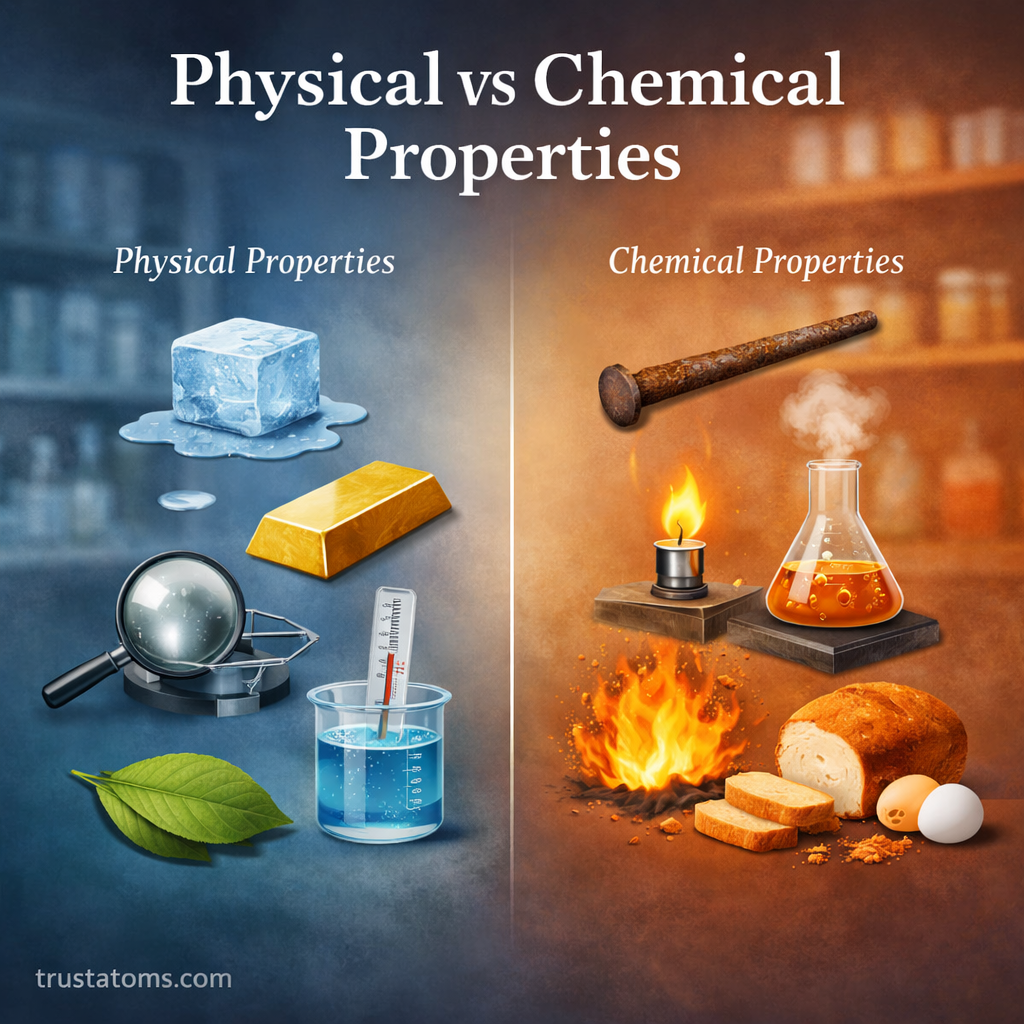
Illustrated comparison showing physical properties like melting ice and a gold bar versus chemical properties like rusting iron and burning materials.
Educational illustration comparing physical properties and chemical properties with everyday examples such as melting ice, gold, rusting iron, and burning reactions. trustatoms.com.

Understanding the difference between physical and chemical properties is essential in chemistry. These properties describe how substances behave and how scientists identify, classify, and use different materials.

Some properties can be observed without changing a substance’s identity, while others describe how a substance reacts to form entirely new substances. Learning to distinguish between these two types of properties helps explain everything from cooking food to designing industrial materials.

Continue reading “Physical vs Chemical Properties”

Physical vs Chemical Changes

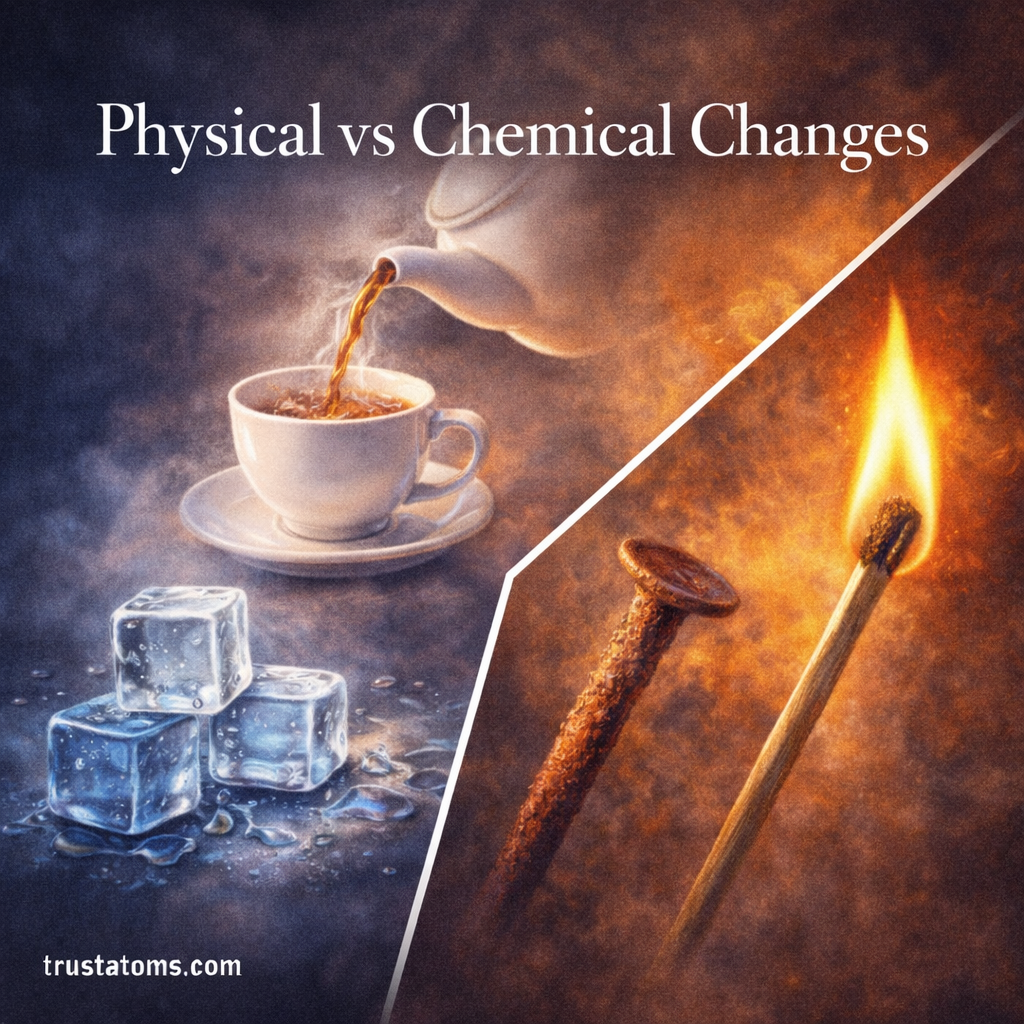
Educational illustration comparing physical and chemical changes with melting ice and pouring tea on one side and a burning match and rusted nail on the other.
Illustration comparing physical and chemical changes using examples like melting ice and boiling liquid versus rusting metal and burning materials. trustatoms.com.

Matter is constantly changing. Ice melts into water, metal rusts, wood burns, and food cooks. In chemistry, these transformations are classified into two main types: physical changes and chemical changes.

Understanding the difference between physical and chemical changes helps scientists explain how substances behave, how reactions occur, and how materials interact with energy.

This guide explains what physical and chemical changes are, how they differ, and how to recognize each type in everyday life.

Continue reading “Physical vs Chemical Changes”

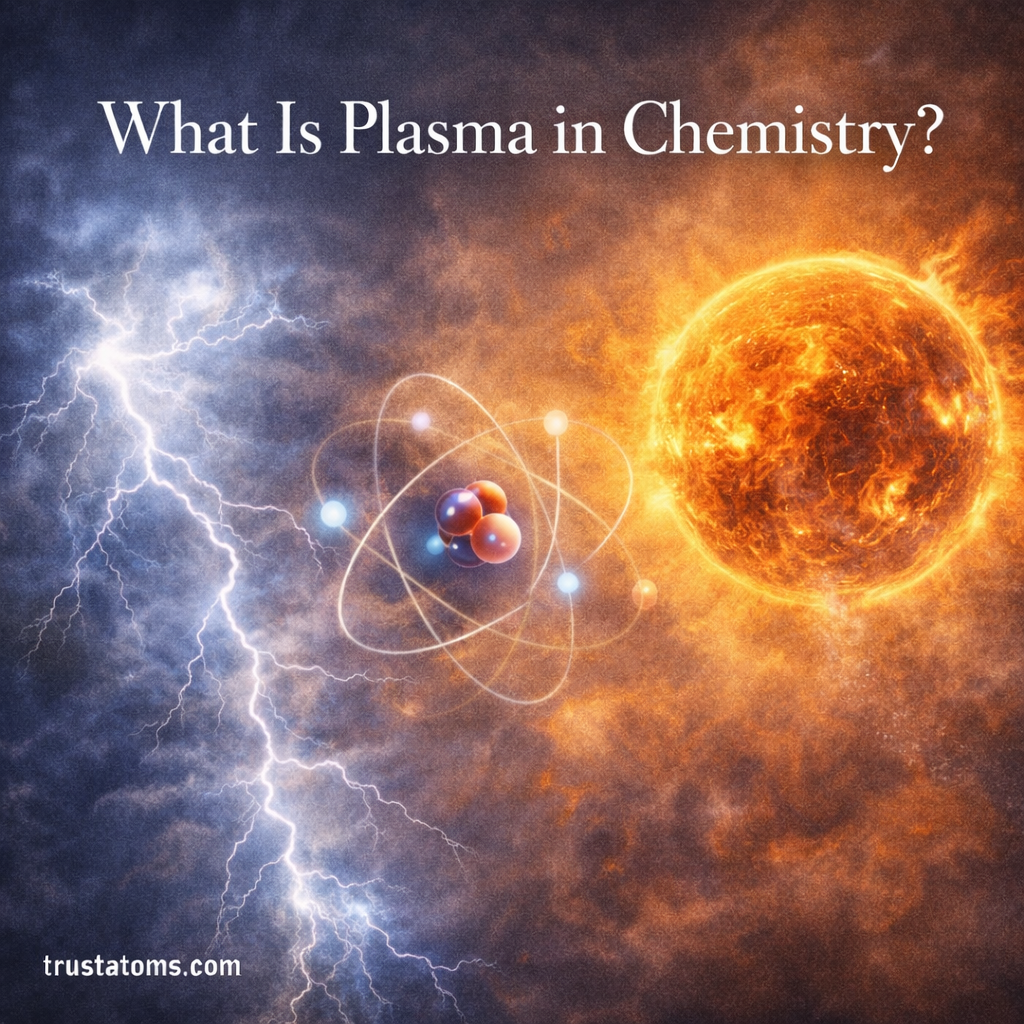
What Is Plasma in Chemistry?

Educational illustration showing plasma in chemistry with lightning, the Sun, and glowing ionized particles representing charged ions and electrons.
Illustration explaining plasma as the fourth state of matter, showing ionized gas, lightning, and the Sun as examples of plasma in nature. trustatoms.com.

Plasma is often referred to as the fourth state of matter. While solids, liquids, and gases are commonly observed in everyday life, plasma exists under conditions of extremely high energy where atoms become ionized.

In chemistry and physics, plasma is important because it behaves very differently from other states of matter. It conducts electricity, responds to magnetic fields, and is found throughout the universe—from lightning on Earth to the interiors of stars.

Understanding plasma helps scientists study everything from space phenomena to advanced technologies used in manufacturing and medicine.

Continue reading “What Is Plasma in Chemistry?”

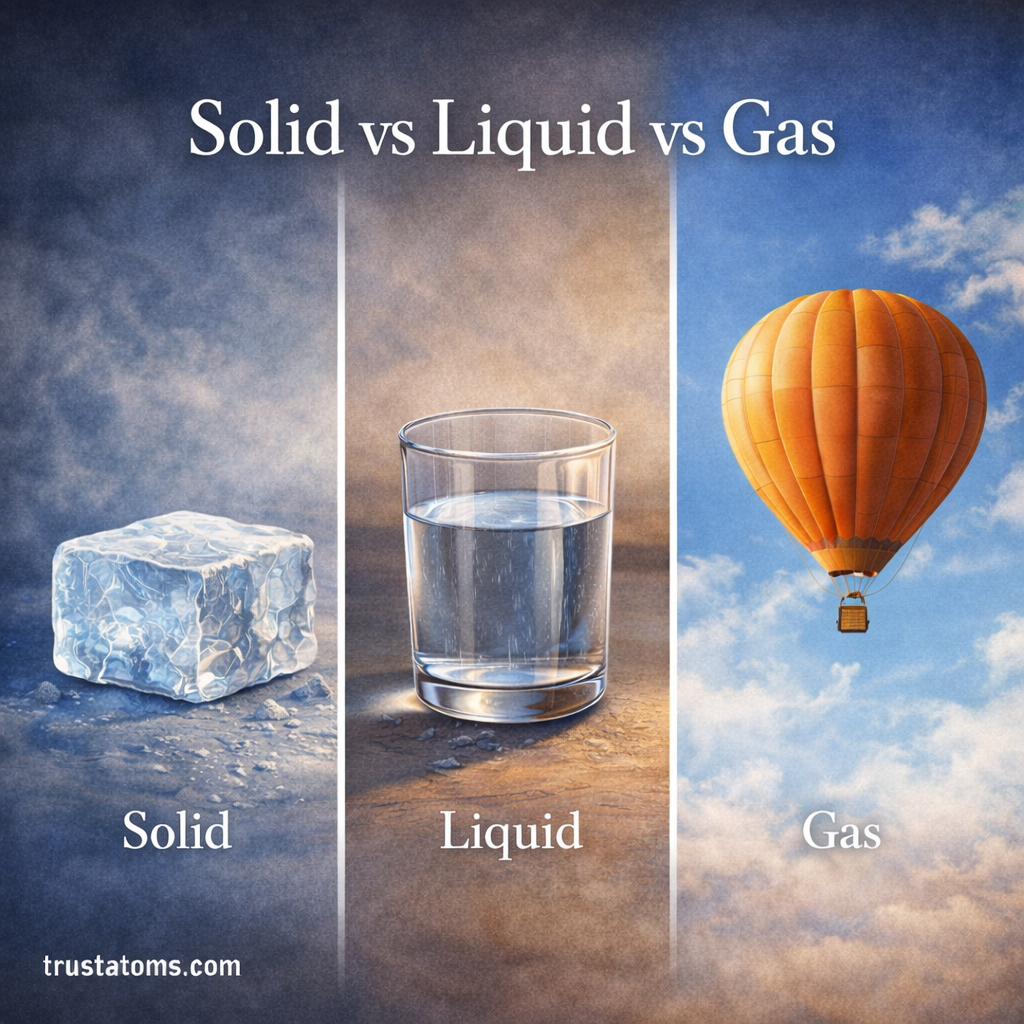
Solid vs Liquid vs Gas

Educational illustration comparing the three states of matter with an ice cube representing solid, a glass of water representing liquid, and a hot air balloon representing gas.
Illustration comparing solid, liquid, and gas using simple real-world examples to explain the three common states of matter. trustatoms.com.

Matter exists in different physical forms known as states of matter. The three most familiar states are solid, liquid, and gas, and each behaves differently depending on how its particles are arranged and how much energy those particles have.

Understanding the differences between solids, liquids, and gases is a core concept in chemistry because it explains how substances behave, how materials change with temperature, and how molecules interact in different environments.

This guide explores the characteristics of solids, liquids, and gases, how they differ, and how matter transitions between these states.

Continue reading “Solid vs Liquid vs Gas”

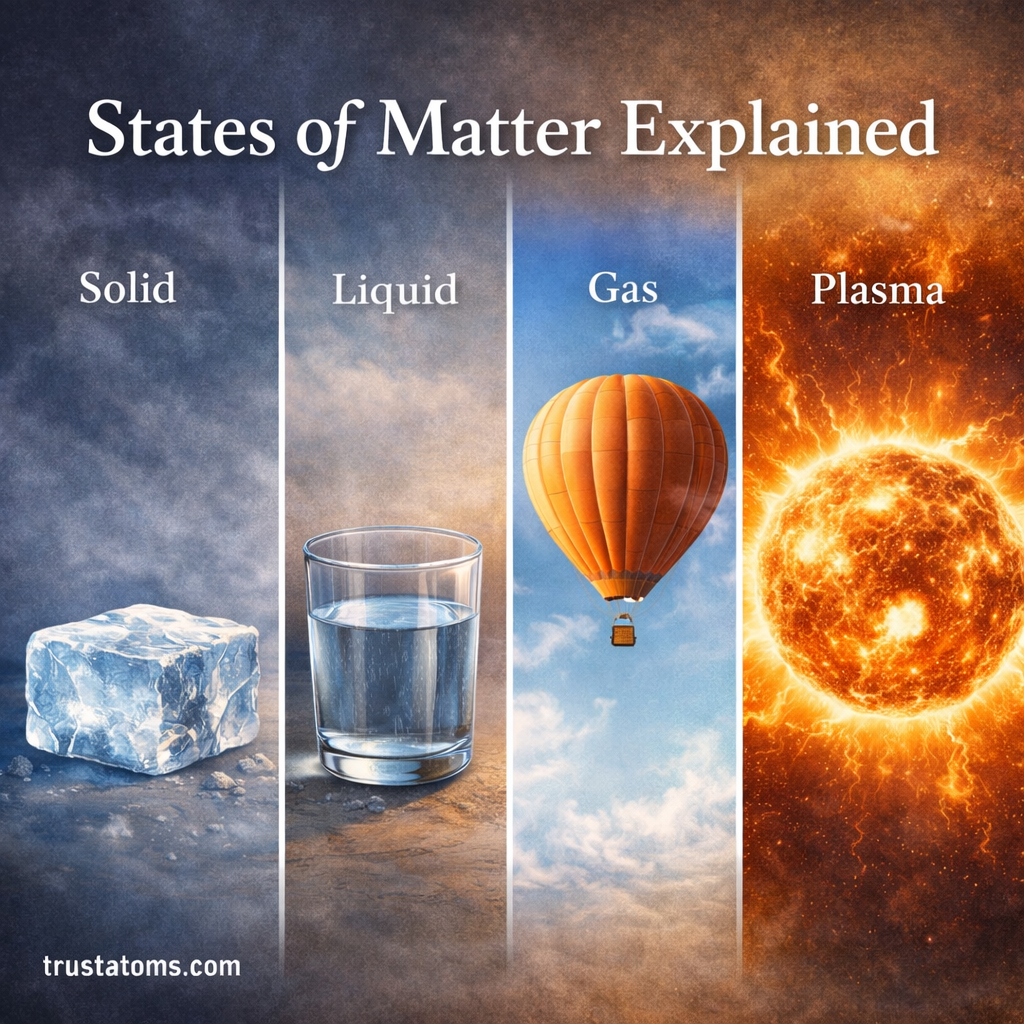
States of Matter Explained

Educational illustration showing the four states of matter including solid ice, liquid water, gas represented by a hot air balloon, and plasma represented by the Sun.
Illustration explaining the four main states of matter—solid, liquid, gas, and plasma—using everyday examples and natural phenomena. trustatoms.com.

Matter exists in different physical forms depending on how its particles are arranged and how much energy they contain. These forms are called states of matter, and they describe the structural and behavioral differences between substances such as ice, water, and steam.

Understanding states of matter is essential in chemistry because it helps explain how substances behave, how they change during heating or cooling, and how particles interact at the microscopic level.

This guide explains the major states of matter, how they differ, and why they matter in both science and everyday life.

Continue reading “States of Matter Explained”

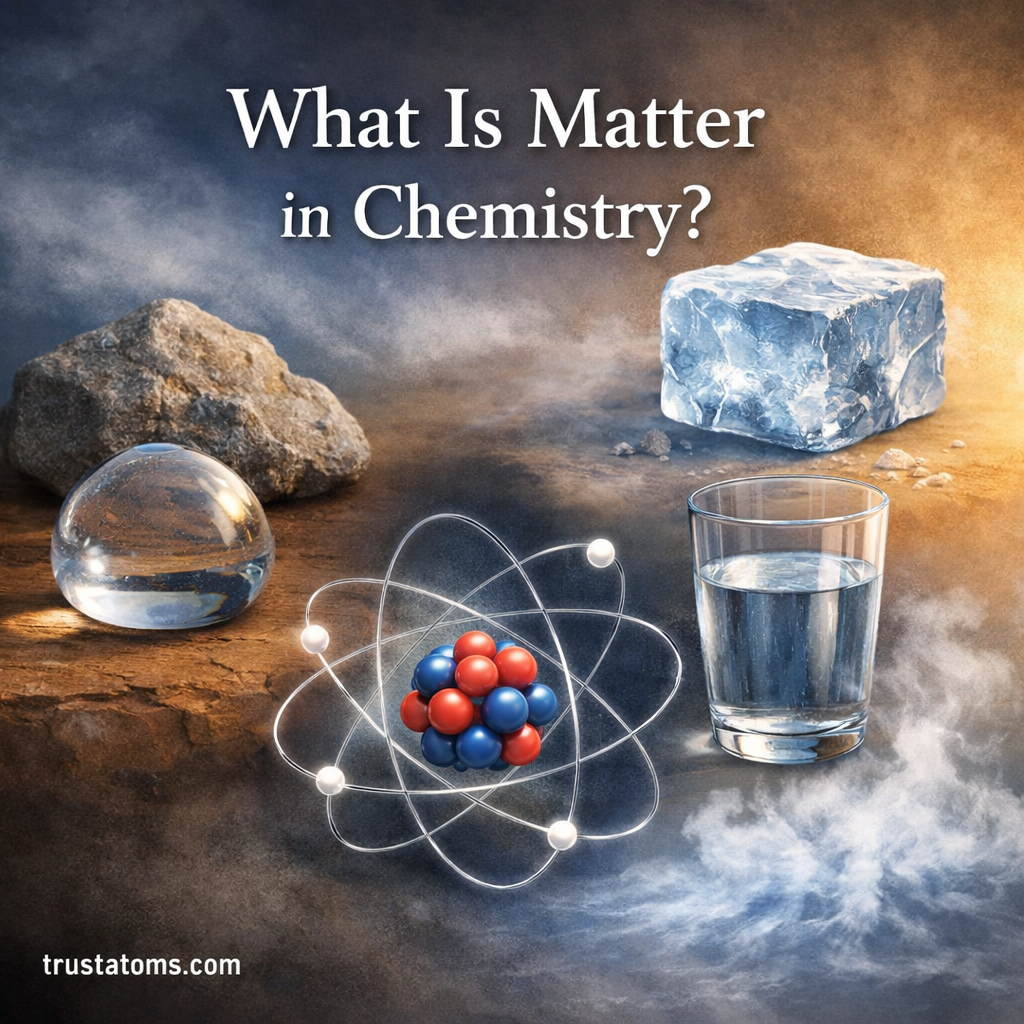
What Is Matter in Chemistry?

Educational illustration showing examples of matter in chemistry including a rock, water, ice, vapor, and an atom model representing the states and structure of matter.
Illustration explaining the concept of matter in chemistry, showing examples of solids, liquids, gases, and atomic structure. trustatoms.com.

Matter is one of the most fundamental concepts in chemistry. Everything you see, touch, or interact with in the physical world is made of matter—from the air you breathe to the water you drink and the devices you use every day.

In chemistry, understanding matter is the first step toward understanding how substances behave, interact, and change during chemical reactions. This article explains what matter is, its defining properties, the different types of matter, and why it is central to the study of chemistry.

Continue reading “What Is Matter in Chemistry?”

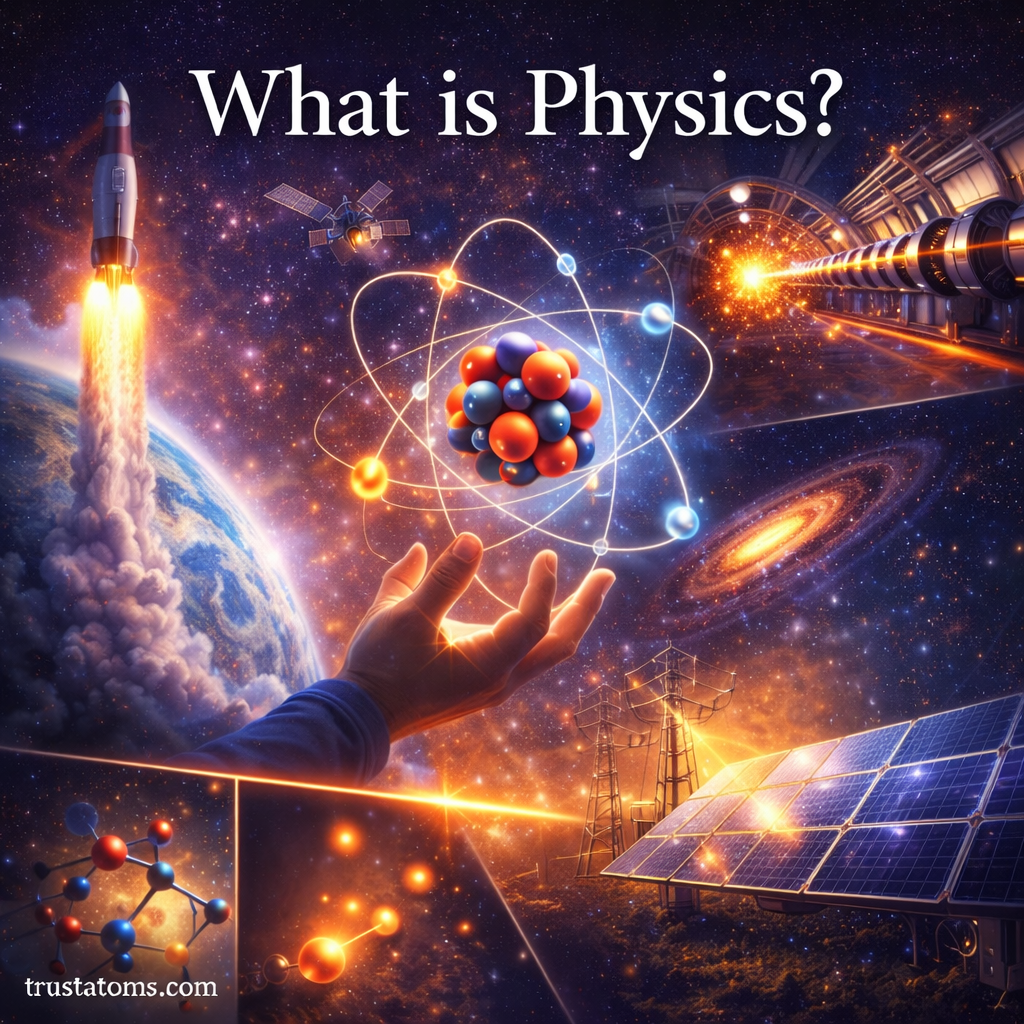
What Is Physics?

Educational illustration showing atoms, rockets, galaxies, and energy systems representing the study of physics.
Conceptual illustration showing atoms, space exploration, and energy technologies representing the science of physics. trustatoms.com.

Physics is the branch of science that studies matter, energy, motion, and the fundamental forces of the universe. It seeks to understand how the natural world works—from the smallest subatomic particles to the largest galaxies.

At its core, physics aims to answer questions such as:

  • Why do objects move?
  • How does energy transfer?
  • What are the fundamental laws that govern the universe?

By studying these principles, physics forms the foundation for many other scientific fields, including chemistry, astronomy, engineering, and modern technology.

Continue reading “What Is Physics?”

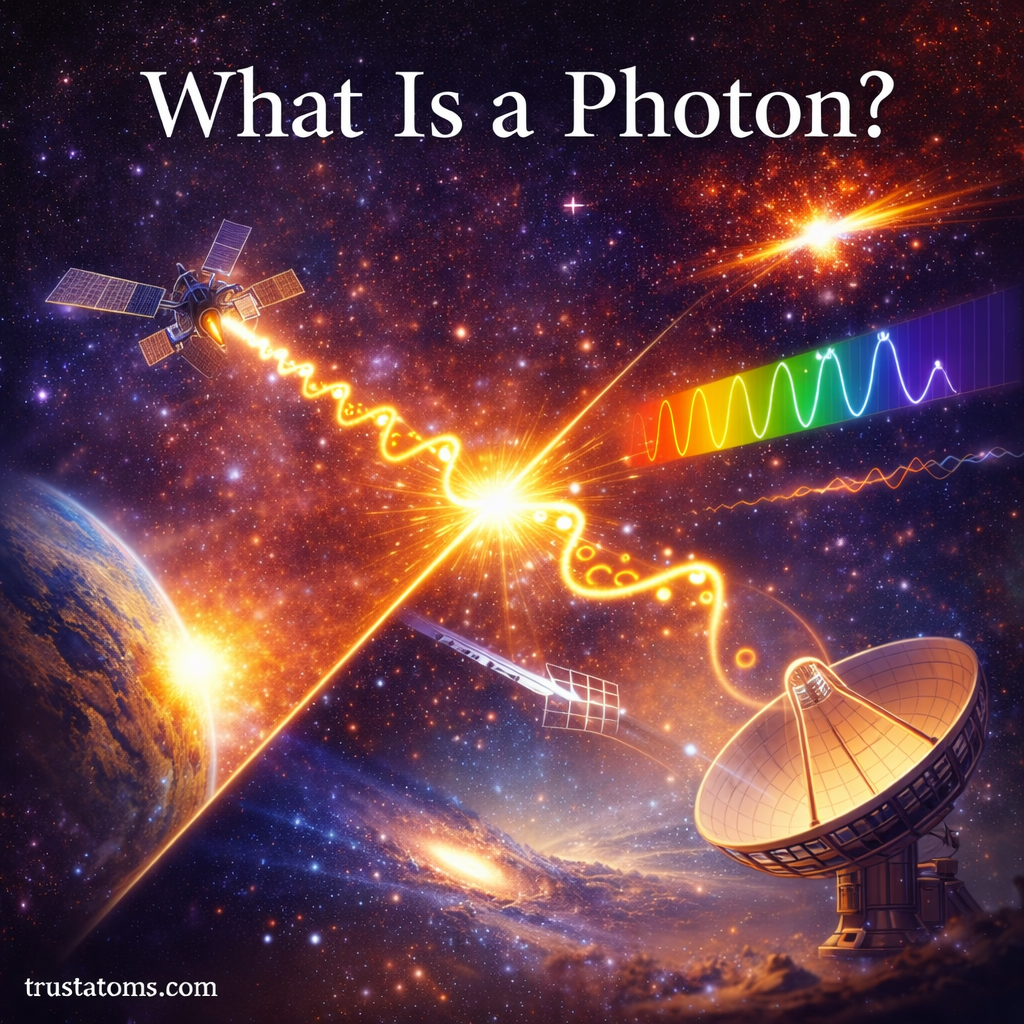
What Is a Photon?

Educational illustration showing a photon traveling as light energy across space with examples of electromagnetic radiation.
Conceptual illustration showing photons carrying electromagnetic energy across space, representing light and radiation. trustatoms.com.

A photon is the fundamental particle of light and the carrier of the electromagnetic force. It is one of the most important particles in physics because it allows energy to travel through space in the form of electromagnetic radiation.

Photons are responsible for everything from visible light and radio waves to X-rays and gamma rays. Whenever light travels through space, it does so as a stream of photons.

Unlike many other particles, photons have no mass and move at the speed of light, making them unique in the world of physics.

Continue reading “What Is a Photon?”

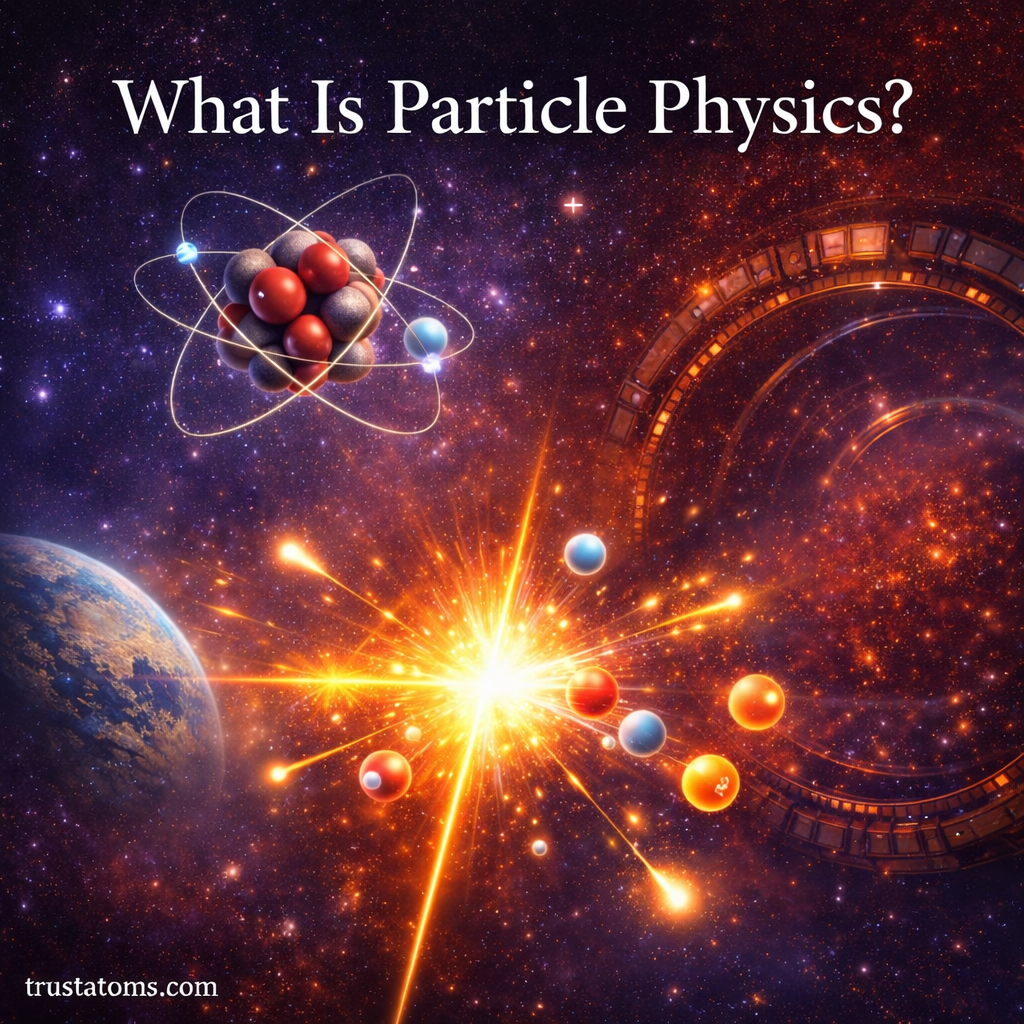
What Is Particle Physics?

Educational illustration showing a particle collision experiment, atom structure, and particle accelerator representing particle physics.
Conceptual illustration showing a particle accelerator collision and atomic structure used to study fundamental particles. trustatoms.com.

Particle physics is the branch of physics that studies the smallest known building blocks of the universe and the forces that govern how they interact. Instead of studying large objects like planets or stars, particle physicists focus on extremely tiny components of matter called elementary particles.

By investigating these particles, scientists try to answer some of the biggest questions in science:

  • What is everything made of?
  • How did the universe begin?
  • What forces control matter and energy?

Particle physics sits at the foundation of modern science because it explores the most fundamental level of reality.

Continue reading “What Is Particle Physics?”