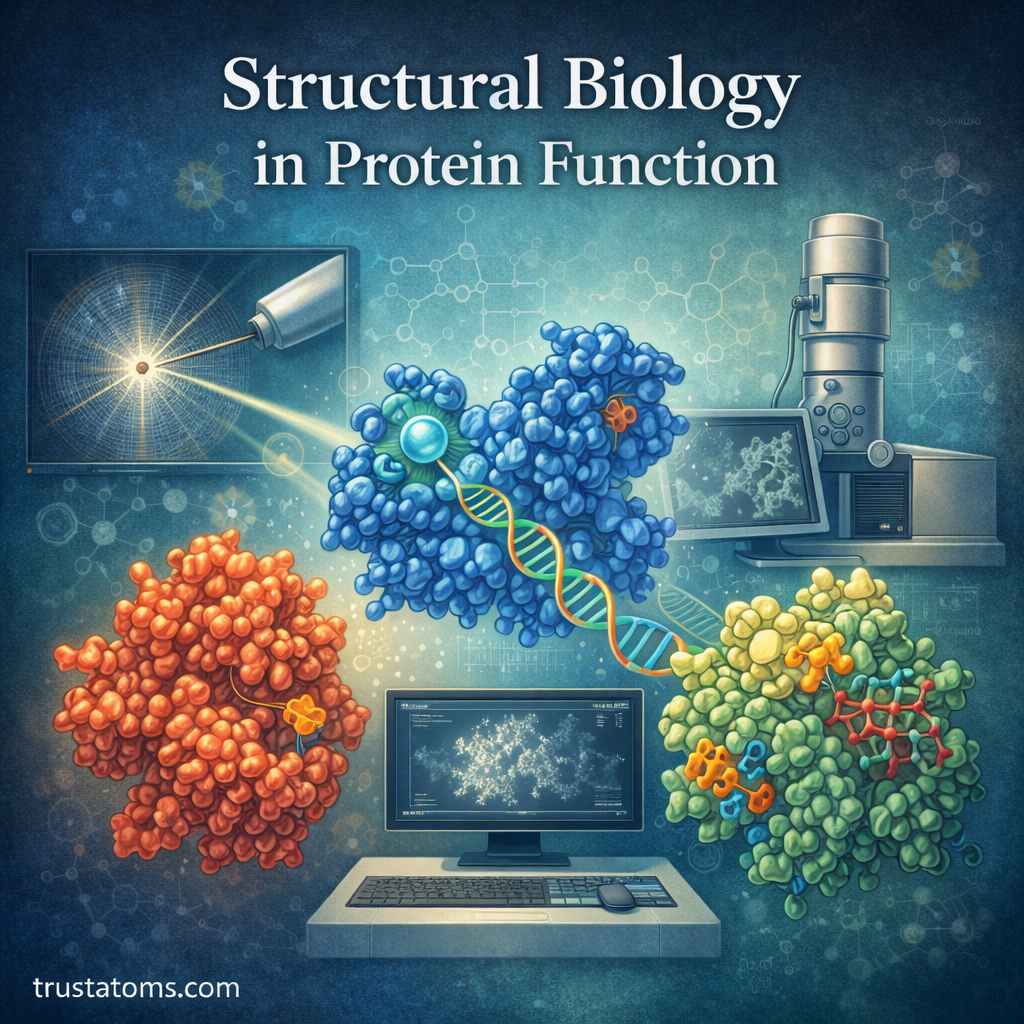
Structural Biology in Protein Function

Illustration of structural biology showing three-dimensional protein structures, DNA, and scientific instruments used to study protein function.
Scientific illustration showing how structural biology examines protein shapes and molecular structures to understand biological function. trustatoms.com.

Proteins are essential molecules that carry out most of the work inside living cells. From catalyzing chemical reactions to transporting molecules and supporting cellular structure, proteins perform an extraordinary range of biological tasks. Understanding how proteins work requires more than knowing their chemical composition—it requires understanding their three-dimensional structure.

Structural biology is the field of science dedicated to studying the shapes and spatial arrangements of biological molecules, particularly proteins. By examining molecular structures in detail, scientists can understand how proteins interact with other molecules and how these interactions control biological processes.

This article explores the principles of structural biology, the relationship between protein structure and function, and the technologies scientists use to study these molecular structures.

Continue reading “Structural Biology in Protein Function”
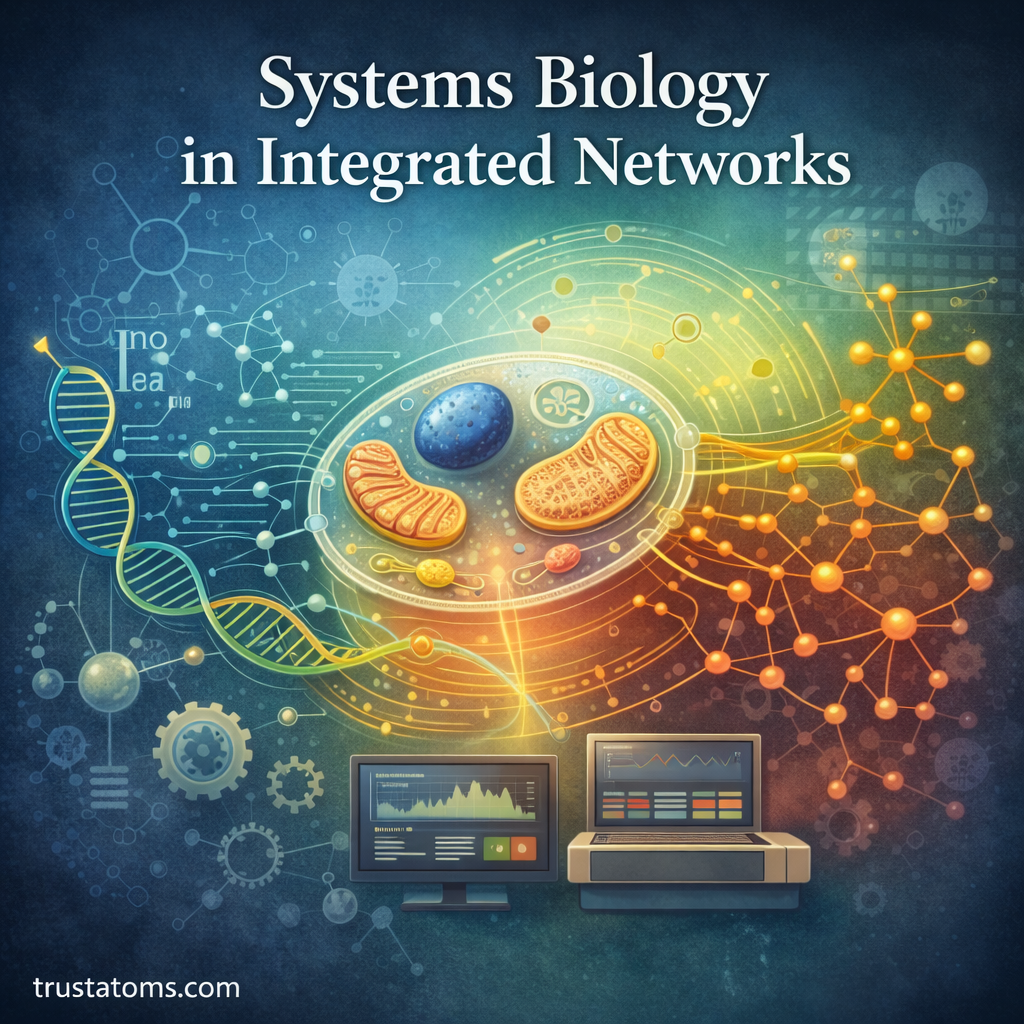
Systems Biology in Integrated Networks

Illustration of systems biology showing a cell connected to gene, protein, and metabolic networks with computational analysis.
Illustration representing systems biology, where genes, proteins, and cellular pathways interact within integrated biological networks. trustatoms.com.

Modern biology has moved far beyond studying individual genes or proteins in isolation. Instead, scientists increasingly focus on how biological components interact with one another to form complex systems. This holistic approach is known as systems biology.

Systems biology examines how genes, proteins, metabolites, and cellular processes interact within interconnected biological networks. By analyzing these integrated systems, researchers gain a deeper understanding of how life functions at molecular, cellular, and organism levels.

This field combines biology, mathematics, computer science, and engineering to model and analyze the complexity of living systems.

Continue reading “Systems Biology in Integrated Networks”

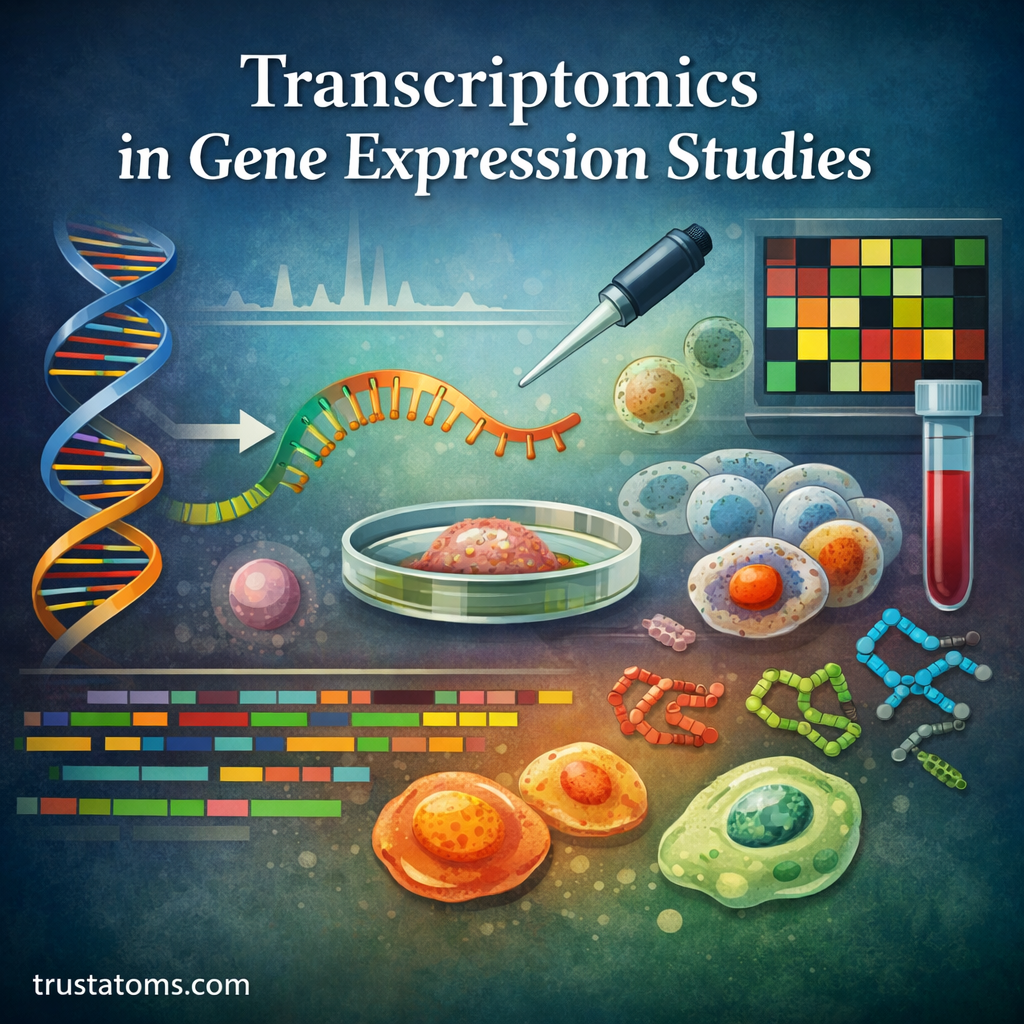
Transcriptomics in Gene Expression Studies

Illustration showing transcriptomics in gene expression studies with DNA converting to RNA, sequencing analysis, and cellular samples.
Scientific illustration explaining transcriptomics and how RNA transcripts reveal gene expression activity in cells. trustatoms.com.

Transcriptomics is a powerful field within modern biology that focuses on studying RNA transcripts produced by the genome. By examining the complete set of RNA molecules in a cell or organism at a given time, scientists can understand how genes are actively expressed and regulated.

Unlike genomic studies, which analyze the full DNA sequence, transcriptomics reveals which genes are actually turned on or off under specific conditions. This makes transcriptomics essential for understanding biological processes such as development, disease progression, environmental adaptation, and cellular responses.

In this article, we explore what transcriptomics is, how it works, and why it plays such an important role in gene expression research.

Continue reading “Transcriptomics in Gene Expression Studies”

Metabolomics in Biochemical Pathways

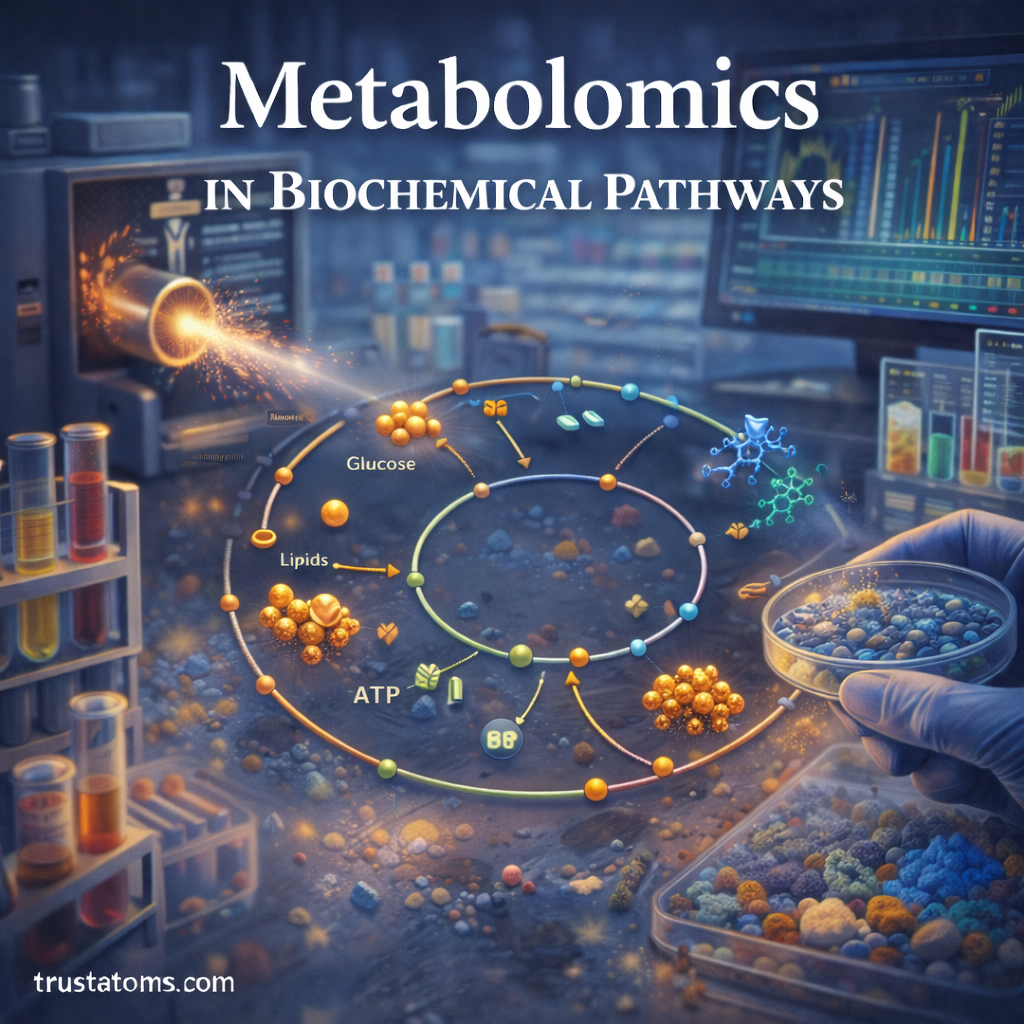
Illustration showing metabolomics in biochemical pathways with simplified metabolic cycle, molecules, and laboratory metabolite analysis tools.
Illustration of metabolomics research showing simplified biochemical pathways and laboratory analysis of cellular metabolites. trustatoms.com.

Metabolomics is the scientific study of small molecules known as metabolites that are produced during cellular metabolism. These molecules play a key role in biochemical pathways that support life, including energy production, nutrient processing, and cellular communication.

In molecular biology and biochemistry, metabolomics helps scientists understand how metabolic processes function inside cells. By analyzing metabolites, researchers can observe how biological systems respond to changes such as disease, environmental stress, or genetic variation.

Because metabolites represent the final products of many cellular processes, metabolomics provides a direct snapshot of cellular activity and biochemical pathways.

Continue reading “Metabolomics in Biochemical Pathways”

Proteomics in Cellular Function Analysis

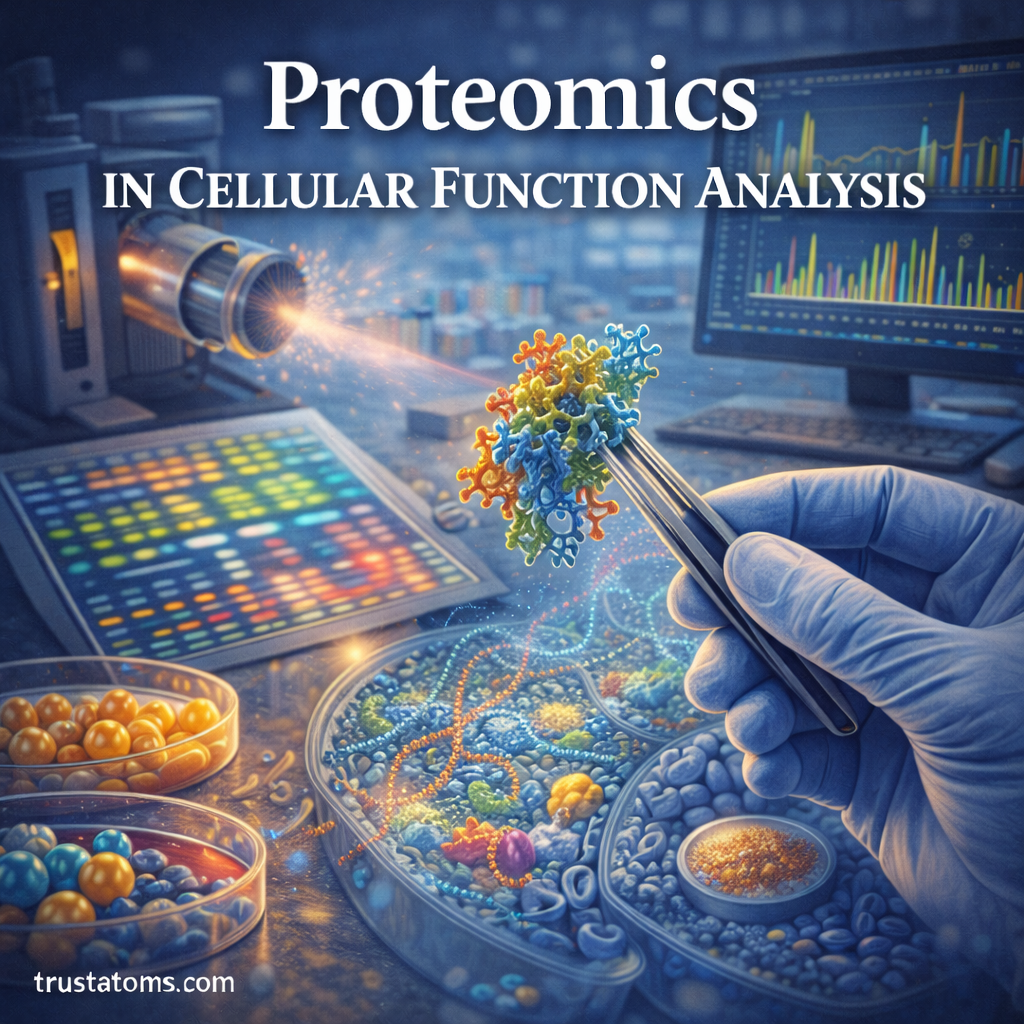
Illustration showing proteomics analysis with protein structures, mass spectrometry equipment, and cellular protein research in a laboratory.
Illustration of proteomics research analyzing proteins to understand cellular function and biological processes. trustatoms.com.

Proteomics is the large-scale study of proteins within cells, tissues, or organisms. Because proteins carry out most biological activities in cells, understanding how they function is essential for studying life at the molecular level.

While genomics focuses on DNA and genes, proteomics examines the proteins that genes produce. These proteins control cellular processes such as metabolism, communication between cells, immune responses, and structural support.

Proteomics has become an important field in molecular biology because it helps scientists understand how cells function, how diseases develop, and how new medical treatments can be created.

Continue reading “Proteomics in Cellular Function Analysis”

Genomic Sequencing in Molecular Biology

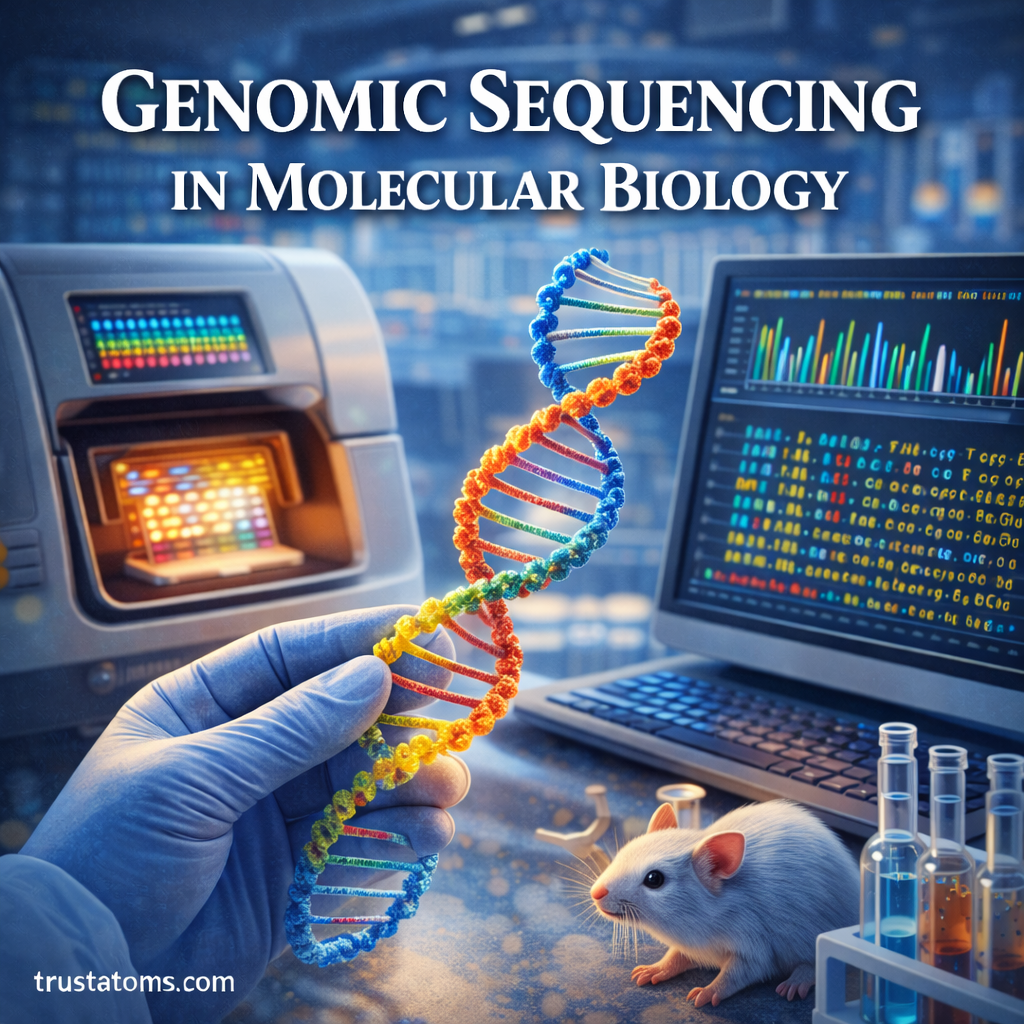
Illustration showing genomic sequencing in molecular biology with DNA analysis, sequencing machine, and genetic data on a computer.
Illustration of genomic sequencing technology used in molecular biology to analyze DNA and study genetic information. trustatoms.com.

Genomic sequencing is a powerful technique used in molecular biology to determine the complete DNA sequence of an organism’s genome. By identifying the exact order of nucleotides within DNA, scientists can study how genes function, how diseases develop, and how organisms evolve.

Over the past few decades, genomic sequencing technologies have transformed biological research. What once took years and enormous resources can now be accomplished much faster and at a significantly lower cost.

Today, genomic sequencing plays a critical role in medicine, genetics, biotechnology, agriculture, and evolutionary biology.

Continue reading “Genomic Sequencing in Molecular Biology”

Recombinant DNA Techniques in Research

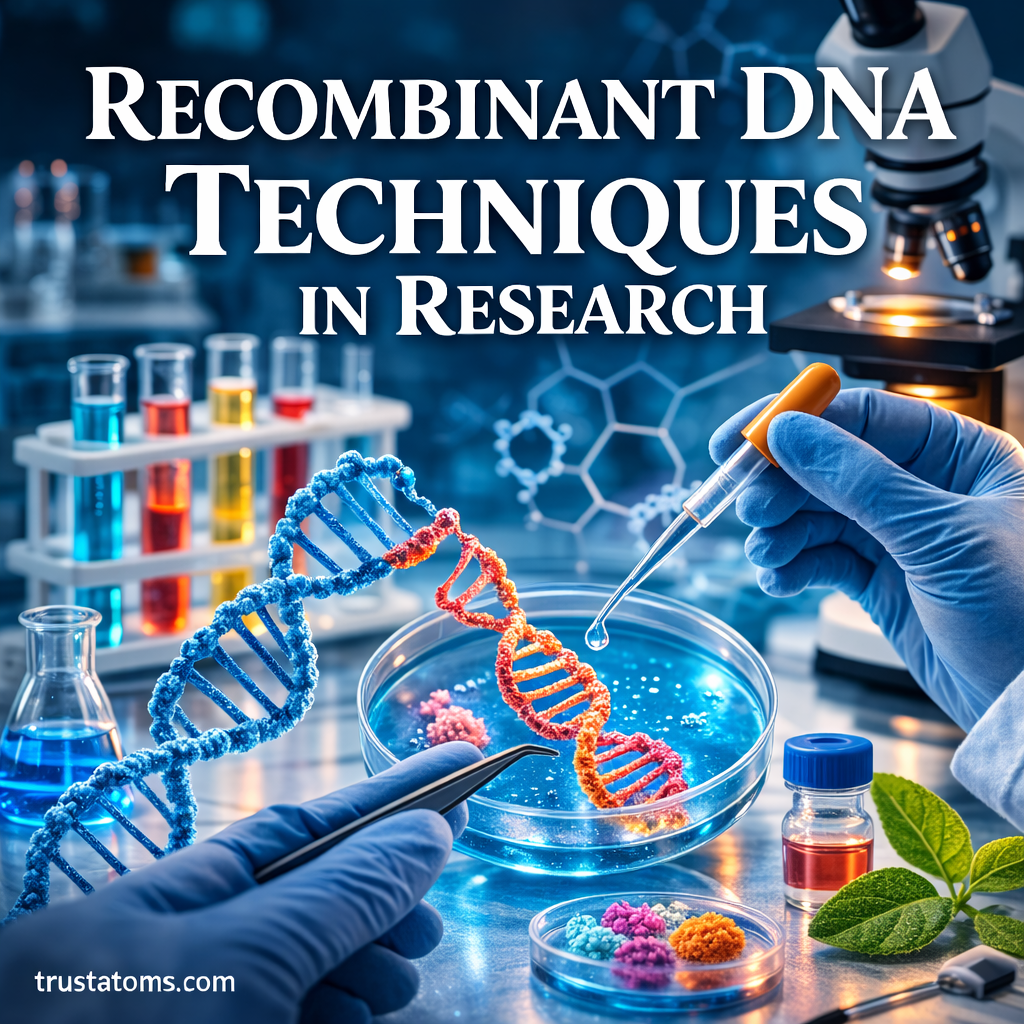
Illustration showing recombinant DNA techniques in research with DNA splicing, laboratory tools, plasmids, and molecular biology experiments.
Illustration of recombinant DNA techniques used in molecular biology research including DNA splicing and gene cloning. trustatoms.com.

Recombinant DNA technology is a powerful scientific method used to combine DNA from different sources into a single molecule. By creating new combinations of genetic material, scientists can study gene function, develop medicines, improve crops, and advance biotechnology research.

Since its development in the 1970s, recombinant DNA techniques have transformed biology and medicine. These methods allow researchers to isolate genes, insert them into organisms, and analyze how those genes affect biological processes.

Today, recombinant DNA technology is a foundation of modern molecular biology and biotechnology.

Continue reading “Recombinant DNA Techniques in Research”

Biotechnology Applications in Medicine

Illustration showing biotechnology applications in medicine including DNA research, vaccines, gene therapy, and laboratory biotechnology tools.
Illustration of biotechnology used in modern medicine including genetic research, vaccines, and advanced laboratory treatments. trustatoms.com.

Biotechnology has transformed modern medicine by allowing scientists to use living cells, biological molecules, and genetic technologies to diagnose, treat, and prevent diseases. From life-saving vaccines to advanced gene therapies, biotechnology plays a central role in many of the medical innovations used today.

Medical biotechnology combines biology, genetics, molecular science, and technology to create treatments that improve human health. These technologies allow scientists to better understand diseases and develop targeted therapies that were not possible in the past.

Today, biotechnology is used in areas such as drug development, genetic testing, vaccine production, and personalized medicine.

Continue reading “Biotechnology Applications in Medicine”

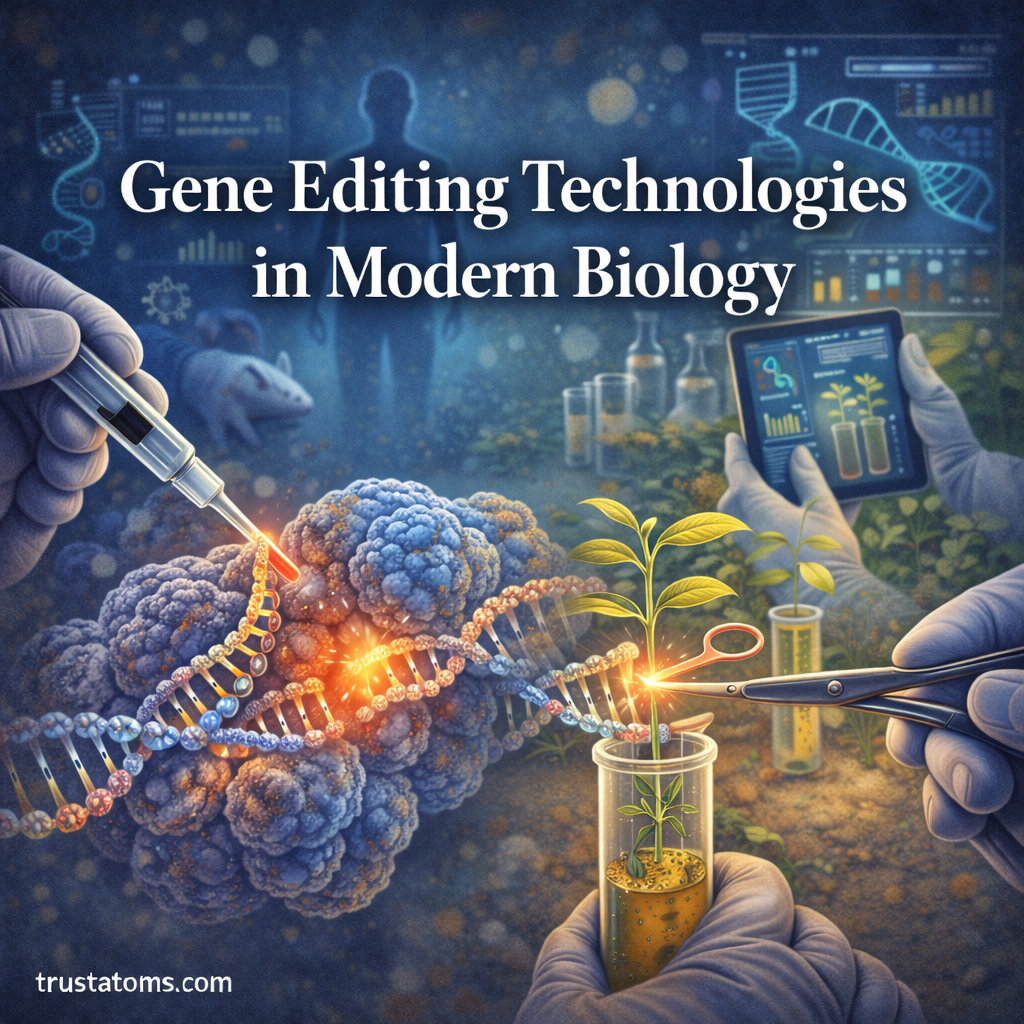
Gene Editing Technologies in Modern Biology

Illustration showing gene editing technologies in modern biology with CRISPR DNA cutting, laboratory gene modification, and plant biotechnology.
Illustration of modern gene editing technologies used in biology, including DNA editing, CRISPR research, and plant biotechnology. trustatoms.com.

Gene editing technologies allow scientists to precisely modify the DNA of living organisms. By changing genetic sequences, researchers can study how genes work, develop treatments for diseases, improve crops, and explore new biological discoveries.

In the past, altering genes was extremely difficult and time-consuming. Today, powerful gene editing tools allow scientists to cut, replace, or deactivate specific genes with remarkable accuracy.

These technologies have transformed modern biology, medicine, agriculture, and biotechnology.

Continue reading “Gene Editing Technologies in Modern Biology”

What Is CRISPR?

Illustration explaining CRISPR gene editing with Cas9 protein cutting DNA and laboratory gene editing tools.
Conceptual illustration of CRISPR gene editing showing DNA modification and Cas9 molecular scissors used in modern biotechnology. trustatoms.com.

CRISPR is a powerful gene-editing technology that allows scientists to precisely modify DNA within living organisms. The name CRISPR stands for Clustered Regularly Interspaced Short Palindromic Repeats, which refers to a natural genetic system found in bacteria.

Scientists discovered that bacteria use CRISPR as a defense mechanism against viruses. By studying this natural system, researchers developed a way to edit genes quickly, accurately, and relatively cheaply.

Today, CRISPR is one of the most important tools in modern biotechnology. It has major applications in medicine, agriculture, genetic research, and disease treatment.

Continue reading “What Is CRISPR?”