Energy Flow in Trophic Systems

Educational ecosystem diagram showing energy flow through trophic levels from producers and herbivores to carnivores, apex predators, and decomposers.
Illustrated ecosystem diagram showing how energy moves through trophic systems from producers to consumers and decomposers. trustatoms.com.

Energy flow is one of the most important processes in ecology. Every ecosystem depends on the movement of energy through different organisms, from plants that capture sunlight to predators that hunt other animals. This transfer of energy occurs through trophic systems, which organize organisms based on how they obtain energy.

Understanding energy flow helps scientists explain ecosystem stability, food chains, population sizes, and environmental changes. It also shows why ecosystems have many plants but relatively few top predators.

Continue reading “Energy Flow in Trophic Systems”
What Is a Trophic Level?

Educational ecosystem diagram showing trophic levels with plants, herbivores, carnivores, and apex predators connected by arrows representing energy flow.
Illustrated ecosystem diagram showing how energy moves through trophic levels from producers to apex predators. trustatoms.com.

Understanding how energy moves through ecosystems is a fundamental concept in biology. One of the key ideas used to describe this process is the trophic level. Trophic levels help scientists organize living organisms based on how they obtain energy and nutrients.

From plants that capture sunlight to predators at the top of the food chain, every organism occupies a position within a system of energy transfer. By studying trophic levels, biologists can better understand ecosystem balance, food chains, and environmental changes.

Continue reading “What Is a Trophic Level?”

What Is a Food Web?

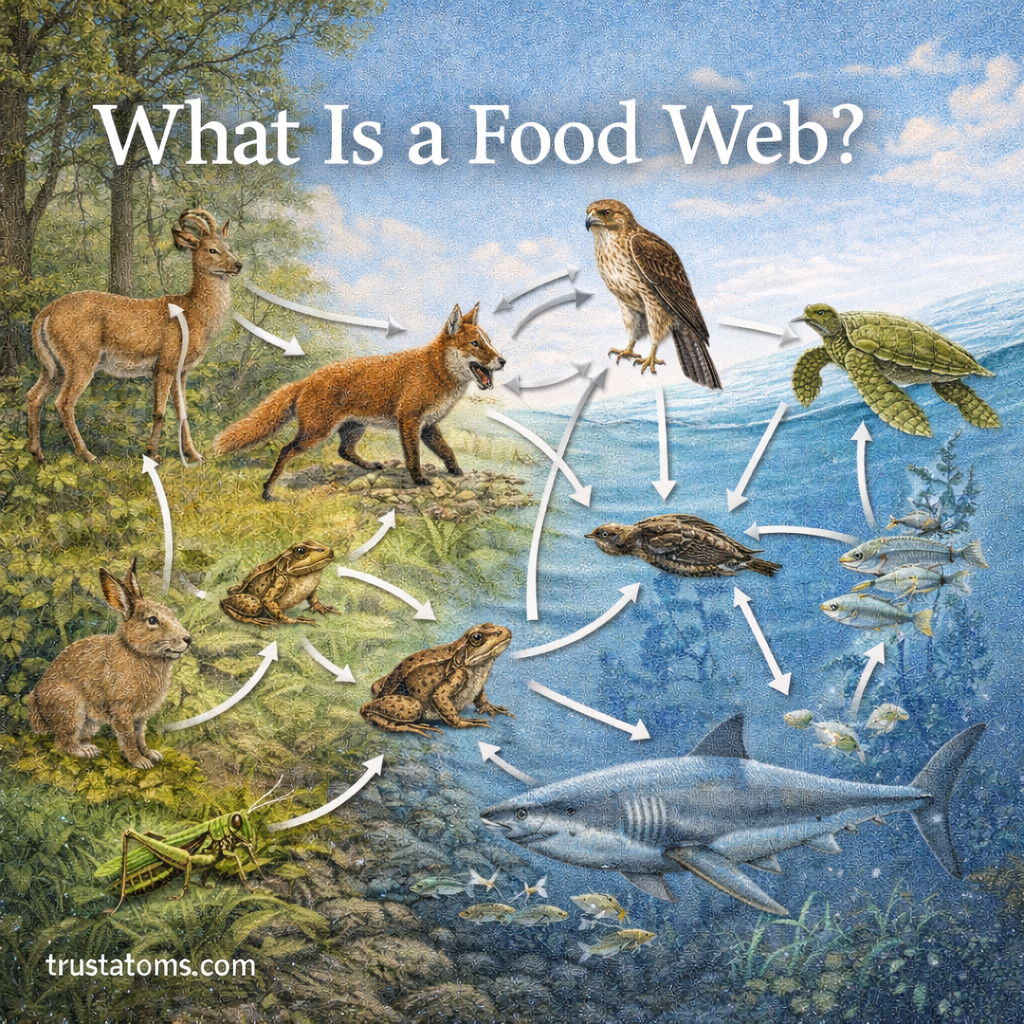
Educational illustration showing a food web with multiple animals connected by arrows representing interconnected feeding relationships in an ecosystem.
Illustration showing a food web with multiple species and feeding relationships demonstrating energy flow in an ecosystem. trustatoms.com.

A food web is a network of interconnected food chains that shows how energy and nutrients move through an ecosystem. Instead of a single pathway of energy flow, a food web illustrates the many feeding relationships that exist between organisms.

In nature, most species eat more than one type of food and are eaten by multiple predators. Because of this complexity, ecosystems function through food webs rather than simple food chains.

Understanding food webs helps scientists study biodiversity, ecosystem stability, and how environmental changes affect the balance of life.

Continue reading “What Is a Food Web?”

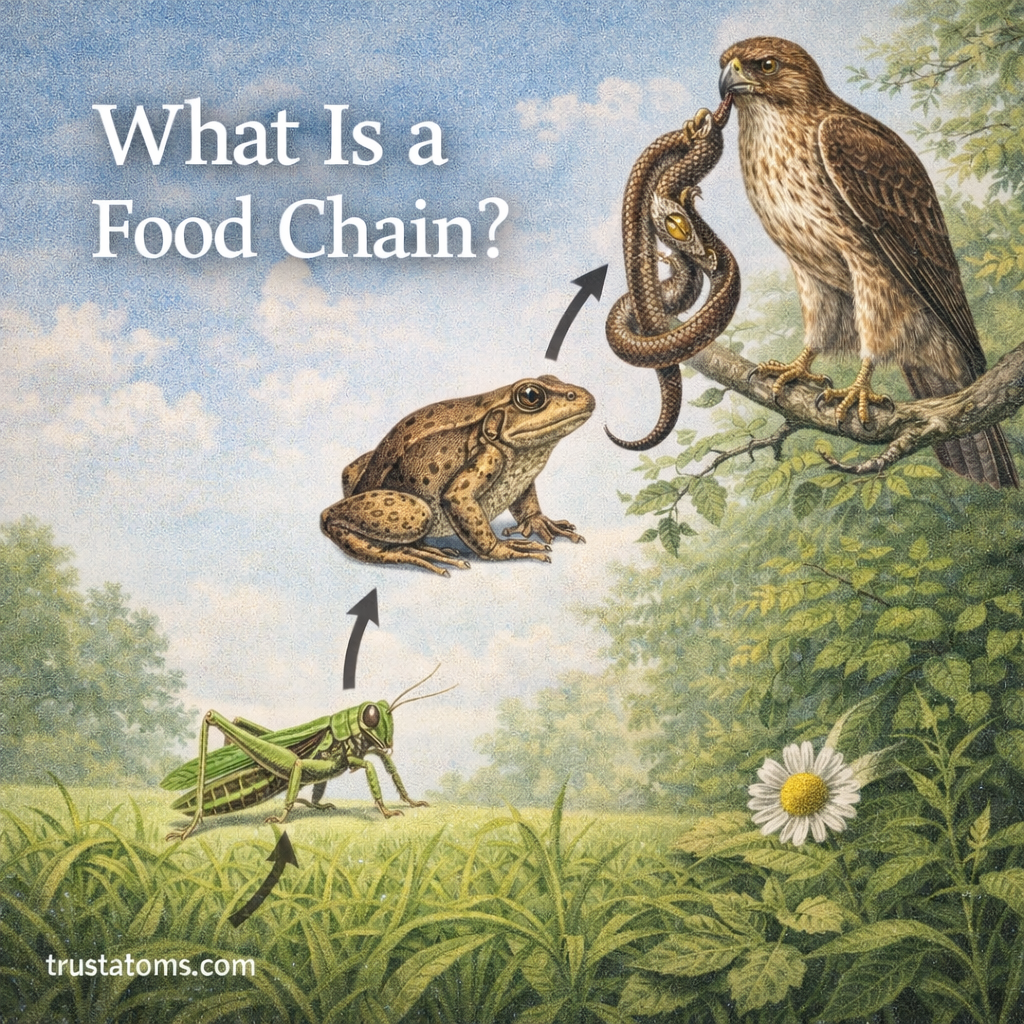
What Is a Food Chain?

Educational illustration showing a food chain with grasshopper, frog, snake, and hawk connected by arrows representing energy flow in an ecosystem.
Illustration showing a simple food chain with grasshopper, frog, snake, and hawk demonstrating energy flow in nature. trustatoms.com.

A food chain is a sequence that shows how energy and nutrients move through living organisms in an ecosystem. It describes who eats whom in nature, starting with producers such as plants and ending with top predators.

Food chains illustrate the flow of energy from one organism to another. Plants capture energy from the sun, herbivores eat plants, and predators consume other animals. This transfer of energy connects all living things within an ecosystem.

Understanding food chains helps scientists study ecosystems, biodiversity, and how environmental changes affect the balance of life on Earth.

Continue reading “What Is a Food Chain?”

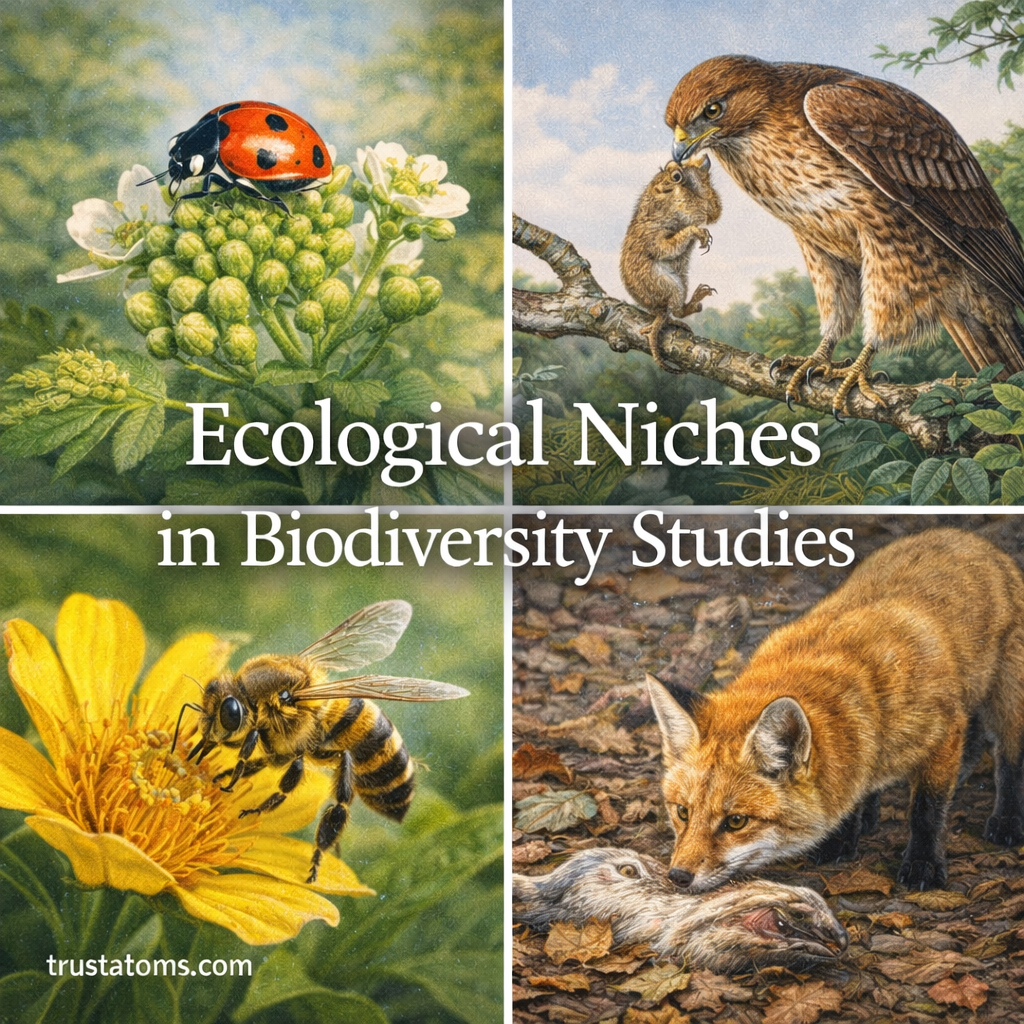
Ecological Niches in Biodiversity Studies

Educational illustration showing different ecological niches including a bee pollinating a flower, a hawk hunting prey, a ladybug eating aphids, and a fox scavenging.
Illustration showing different ecological niches such as pollinators, predators, and scavengers within biodiversity studies. trustatoms.com.

An ecological niche describes the role a species plays within its environment. It includes how an organism obtains resources, interacts with other species, and contributes to the functioning of an ecosystem.

In biodiversity studies, ecological niches help scientists understand how multiple species can coexist in the same environment without competing for exactly the same resources. By occupying different niches, species reduce competition and help maintain ecological balance.

Studying ecological niches provides insight into species diversity, ecosystem stability, and the complex relationships that shape life on Earth.

Continue reading “Ecological Niches in Biodiversity Studies”

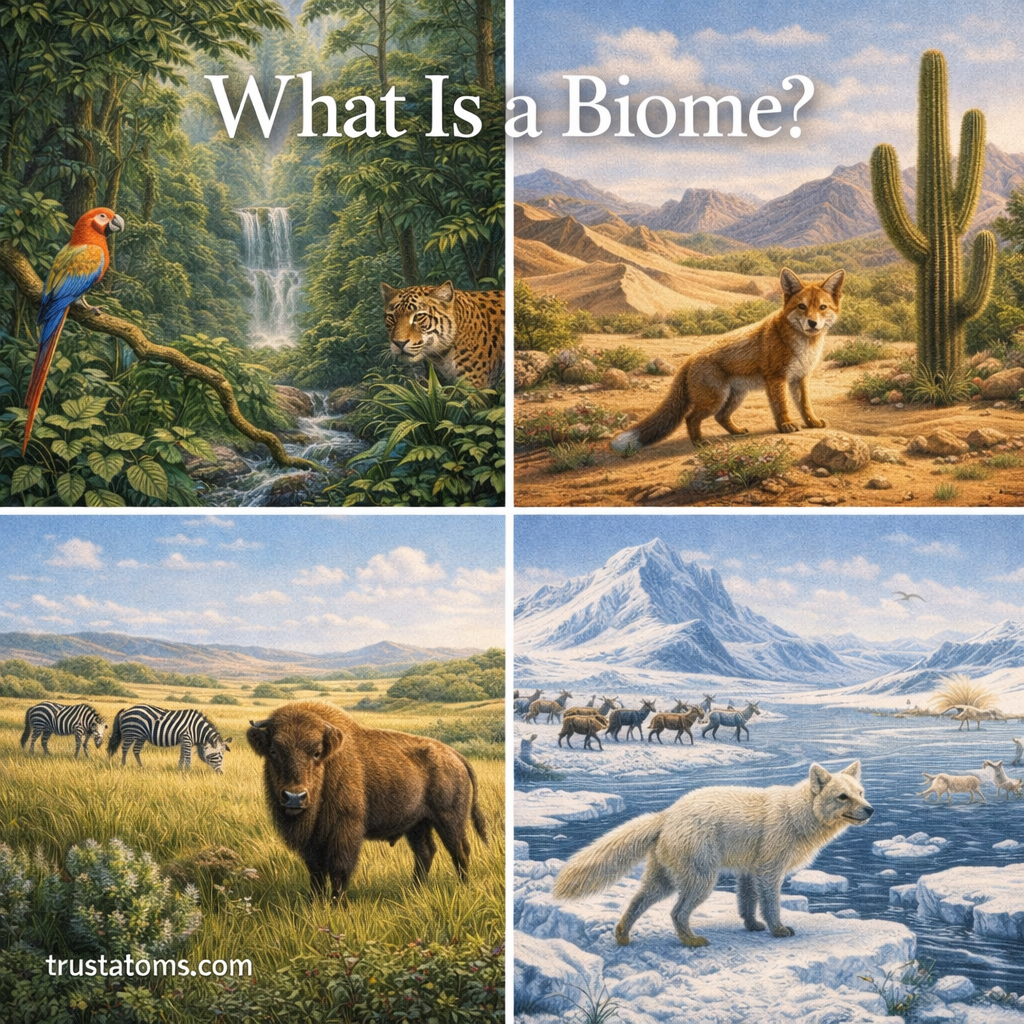
What Is a Biome?

Educational illustration showing four major biomes including tropical rainforest, desert, grassland, and tundra with animals adapted to each environment.
Illustration showing major Earth biomes including rainforest, desert, grassland, and tundra ecosystems. trustatoms.com.

A biome is a large ecological region on Earth defined by its climate, vegetation, and the types of animals that live there. Biomes represent broad environmental zones where living organisms share similar adaptations to the surrounding conditions.

From tropical rainforests to icy tundra landscapes, each biome supports unique communities of plants and animals. Scientists use the concept of biomes to understand how ecosystems are organized across the planet and how life responds to different climates.

Studying biomes helps researchers explain patterns of biodiversity, species distribution, and ecological relationships at a global scale.

Continue reading “What Is a Biome?”

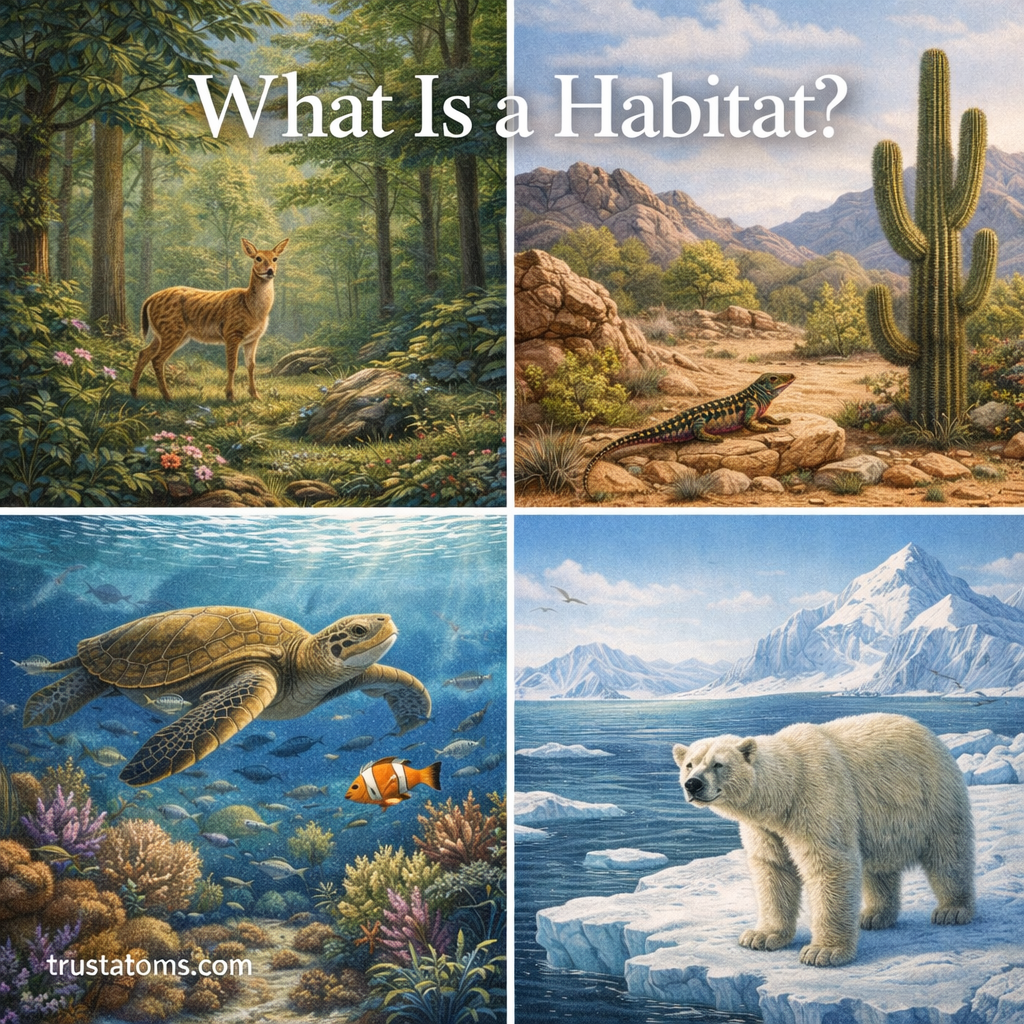
What Is a Habitat?

Educational illustration showing multiple habitats including forest, desert, ocean, and Arctic environments with animals adapted to each ecosystem.
Illustration showing different natural habitats including forest, desert, ocean, and Arctic ecosystems. trustatoms.com.

A habitat is the natural environment where a plant, animal, or microorganism lives. It provides the conditions and resources that organisms need to survive, grow, and reproduce.

Habitats exist everywhere on Earth—from forests and oceans to deserts and wetlands. Each habitat contains unique environmental conditions such as temperature, water availability, soil type, and food sources.

Understanding habitats is essential in biology because they explain how organisms interact with their surroundings and why certain species live in particular locations.

Continue reading “What Is a Habitat?”

What Is Biodiversity?

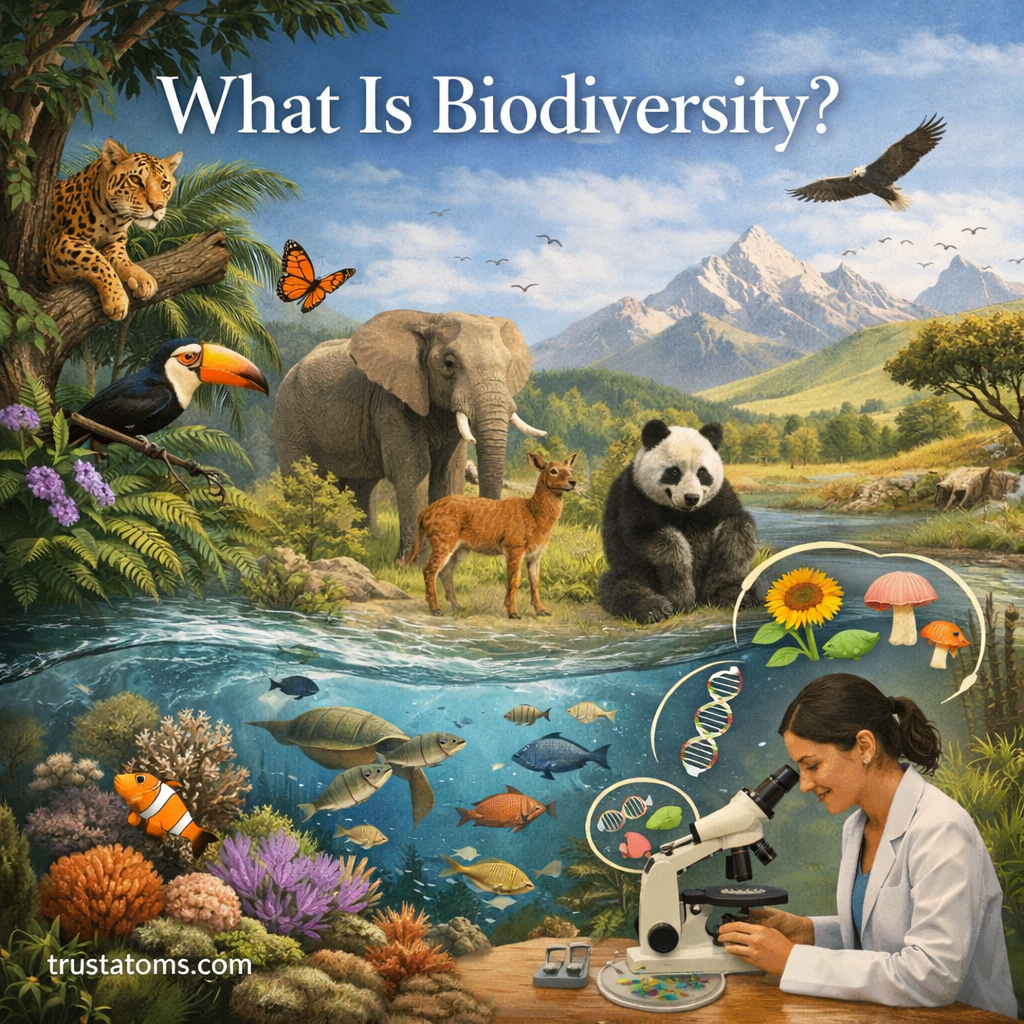
Illustration showing multiple ecosystems with diverse animals, plants, and marine life representing biodiversity on Earth.
Illustration showing diverse species across land and ocean ecosystems representing global biodiversity. trustatoms.com.

Biodiversity refers to the variety of life on Earth. It includes the different species of plants, animals, fungi, and microorganisms, as well as the ecosystems they form and the genetic differences within each species.

Scientists consider biodiversity one of the most important indicators of a healthy planet. From tropical rainforests to deep ocean ecosystems, biodiversity supports ecological balance, food systems, medicine development, and climate stability.

Understanding biodiversity helps explain how life evolves, how ecosystems function, and why protecting nature is critical for the survival of both wildlife and humans.

Continue reading “What Is Biodiversity?”

What Is an Ecosystem?

Educational illustration showing multiple ecosystems including forest, wetland, desert, and farmland with energy flow connecting plants, animals, and environmental factors.
Illustrated ecosystem diagram showing forests, wetlands, deserts, and farmland with plants, animals, sunlight, and nutrient cycling interacting within ecosystems. trustatoms.com.

An ecosystem is a community of living organisms interacting with each other and with their physical environment. These interactions form complex systems where plants, animals, microorganisms, and environmental factors such as water, soil, air, and sunlight work together to support life.

Ecosystems exist everywhere on Earth—from vast oceans and forests to small ponds and even a patch of soil in a backyard. Each ecosystem contains unique combinations of species and environmental conditions that shape how organisms survive, grow, and reproduce.

Understanding ecosystems is essential in biology because they explain how energy moves through nature, how nutrients cycle through environments, and how life remains balanced across the planet.

Continue reading “What Is an Ecosystem?”

What Is Ecology?

Illustrated ecology diagram showing forest wildlife, wetlands, farmland, and ocean ecosystems connected by energy flow from the sun.
Educational illustration showing multiple ecosystems—including forests, wetlands, farmland, and oceans—demonstrating ecological relationships and energy flow in nature. trustatoms.com.

Ecology is the branch of biology that studies how living organisms interact with each other and with their environment. These interactions determine how ecosystems function, how species survive, and how energy and nutrients move through nature.

From microscopic bacteria in soil to massive forests and oceans, ecology examines the complex relationships that sustain life on Earth. It also helps scientists understand how environmental changes—such as climate shifts, pollution, and habitat loss—affect organisms and ecosystems.

Understanding ecology is essential for protecting biodiversity, managing natural resources, and maintaining the balance of life on our planet.

Continue reading “What Is Ecology?”