Chromatography in Analytical Chemistry

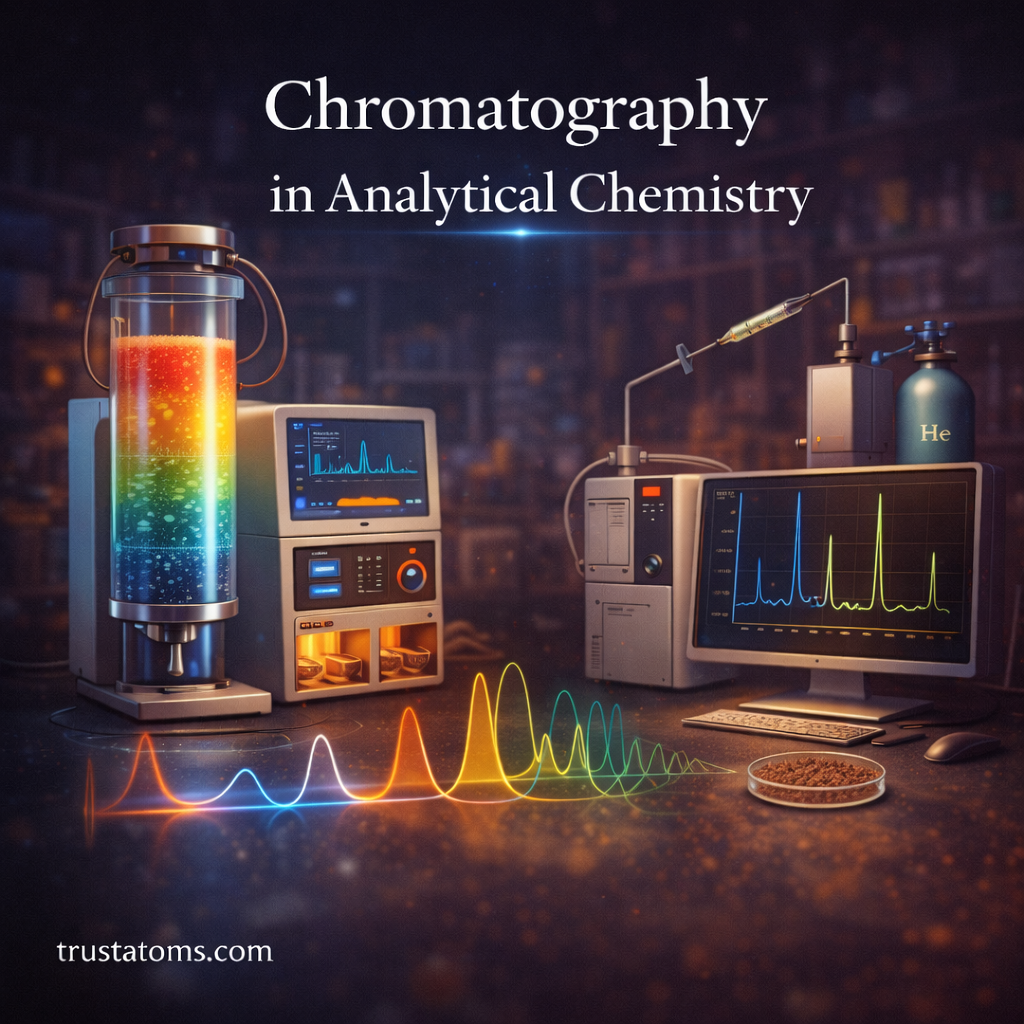
Scientific illustration showing chromatography instruments and chromatogram peaks used to separate chemical mixtures.
Illustration showing chromatography techniques used in analytical chemistry to separate and analyze chemical mixtures. trustatoms.com

Chromatography is one of the most important techniques used in analytical chemistry to separate, identify, and analyze mixtures of chemical substances. It allows scientists to isolate individual components within complex samples, making it easier to study their properties and concentrations.

From pharmaceutical testing and environmental monitoring to food safety and forensic science, chromatography plays a central role in modern laboratory analysis.

This guide explains how chromatography works, the major types used in analytical chemistry, and why it remains one of the most reliable tools for chemical analysis.

Continue reading “Chromatography in Analytical Chemistry”
NMR Spectroscopy in Structural Determination

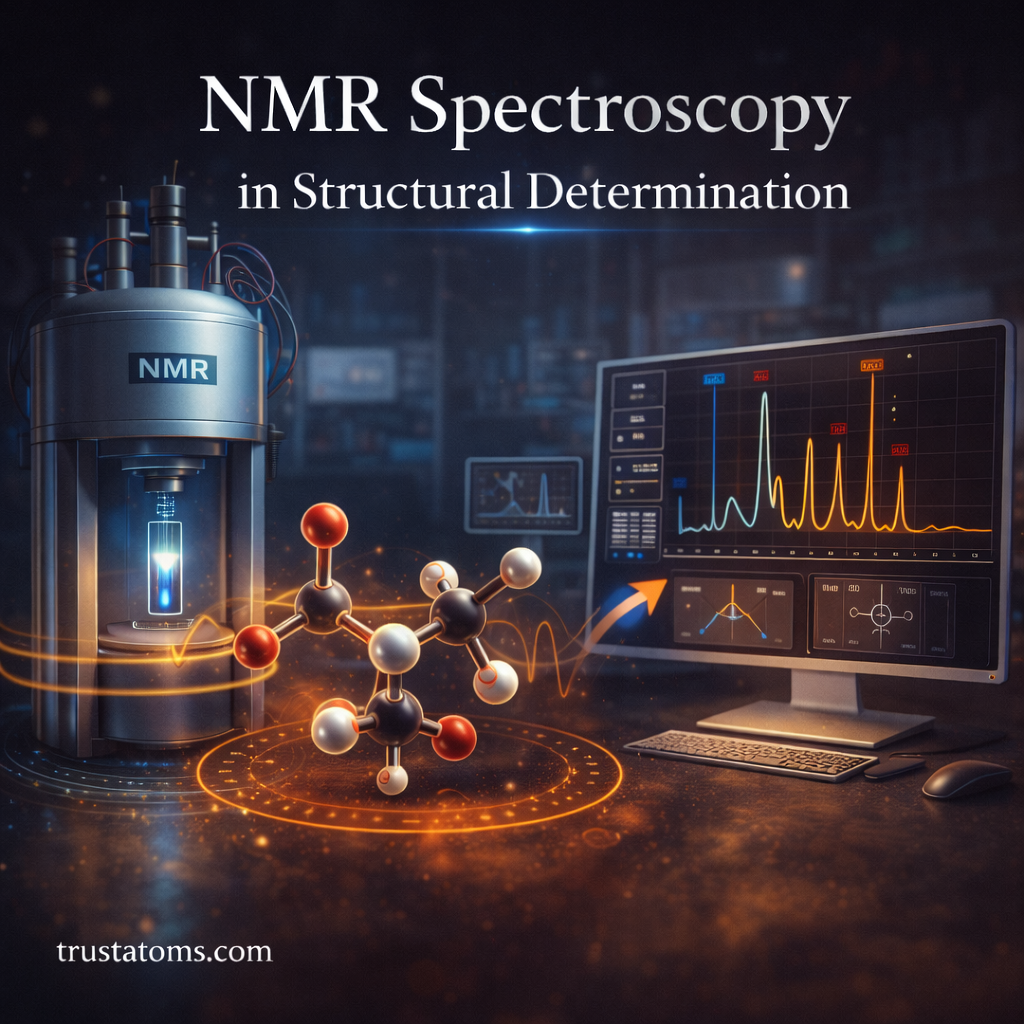
Illustration showing NMR spectroscopy analyzing molecular structure using a magnetic spectrometer and spectral data.
Illustration demonstrating how NMR spectroscopy reveals molecular structure by analyzing signals from atomic nuclei in a magnetic field. trustatoms.com

Nuclear Magnetic Resonance (NMR) spectroscopy is one of the most powerful tools chemists use to determine the structure of molecules. By analyzing how atomic nuclei behave in strong magnetic fields, scientists can uncover detailed information about how atoms are connected within a compound.

Unlike many analytical techniques that only identify elements, NMR spectroscopy reveals how atoms are arranged in a molecule. This makes it essential in organic chemistry, pharmaceutical research, and biochemical studies.

This guide explains how NMR spectroscopy works, how it helps determine molecular structures, and why it is such an important technique in modern chemical analysis.

Continue reading “NMR Spectroscopy in Structural Determination”

Infrared Spectroscopy in Chemical Identification

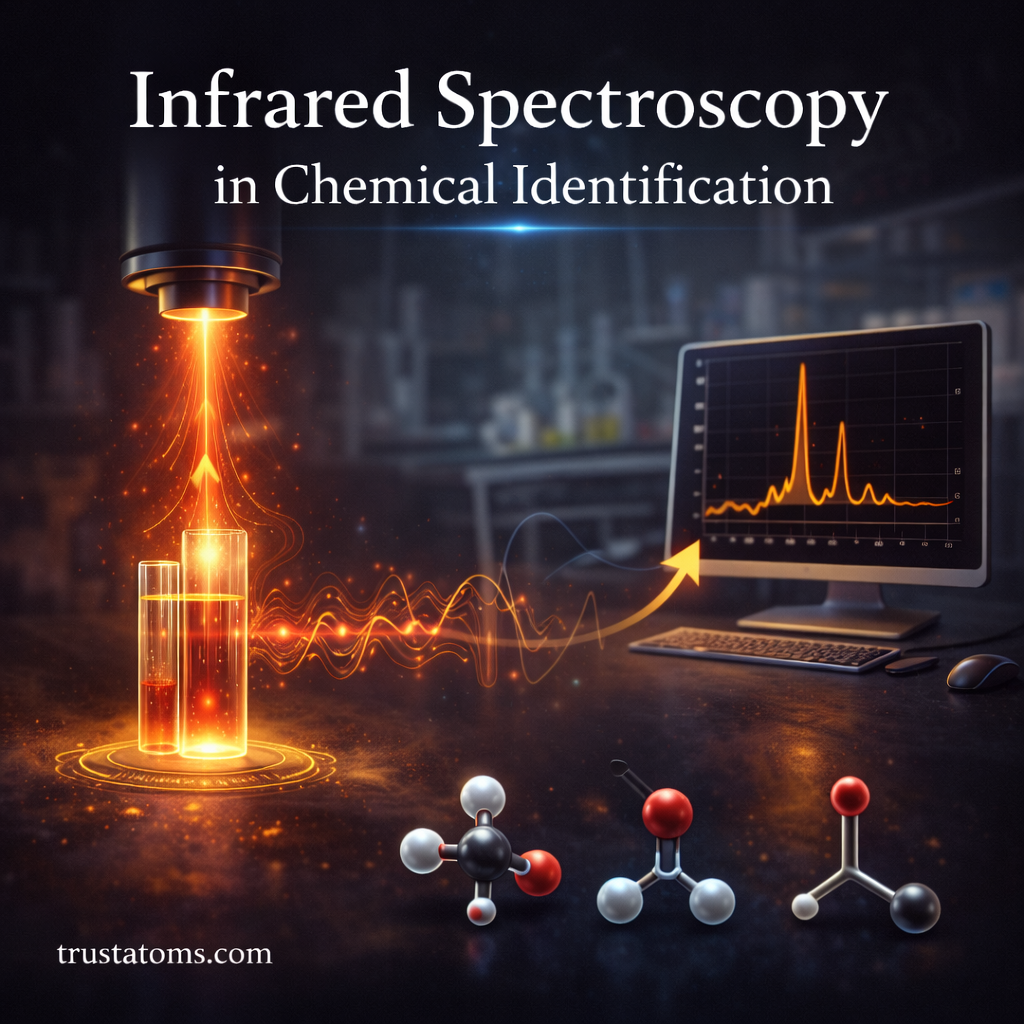
Scientific illustration showing infrared spectroscopy analyzing a chemical sample and producing an infrared absorption spectrum.
Illustration demonstrating how infrared spectroscopy identifies chemical compounds by analyzing molecular vibrations and absorption patterns. trustatoms.com

Infrared spectroscopy (IR spectroscopy) is one of the most widely used analytical techniques in chemistry for identifying chemical compounds. By examining how molecules absorb infrared light, scientists can determine the types of chemical bonds present in a substance and often identify the compound itself.

Because each molecule absorbs infrared radiation in a unique way, infrared spectroscopy provides a kind of molecular fingerprint. This makes the technique extremely valuable in research laboratories, environmental testing, pharmaceuticals, and forensic science.

This guide explains how infrared spectroscopy works, why it is useful for chemical identification, and where it is commonly applied in modern science.

Continue reading “Infrared Spectroscopy in Chemical Identification”

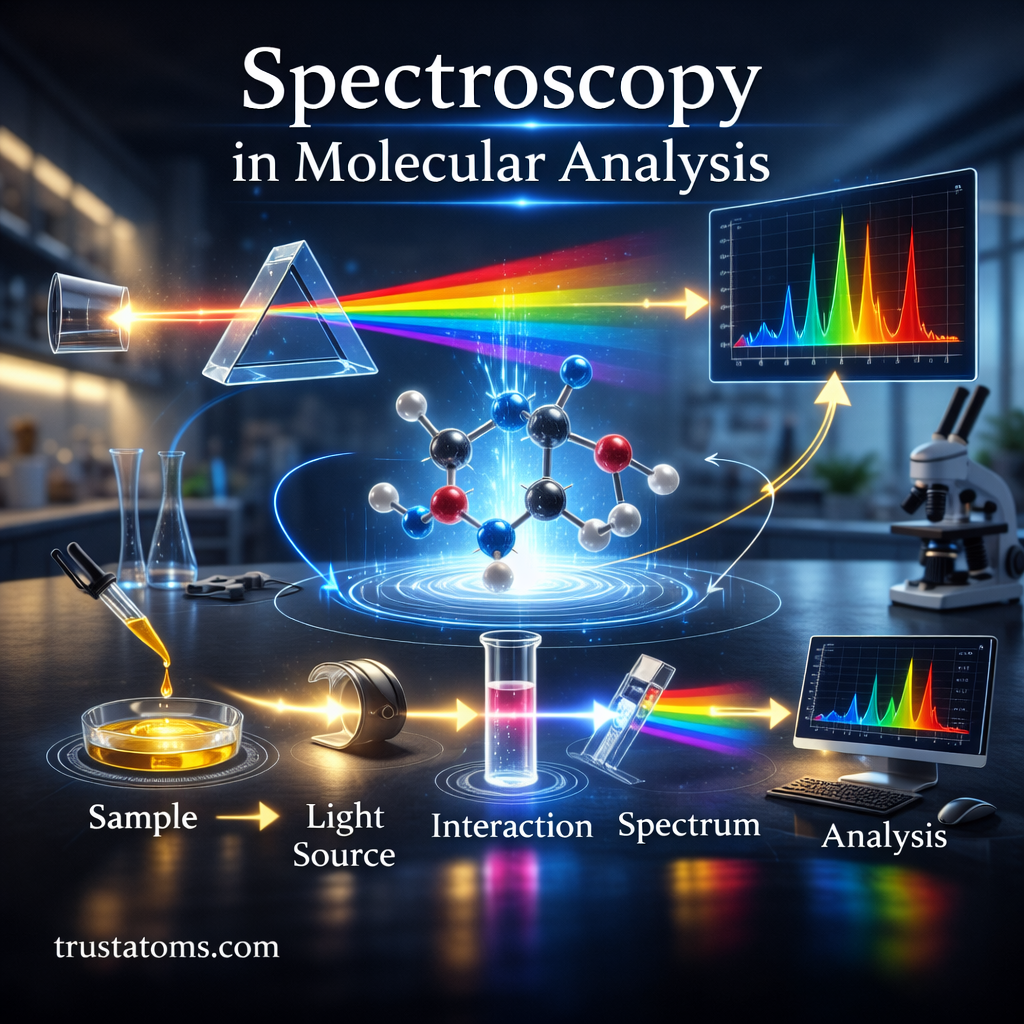
Spectroscopy in Molecular Analysis

Scientific illustration showing spectroscopy used to analyze molecules with different types of electromagnetic radiation.
Illustration showing how spectroscopy analyzes molecules using different types of electromagnetic radiation. trustatoms.com

Spectroscopy is one of the most powerful tools scientists use to understand the structure and composition of molecules. By studying how matter interacts with light and other electromagnetic radiation, researchers can identify substances, analyze chemical bonds, and determine molecular structures with remarkable precision.

From pharmaceutical research to environmental monitoring, spectroscopy plays a critical role in modern chemistry. It allows scientists to detect molecules that are invisible to the naked eye and reveal how atoms are arranged within compounds.

This guide explains how spectroscopy works, why it is important in molecular analysis, and the most common types used in chemical research.

Continue reading “Spectroscopy in Molecular Analysis”

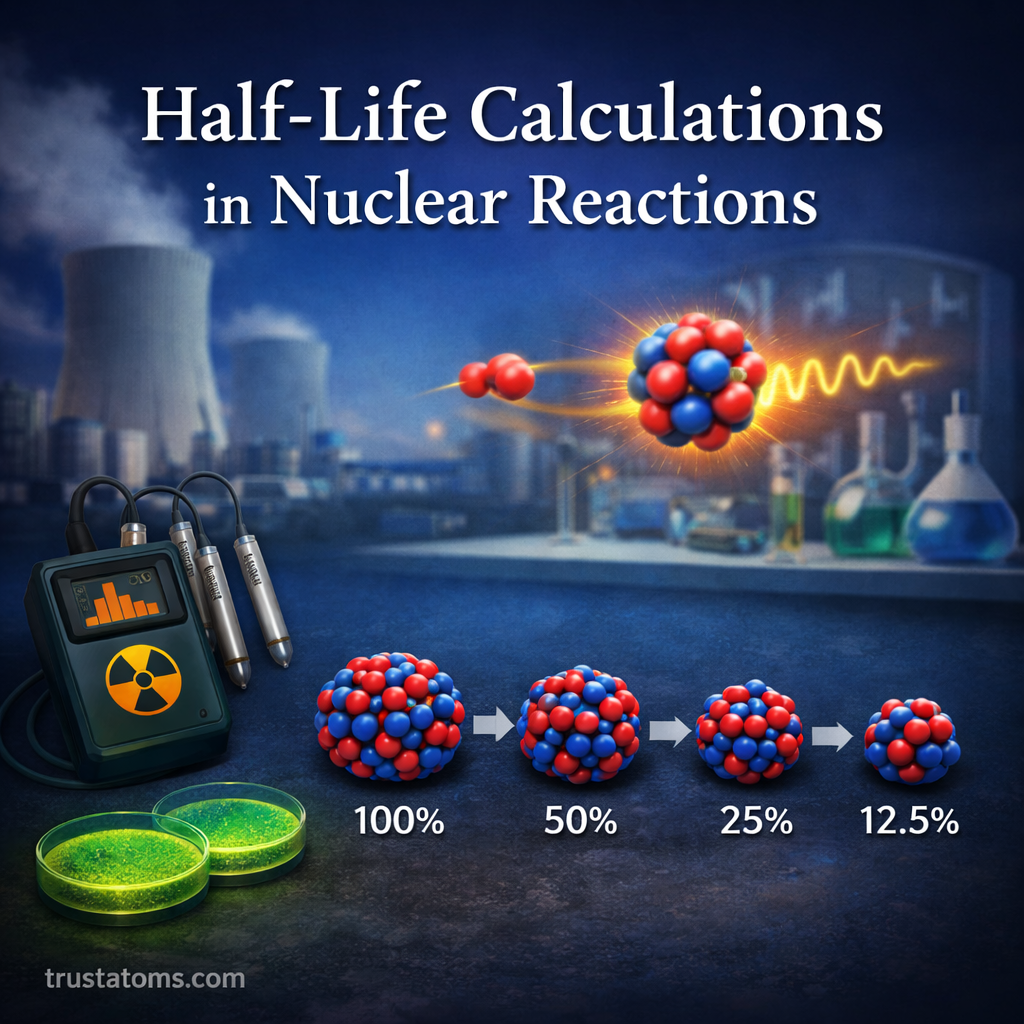
Half-Life Calculations in Nuclear Reactions

Illustrated diagram showing radioactive decay and half-life progression in nuclear reactions.
Illustration showing the concept of half-life in nuclear reactions as radioactive atoms decay over time. trustatoms.com

Radioactive materials naturally change over time through a process known as radioactive decay. One of the most important ways scientists describe this process is through the concept of half-life.

Half-life calculations allow researchers to determine how long it takes for a radioactive substance to decay, estimate the age of objects, and understand nuclear reactions occurring in nature and in laboratories. From nuclear medicine to carbon dating, half-life plays a central role in modern science.

This guide explains what half-life is, how it works, and how scientists calculate it in nuclear reactions.

Continue reading “Half-Life Calculations in Nuclear Reactions”

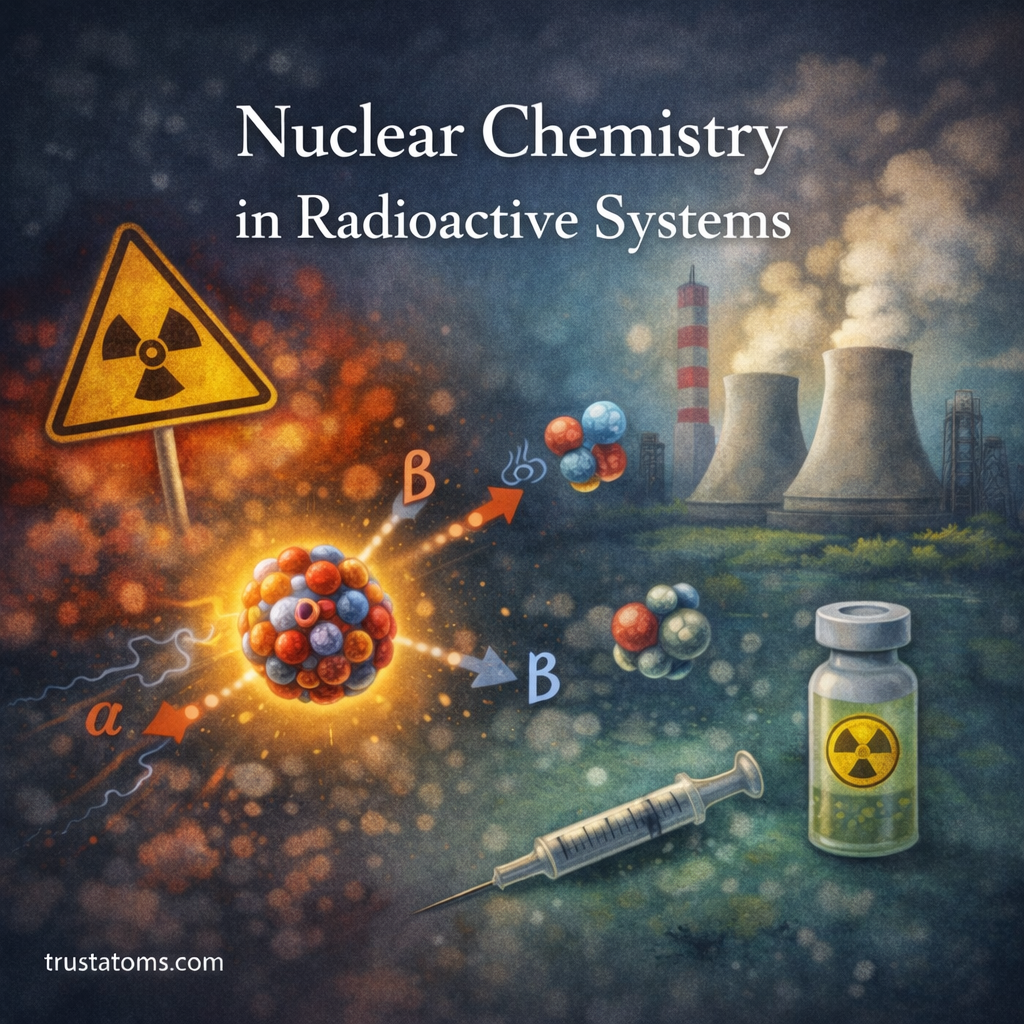
Nuclear Chemistry in Radioactive Systems

Illustration showing nuclear chemistry in radioactive systems with an atomic nucleus emitting radiation, nuclear power plant, and radioactive materials.
Illustration representing nuclear chemistry in radioactive systems, including radioactive decay, nuclear energy production, and laboratory radioactive materials. trustatoms.com

Nuclear chemistry explores chemical and physical processes that occur within the atomic nucleus. While traditional chemistry focuses on interactions between electrons and atoms, nuclear chemistry examines transformations involving protons and neutrons inside the nucleus, particularly in radioactive materials.

Radioactive systems are environments where unstable atomic nuclei undergo spontaneous changes, releasing energy and particles. These processes power technologies ranging from medical imaging and cancer treatment to nuclear energy production.

Understanding nuclear chemistry helps scientists safely handle radioactive materials, predict nuclear reactions, and apply radioactive isotopes in medicine, research, and industry.

Continue reading “Nuclear Chemistry in Radioactive Systems”

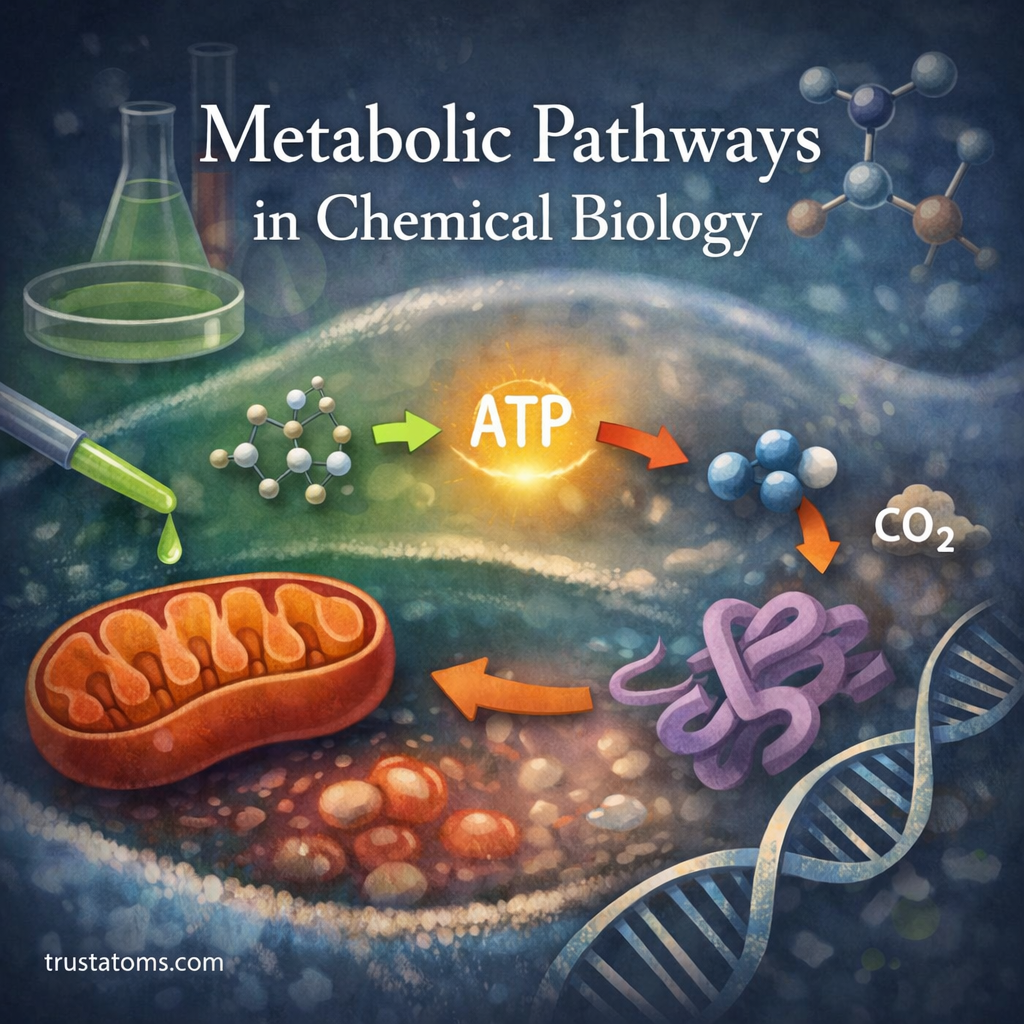
Metabolic Pathways in Chemical Biology

Illustration diagram showing metabolic pathways in chemical biology with molecules converting nutrients into ATP energy inside a cell.
Simplified illustration of metabolic pathways in chemical biology showing how molecules are converted into cellular energy. trustatoms.com

Metabolic pathways are the complex networks of chemical reactions that sustain life. Inside every cell, thousands of reactions occur in coordinated sequences that convert nutrients into energy, build essential molecules, and remove waste products. In chemical biology, scientists study these pathways by combining principles of chemistry and biology to understand how molecular reactions drive biological processes.

Understanding metabolic pathways helps researchers explain how cells function, how diseases develop, and how drugs can target specific biochemical reactions.

Continue reading “Metabolic Pathways in Chemical Biology”

Enzyme Catalysis in Biochemistry

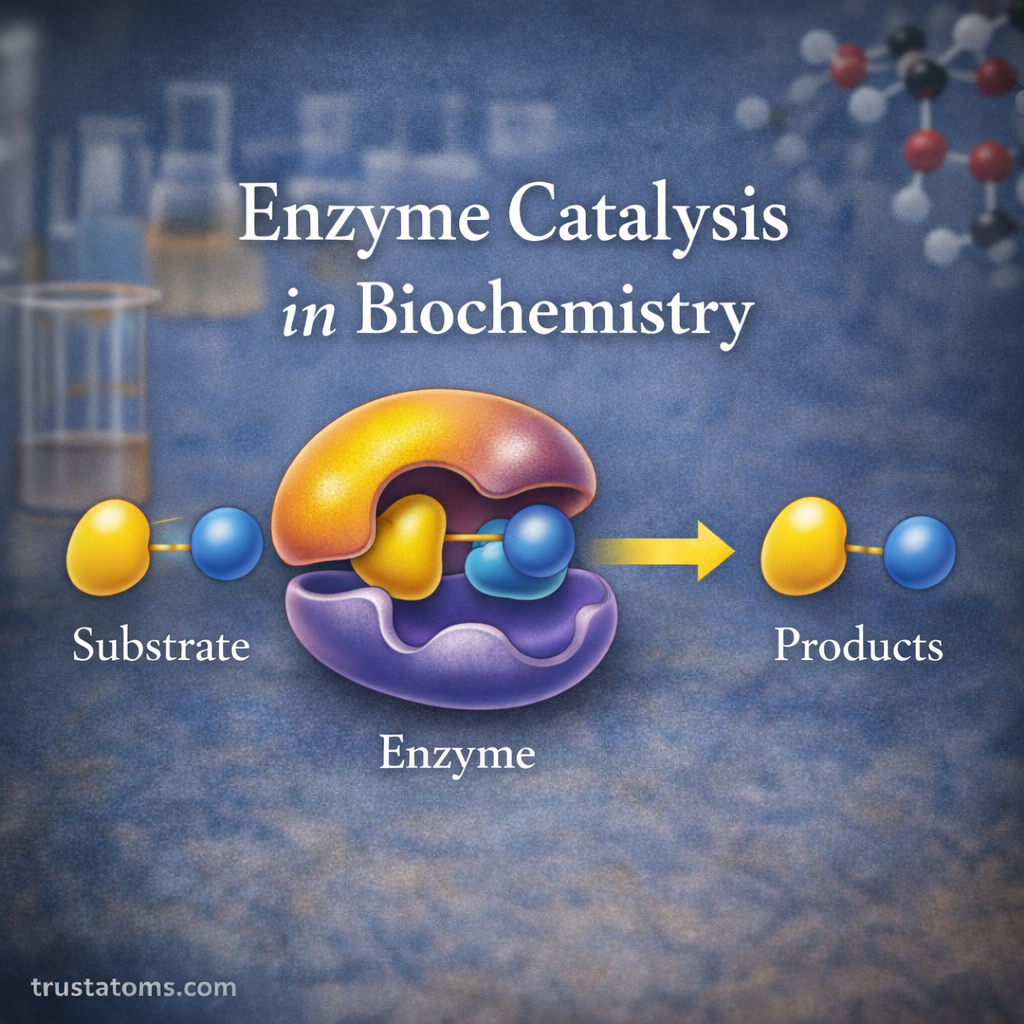
Illustration showing how an enzyme binds a substrate at the active site and converts it into products during enzyme catalysis in biochemistry.
Simple diagram illustrating enzyme catalysis where a substrate binds to an enzyme and is converted into products. trustatoms.com.

Enzyme catalysis is one of the most important processes in biochemistry. Enzymes allow chemical reactions inside living cells to occur quickly and efficiently, often accelerating reactions that would otherwise take years or even centuries under normal conditions.

These biological catalysts are responsible for countless processes necessary for life, including metabolism, DNA replication, digestion, and cellular energy production. Without enzymes, most biochemical reactions would occur far too slowly to sustain living organisms.

Understanding enzyme catalysis helps scientists explain how biological systems function at the molecular level and has important applications in medicine, biotechnology, and industrial chemistry.

Continue reading “Enzyme Catalysis in Biochemistry”

Protein Structure in Biochemical Systems

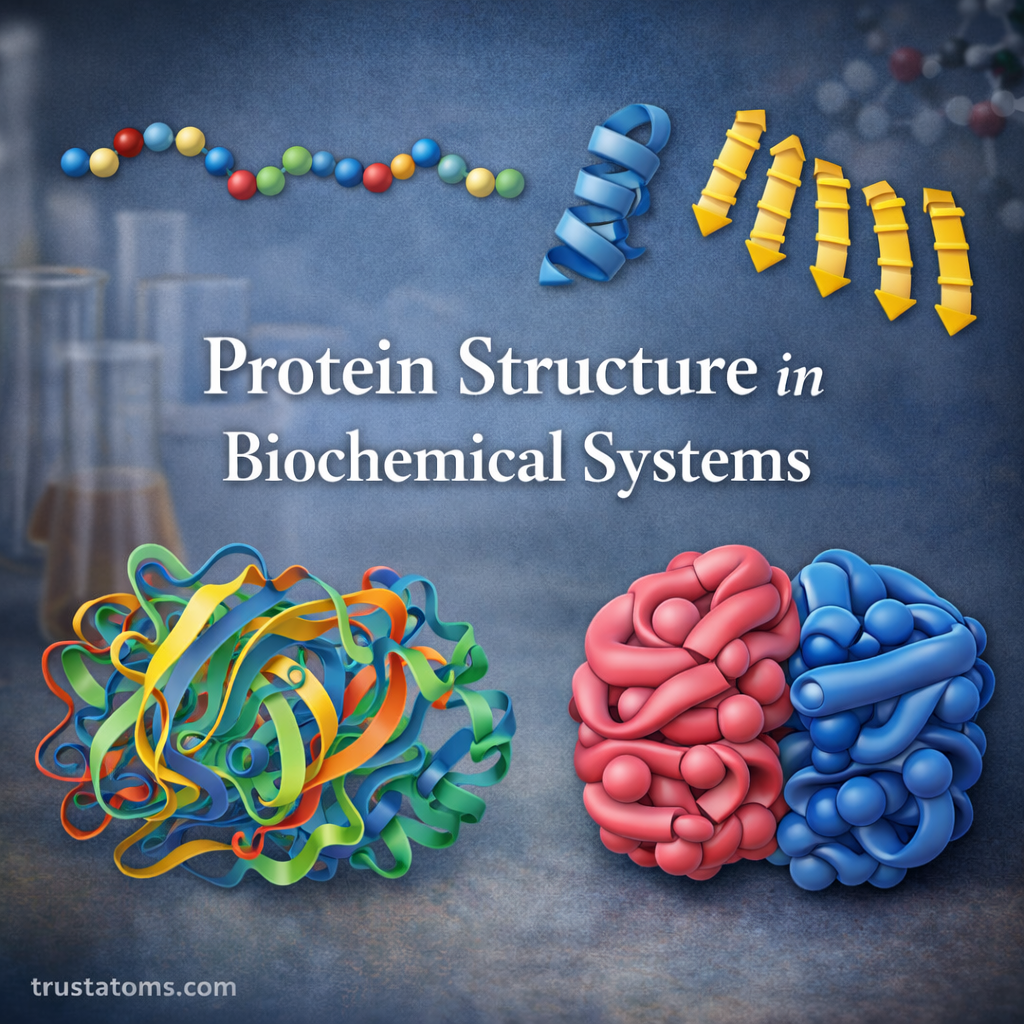
Illustrated diagram showing the four levels of protein structure: primary chain, alpha helix and beta sheet secondary structures, tertiary folding, and quaternary protein complex.
Illustration showing the four levels of protein structure including primary, secondary, tertiary, and quaternary organization in biochemical systems. trustatoms.com.

Proteins are among the most important molecules in living organisms. They perform a vast range of biological functions, including catalyzing chemical reactions, supporting cellular structure, transporting molecules, and regulating biological processes.

In biochemical systems, the structure of a protein determines its function. The way a protein folds and organizes in three-dimensional space controls how it interacts with other molecules and carries out biological tasks.

Understanding protein structure is a core concept in biochemistry, molecular biology, and structural biology, and it plays a key role in fields such as medicine, biotechnology, and drug development.

Continue reading “Protein Structure in Biochemical Systems”

Polymer Structures in Macromolecular Chemistry

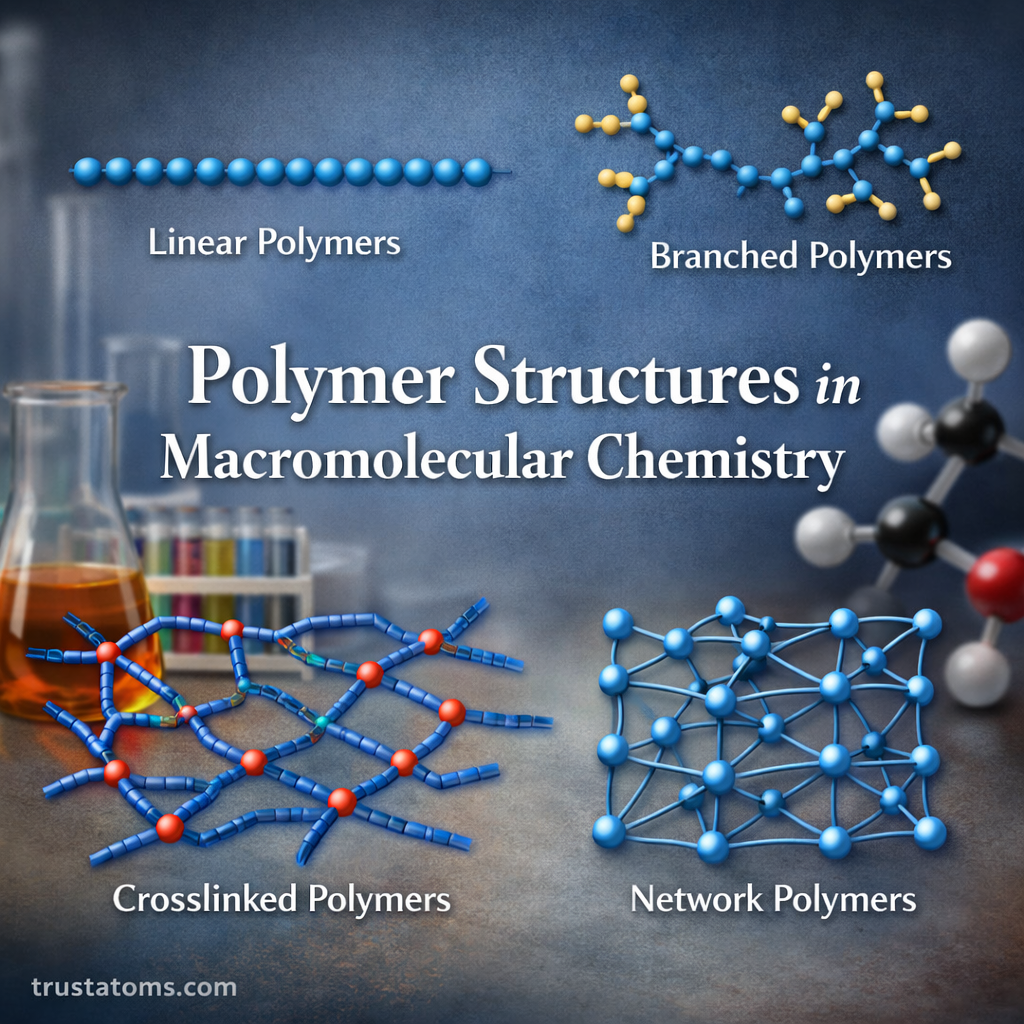
Illustrated diagram showing linear, branched, cross-linked, and network polymer structures in macromolecular chemistry.
Illustration of common polymer structures including linear, branched, cross-linked, and network polymers in macromolecular chemistry. trustatoms.com.

Macromolecular chemistry focuses on the study of very large molecules called macromolecules, which are made by linking many smaller repeating units together. These large molecules—commonly known as polymers—are essential to modern life. They appear in plastics, rubbers, fibers, adhesives, coatings, and even biological systems like proteins and DNA.

One of the most important concepts in polymer science is polymer structure. The arrangement of repeating units and how polymer chains are organized determines a material’s flexibility, strength, heat resistance, and chemical stability.

Understanding polymer structures helps chemists design materials with specific properties for applications ranging from medical implants to aerospace engineering.

Continue reading “Polymer Structures in Macromolecular Chemistry”