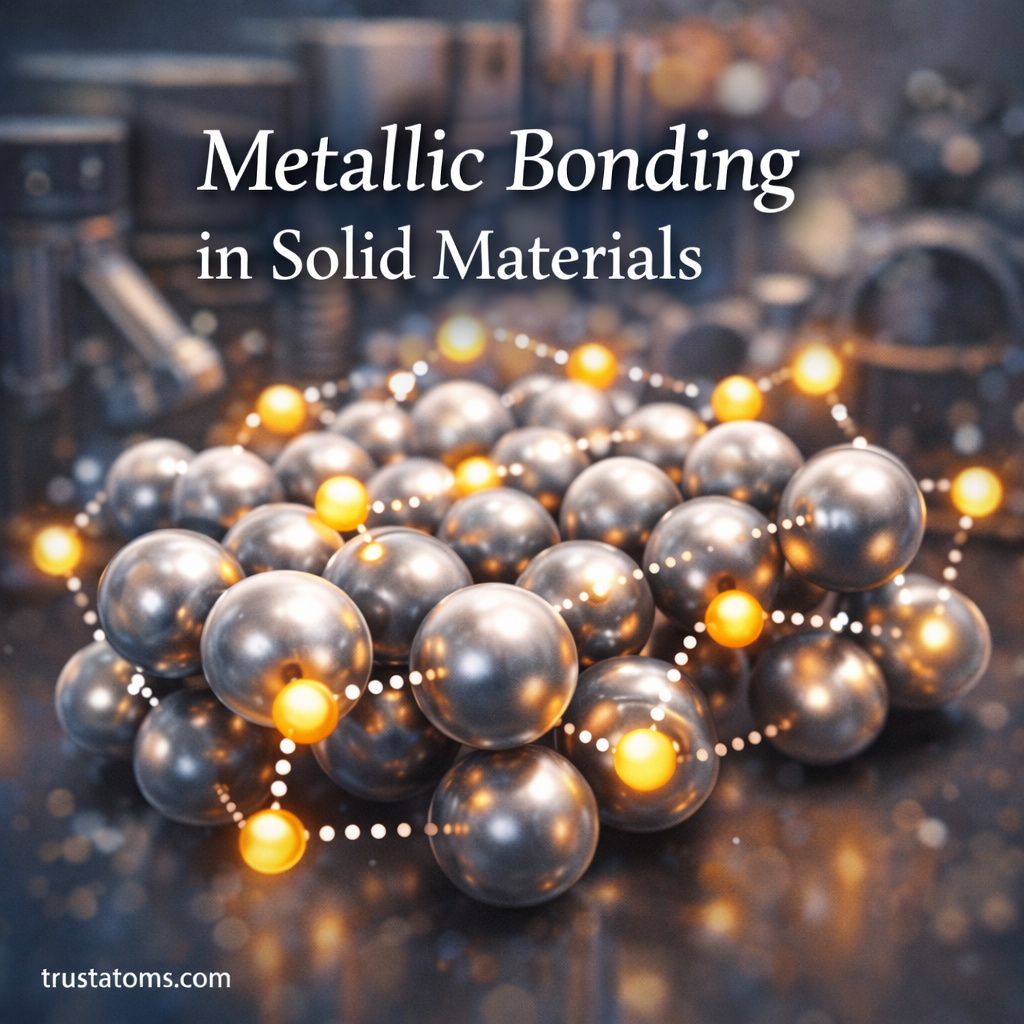
Metallic bonding is the force that holds metal atoms together in solid materials. It is responsible for many of the unique properties that metals display, such as electrical conductivity, malleability, ductility, and high thermal conductivity.
Unlike ionic or covalent bonding, metallic bonding involves a shared pool of electrons that move freely throughout the structure. This special bonding system allows metals to behave differently from other types of materials and explains why metals are widely used in construction, electronics, transportation, and manufacturing.
Understanding metallic bonding helps explain how metals form stable structures and why they are so useful in everyday technology.
Continue reading “Metallic Bonding in Solid Materials”