Plants live in constantly changing environments. Unlike animals, they cannot move away from unfavorable conditions, so they rely on sophisticated biological systems to detect environmental stress and respond effectively.
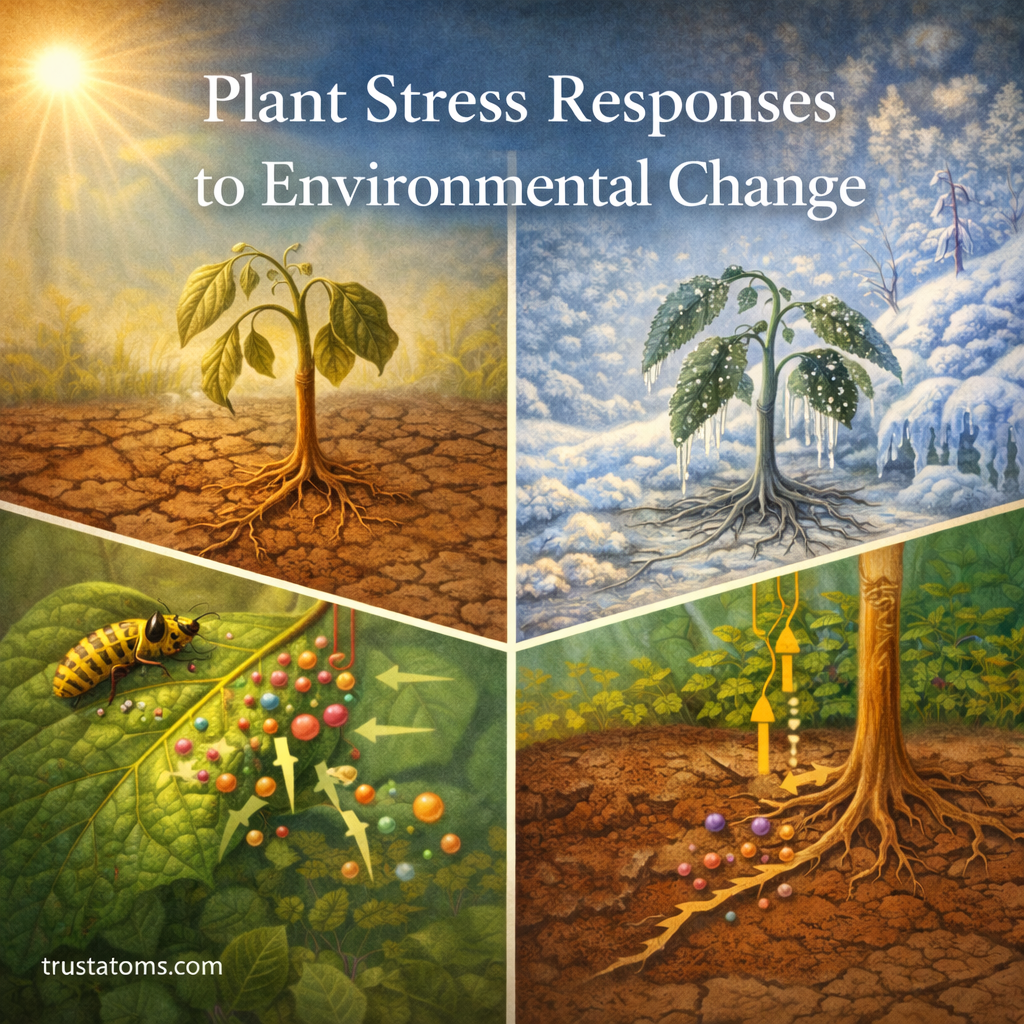
Plant stress responses to environmental change involve cellular signaling, physiological adjustments, and genetic regulation. These responses help plants survive challenges such as drought, extreme temperatures, nutrient shortages, and attacks from pests or pathogens.
Understanding plant stress responses is essential for fields like agriculture, ecology, and climate science because it helps researchers develop crops that are more resilient to environmental pressures.
What Is Plant Stress?
Plant stress occurs when environmental conditions interfere with normal plant growth and biological processes.
When plants encounter stress, they activate specialized physiological and molecular responses that allow them to adapt and maintain survival.
Plant stress can generally be divided into two major categories:
Abiotic Stress
Abiotic stress is caused by non-living environmental factors.
Common examples include:
- Drought or water scarcity
- Extreme heat or cold
- Soil salinity
- Nutrient deficiency
- Excess sunlight or UV radiation
- Pollution or toxic chemicals
Abiotic stress often affects large geographic areas and can significantly reduce plant productivity.
Biotic Stress
Biotic stress is caused by living organisms that interact with plants.
Examples include:
- Insect herbivores
- Fungal infections
- Bacterial pathogens
- Viral diseases
- Competition from neighboring plants
Plants must detect and defend against these biological threats while still maintaining growth and reproduction.
How Plants Detect Environmental Stress
Plants rely on cellular sensors and signaling pathways to detect environmental changes.
Specialized receptors located on plant cell membranes identify changes in factors such as:
- Water availability
- Temperature fluctuations
- Light intensity
- Mechanical damage
- Chemical signals from pathogens
Once a stress signal is detected, plants activate internal signaling networks that communicate the stress throughout the plant.
This communication often involves:
- Plant hormones
- Calcium signaling pathways
- Electrical signals between cells
- Reactive oxygen molecules acting as signaling agents
These mechanisms allow plants to coordinate rapid responses across different tissues.
Hormonal Regulation of Stress Responses
Plant hormones play a central role in regulating stress responses.
These chemical messengers help transmit signals from stressed tissues to other parts of the plant.
Key stress-related hormones include:
Abscisic Acid (ABA)
Abscisic acid is one of the most important stress hormones in plants.
It is strongly associated with drought and water stress responses.
ABA helps plants:
- Close stomata to reduce water loss
- Activate drought-resistance genes
- Adjust root growth to seek water
- Regulate seed dormancy during unfavorable conditions
Ethylene
Ethylene is involved in stress responses related to physical damage and pathogen attack.
It can trigger:
- Leaf aging and shedding
- Activation of defense genes
- Changes in plant growth patterns
Ethylene signaling often interacts with other hormones to coordinate complex responses.
Jasmonates and Salicylic Acid
These hormones are especially important in plant defense against pests and pathogens.
They regulate:
- Production of defensive chemicals
- Strengthening of plant cell walls
- Activation of immune-like responses
Different hormones often work together to fine-tune plant stress responses.
Physiological Adaptations to Environmental Stress
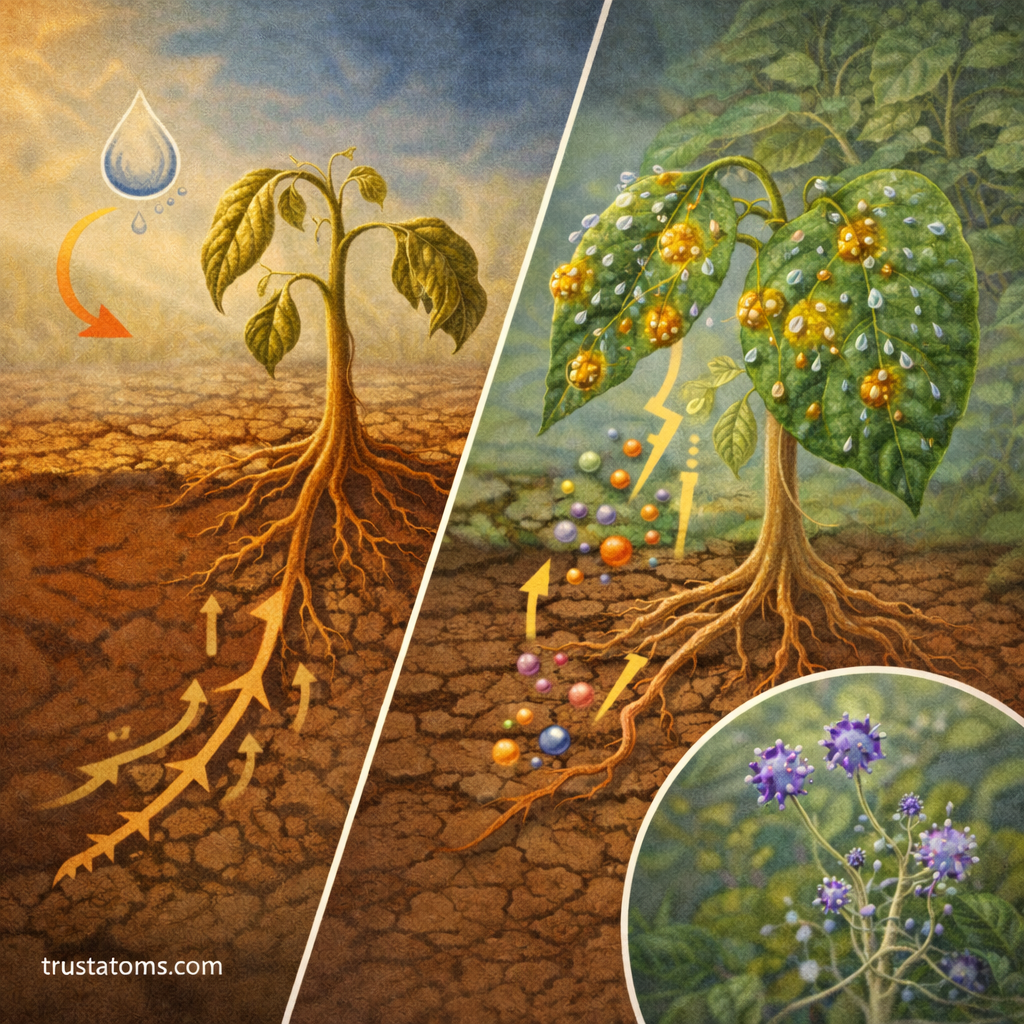
When plants experience environmental stress, they often undergo visible physiological changes.
These changes help reduce damage and maintain survival.
Common adaptations include:
Stomatal Regulation
Stomata are small openings on leaf surfaces that regulate gas exchange and water loss.
During drought conditions, plants may close their stomata to conserve water.
However, this also reduces carbon dioxide intake and can slow photosynthesis.
Changes in Root Growth
Plants may modify their root systems when water or nutrients are limited.
Examples include:
- Deeper root growth to access groundwater
- Increased root branching to explore soil nutrients
- Redistribution of energy from leaves to roots
These adaptations help plants improve resource acquisition.
Production of Protective Molecules
Plants often produce specialized molecules during stress conditions.
Examples include:
- Antioxidants that protect cells from oxidative damage
- Osmoprotectants that help cells retain water
- Heat shock proteins that stabilize cellular structures
These compounds help maintain cellular stability during environmental challenges.
Genetic Responses to Stress
Environmental stress can trigger changes in plant gene expression.
Certain genes become activated or suppressed depending on the type of stress encountered.
These genetic responses may include:
- Activation of stress-response proteins
- Production of protective enzymes
- Changes in metabolic pathways
- Regulation of growth-related genes
Modern plant biology research focuses heavily on identifying stress-related genes that could improve crop resilience.
Plant Memory and Stress Priming
Recent research suggests that plants can “remember” previous stress events.
This process is known as stress priming.
When plants experience stress once, they may respond more quickly if the stress occurs again.
Examples of stress memory include:
- Faster activation of defense genes
- Improved tolerance to repeated drought conditions
- Enhanced resistance to recurring pathogens
This adaptive capability helps plants survive fluctuating environmental conditions.
Why Plant Stress Responses Matter
Understanding plant stress responses is increasingly important in a world experiencing climate change and environmental instability.
Knowledge of plant stress biology helps scientists:
- Develop drought-resistant crops
- Improve agricultural productivity
- Protect ecosystems under environmental pressure
- Breed plants with improved resilience to extreme weather
These efforts are essential for global food security and environmental sustainability.
Final Thoughts
Plant stress responses to environmental change demonstrate the remarkable adaptability of plant life. Through complex signaling networks, hormonal regulation, and physiological adjustments, plants can detect environmental challenges and activate protective mechanisms.
From drought and temperature extremes to pests and pathogens, plants continuously adjust their biological processes to survive in dynamic environments. As scientific understanding of these responses grows, researchers can use this knowledge to improve agriculture, protect ecosystems, and support sustainable food systems in a changing world.