The human body constantly adjusts to changing conditions, whether reacting to danger, digesting food, or recovering after physical activity. These automatic adjustments are controlled by the autonomic nervous system (ANS).
Within the autonomic nervous system are two key divisions that work together to maintain balance in the body:
- The sympathetic nervous system
- The parasympathetic nervous system
These systems regulate many involuntary functions such as heart rate, breathing, digestion, and blood pressure. Understanding how they differ—and how they cooperate—reveals how the body responds to stress and maintains internal stability.
The Autonomic Nervous System Overview
The autonomic nervous system controls bodily processes that occur without conscious effort. Unlike the somatic nervous system, which controls voluntary muscle movement, the ANS regulates internal organs and glands automatically.
Major functions controlled by the autonomic nervous system include:
- Heart rate regulation
- Breathing rate
- Digestion
- Blood pressure control
- Pupil dilation
- Temperature regulation
- Gland secretion
The autonomic system maintains homeostasis, meaning it keeps internal conditions stable despite changes in the environment.
Two main divisions handle these adjustments:
- Sympathetic nervous system
- Parasympathetic nervous system
These systems often have opposite effects, allowing the body to react quickly to challenges and return to a resting state afterward.
What Is the Sympathetic Nervous System?
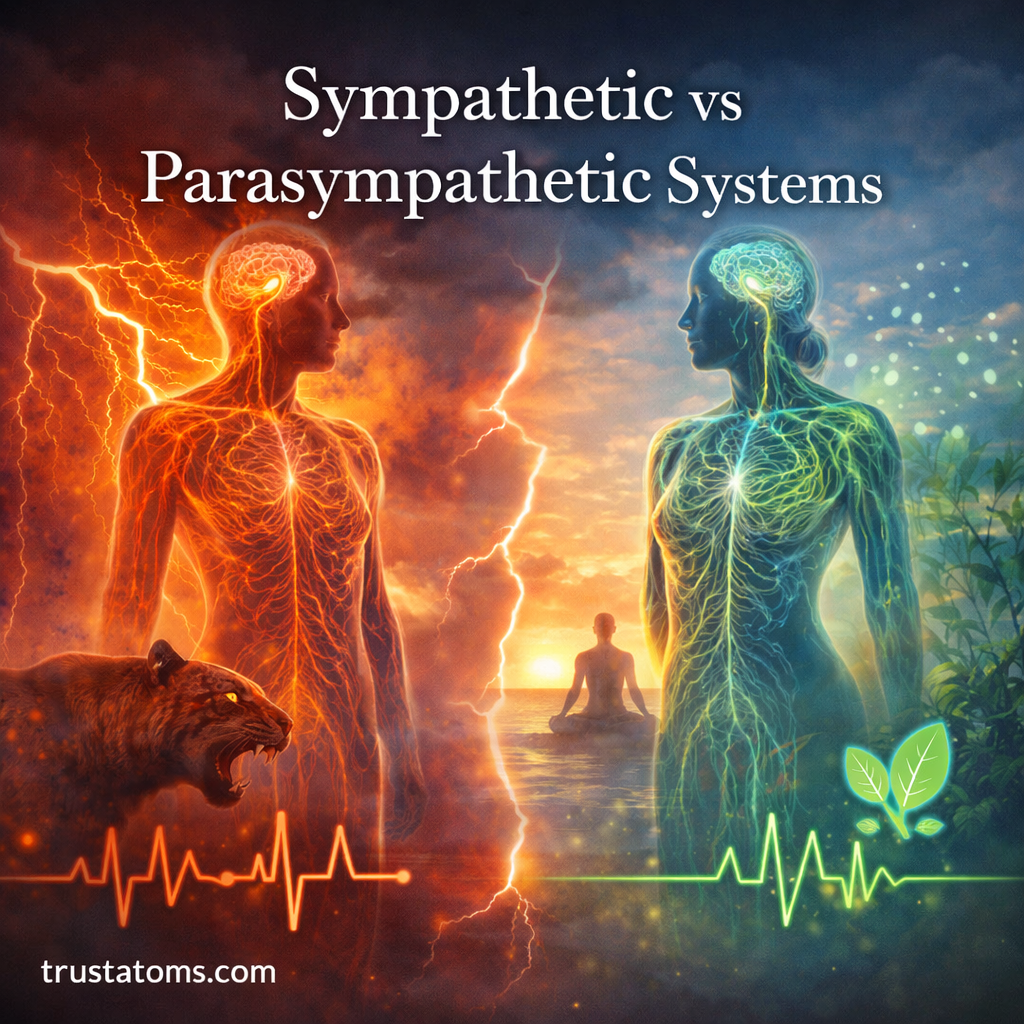
The sympathetic nervous system (SNS) prepares the body for action during stressful or demanding situations. It is often called the “fight-or-flight” system because it activates physiological changes that help the body respond to danger.
When the sympathetic system is activated, the body shifts resources toward survival and rapid response.
Key Effects of the Sympathetic System
Activation of the sympathetic nervous system causes several changes in the body, including:
- Increased heart rate
- Faster breathing
- Dilated pupils
- Increased blood flow to muscles
- Release of adrenaline and stress hormones
- Reduced digestion activity
These changes allow the body to react quickly, improving alertness and physical performance in stressful situations.
When the Sympathetic System Is Activated
The sympathetic system becomes active during many situations, such as:
- Facing danger or threats
- Intense physical exercise
- Emotional stress
- Sudden surprises
- Competitive events
While the sympathetic response is essential for survival, prolonged activation can place strain on the body.
What Is the Parasympathetic Nervous System?
The parasympathetic nervous system (PNS) helps the body relax, recover, and conserve energy. It is commonly known as the “rest-and-digest” system.
This system becomes more active after a stressful event has passed or when the body is in a calm, safe environment.
Key Effects of the Parasympathetic System
Activation of the parasympathetic system produces the opposite effects of the sympathetic response.
These effects include:
- Slowing the heart rate
- Lowering blood pressure
- Stimulating digestion
- Constricting pupils
- Promoting energy storage
- Supporting tissue repair
By reversing stress responses, the parasympathetic system helps restore balance in the body.
When the Parasympathetic System Is Active
The parasympathetic system dominates during normal, relaxed conditions such as:
- Sleeping
- Eating and digesting food
- Resting after exercise
- Relaxation or meditation
This system ensures the body can recover and maintain long-term health.
Key Differences Between the Two Systems
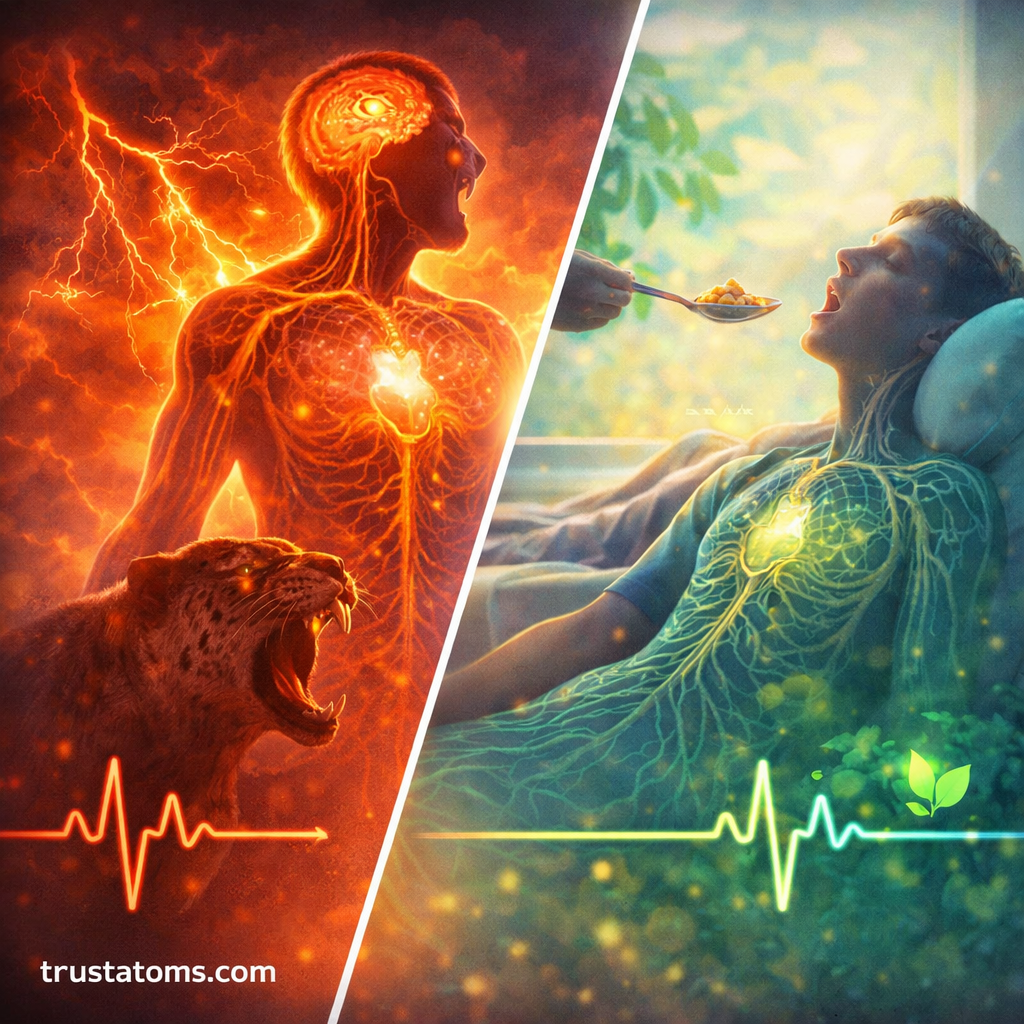
Although both systems belong to the autonomic nervous system, they perform opposite roles.
Sympathetic vs Parasympathetic Comparison
Sympathetic Nervous System
- Activates during stress or danger
- Increases heart rate
- Expands airways
- Reduces digestion
- Releases stress hormones
- Prepares the body for action
Parasympathetic Nervous System
- Active during calm or recovery
- Slows heart rate
- Stimulates digestion
- Promotes relaxation
- Conserves energy
- Supports healing and recovery
These systems act like a biological accelerator and brake, ensuring the body can respond to challenges and then return to normal functioning.
How the Systems Work Together
The sympathetic and parasympathetic systems rarely function independently. Instead, they work together to regulate body functions through balanced control.
For example:
- A stressful event activates the sympathetic system.
- The heart rate rises and breathing increases.
- Once the threat passes, the parasympathetic system activates.
- Heart rate slows and digestion resumes.
This constant adjustment helps the body maintain internal stability.
The balance between these systems is sometimes referred to as autonomic balance.
The Role of the Vagus Nerve
One of the most important components of the parasympathetic nervous system is the vagus nerve.
The vagus nerve connects the brain to several major organs, including:
- The heart
- The lungs
- The digestive tract
This nerve helps regulate functions such as:
- Heart rate slowing
- Digestion stimulation
- Relaxation responses
Healthy vagal activity is associated with improved stress regulation and emotional resilience.
Stress, Health, and Autonomic Balance
While the sympathetic nervous system is necessary for survival, chronic stress can keep it activated for long periods, which may affect overall health.
Long-term sympathetic activation can contribute to:
- High blood pressure
- Sleep problems
- Digestive issues
- Increased anxiety
- Weakened immune function
Maintaining a balance between sympathetic and parasympathetic activity is essential for long-term well-being.
Activities That Support Parasympathetic Activation
Several habits can help stimulate the parasympathetic system, including:
- Deep breathing exercises
- Meditation or mindfulness
- Regular physical activity
- Adequate sleep
- Relaxation techniques such as yoga
These practices encourage the body to shift out of stress mode and return to a restorative state.
Why These Systems Matter
The sympathetic and parasympathetic systems regulate nearly every internal function of the body. Without them, the body would not be able to respond to emergencies or recover afterward.
Together, they allow the body to:
- Respond rapidly to challenges
- Maintain stable internal conditions
- Support digestion and recovery
- Balance energy use and conservation
Their coordinated activity keeps the body functioning efficiently in both stressful and relaxed conditions.
Final Thoughts
The sympathetic and parasympathetic systems are two essential components of the autonomic nervous system. While the sympathetic division prepares the body for action, the parasympathetic division restores calm and supports recovery.
Rather than acting independently, these systems constantly adjust body functions to maintain balance. This delicate coordination allows humans to react quickly to danger while still preserving long-term health and stability.
Understanding how these systems work offers valuable insight into how the body manages stress, energy, and recovery throughout daily life.