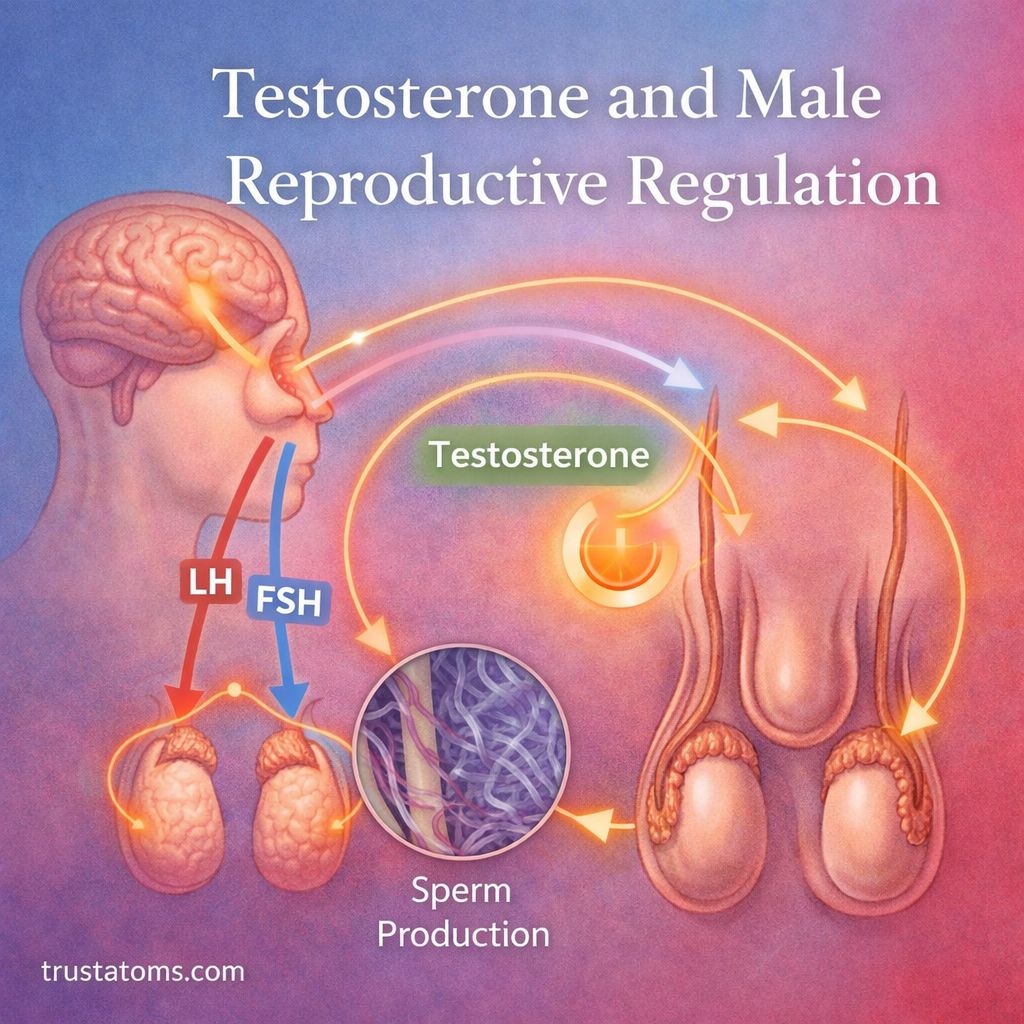
Testosterone is the primary male sex hormone responsible for regulating reproductive function, physical development, and overall health. Produced mainly in the testes, this hormone plays a central role in sperm production, sexual function, and secondary male characteristics. Understanding how testosterone is controlled within the body provides insight into male reproductive health and hormonal balance.
What Is Testosterone?
Testosterone is an androgen (male sex hormone) produced primarily in the testes, with small amounts made by the adrenal glands.
Key Functions of Testosterone
- Development of male reproductive organs
- Production of sperm (spermatogenesis)
- Regulation of libido (sex drive)
- Growth of facial and body hair
- Deepening of the voice during puberty
- Maintenance of muscle mass and bone density
Testosterone is essential not only for reproduction but also for general physical and mental well-being.
The Male Reproductive Hormone System
Testosterone production is controlled by a regulatory system known as the hypothalamic-pituitary-gonadal (HPG) axis.
Key Components of the HPG Axis
- Hypothalamus – releases gonadotropin-releasing hormone (GnRH)
- Pituitary gland – releases luteinizing hormone (LH) and follicle-stimulating hormone (FSH)
- Testes – produce testosterone and support sperm production
This system ensures that hormone levels remain balanced and responsive to the body’s needs.
How Testosterone Production Is Regulated
Testosterone levels are carefully controlled through a feedback loop.
Step-by-Step Regulation Process
- The hypothalamus releases GnRH
- GnRH signals the pituitary gland
- The pituitary releases LH and FSH
- LH stimulates Leydig cells in the testes to produce testosterone
- FSH supports sperm production in Sertoli cells
- Rising testosterone levels signal the brain to reduce GnRH production
This negative feedback loop prevents hormone levels from becoming too high or too low.
Role of Testosterone in Sperm Production
Testosterone is essential for spermatogenesis, the process of producing sperm.
How It Supports Sperm Development
- Stimulates Sertoli cells in the seminiferous tubules
- Works alongside FSH to promote sperm maturation
- Maintains the environment needed for healthy sperm production
Without adequate testosterone, sperm production can decrease significantly.
Testosterone Levels Across Life Stages
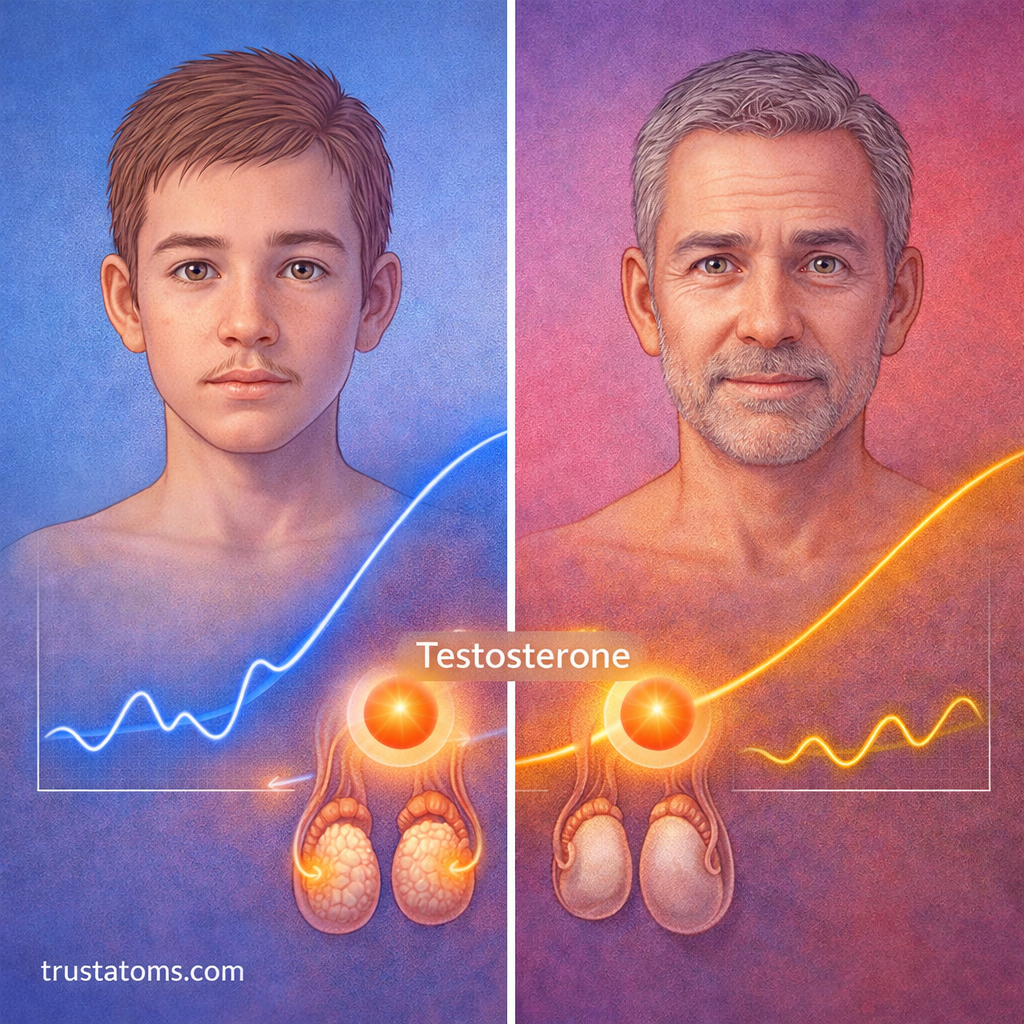
Testosterone levels vary throughout a male’s life.
Childhood
- Levels are low
- Minimal reproductive activity
Puberty
- Rapid increase in testosterone
- Development of secondary sexual characteristics
- Growth of reproductive organs
Adulthood
- Stable testosterone levels
- Peak reproductive function
Aging
- Gradual decline in testosterone
- Possible changes in energy, muscle mass, and libido
Factors That Influence Testosterone Levels
Several factors can affect testosterone production and regulation:
- Age
- Stress levels
- Sleep quality
- Diet and nutrition
- Physical activity
- Body fat percentage
- Medical conditions
Maintaining a healthy lifestyle can help support normal hormone levels.
Signs of Testosterone Imbalance
An imbalance in testosterone can impact both reproductive and overall health.
Low Testosterone (Hypogonadism)
- Reduced libido
- Fatigue
- Decreased muscle mass
- Mood changes
- Lower sperm count
High Testosterone (Less Common)
- Acne
- Mood swings
- Increased aggression
- Potential hormonal disruptions
Recognizing these signs can help identify when further evaluation may be needed.
Why Testosterone Regulation Matters
Proper testosterone regulation is essential for:
- Fertility and sperm production
- Sexual health
- Physical strength and endurance
- Bone density
- Mental well-being
The balance maintained by the HPG axis ensures that the body functions efficiently and adapts to changes.
Key Takeaways
- Testosterone is the primary hormone controlling male reproductive function
- It is regulated by the hypothalamus, pituitary gland, and testes
- A feedback loop maintains stable hormone levels
- Testosterone supports sperm production, libido, and physical development
- Lifestyle factors can significantly influence hormone balance
Final Thoughts
Testosterone plays a vital role in male reproductive regulation, influencing everything from sperm production to physical characteristics. Its precise control through the HPG axis highlights the complexity of the human endocrine system. By understanding how testosterone functions and is regulated, you gain valuable insight into male health, fertility, and overall physiological balance.