The theory of plate tectonics is one of the most important concepts in Earth science. It explains how Earth’s outer layer is divided into moving plates and how their interactions shape the planet’s surface.
From earthquakes and volcanoes to mountain formation and ocean basins, plate tectonics helps us understand many of the dynamic processes that occur on Earth.
What Is Plate Tectonics?
Plate tectonics is the scientific theory that Earth’s lithosphere (its outer shell) is broken into large pieces called tectonic plates. These plates move slowly over the semi-fluid layer beneath them, known as the asthenosphere.
Key Features
- Earth’s surface is divided into multiple plates
- Plates move at a rate of a few centimeters per year
- Plate interactions cause major geological events
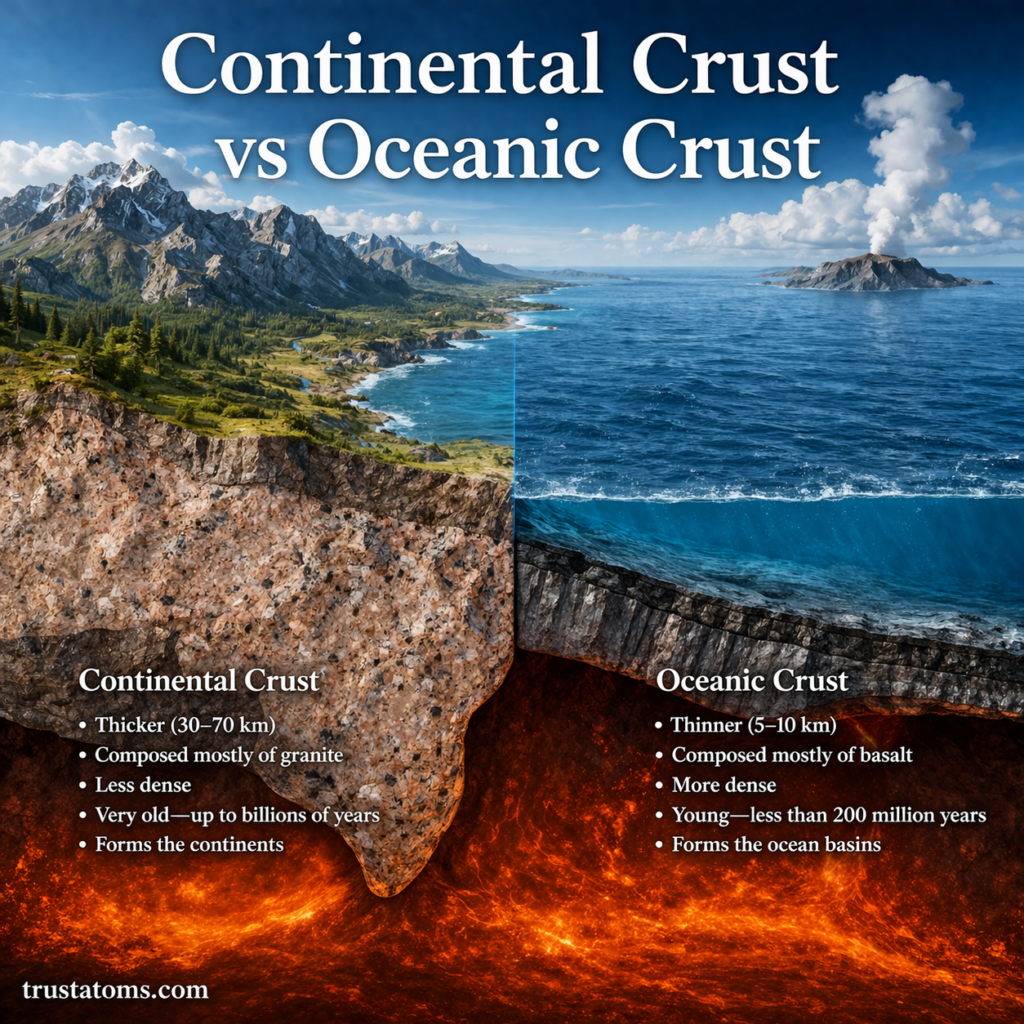
There are both continental plates (carrying land) and oceanic plates (carrying ocean floor).
The Structure of Earth
To understand plate tectonics, it helps to know Earth’s internal structure.
Main Layers of Earth
- Crust: Thin outer layer where we live
- Mantle: Thick layer of semi-solid rock beneath the crust
- Core: Central region made mostly of iron and nickel
The lithosphere includes the crust and the uppermost mantle, forming rigid plates that move over the softer asthenosphere.
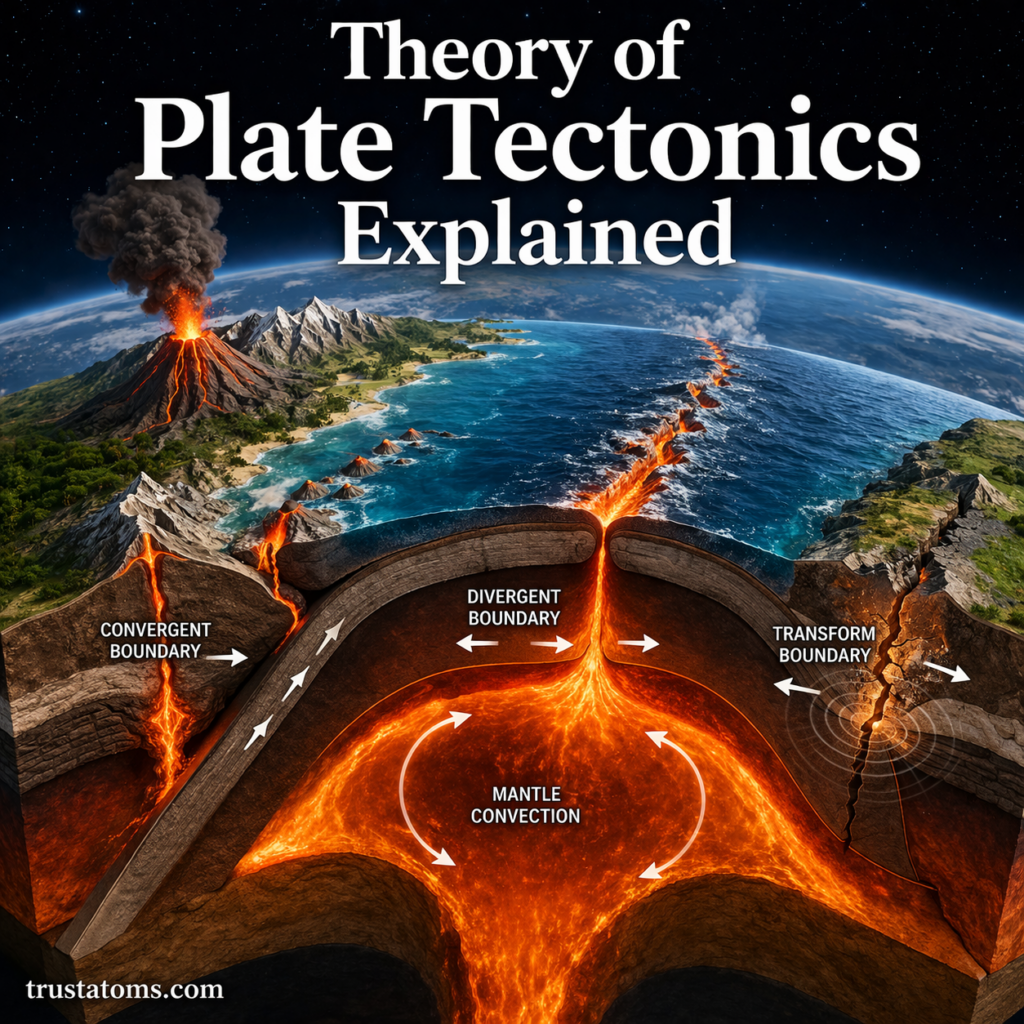
Types of Plate Boundaries
Plate movement occurs at boundaries where plates interact with each other.
Divergent Boundaries
At divergent boundaries, plates move apart.
- Magma rises to fill the gap
- New crust forms as magma cools
- Common at mid-ocean ridges
Example: Mid-Atlantic Ridge
Convergent Boundaries
At convergent boundaries, plates move toward each other.
- One plate may subduct beneath another
- Can form mountains or volcanoes
- Often associated with deep ocean trenches
Example: Andes Mountains (oceanic plate subducting beneath continental plate)
Transform Boundaries
At transform boundaries, plates slide past each other.
- No crust is created or destroyed
- Movement can cause earthquakes
Example: San Andreas Fault
What Drives Plate Movement?
Plate motion is driven by forces within Earth’s mantle.
Convection Currents
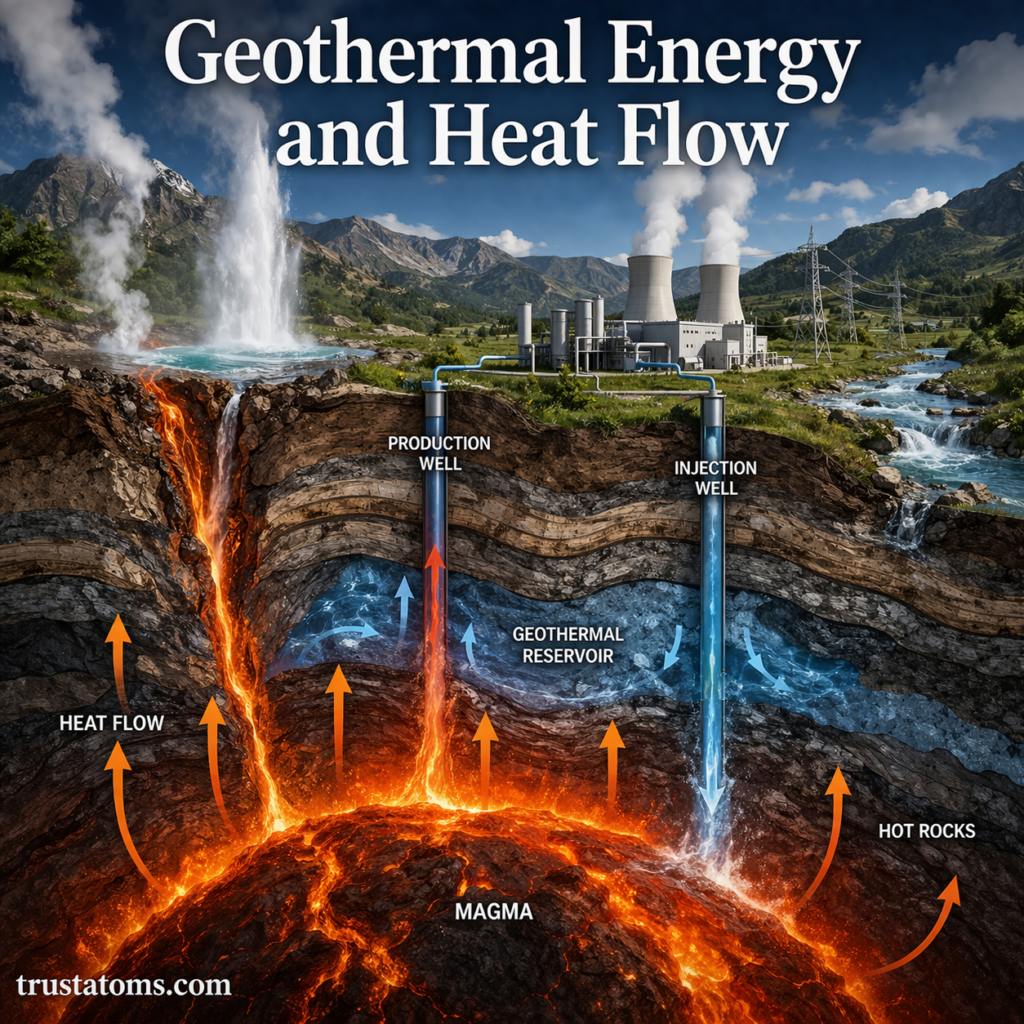
- Heat from the core causes mantle material to rise and sink
- This movement creates currents that push plates
Ridge Push
- Newly formed crust at mid-ocean ridges pushes older crust away
Slab Pull
- Dense oceanic plates sink into the mantle, pulling the rest of the plate along
These combined forces keep plates in constant motion.
Evidence Supporting Plate Tectonics
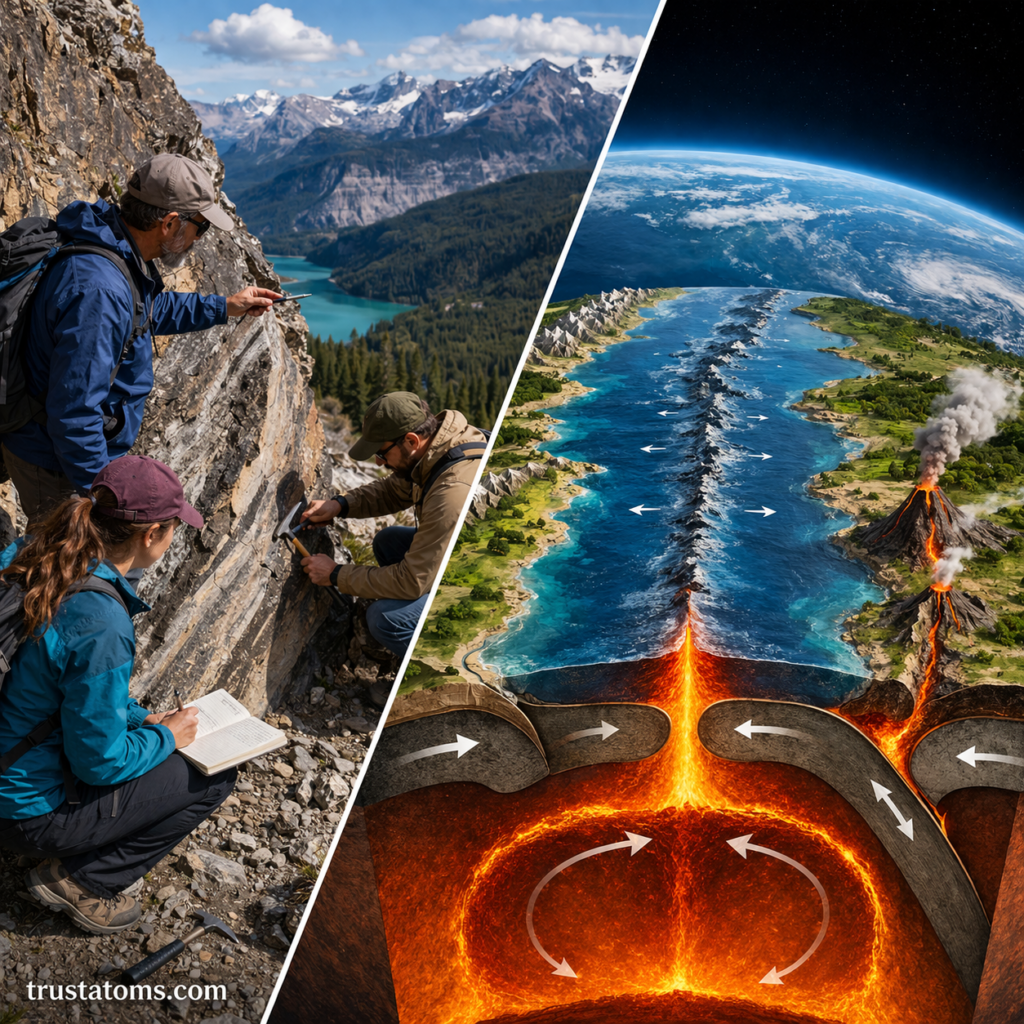
Scientists developed the theory based on several key observations.
Continental Drift
- Continents appear to fit together like puzzle pieces
- Proposed by Alfred Wegener
Fossil Evidence
- Similar fossils found on different continents
- Suggest continents were once connected
Seafloor Spreading
- New crust forms at mid-ocean ridges
- Ocean floor moves outward over time
Earthquake and Volcano Patterns
- Most occur along plate boundaries
- Match the edges of tectonic plates
Effects of Plate Tectonics
Plate tectonics has a major impact on Earth’s surface and natural systems.
Landform Creation
- Mountains, valleys, and ocean basins form through plate interactions
Natural Hazards
- Earthquakes, volcanoes, and tsunamis are linked to plate movement
Recycling of Earth’s Crust
- Old crust is destroyed at subduction zones
- New crust forms at divergent boundaries
Real-World Examples
Pacific Ring of Fire
- Area with frequent earthquakes and volcanic activity
- Located around the edges of the Pacific Plate
Himalayan Mountains
- Formed by the collision of the Indian and Eurasian plates
- Still rising today
Common Misconceptions
“Continents Float Freely”
Continents are part of tectonic plates, not separate floating masses.
“Plate Movement Is Fast”
Plate movement is very slow—about the rate fingernails grow.
“Earthquakes Happen Randomly”
Most earthquakes occur along plate boundaries, not randomly.
Key Takeaways
- Plate tectonics explains the movement of Earth’s surface
- The lithosphere is divided into moving plates
- Plate boundaries determine geological activity
- Movement is driven by mantle processes
- The theory explains many Earth features and hazards
Final Thoughts
The theory of plate tectonics provides a powerful framework for understanding how Earth works. It connects processes deep within the planet to the landscapes we see on the surface.
By studying plate tectonics, scientists can better predict natural hazards, understand Earth’s history, and gain insights into how the planet continues to evolve.