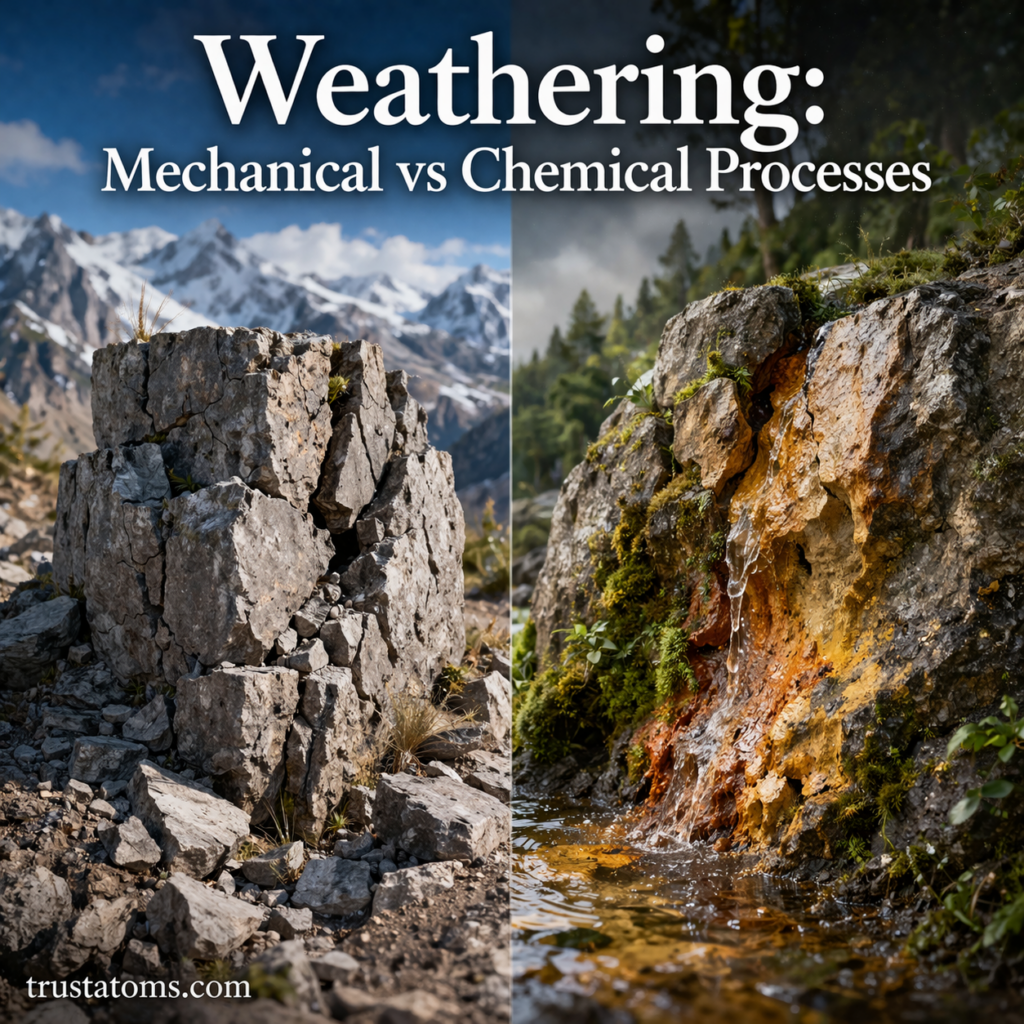
Weathering is the process that breaks down rocks and minerals at Earth’s surface. Over time, it shapes landscapes, forms soil, and influences ecosystems. Unlike erosion, which moves material, weathering works in place—gradually weakening and altering rock.
There are two main types of weathering: mechanical and chemical. Each plays a distinct role, but they often work together to transform Earth’s surface.
What Is Weathering?
Weathering refers to the breakdown of rocks through physical forces and chemical reactions.
Key characteristics
- Occurs at or near Earth’s surface
- Does not involve movement of material
- Prepares rock for erosion and transport
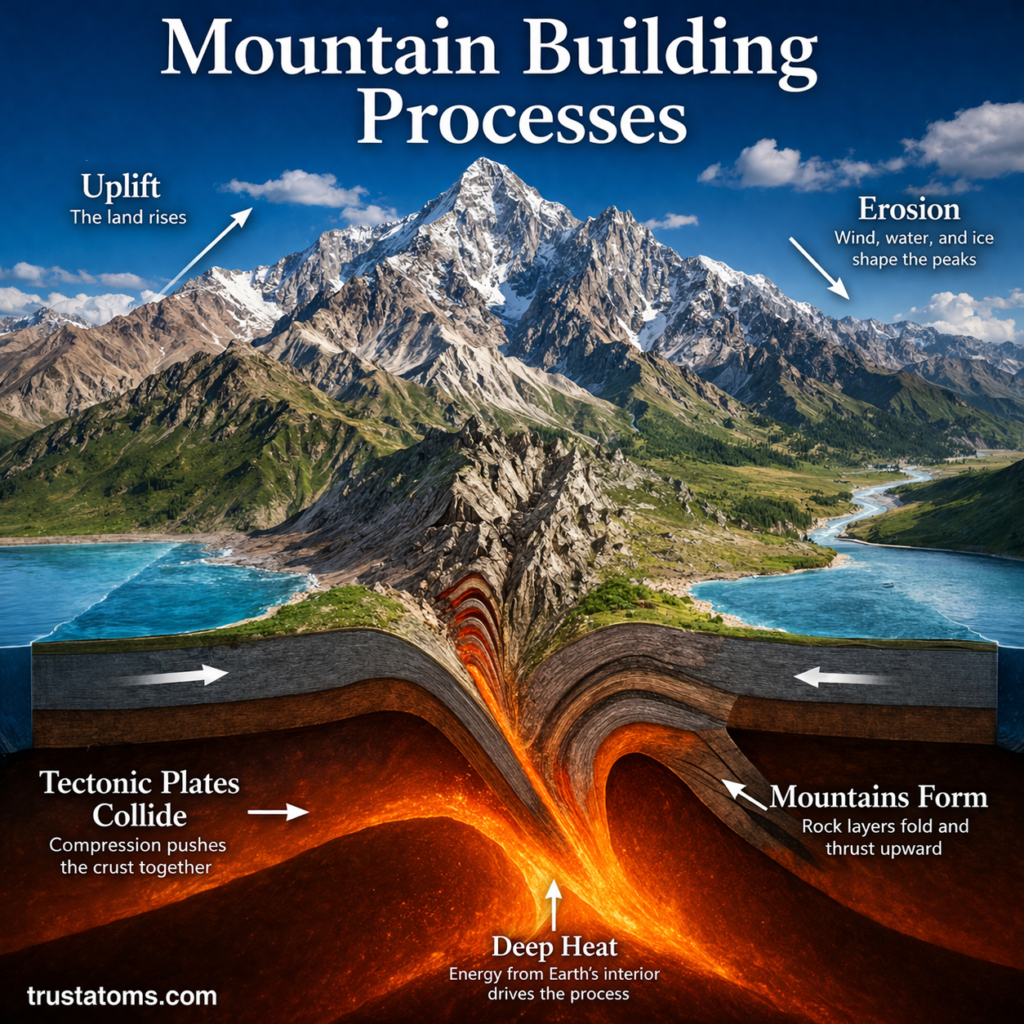
Understanding weathering helps explain how mountains wear down and how soil forms over time.
Mechanical Weathering (Physical Breakdown)
Mechanical weathering breaks rocks into smaller pieces without changing their chemical composition.
How it works
Physical forces cause rocks to crack, split, or crumble into smaller fragments.
Common Types of Mechanical Weathering
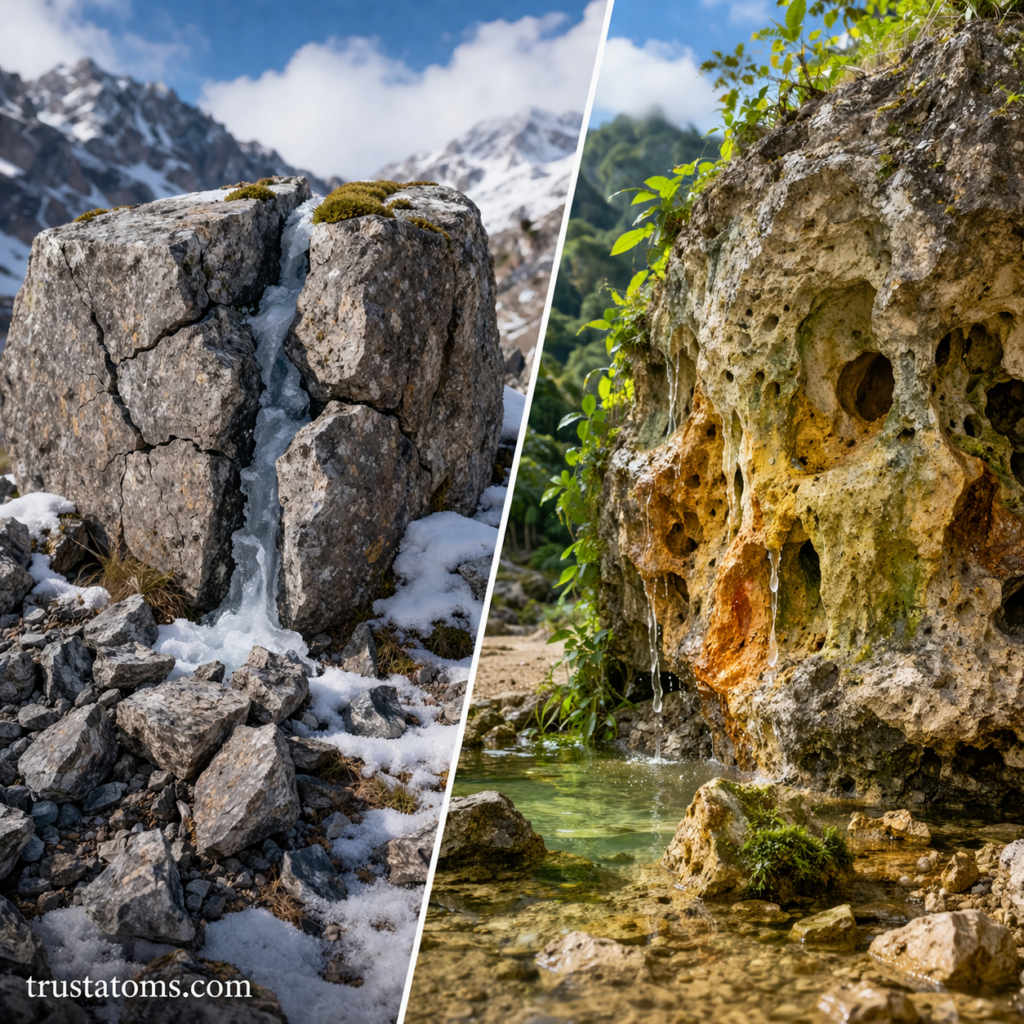
Freeze-Thaw (Frost Wedging)
Water enters cracks in rocks and freezes.
- Water expands when it freezes
- This expansion widens cracks
- Repeated cycles eventually break the rock apart
This process is common in colder climates.
Thermal Expansion
Rocks expand when heated and contract when cooled.
- Daily temperature changes cause stress
- Outer layers may peel or crack
- Over time, this weakens the rock
This is especially common in desert environments.
Biological Activity
Living organisms can physically break rock.
- Plant roots grow into cracks
- Animals burrow into soil and rock
- These actions widen fractures over time
Abrasion
Rocks collide and grind against each other.
- Caused by wind, water, or ice
- Smooths and breaks down rock surfaces
- Common in rivers and coastal areas
Chemical Weathering (Chemical Change)
Chemical weathering alters the composition of rocks through reactions.
How it works
Minerals react with water, oxygen, or acids, transforming into new substances.
Common Types of Chemical Weathering
Hydrolysis
Water reacts with minerals to form new compounds.
- Common in feldspar minerals
- Leads to the formation of clay
- Weakens rock structure
Oxidation
Oxygen reacts with minerals, especially iron.
- Produces rust-like compounds
- Causes rocks to weaken and crumble
- Gives rocks a reddish color
Carbonation
Carbon dioxide dissolves in water to form carbonic acid.
- Reacts with minerals like limestone
- Gradually dissolves rock
- Forms caves and sinkholes
Dissolution
Some minerals dissolve directly in water.
- Common in salt and limestone
- Leads to gradual loss of material
- Alters rock structure over time
Key Differences Between Mechanical and Chemical Weathering
Understanding how these processes differ helps explain how landscapes evolve.
Mechanical weathering
- Breaks rock into smaller pieces
- Does not change chemical composition
- Faster in cold or dry environments
Chemical weathering
- Changes the chemical makeup of rock
- Often slower but more transformative
- More active in warm, wet climates
How Both Processes Work Together
Mechanical and chemical weathering often occur at the same time.
Interaction between processes
- Mechanical weathering increases surface area
- More surface area allows chemical reactions to occur more easily
- Chemical weathering weakens rock, making it easier to break
This combination speeds up the overall breakdown of rock.
Factors That Influence Weathering
Several environmental conditions affect how quickly weathering occurs.
Major factors
- Climate (temperature and moisture)
- Rock type and mineral composition
- Presence of plants and organisms
- Exposure to air and water
Different regions experience different rates and types of weathering.
Why Weathering Matters
Weathering plays a critical role in shaping Earth’s surface and supporting life.
Importance of weathering
- Forms soil needed for plant growth
- Breaks down rocks into usable minerals
- Shapes landscapes over time
- Contributes to natural cycles like the carbon cycle
Without weathering, Earth’s surface would look very different.
Key Takeaways
- Weathering breaks down rocks without moving them
- Mechanical weathering physically breaks rock into smaller pieces
- Chemical weathering changes the composition of minerals
- Both processes often work together to accelerate rock breakdown
- Climate and environment strongly influence weathering rates
Final Thoughts
Weathering is a slow but powerful force that continuously reshapes Earth’s surface. Whether through physical stress or chemical reactions, rocks are constantly being transformed.
By understanding the differences between mechanical and chemical weathering, we gain insight into how landscapes form, how soil develops, and how Earth’s surface evolves over time.