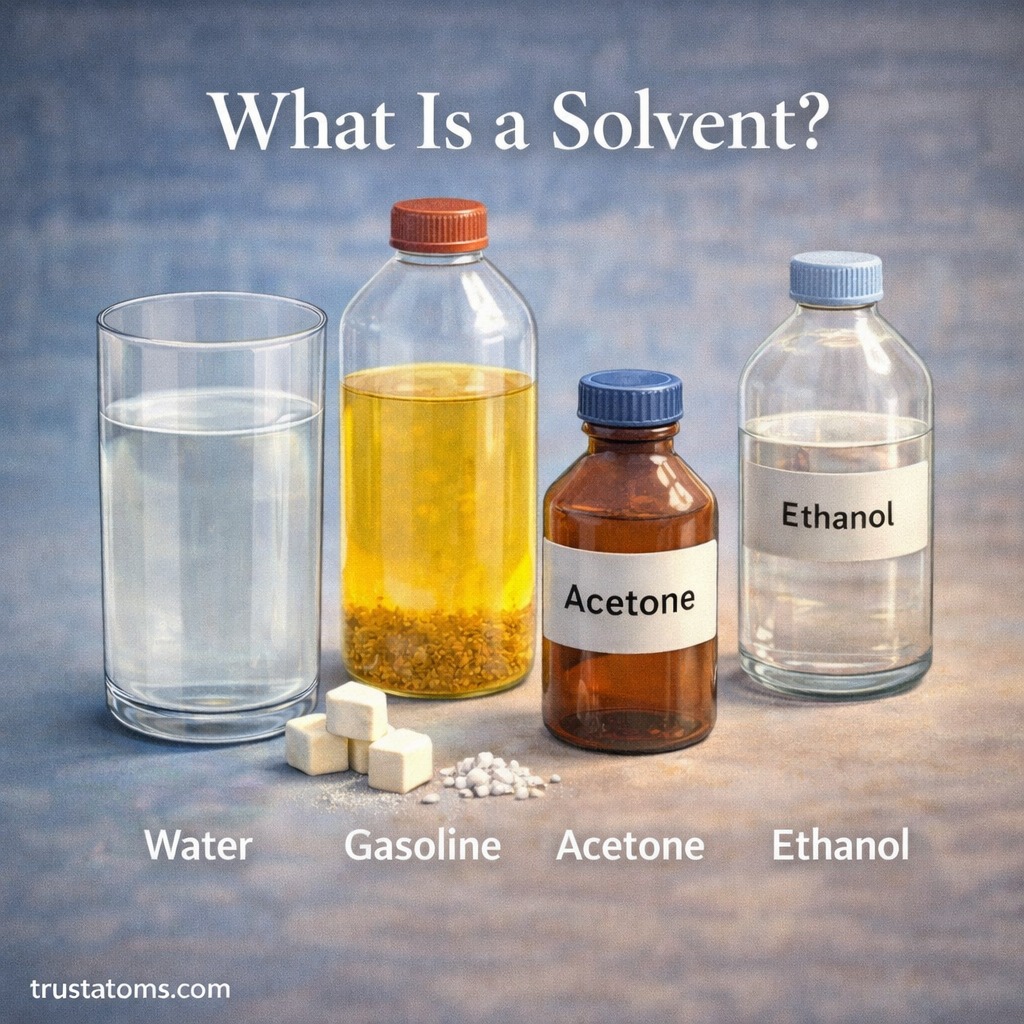
In chemistry, many substances mix together to form solutions. In every solution, one substance dissolves another. The substance that performs the dissolving is called the solvent.
Solvents play a major role in chemistry, biology, medicine, and industry. From salt dissolving in water to chemicals used in manufacturing, solvents help substances mix, react, and move through systems.
This guide explains what a solvent is, how it works, common examples, and why solvents are important in chemistry.
Definition of a Solvent
A solvent is the substance in a solution that dissolves another substance, known as the solute.
In most cases, the solvent is present in the greatest amount within the solution. When the solute dissolves, its particles spread evenly throughout the solvent, creating a uniform mixture.
Key features of solvents include:
- They dissolve other substances
- They are usually present in larger amounts than the solute
- They create homogeneous mixtures called solutions
- They allow molecules to mix evenly
A common example is saltwater, where water acts as the solvent and salt is the solute.
How Solvents Work
Solvents dissolve substances through interactions at the molecular level.
When a solute is added to a solvent, several steps occur:
- Solvent molecules surround the solute particles.
- Forces between the solute particles weaken.
- Solvent molecules separate the particles.
- The solute spreads evenly throughout the solvent.
This process is called dissolution.
For example, when sugar is added to tea, the sugar crystals break apart and the molecules disperse throughout the liquid.
Common Examples of Solvents
Solvents exist in many everyday situations. Some solvents are liquids, while others can be gases or even solids.
Water
Water is the most common solvent on Earth and is often called the universal solvent.
Water dissolves many substances, including:
- Salt
- Sugar
- Minerals
- Some gases
Because of this ability, water plays a critical role in biological systems.
Alcohol
Alcohols such as ethanol are widely used solvents.
They dissolve many substances that water cannot easily dissolve.
Common uses include:
- Pharmaceuticals
- Perfumes
- Cleaning products
- Laboratory chemicals
Acetone
Acetone is a powerful solvent used in many industrial and household products.
Examples include:
- Nail polish remover
- Paint thinning
- Cleaning electronics
Gasoline
Gasoline acts as a solvent for many oily substances and fuels.
It helps dissolve and transport hydrocarbons used in engines.
Types of Solvents
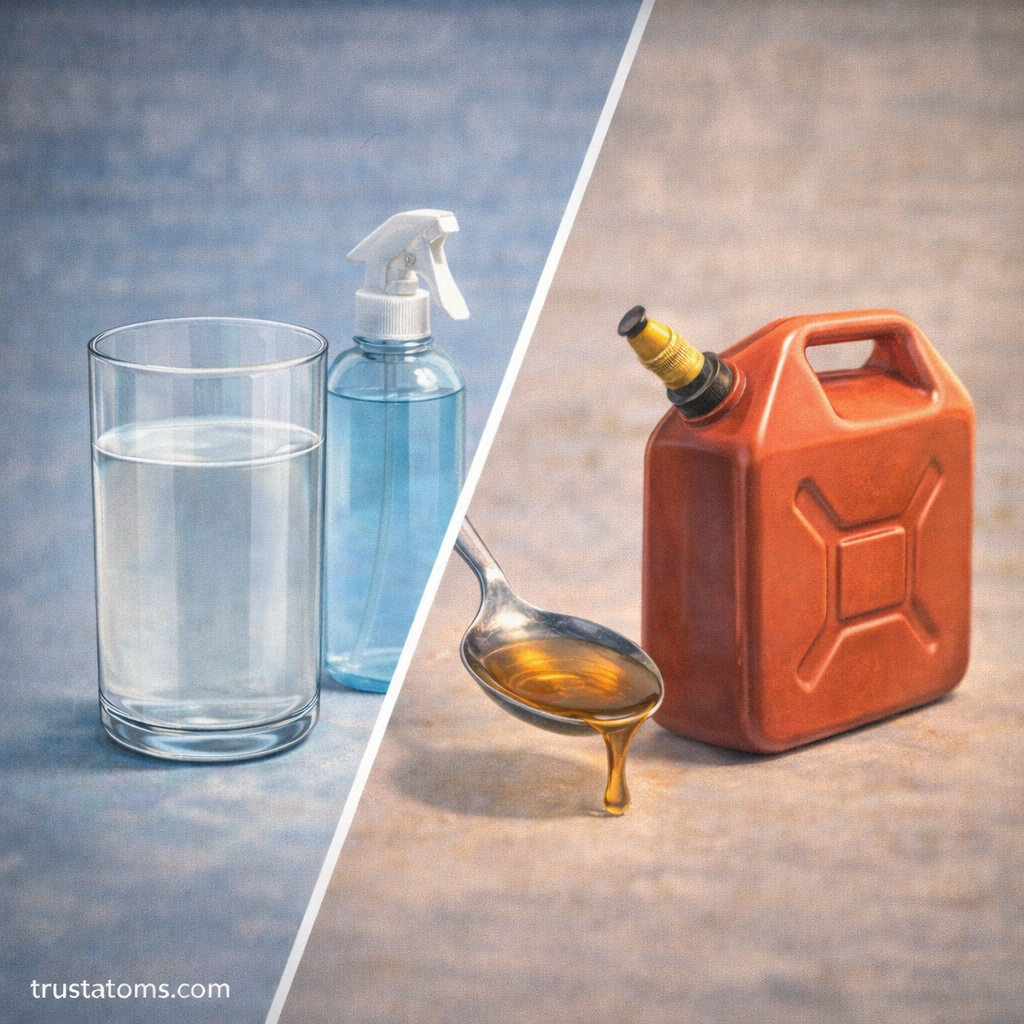
Solvents can be grouped based on their chemical properties and how they interact with other substances.
Polar Solvents
Polar solvents have molecules with uneven electrical charges. This allows them to dissolve many ionic and polar substances.
Examples include:
- Water
- Methanol
- Ethanol
Polar solvents are commonly used for dissolving salts and sugars.
Nonpolar Solvents
Nonpolar solvents have molecules with evenly distributed electrical charge.
They dissolve substances that do not dissolve well in water.
Examples include:
- Hexane
- Benzene
- Toluene
Nonpolar solvents are often used to dissolve oils, fats, and waxes.
Solvent vs Solute
Understanding the difference between solvents and solutes is essential in chemistry.
Solvent
The solvent:
- Dissolves another substance
- Usually exists in the larger amount
- Forms the medium of the solution
Example: Water in saltwater.
Solute
The solute:
- Is dissolved by the solvent
- Usually exists in a smaller amount
- Disperses throughout the solvent
Example: Salt in saltwater.
Together, the solvent and solute create a solution.
Everyday Examples of Solutions and Solvents
Solvents appear in many familiar mixtures and products.
Examples include:
- Salt dissolved in water
- Sugar dissolved in coffee
- Carbon dioxide dissolved in soda
- Food coloring dissolved in liquid
- Vinegar mixed with water
In each case, the solvent helps distribute the solute evenly.
Why Solvents Are Important
Solvents are essential for many scientific, industrial, and biological processes.
They are important in areas such as:
Biology
Water acts as the solvent inside living cells. Many biological reactions occur in water-based solutions.
Medicine
Many medications are dissolved in solvents so they can be absorbed by the body.
Chemical Manufacturing
Industries use solvents to:
- Dissolve raw materials
- Enable chemical reactions
- Extract compounds
- Clean equipment
Environmental Processes
Solvents help transport minerals, nutrients, and gases through natural systems such as rivers, oceans, and soil.
Safety and Environmental Considerations
Some solvents are harmless, while others can be toxic or environmentally harmful.
Examples of safer solvents include:
- Water
- Ethanol
Examples of hazardous solvents include:
- Benzene
- Toluene
- Certain industrial chemicals
Scientists work to develop green solvents that reduce environmental impact while maintaining effectiveness.
Final Thoughts
A solvent is a substance that dissolves another substance to form a solution. Most solvents are liquids, and they allow molecules to mix evenly by surrounding and separating solute particles.
Water is the most common solvent, but many other solvents exist depending on the types of substances being dissolved. From biological systems to industrial manufacturing, solvents play a crucial role in how materials interact and react.
Understanding solvents helps explain how solutions form and how many chemical processes occur in everyday life.