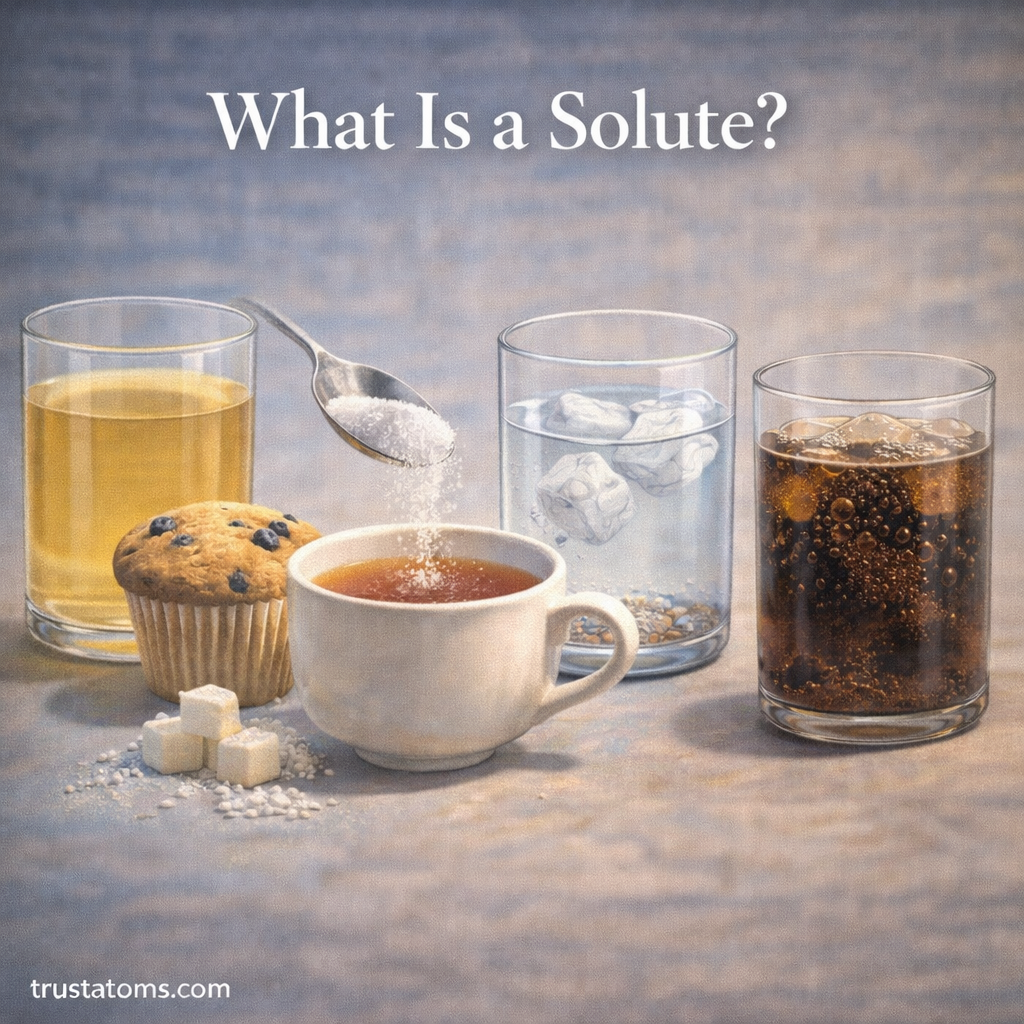
A solute is a substance that dissolves in a solvent to form a uniform mixture called a solution. Solutes can be solids, liquids, or gases, and their particles become distributed throughout the solvent when dissolution occurs.
In the study of chemistry, many substances dissolve into others to form solutions. When this happens, the dissolved substance spreads throughout the mixture at the molecular or ionic level. For example, salt is the solute in saltwater, while water is the solvent.
Solutes appear in everyday situations, from sugar dissolving in coffee to oxygen dissolved in lakes and rivers. Understanding how solutes behave helps explain how substances mix, how much can dissolve, and how solutes differ from solvents.
Definition of a Solute in Chemistry
A solute is the component of a solution that is dissolved in another substance, known as the solvent. In many familiar solutions, the solute is present in a smaller amount than the solvent, although this is not an absolute rule for every mixture.
When a solute dissolves, its constituent particles become distributed throughout the solvent. The resulting mixture is homogeneous, meaning its composition is uniform on the scale at which a solution is described.
Key characteristics of solutes include:
- They are dissolved in a solvent to form a solution.
- They are commonly present in smaller amounts than the solvent.
- They become distributed throughout the solution.
- They can initially exist as solids, liquids, or gases.
- The amount that dissolves depends on the substances and conditions involved.
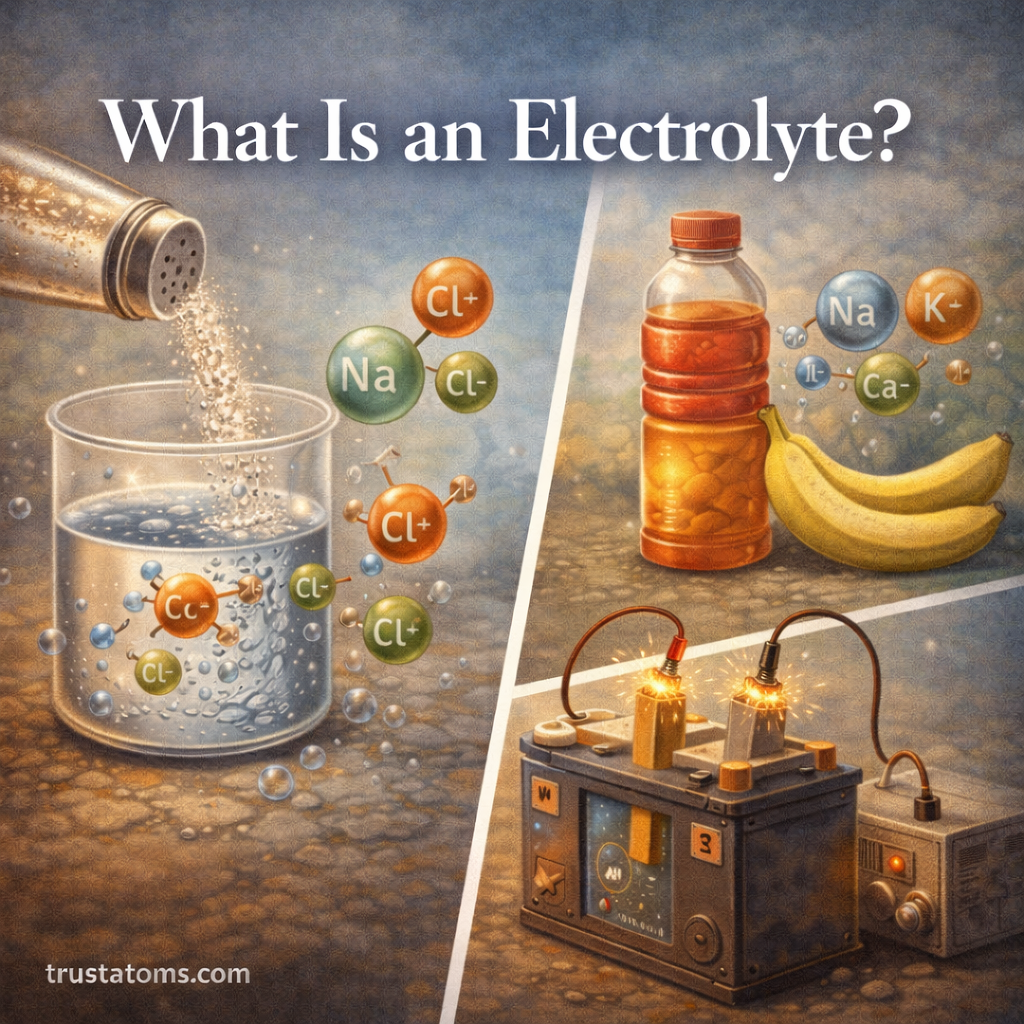
Consider a glass of saltwater. Sodium chloride is the solute, water is the solvent, and the resulting saltwater is the solution. The dissolved salt exists primarily as separated sodium and chloride ions surrounded by water molecules.
The amount of solute present is described using concentration in chemistry. Understanding how dissolved particles interact and how solutions change under different conditions is also part of solution dynamics in chemical systems.
How Does a Solute Dissolve in a Solvent?
Dissolution occurs when interactions between solute and solvent particles allow the solute to become dispersed throughout the solvent. The exact process depends on whether the solute is an ionic compound, a molecular substance, or a gas.
For a typical solid solute dissolving in water, the process can be described in four steps:
- The solute comes into contact with the solvent, allowing solvent molecules to interact with its surface.
- Attractive interactions between solute particles are overcome as individual particles separate from the solid.
- Solvent molecules surround and interact with the separated solute particles, a process called solvation.
- The dissolved particles spread throughout the solvent through molecular motion and diffusion, producing a uniform solution.
When sugar dissolves in tea, individual sugar molecules separate from the crystal and become surrounded by water molecules. The sugar molecules remain chemically identifiable as sugar; dissolving does not automatically mean a chemical reaction has occurred.
Salt behaves differently because sodium chloride is an ionic compound. When it dissolves in water, sodium and chloride ions separate and become hydrated by surrounding water molecules.
Three Types of Solutes: Solid, Liquid, and Gas
Solutes are not limited to solids dissolving in liquids. A substance can act as a solute regardless of its original physical state, provided it forms a solution with another substance.
Solid Solutes
Solid solutes are common in household and laboratory solutions. Examples include table salt dissolved in water, sugar dissolved in coffee, and baking soda dissolved in water.
Whether a solid dissolves depends on its chemical structure, interactions with the solvent, temperature, and other conditions. Some solids dissolve readily, while others have very limited solubility.
Liquid Solutes
A liquid can also be a solute when it mixes uniformly with another liquid. For example, ethanol can act as the solute in a mixture containing a smaller amount of ethanol and a larger amount of water.
Some liquids are completely miscible, meaning they can mix in all proportions. Ethanol and water are familiar examples. Other liquid pairs, such as vegetable oil and water, do not form a single homogeneous solution under ordinary conditions.
Gas Solutes
Gases can dissolve in liquids and contribute to many natural and manufactured systems. Carbon dioxide dissolved in carbonated beverages and oxygen dissolved in water are common examples.
Dissolved oxygen supports aquatic organisms that obtain oxygen from water. Carbon dioxide remains dissolved more readily in sealed carbonated beverages because the gas pressure above the liquid is relatively high.
Solute vs. Solvent: What Is the Difference?
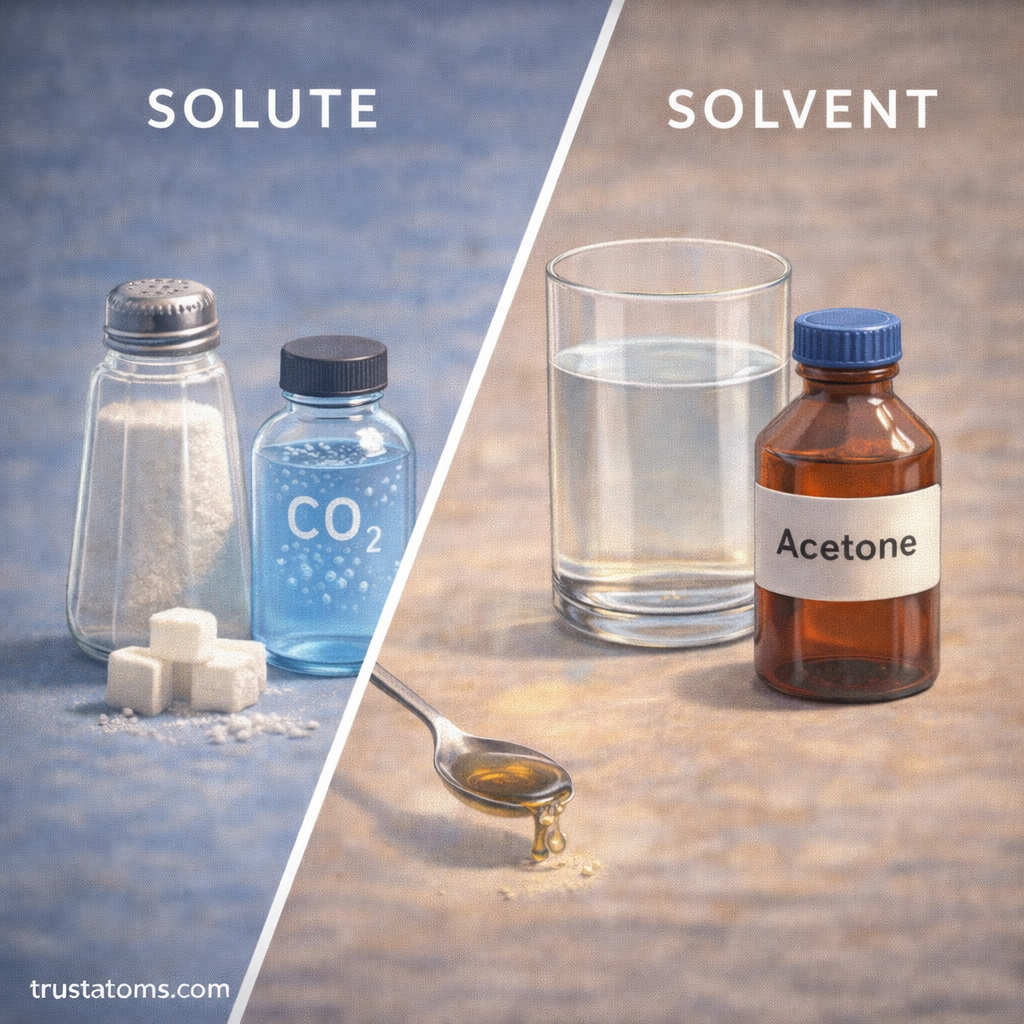
The solute is the substance being dissolved, while the solvent is the medium in which it dissolves. Together, these components form a solution.
| Property | Solute | Solvent |
|---|---|---|
| Definition | Substance being dissolved | Substance that dissolves the solute |
| Typical amount | Often smaller | Often larger |
| Physical state | Solid, liquid, or gas | Solid, liquid, or gas |
| Role | Becomes dispersed throughout the mixture | Provides the dissolving medium |
| Saltwater example | Salt | Water |
| Sugar-water example | Sugar | Water |
Water is often called the universal solvent because it dissolves a wide range of substances. However, it does not dissolve everything, and many substances dissolve better in other solvents.
The solute-solvent distinction can become less clear in mixtures of two fully miscible liquids. In these cases, the larger component is often designated the solvent, but the terminology depends on the context.
Worked Example: Calculating Solute Concentration
Suppose you dissolve 10 grams of table salt in 90 grams of water. Assuming all the salt dissolves and none of the material is lost, you can calculate the mass percentage of salt in the resulting solution.
- Identify the solute: 10 grams of salt.
- Identify the solvent: 90 grams of water.
- Calculate the total solution mass: 10 + 90 = 100 grams.
- Divide the solute mass by the total solution mass: 10 / 100 = 0.10.
- Multiply by 100 to express the result as a percentage: 0.10 × 100 = 10%.
The solution is 10% salt by mass. This means every 100 grams of the solution contains 10 grams of salt, not that every 100 grams of water contains 10 grams of salt.
If you added more water without adding additional salt, the solution would become more dilute. If water evaporated while the salt remained, the concentration would increase until the solution reached saturation and excess salt could crystallize.
What Affects How Much Solute Can Dissolve?
Solubility refers to how easily a solute dissolves in a solvent. Several factors influence this process, including temperature, pressure, and the chemical properties of the substances involved. More precisely, solubility describes the maximum amount that can dissolve under specified conditions, while dissolving rate describes how quickly dissolution occurs.
Temperature
Temperature often affects the solubility of solids in liquids. Many solid solutes, including sugar, become more soluble as temperature increases, although not all solids follow this pattern.
Higher temperatures can also increase the rate at which a solid dissolves. For gases dissolved in liquids, increasing temperature commonly decreases solubility.
Pressure
Pressure has a particularly noticeable effect on gases dissolved in liquids. According to Henry’s law, under suitable conditions, the equilibrium concentration of a dissolved gas is proportional to its partial pressure above the liquid.
This explains why carbon dioxide can remain dissolved at relatively high concentrations in sealed soda. When the container opens, pressure decreases and some dissolved gas escapes as bubbles.
Chemical Properties of Solute and Solvent
A useful introductory principle is that substances with similar intermolecular interaction characteristics often dissolve in one another. This is commonly summarized as “like dissolves like.”
Polar solvents such as water dissolve many polar and ionic substances, while nonpolar solvents tend to dissolve nonpolar substances more readily. This is a general guideline rather than a universal rule.
Stirring and Particle Size
Stirring and grinding a solid into smaller particles can help it dissolve faster. Stirring brings fresh solvent into contact with the solute, while smaller particles provide greater surface area for interaction.
These changes generally affect the speed of dissolution, not the equilibrium solubility at a fixed temperature and pressure.
Saturated, Unsaturated, and Supersaturated Solutions
The amount of dissolved solute can be compared with the solubility limit under particular conditions. This leads to three useful classifications.
| Solution Type | Meaning | What Happens When More Solute Is Added? |
|---|---|---|
| Unsaturated | Contains less dissolved solute than the equilibrium limit | More may dissolve |
| Saturated | Contains the equilibrium maximum under the specified conditions | Additional solute generally remains undissolved |
| Supersaturated | Contains more dissolved solute than the equilibrium limit | Crystallization may be triggered |
Supersaturated solutions are often prepared by dissolving a relatively large amount of solid in a hot solvent and then cooling the mixture carefully. If crystallization does not begin immediately, the solution can temporarily retain more dissolved material than its normal equilibrium limit.
Such solutions are metastable. Adding a seed crystal or disturbing the mixture can trigger rapid crystallization.
Examples of Solutes in Everyday Life
Solutes occur in foods, beverages, natural waters, biological fluids, and industrial products. Recognizing the dissolved substance helps explain how each solution behaves.
- Tea and coffee: Dissolved sugar acts as a solute when sweetener is added.
- Seawater: Dissolved salts, including sodium and chloride ions, are solutes in water.
- Carbonated drinks: Dissolved carbon dioxide is a gaseous solute.
- Drinking water: Dissolved calcium, magnesium, and other mineral ions are solutes.
- Blood plasma: Glucose, electrolytes, and many other substances are dissolved in its water-rich liquid component.
- Aquatic environments: Dissolved oxygen is available for organisms that extract oxygen from water.
Solutes are also important in preparing medicines, monitoring water quality, and manufacturing food products. The concentration and solubility of a substance can influence how a product is prepared, stored, and used.
Common Misconceptions About Solutes
Misconception 1: A Solute Must Be a Solid
Solutes can be solids, liquids, or gases. Sugar dissolved in water is a solid-solute example, while ethanol in water and carbon dioxide in soda illustrate liquid and gas solutes.
Misconception 2: Dissolving Means the Solute Disappears
A dissolved solute does not simply vanish. Its particles become distributed throughout the solvent and remain part of the solution. In many cases, the solute can be recovered through a suitable separation process.
Misconception 3: Stirring Increases Solubility
Stirring generally increases how quickly a solute dissolves, but it does not normally increase the maximum equilibrium amount that can dissolve at the same temperature and pressure.
Misconception 4: Every Mixture Is a Solution
A solution is a homogeneous mixture. Sand suspended in water is not a true solution because the sand does not dissolve into individual molecular or ionic particles and can eventually settle.
Frequently Asked Questions
What is a solute in simple terms?
A solute is the substance that dissolves in another substance to make a solution. For example, when sugar dissolves in water, the sugar is the solute and the water is the solvent.
What are five examples of solutes?
Five examples are salt in saltwater, sugar in tea, carbon dioxide in soda, oxygen in lake water, and glucose dissolved in blood plasma. Each substance forms part of a homogeneous solution.
Is water a solute or a solvent?
Water is most commonly a solvent, especially when dissolving salts or sugars. However, it can act as a solute in certain mixtures where another liquid is designated as the solvent.
Can a solute be a gas?
Yes. Carbon dioxide dissolved in soda and oxygen dissolved in water are examples of gaseous solutes. Their solubility depends on conditions such as temperature and gas pressure.
What is the difference between solute and solution?
The solute is the dissolved component, while the solution is the complete homogeneous mixture of solute and solvent. In saltwater, salt is the solute and the saltwater mixture is the solution.
A solute is the dissolved component of a solution, whether it begins as a solid, liquid, or gas. Understanding the distinction between solute, solvent, concentration, and solubility makes it easier to explain everyday examples such as saltwater, sweetened tea, and carbonated drinks. It also provides a foundation for studying chemical reactions, biological fluids, and the behavior of substances in mixtures.
Sources: OpenStax Chemistry 2e; Chemistry: The Central Science by Theodore L. Brown and colleagues; IUPAC Compendium of Chemical Terminology (Gold Book); Chemistry by Raymond Chang and Kenneth A. Goldsby.