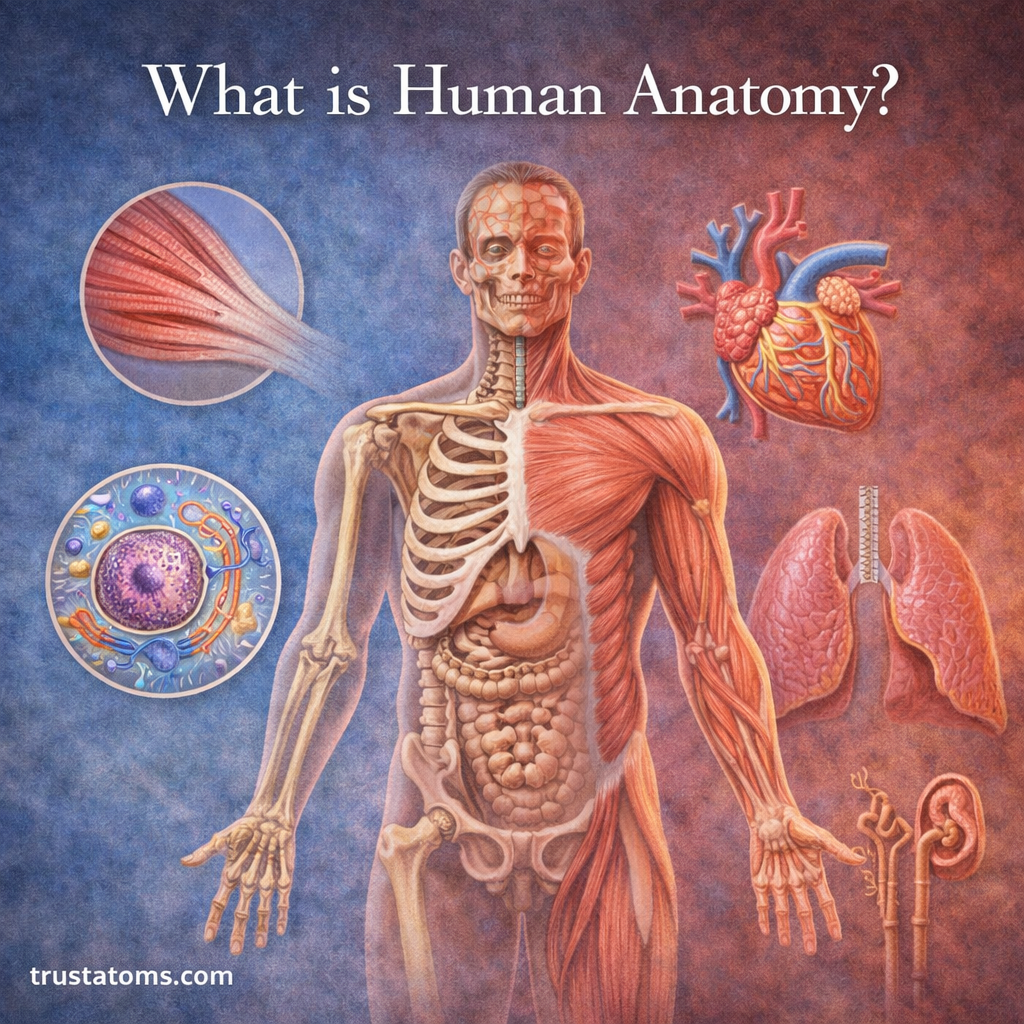
Human anatomy is the scientific study of the structure of the human body. It explores how different body parts are organized, how they relate to one another, and how their structure supports function.
From bones and muscles to organs and tissues, anatomy provides the foundation for understanding how the human body works.
What Does Human Anatomy Study?
Human anatomy focuses on the physical structures of the body, including:
- Organs (heart, lungs, brain)
- Tissues (muscle, connective, nervous tissue)
- Cells (basic units of life)
- Systems (groups of organs working together)
It answers questions like:
- Where is a structure located?
- What is it made of?
- How is it connected to other structures?
Anatomy vs Physiology
Anatomy is often paired with physiology, but they are not the same.
Anatomy
- Focuses on structure
- Examines form, shape, and organization
Physiology
- Focuses on function
- Explains how body parts work
Simple Comparison
- Anatomy = what something is
- Physiology = what something does
Both fields work together to give a complete understanding of the body.
Levels of Organization in the Human Body
The human body is organized into several levels, from simplest to most complex.
1. Chemical Level
- Atoms and molecules (e.g., water, proteins)
- Form the building blocks of cells
2. Cellular Level
- Cells are the smallest units of life
- Examples: nerve cells, muscle cells
3. Tissue Level
Groups of similar cells working together:
- Epithelial tissue (covers surfaces)
- Muscle tissue (movement)
- Nervous tissue (communication)
- Connective tissue (support)
4. Organ Level
Structures made of multiple tissue types:
- Heart
- Liver
- Brain
5. Organ System Level
Groups of organs working together:
- Circulatory system
- Respiratory system
- Digestive system
6. Organism Level
- The complete human body
- All systems working together
Major Branches of Human Anatomy
Human anatomy can be studied in different ways depending on the level of detail.
Gross Anatomy (Macroscopic)
- Study of structures visible to the naked eye
- Includes organs, muscles, and bones
Subtypes:
- Regional anatomy (specific body areas)
- Systemic anatomy (by organ systems)
- Surface anatomy (external features)
Microscopic Anatomy
- Study of structures not visible without a microscope
Includes:
- Histology (study of tissues)
- Cytology (study of cells)
Developmental Anatomy
- Examines changes in the body over time
- Includes embryology (development before birth)
Major Systems of the Human Body
The body is made up of multiple organ systems, each with specific functions.
Key Systems Include:
- Skeletal system
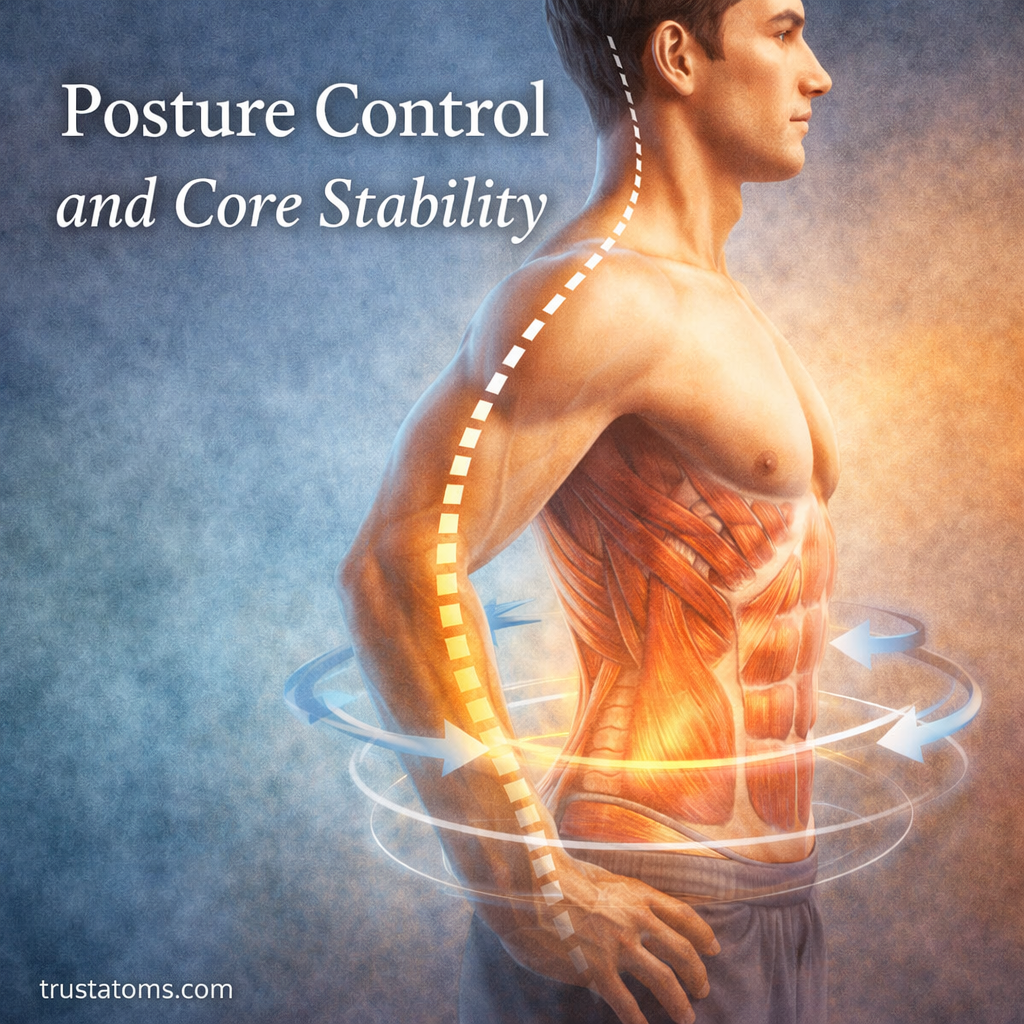
Supports the body and protects organs - Muscular system
Enables movement - Nervous system
Controls and coordinates activities - Circulatory system
Transports oxygen and nutrients - Respiratory system
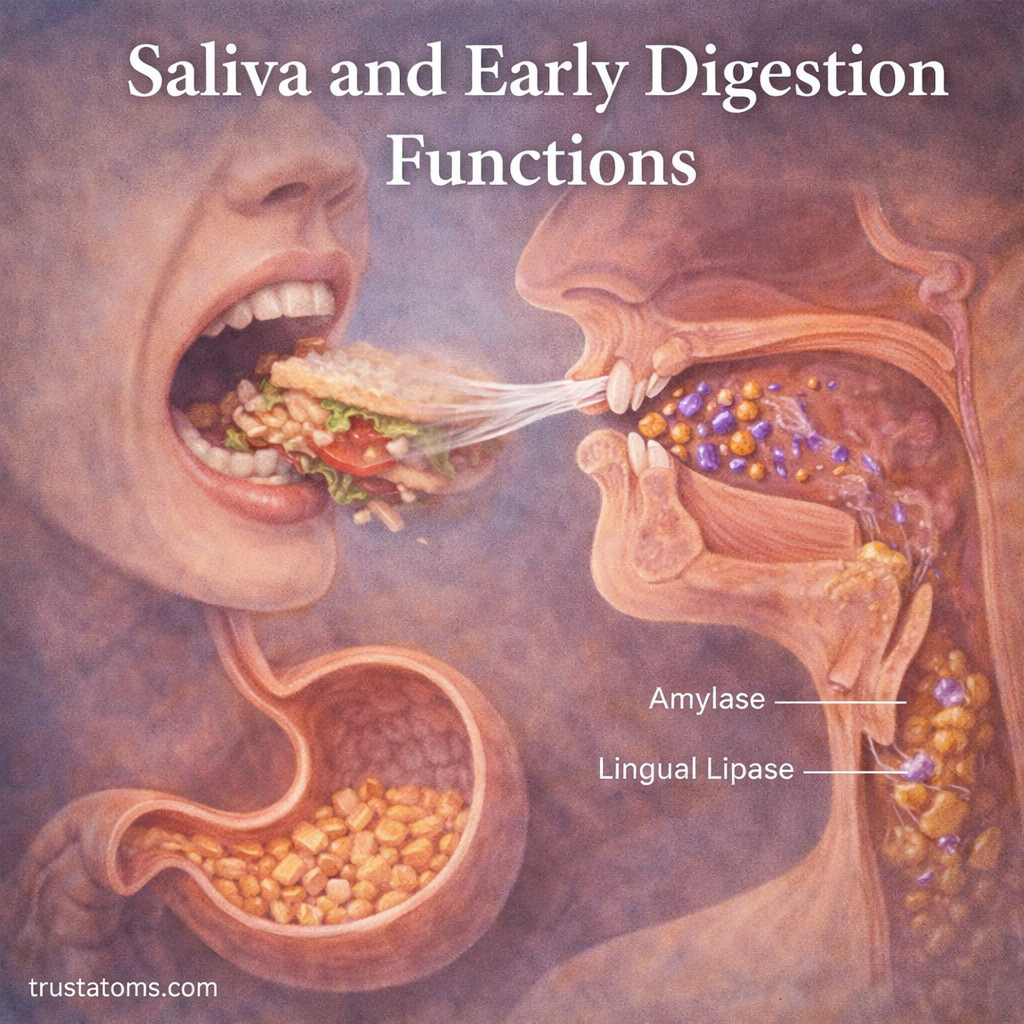
Facilitates breathing - Digestive system
Breaks down food and absorbs nutrients - Endocrine system
Regulates hormones - Urinary system
Removes waste - Immune/lymphatic system
Defends against disease - Reproductive system
Enables reproduction
Why Is Human Anatomy Important?
Understanding human anatomy has practical and real-world benefits.
In Healthcare
- Helps diagnose diseases
- Guides medical procedures
- Supports patient care
In Everyday Life
- Improves body awareness
- Supports fitness and injury prevention
- Enhances understanding of health
In Education and Research
- Forms the foundation for biology and medicine
- Helps develop new treatments and technologies
Common Anatomical Terms
Anatomy uses specific terms to describe locations and directions in the body.
Directional Terms
- Anterior (front)
- Posterior (back)
- Superior (above)
- Inferior (below)
- Medial (toward the center)
- Lateral (away from the center)
Body Planes
- Sagittal plane (left/right division)
- Frontal plane (front/back division)
- Transverse plane (top/bottom division)
These terms allow clear and consistent communication in science and medicine.
How Human Anatomy Is Studied
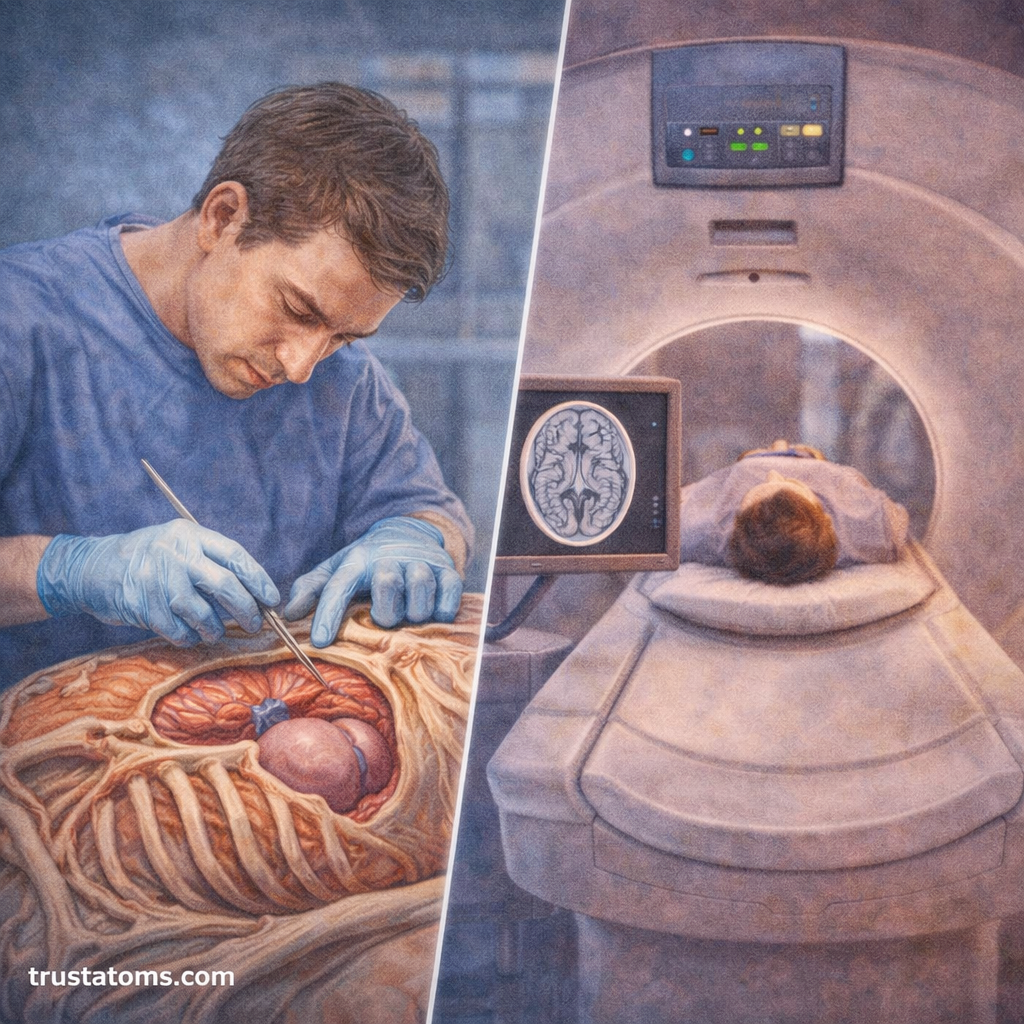
There are several methods used to study anatomy.
Common Approaches
- Dissection
Examining real human or animal bodies - Medical imaging
Includes X-rays, MRI, and CT scans - Models and diagrams
Used for education and visualization - Digital tools
3D simulations and virtual anatomy platforms
Relationship Between Structure and Function
A key principle in anatomy is that structure supports function.
Examples
- The heart’s muscular walls allow it to pump blood
- The lungs’ large surface area enables efficient gas exchange
- Bones provide both support and protection
Understanding structure helps explain how the body works.
Final Thoughts
Human anatomy is the foundation of understanding the human body. By studying the structure of cells, tissues, organs, and systems, you gain insight into how the body is organized and how it functions as a whole.
Whether you’re interested in healthcare, fitness, or general knowledge, anatomy provides essential tools for understanding life itself.