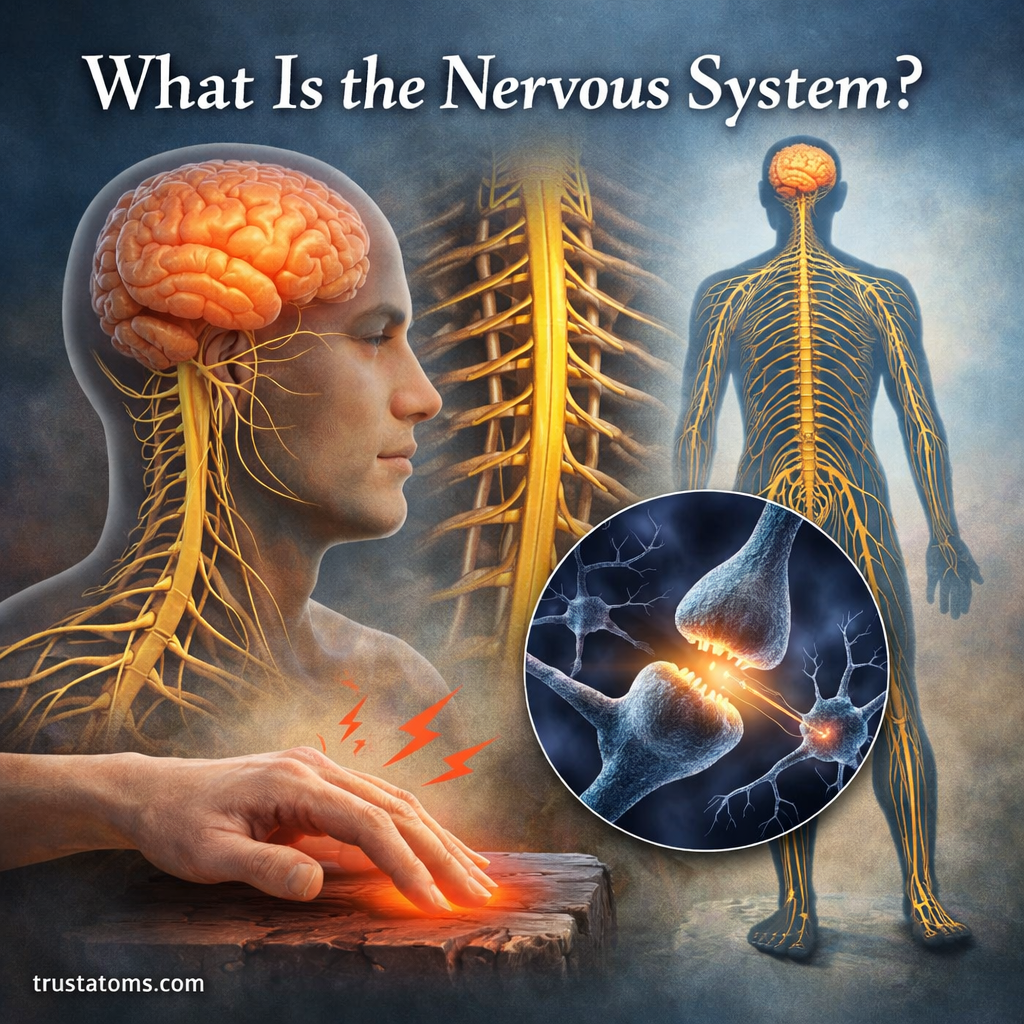
The nervous system is the body’s communication and control network. It allows different parts of the body to send, receive, and process information so that we can move, think, feel, and respond to our environment.
Every time you blink, touch something hot, remember a name, or take a step, the nervous system is coordinating the activity behind the scenes. It connects the brain, spinal cord, and nerves throughout the body, allowing billions of cells to communicate through electrical and chemical signals.
In simple terms, the nervous system acts like the body’s internal messaging system—detecting changes, interpreting them, and directing appropriate responses.
The Basic Function of the Nervous System
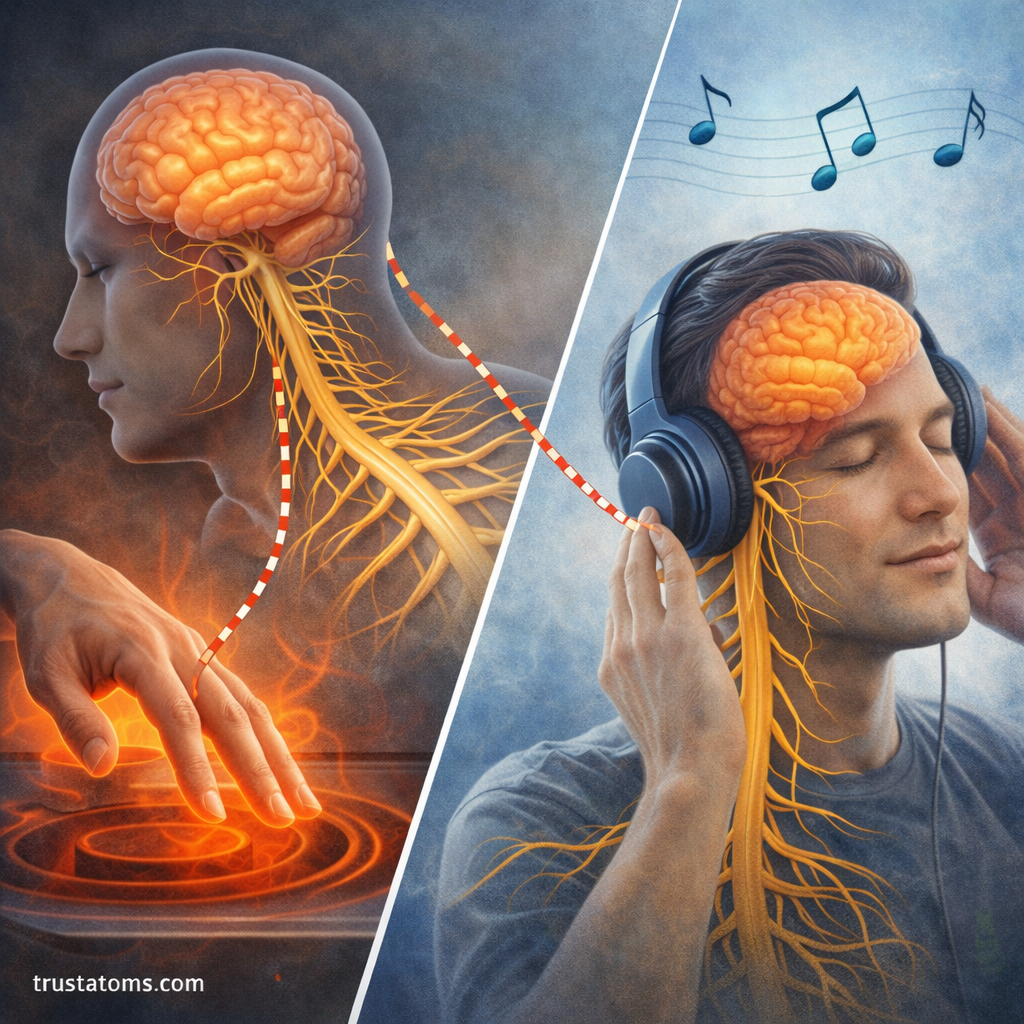
The nervous system performs three main functions that keep the body operating smoothly.
1. Sensory Input
Sensory receptors located throughout the body detect changes in the environment, both inside and outside the body.
Examples include:
- Light detected by the eyes
- Sound detected by the ears
- Temperature sensed by the skin
- Internal signals like hunger or pain
These signals are sent to the brain and spinal cord through sensory nerves.
2. Information Processing
Once sensory information reaches the brain or spinal cord, it is analyzed and interpreted.
For example:
- The brain recognizes a hot surface
- It identifies potential danger
- It decides that the hand should move away
This processing happens extremely quickly—often within milliseconds.
3. Motor Output
After the information is interpreted, the nervous system sends instructions to muscles or glands.
Examples include:
- Pulling your hand away from heat
- Contracting muscles to walk or run
- Releasing hormones from glands
These commands travel through motor nerves to the appropriate body parts.
Major Parts of the Nervous System
The nervous system is divided into two main structural components.
Central Nervous System (CNS)
The central nervous system is the body’s control center. It consists of:
- The brain
- The spinal cord
The CNS processes incoming information and determines how the body should respond.
The Brain
The brain is the most complex organ in the human body. It controls:
- Thinking and reasoning
- Memory and emotions
- Voluntary movements
- Sensory interpretation
- Automatic processes like breathing and heartbeat
Different regions of the brain specialize in different functions.
The Spinal Cord
The spinal cord is a long bundle of nerve tissue extending from the brain down the back.
Its roles include:
- Carrying messages between the brain and body
- Controlling certain reflexes
Reflex actions—like quickly pulling your hand away from something sharp—can happen through the spinal cord before the brain even processes the event.
Peripheral Nervous System (PNS)
The peripheral nervous system includes all the nerves outside the brain and spinal cord.
These nerves act as communication lines between the CNS and the rest of the body.
The PNS connects to:
- Muscles
- Organs
- Skin
- Sensory receptors
It allows the brain and spinal cord to gather information and control body activity.
Two Divisions of the Peripheral Nervous System
The peripheral nervous system itself is further divided based on how the body responds.
Somatic Nervous System
The somatic nervous system controls voluntary actions—things you consciously decide to do.
Examples include:
- Walking
- Writing
- Speaking
- Moving your arms or legs
It also carries sensory information from the skin, muscles, and joints to the brain.
Autonomic Nervous System
The autonomic nervous system controls involuntary processes that happen automatically.
These include:
- Heart rate
- Digestion
- Breathing
- Blood pressure
- Gland activity
The autonomic system works continuously to maintain balance in the body.
Sympathetic vs. Parasympathetic Systems
The autonomic nervous system has two important subdivisions that regulate how the body reacts to stress or relaxation.
Sympathetic Nervous System
Often called the “fight or flight” system, the sympathetic nervous system prepares the body to handle emergencies or intense activity.
Typical responses include:
- Increased heart rate
- Faster breathing
- Dilated pupils
- Increased blood flow to muscles
These changes help the body react quickly in stressful situations.
Parasympathetic Nervous System
The parasympathetic system is often called the “rest and digest” system.
It helps the body relax and conserve energy by:
- Slowing the heart rate
- Promoting digestion
- Lowering blood pressure
- Supporting recovery and repair
Both systems work together to keep the body balanced depending on the situation.
The Role of Neurons
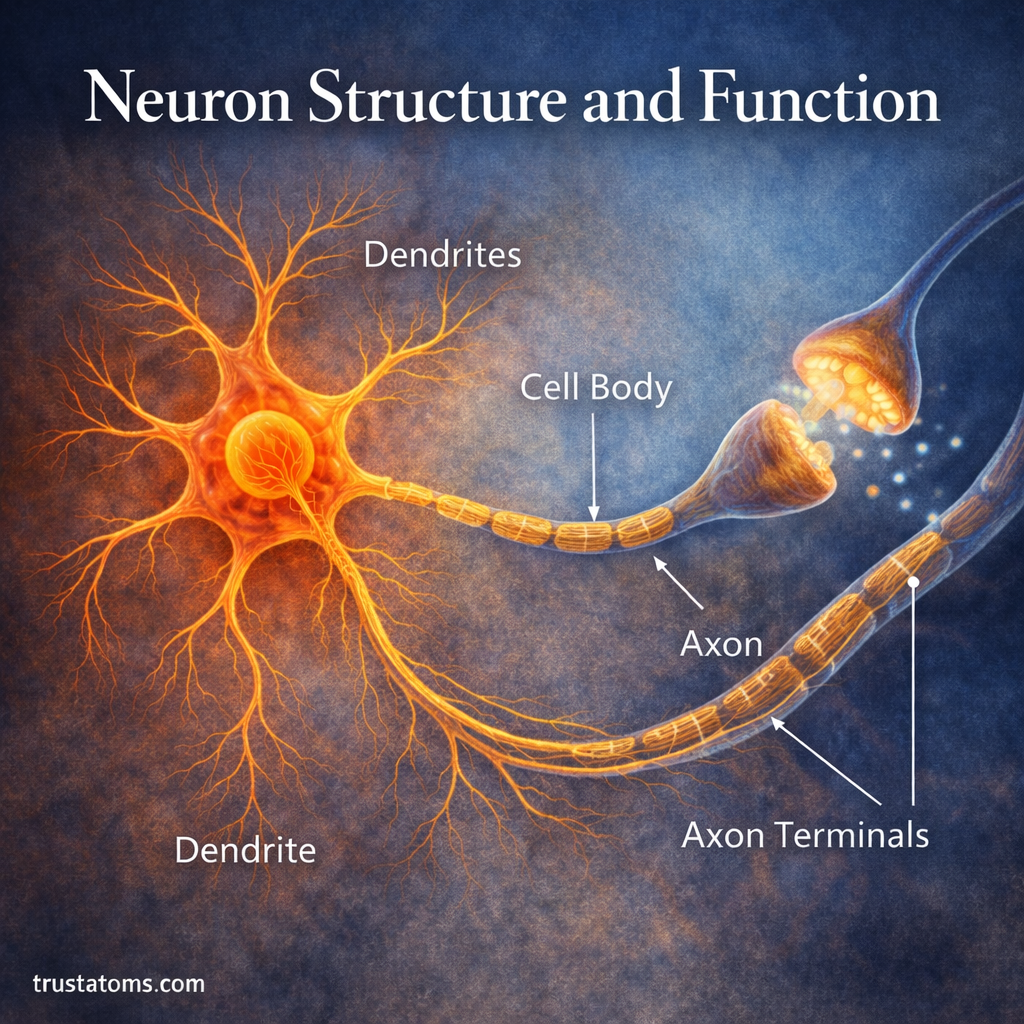
The nervous system relies on specialized cells called neurons to transmit information.
Neurons communicate using electrical impulses and chemical signals.
A typical neuron has three main parts:
- Dendrites – receive signals from other cells
- Cell body – processes the information
- Axon – sends signals to other neurons, muscles, or glands
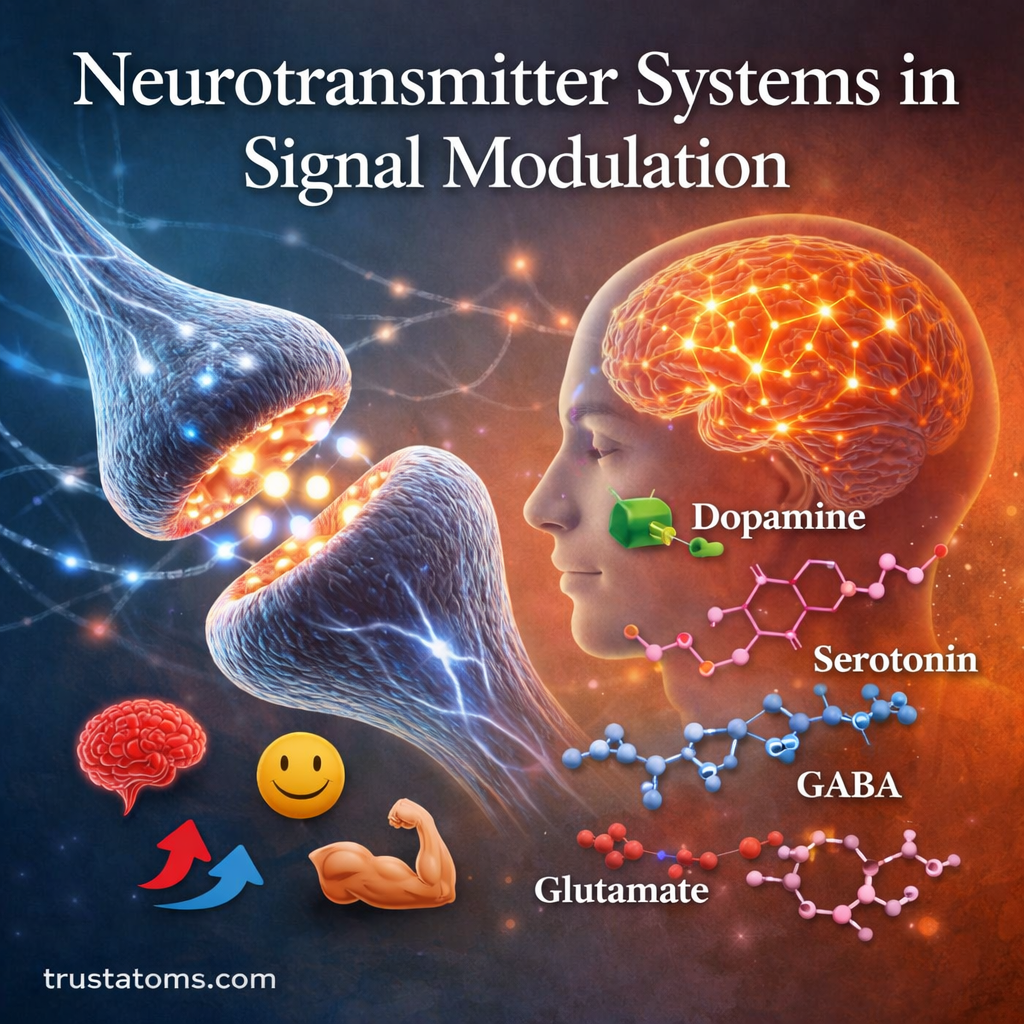
Signals travel along neurons and cross small gaps called synapses using chemicals known as neurotransmitters.
This rapid communication network allows the nervous system to coordinate body activities almost instantly.
How Fast Does the Nervous System Work?
Signals in the nervous system travel extremely quickly.
Some nerve impulses can move at speeds of up to 120 meters per second (about 270 miles per hour).
Because of this speed:
- Reflexes occur almost instantly
- Muscles respond quickly to commands
- Sensory information is processed rapidly
This efficiency allows humans to react to danger and interact smoothly with the environment.
Why the Nervous System Is Essential
The nervous system is critical for survival because it regulates nearly every function in the body.
It controls:
- Movement and coordination
- Sensation and perception
- Memory and learning
- Emotional responses
- Automatic bodily functions
Without the nervous system, the body would not be able to detect changes in the environment or coordinate actions.
It also works closely with the endocrine system (hormones) to maintain homeostasis, the stable internal balance necessary for life.
Common Conditions Affecting the Nervous System
Because the nervous system controls so many functions, disorders affecting it can have wide-ranging effects.
Examples include:
- Alzheimer’s disease – affects memory and cognitive function
- Parkinson’s disease – affects movement control
- Multiple sclerosis – damages nerve communication
- Epilepsy – causes abnormal electrical activity in the brain
- Stroke – interrupts blood flow to brain tissue
Understanding how the nervous system works helps scientists and doctors develop treatments for these conditions.
The Nervous System in Everyday Life
Many of the actions people perform each day rely on the nervous system working behind the scenes.
Examples include:
- Reading and understanding words
- Feeling temperature changes
- Maintaining balance while walking
- Reacting to sudden noises
- Learning new skills
Even during sleep, the nervous system continues to regulate breathing, heart rate, and other vital processes.
Final Thoughts
The nervous system is one of the most complex and essential systems in the human body. By linking the brain, spinal cord, and a vast network of nerves, it enables communication between every part of the body.
From simple reflexes to complex thoughts and emotions, the nervous system coordinates the signals that allow humans to interact with the world, maintain internal balance, and perform everyday tasks.
Understanding the nervous system provides insight into how the body functions as an integrated system—and why protecting brain and nerve health is so important for overall well-being.