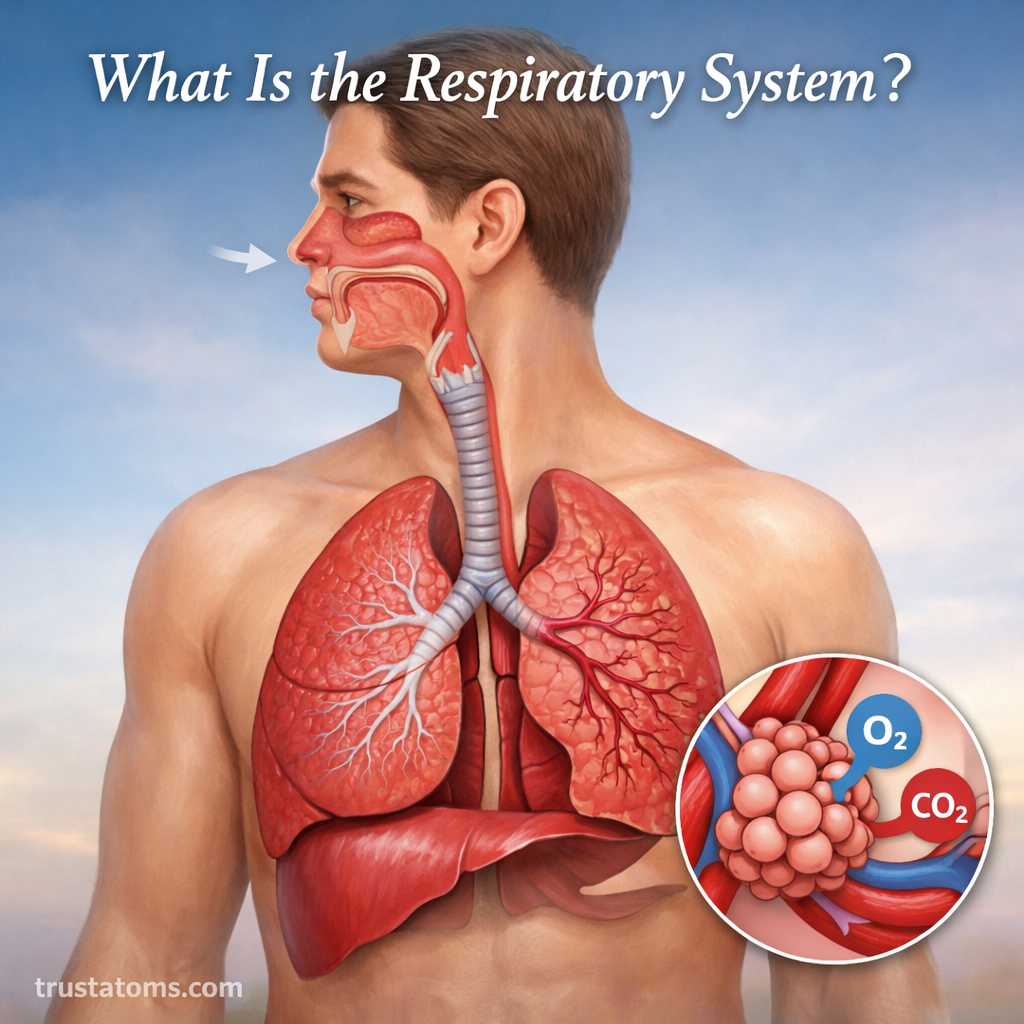
The respiratory system is the body’s network of organs and tissues responsible for breathing. Its main job is to bring oxygen into the body and remove carbon dioxide, a waste gas produced by cells. This process is essential for survival because every cell depends on oxygen to produce energy.
From the moment you take your first breath, your respiratory system works continuously—often without you even noticing.
Overview of the Respiratory System
The respiratory system includes several key structures that work together to move air in and out of the body and exchange gases efficiently.
Main Functions
- Supply oxygen to the bloodstream
- Remove carbon dioxide from the body
- Help regulate blood pH levels
- Enable speech and vocalization
- Support the sense of smell
Major Parts of the Respiratory System
Each part of the respiratory system has a specific role in breathing and gas exchange.
Upper Respiratory Tract
The upper respiratory tract prepares air before it reaches the lungs.
- Nose and nasal cavity – Filters, warms, and moistens incoming air
- Sinuses – Help regulate temperature and humidity
- Pharynx (throat) – Passageway for air moving toward the lungs
Lower Respiratory Tract
The lower respiratory tract is where air is transported and gas exchange occurs.
- Larynx (voice box) – Produces sound and keeps airways open
- Trachea (windpipe) – Carries air into the lungs
- Bronchi – Two main branches leading into each lung
- Bronchioles – Smaller airways that distribute air within the lungs
- Alveoli – Tiny air sacs where oxygen and carbon dioxide are exchanged
How the Respiratory System Works
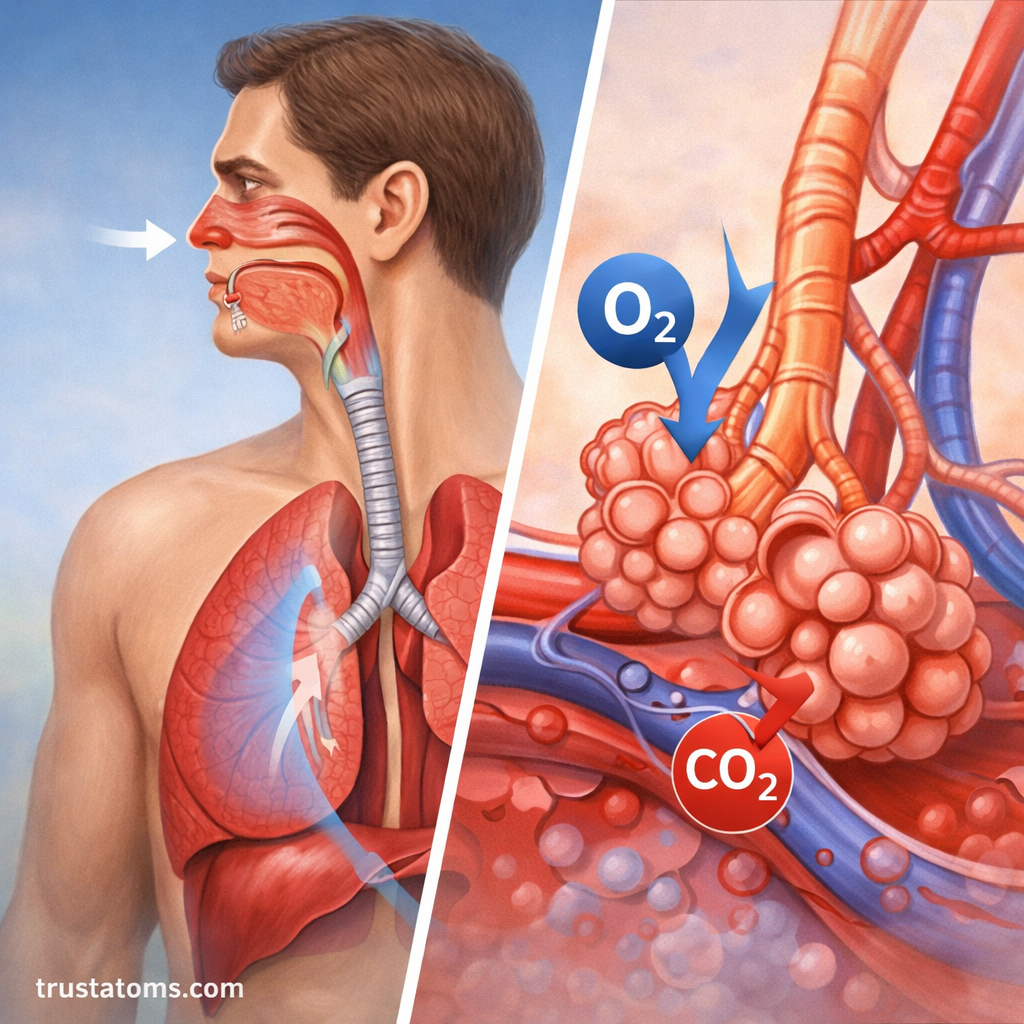
Breathing involves two main phases: inhalation and exhalation.
Inhalation (Breathing In)
- The diaphragm contracts and moves downward
- The chest cavity expands
- Air is pulled into the lungs through the nose or mouth
- Oxygen travels into the alveoli and enters the bloodstream
Exhalation (Breathing Out)
- The diaphragm relaxes and moves upward
- The chest cavity decreases in size
- Carbon dioxide moves from the blood into the alveoli
- Air is pushed out of the lungs
This continuous cycle keeps oxygen levels stable and removes waste gases efficiently.
Gas Exchange in the Lungs
Gas exchange occurs in the alveoli, which are surrounded by tiny blood vessels called capillaries.
- Oxygen passes from the alveoli into the blood
- Carbon dioxide moves from the blood into the alveoli
- The circulatory system then transports oxygen to cells throughout the body
This process happens rapidly and efficiently, allowing the body to meet its energy demands.
Why the Respiratory System Is Important
Without the respiratory system, the body would not be able to perform even the most basic functions. Oxygen is required for cellular respiration, the process that produces energy in cells.
Key reasons it’s essential:
- Fuels energy production in every cell
- Removes harmful carbon dioxide
- Supports brain function and organ health
- Enables communication through speech
How the Respiratory System Works with Other Systems
The respiratory system does not work alone. It closely interacts with other body systems.
Circulatory System
- Transports oxygen from the lungs to tissues
- Carries carbon dioxide back to the lungs
Nervous System
- Controls breathing rate automatically
- Adjusts breathing during exercise or stress
Muscular System
- Diaphragm and intercostal muscles enable breathing movements
Common Respiratory Conditions
Several conditions can affect how well the respiratory system functions.
- Asthma – Narrowed airways causing difficulty breathing
- Bronchitis – Inflammation of the bronchial tubes
- Pneumonia – Infection of the lungs
- Chronic Obstructive Pulmonary Disease (COPD) – Long-term airflow limitation
Understanding these conditions highlights the importance of maintaining respiratory health.
Tips for Keeping Your Respiratory System Healthy
You can support your respiratory system with simple lifestyle habits:
- Avoid smoking and exposure to pollutants
- Exercise regularly to strengthen lung capacity
- Practice good hygiene to prevent infections
- Maintain good indoor air quality
- Stay hydrated to keep airways moist
Final Thoughts
The respiratory system is vital for life, quietly working around the clock to supply oxygen and remove waste gases. From the nose to the alveoli, each part plays a role in ensuring your body functions properly.
By understanding how it works, you can better appreciate its importance and take steps to keep it healthy for the long term.