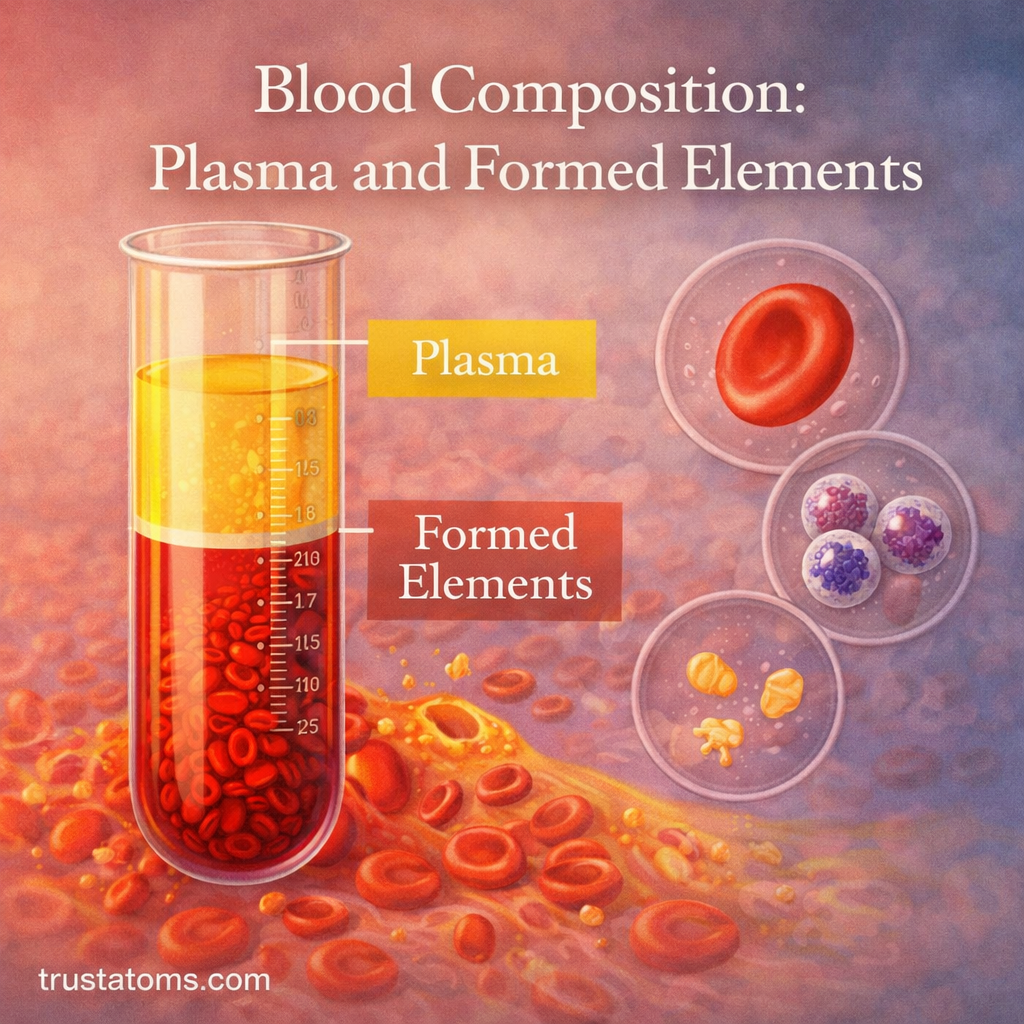
Blood is composed of two main parts: plasma, the liquid portion, and formed elements, which include red blood cells, white blood cells, and platelets. Plasma makes up approximately 55% of blood volume, while formed elements account for about 45%, although these proportions vary among individuals.
Understanding blood composition connects human anatomy with the everyday functions of circulation. Each component contributes differently to oxygen transport, immune defense, clot formation, and the regulation of the body’s internal environment.
Overview of Blood Composition
Blood is a specialized connective tissue containing cells and cell fragments suspended in liquid plasma. Its composition allows it to transport materials throughout the body while responding to injuries and infections.
| Component | Approximate proportion | Primary function |
|---|---|---|
| Plasma | 55% | Transports dissolved substances and maintains fluid balance |
| Red blood cells | Most of the remaining 45% | Transport oxygen and help carry carbon dioxide |
| White blood cells and platelets | Less than 1% combined | Immune defense and clot formation |
The percentage of blood occupied by red blood cells is called hematocrit. Changes in this measurement can affect how easily blood flows through vessels, as explained in hematocrit and blood viscosity.
What Is Blood Plasma Made Of?
Plasma is the pale yellow liquid that surrounds blood cells. It accounts for slightly more than half of normal blood volume and carries dissolved substances between organs and tissues.
Approximately 90–92% of plasma is water. The remainder contains proteins, electrolytes, nutrients, hormones, gases, and metabolic waste products.
Major Components of Plasma
- Water: Provides the liquid medium for transporting substances and distributing heat.
- Albumin: Helps maintain osmotic pressure, keeping fluid within blood vessels.
- Globulins: Include antibodies and proteins involved in transport and immune defense.
- Fibrinogen: A clotting protein that is converted into fibrin during coagulation.
- Electrolytes: Sodium, potassium, calcium, and other ions support fluid balance and cellular activity.
- Other dissolved substances: Include glucose, amino acids, hormones, urea, and dissolved gases.
Plasma also helps distribute heat and transport waste products toward organs responsible for their removal, including the kidneys and lungs.
What Are the Formed Elements of Blood?
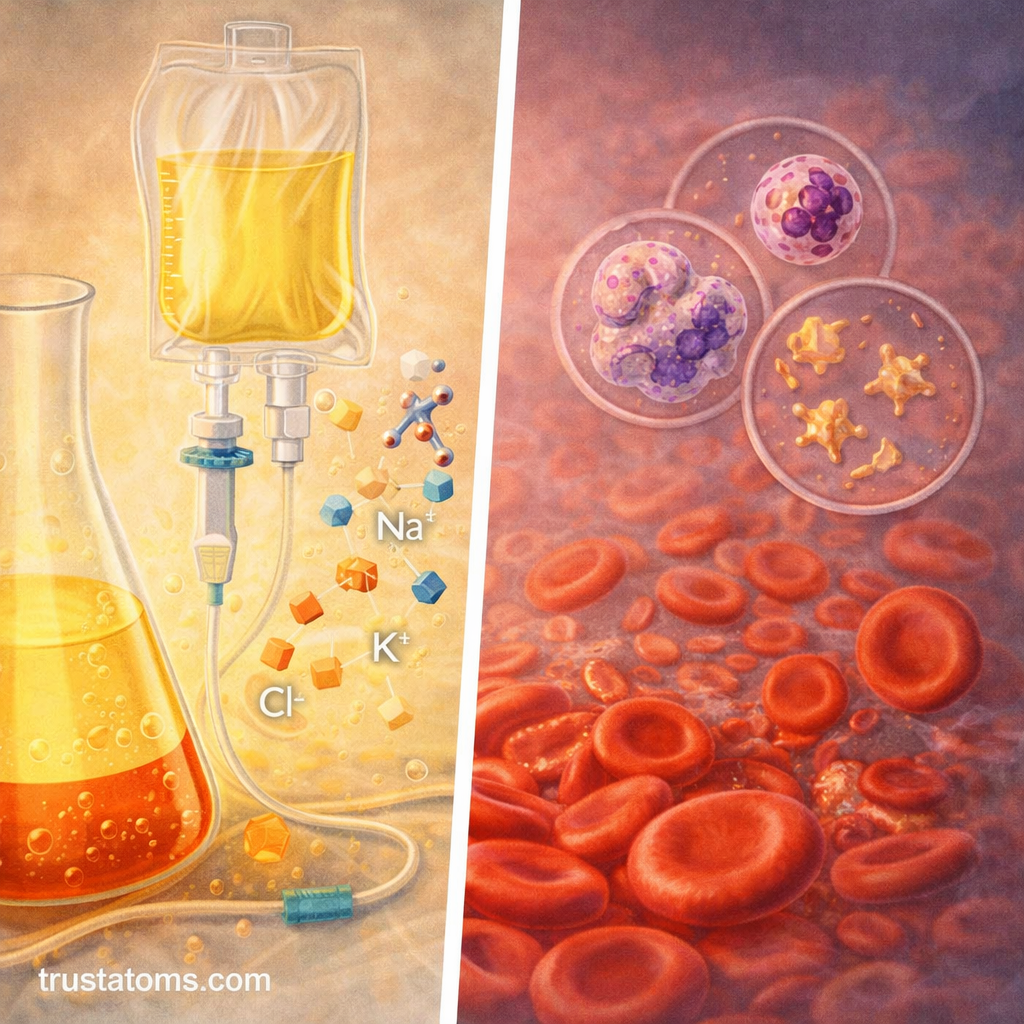
Formed elements are the cellular components of blood. They include red blood cells, white blood cells, and platelets. Although grouped together, platelets are cell fragments rather than complete cells.
Red Blood Cells: Transporting Oxygen
Red blood cells, or erythrocytes, are the most numerous formed elements. Their primary function is carrying oxygen from the lungs to body tissues using hemoglobin, an iron-containing protein.
Mature human red blood cells lack a nucleus and have a flexible, biconcave shape. This structure provides a large surface area for gas exchange and helps them pass through narrow capillaries. They also contribute to transporting carbon dioxide from tissues toward the lungs.
A typical red blood cell circulates for approximately 120 days before aging cells are removed, mainly by the spleen and liver. The bone marrow continually produces replacements.
White Blood Cells: Defending Against Infection
White blood cells, or leukocytes, help identify and respond to infections, damaged tissues, and other threats. Unlike mature red blood cells, they contain nuclei and can move from blood vessels into surrounding tissues.
The five major types have different functions:
- Neutrophils: Respond rapidly to many bacterial and fungal infections.
- Lymphocytes: Include B cells, T cells, and natural killer cells involved in immune responses.
- Monocytes: Can develop into macrophages and other immune cells within tissues.
- Eosinophils: Participate in responses to parasites and allergic conditions.
- Basophils: Release inflammatory mediators, including histamine.
Some white blood cells circulate briefly before entering tissues, while others remain in circulation longer. The article on white blood cells in circulation explains how these immune cells move through the bloodstream.
Platelets: Helping Stop Bleeding
Platelets, also called thrombocytes, are small fragments released from megakaryocytes in the bone marrow. They help stop bleeding by adhering to damaged blood vessels and forming an initial plug.
They also provide surfaces that support clotting-factor reactions. These reactions produce fibrin, which reinforces the platelet plug. Circulating platelets generally survive for about 7–10 days.
How Blood Components Work Together After an Injury
Imagine accidentally cutting your finger while chopping vegetables. Several blood components respond at nearly the same time:
- Blood vessels constrict: The damaged vessel narrows, reducing blood loss.
- Platelets gather: Platelets attach to exposed structures and form a temporary plug.
- Plasma proteins activate: Clotting factors generate fibrin strands that reinforce the plug.
- White blood cells respond: Immune cells help protect the injured tissue and support cleanup.
- Circulation continues: Red blood cells deliver oxygen to surrounding tissues as healing progresses.
This example shows why blood cannot function as plasma or cells alone. Its components work together to control bleeding, maintain tissue oxygenation, and support recovery.
How Blood Tests Measure Composition
A complete blood count (CBC) measures several characteristics of the formed elements, including red blood cell count, hemoglobin, hematocrit, white blood cell count, and platelet count.
These measurements help clinicians investigate conditions such as anemia, infection, inflammation, and certain bleeding disorders.
Plasma components are evaluated through other laboratory tests. For example, metabolic panels can measure electrolytes and selected proteins, while specialized tests assess clotting function.
An abnormal result does not automatically identify a particular disease. Results must be interpreted alongside symptoms, medical history, and the laboratory’s reference ranges.
Frequently Asked Questions
What percentage of blood is plasma?
Plasma typically makes up about 55% of blood volume, although the proportion varies with factors such as hydration and hematocrit. Formed elements occupy the remaining volume, mostly as red blood cells.
What is the difference between plasma and serum?
Plasma is the liquid portion of blood that retains clotting proteins, including fibrinogen. Serum is the liquid remaining after blood has clotted, so it lacks much of the fibrinogen consumed during clot formation.
Are platelets considered blood cells?
Platelets are classified as formed elements, but they are not complete cells. They are fragments of large bone marrow cells called megakaryocytes and specialize in helping control bleeding.
Blood composition reflects a coordinated system rather than a single fluid. Plasma transports dissolved materials, red blood cells carry oxygen, white blood cells provide immune defense, and platelets help control bleeding. Understanding these differences also makes common laboratory measurements, such as hematocrit and platelet count, easier to interpret.
This article is for general education and is not medical advice. Talk to a qualified health professional about any medical concern.
Sources: Guyton and Hall Textbook of Medical Physiology; OpenStax Anatomy and Physiology 2e; Merck Manual Professional Edition.