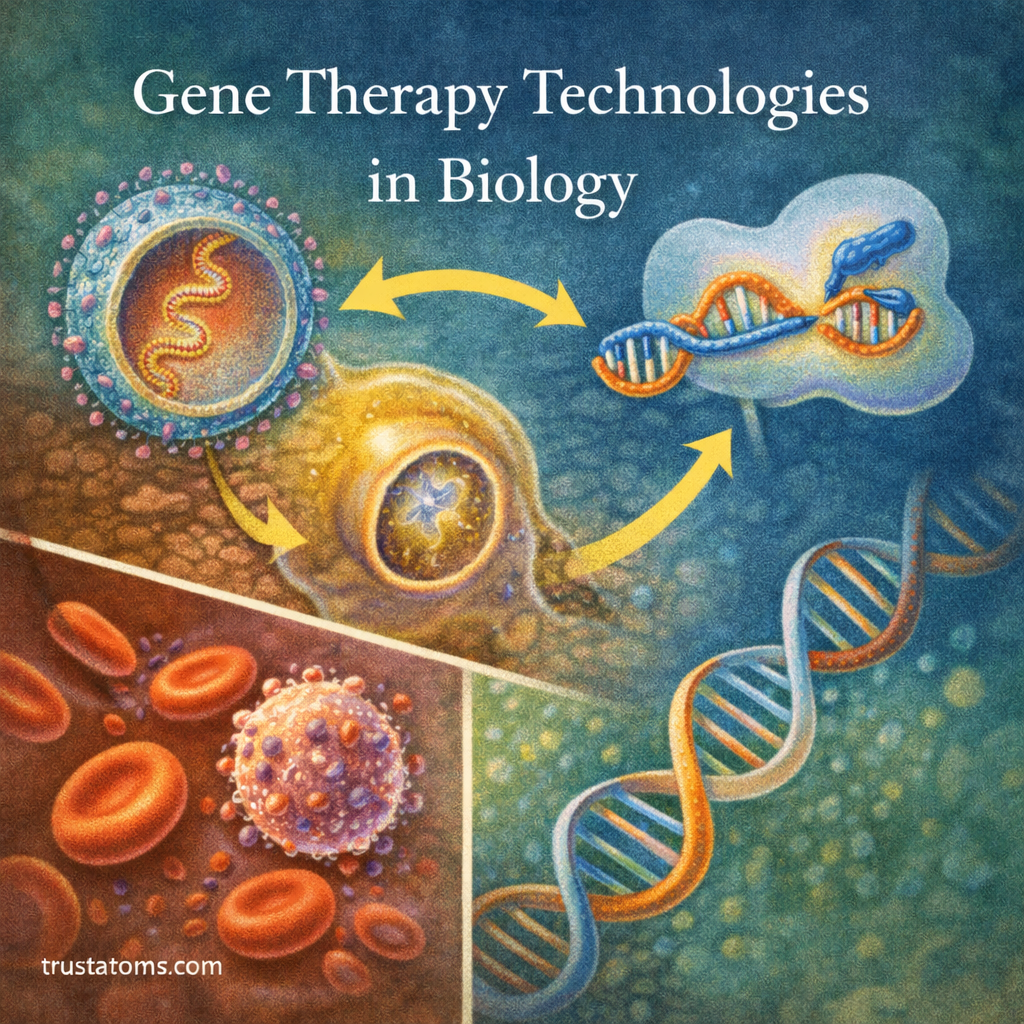
Gene therapy technologies are medical approaches that introduce, modify, or regulate genetic material in cells to treat disease. They work by addressing specific biological problems, such as a missing protein, a harmful genetic mutation, or an immune system that cannot effectively recognize cancer cells.
Advances in molecular biology, genetic engineering, and biotechnology have made gene therapy technologies increasingly precise and effective for selected conditions. Within modern biology, these treatments demonstrate how understanding DNA, proteins, and cellular processes can lead to new medical approaches.
What Is Gene Therapy?
Gene therapy is a treatment approach that changes genetic function in a person’s cells to prevent, manage, or treat disease. Unlike medicines that must be taken repeatedly to control symptoms, some gene therapies aim to produce a lasting biological effect after a single treatment.
Gene therapy does not always involve correcting a mutation. Different treatments use different strategies depending on the disease and the cells involved.
- Gene addition: Introduces a functioning gene so cells can produce a needed protein.
- Gene editing: Changes a selected DNA sequence or regulatory region.
- Gene silencing: Reduces the activity of a gene associated with disease.
- Cell modification: Gives cells new abilities, such as recognizing particular cancer cells.
The most appropriate strategy depends on whether a disease results from insufficient gene activity, a harmful gene product, or another cellular problem.
How Gene Therapy Works
Most gene therapies require a way to deliver genetic material or editing components into the correct cells. Researchers must also ensure that the resulting genetic change produces a useful effect without causing unacceptable harm.
A typical treatment-development process involves several stages:
- Identify the biological target: Determine which gene, protein, or cellular pathway contributes to the disease.
- Choose a therapeutic strategy: Decide whether to add a gene, edit DNA, silence gene activity, or modify cells.
- Prepare the delivery system: Package genetic material or editing components for transfer into cells.
- Administer the treatment: Deliver it directly into the body or modify cells outside the body before returning them.
- Monitor the outcome: Evaluate therapeutic effects, side effects, and long-term safety.
These steps differ considerably between therapies. Some treatments deliver a gene to cells inside the body, while others require collecting and processing a patient’s cells in a specialized laboratory.
Gene Delivery Systems
Delivering genetic material into the intended cells is one of the most difficult parts of gene therapy. DNA and RNA cannot always enter cells efficiently on their own, so specialized delivery systems are often necessary.
Viral Vectors
Viruses naturally deliver genetic material into cells. Scientists can engineer viral vectors to carry therapeutic sequences while removing or disabling components associated with normal viral replication.
Common vector types include:
- Adeno-associated virus (AAV): Often used to deliver genes to tissues such as the eye, liver, or nervous system.
- Lentiviral vectors: Can integrate genetic material into cellular DNA and are frequently used to modify cells outside the body.
- Adenoviral vectors: Can deliver genetic material without normally integrating it into the host genome.
Viral vectors differ in carrying capacity, tissue targeting, and whether their genetic material integrates into chromosomes. Potential concerns include immune responses, limited delivery efficiency, and unwanted effects associated with genetic integration.
Non-Viral Delivery Methods
Non-viral approaches use physical or chemical methods to transfer genetic material. They can avoid some limitations of viral vectors, although successful delivery remains challenging.
- Lipid nanoparticles: Enclose nucleic acids within lipid-based particles that help transport them into cells.
- Electroporation: Uses brief electrical pulses to temporarily increase cell membrane permeability.
- Synthetic carriers: Use engineered polymers or other materials to protect and transport genetic material.
Electroporation is particularly useful when cells can be collected and modified in a laboratory. Lipid-based delivery is being investigated for applications involving different tissues and therapeutic molecules.
Gene Editing Technologies Used in Therapy
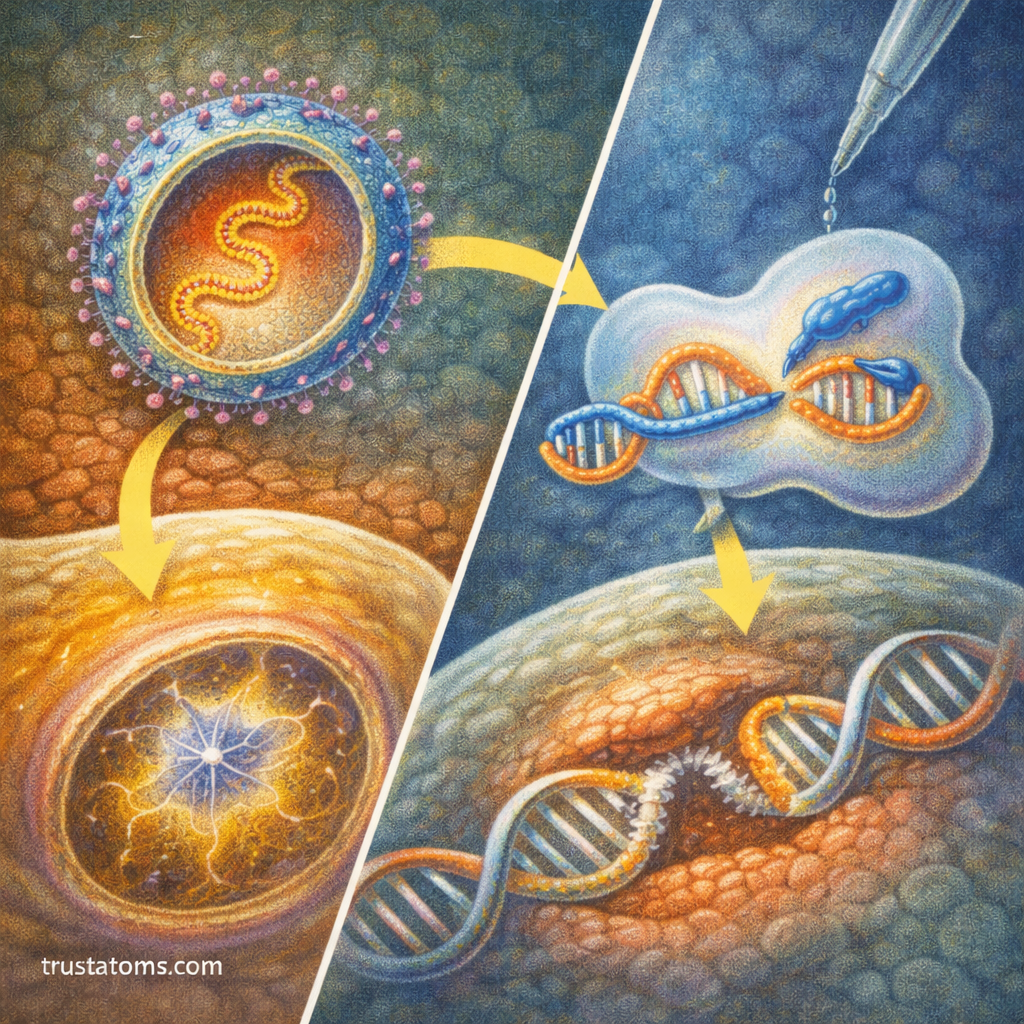
Gene editing differs from traditional gene addition because it changes DNA at a targeted location. Researchers may disrupt a harmful gene, modify a regulatory sequence, or attempt to correct a mutation.
CRISPR-Cas technology is one of the most widely used gene editing tools today. Many CRISPR systems use a guide RNA to recognize a target DNA sequence and a Cas enzyme to cut the DNA, allowing cellular repair processes to produce genetic changes.
Other systems include zinc finger nucleases and transcription activator-like effector nucleases, commonly called TALENs. Both use engineered DNA-binding proteins to direct cutting enzymes toward selected genomic regions.
Gene Editing Technologies in Modern Biology compares these systems and explains how newer approaches, including base editing and prime editing, expand the range of possible DNA modifications.
Editing human cells also introduces questions about unintended DNA changes, informed consent, and acceptable medical uses. Genome Editing Ethics and Applications explores these concerns in greater detail.
In Vivo and Ex Vivo Gene Therapy
Gene therapies can be classified according to where the genetic modification takes place.
| Approach | How It Works | Example |
|---|---|---|
| In vivo | Genetic material is delivered directly into the patient’s body. | Delivering a therapeutic gene to retinal cells. |
| Ex vivo | Cells are collected, genetically modified outside the body, and returned. | Modifying blood stem cells or immune cells. |
In vivo treatment avoids the need to collect and return cells but requires effective delivery to the intended tissue. Ex vivo treatment allows researchers to examine modified cells before administration, although collecting, processing, and reinfusing cells can be medically demanding.
A Real-World Example: Treating Sickle Cell Disease
Sickle cell disease is caused by a mutation affecting hemoglobin, the protein that carries oxygen in red blood cells. Abnormal hemoglobin can cause cells to become rigid and sickle-shaped, contributing to painful episodes and organ damage.
One approved gene-editing treatment, known as Casgevy, modifies a patient’s own blood-forming stem cells outside the body. CRISPR-Cas9 editing targets a regulatory region associated with the BCL11A gene, allowing the modified cells to produce more fetal hemoglobin.
Fetal hemoglobin can reduce the tendency of red blood cells to sickle. After preparative chemotherapy, the edited stem cells are infused back into the patient, where they can establish blood cell production.
This treatment illustrates an important distinction: gene therapy does not always repair the original disease-causing mutation. Sometimes changing the regulation of another gene can compensate for the biological problem.
Other Medical Applications of Gene Therapy
Inherited Genetic Disorders
Gene therapies have been developed for selected inherited disorders, including certain retinal diseases, spinal muscular atrophy, and blood disorders. Depending on the condition, treatment may deliver a functioning gene or modify cells to restore a missing biological function.
Researchers are also investigating gene-based treatments for conditions such as muscular dystrophy, hemophilia, and cystic fibrosis. Progress varies substantially by disease, and many approaches remain experimental.
Cancer and CAR-T Cell Therapy
CAR-T cell therapy uses genetically modified immune cells to recognize specific proteins on cancer cells. T cells are collected from a patient or donor and engineered to express a chimeric antigen receptor, or CAR.
After the modified cells are administered, they can recognize and attack cancer cells carrying the target antigen. CAR-T therapies are established treatments for certain blood cancers, although they can cause serious side effects and are not effective for every patient.
Regenerative Medicine
Researchers are exploring whether gene-based approaches can support tissue repair or improve the function of transplanted cells. Potential applications include selected neurological, cardiovascular, and degenerative conditions.
Most regenerative applications remain under investigation. Producing the intended cellular response safely and maintaining it over time are major research challenges.
Safety Challenges and Treatment Limitations
Gene therapy can produce substantial medical benefits, but the risks depend on the delivery method, target tissue, and type of genetic modification.
- Immune reactions: The body may respond to viral vectors, modified cells, or treatment-related proteins.
- Unintended genetic changes: Editing systems may affect DNA outside the intended target or produce unexpected changes at the target site.
- Insertional effects: Integrating genetic material can sometimes disrupt normal gene regulation.
- Limited delivery: Some tissues are difficult to reach, reducing treatment effectiveness.
- Durability: Therapeutic effects may weaken if modified cells are lost or the introduced gene stops functioning.
Some treatments also require intensive preparative procedures, including chemotherapy. Long-term follow-up is necessary for many gene therapies because certain effects may take years to become apparent.
Ethical Questions and Access to Treatment
Most established gene therapies modify somatic cells, meaning the genetic changes are not intended to be inherited by future generations. Editing reproductive cells or embryos raises different ethical and safety concerns because changes could potentially affect descendants.
Access is another challenge. Specialized manufacturing, hospital procedures, and long-term monitoring can make treatment expensive and difficult to provide widely.
Researchers and healthcare systems must therefore evaluate not only whether a therapy works, but also whether its benefits justify its risks and whether eligible patients can realistically receive it.
Frequently Asked Questions
Can gene therapy permanently cure a genetic disease?
Some gene therapies can produce long-lasting benefits, and certain treatments may substantially reduce or eliminate disease symptoms. However, results depend on the condition and treatment, and permanent cures cannot be assumed without sufficient long-term evidence.
Is gene therapy the same as CRISPR?
No. Gene therapy is a broad medical approach involving genetic material or genetically modified cells. CRISPR is one technology that can be used within gene therapy to make targeted DNA changes.
Does gene therapy change a person’s DNA?
Some gene therapies directly edit DNA, while others introduce genetic material without changing the original sequence. The result depends on the technology, and most treatments target specific cells rather than every cell in the body.
Gene therapy technologies now provide treatment options for selected inherited disorders and cancers by adding genes, editing DNA, or modifying immune cells. Viral vectors, non-viral delivery systems, and CRISPR-based methods offer different ways to achieve these effects, each with distinct limitations. Improving delivery, monitoring long-term safety, and expanding patient access remain central challenges as the field develops.
Sources: National Human Genome Research Institute, Gene Therapy; U.S. Food and Drug Administration, Cellular & Gene Therapy Products; National Cancer Institute, CAR T Cells: Engineering Patients’ Immune Cells to Treat Their Cancers.