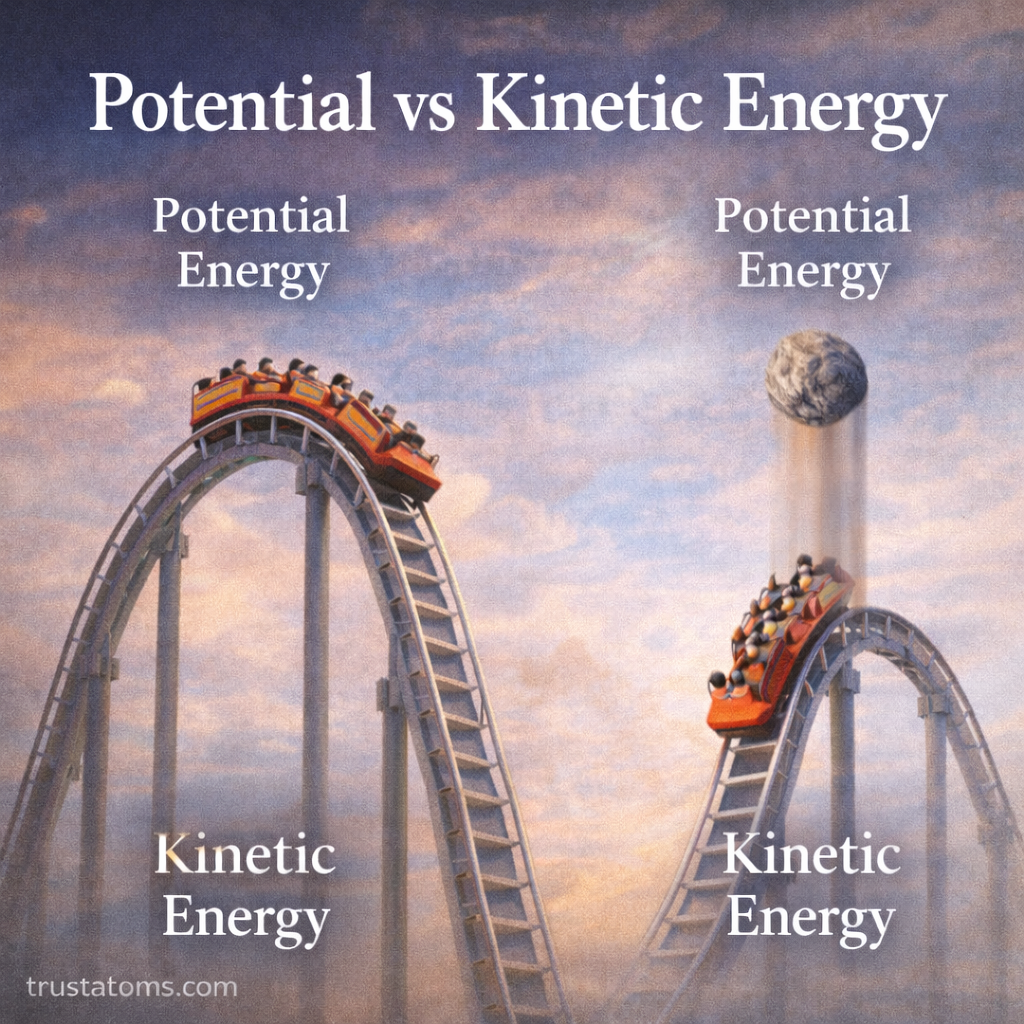
Energy is the ability to do work. In physics, two of the most important forms of energy are potential energy and kinetic energy.
Understanding the difference between them helps explain how roller coasters move, how batteries power devices, and how objects fall.
In this guide, you’ll learn:
- What potential energy is
- What kinetic energy is
- The formulas for each
- The key differences
- How they transform into each other
What Is Potential Energy?
Potential energy is stored energy.
It exists because of an object’s:
- Position
- Height
- Arrangement
- Condition
The most common type studied in physics is gravitational potential energy.
Gravitational Potential Energy Formula
PE = mgh
Where:
- m = mass (kg)
- g = gravity (9.8 m/s² on Earth)
- h = height (m)
The higher and heavier an object is, the more potential energy it has.
What Is Kinetic Energy?
Kinetic energy is the energy of motion.
If something is moving, it has kinetic energy.
Kinetic Energy Formula
KE = ½mv²
Where:
- m = mass (kg)
- v = velocity (m/s)
The faster an object moves, the more kinetic energy it has.
Because velocity is squared, speed has a powerful effect on kinetic energy.
Main Differences Between Potential and Kinetic Energy
Here’s a simple breakdown:
Potential Energy:
- Stored energy
- Depends on position or condition
- Can exist when object is not moving
- Formula (gravitational): PE = mgh
Kinetic Energy:
- Energy of motion
- Depends on mass and speed
- Only exists when object is moving
- Formula: KE = ½mv²
How Potential Energy Converts Into Kinetic Energy
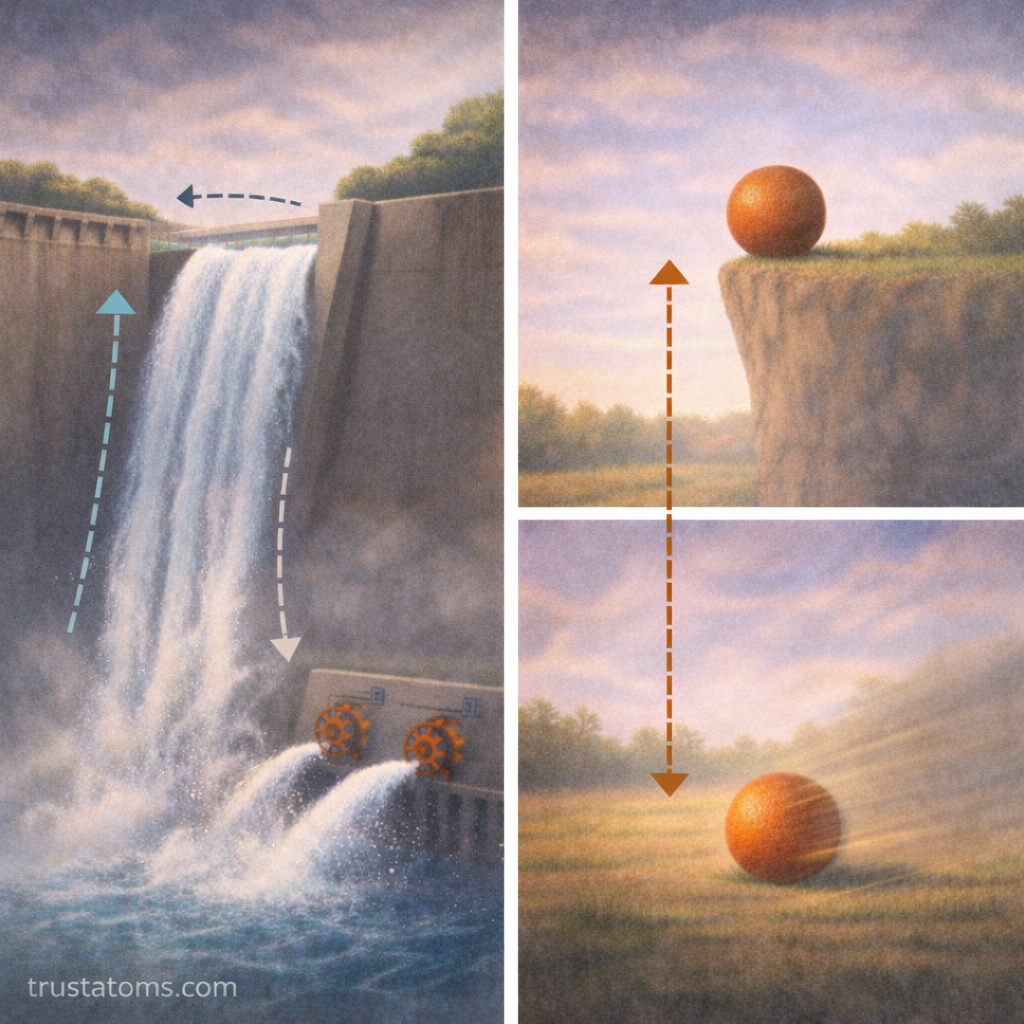
Potential and kinetic energy constantly transform into each other.
Example: Roller Coaster
- At the top of the hill:
- Maximum potential energy
- Minimal kinetic energy
- As it rolls down:
- Potential energy decreases
- Kinetic energy increases
- At the bottom:
- Maximum kinetic energy
- Minimal potential energy
Energy changes form, but the total energy remains constant (ignoring friction).
The Law of Conservation of Energy
The law of conservation of energy states:
Energy cannot be created or destroyed.
It can only change forms.
In a closed system:
Total Energy = Potential Energy + Kinetic Energy
As one increases, the other decreases.
Real-Life Examples of Potential vs Kinetic Energy
A Falling Ball
At the top:
- High potential energy
- Zero kinetic energy
As it falls:
- Potential energy decreases
- Kinetic energy increases
Just before hitting the ground:
- Low potential energy
- High kinetic energy
A Drawn Bow
When pulled back:
- Elastic potential energy stored
When released:
- Potential energy converts to kinetic energy of the arrow
Hydroelectric Dam
Water stored at height:
- Gravitational potential energy
Water flowing through turbines:
- Kinetic energy
Turbines spinning:
- Electrical energy generated
Mathematical Comparison Example
Imagine a 2 kg object 10 meters above the ground.
Step 1: Calculate Potential Energy
PE = mgh
PE = 2 × 9.8 × 10
PE = 196 J
If it falls and all potential energy converts into kinetic energy:
KE = 196 J
Using KE = ½mv²:
196 = ½ × 2 × v²
196 = v²
v = 14 m/s
The object’s speed just before impact would be 14 m/s (ignoring air resistance).
Why This Difference Matters
Understanding potential vs kinetic energy helps in:
- Engineering and construction
- Safety design (helmets, airbags)
- Renewable energy systems
- Sports science
- Space and planetary motion
It explains how energy moves through systems and predicts how objects behave.
Quick Summary
Potential Energy:
- Stored energy
- Depends on position or configuration
- Can exist without motion
Kinetic Energy:
- Energy of motion
- Depends on speed and mass
- Increases dramatically with velocity
Both are connected through the conservation of energy.
Mastering the difference between potential and kinetic energy is essential for understanding motion, mechanics, and how energy powers the physical world.
They are not separate ideas — they are two sides of the same energy system.