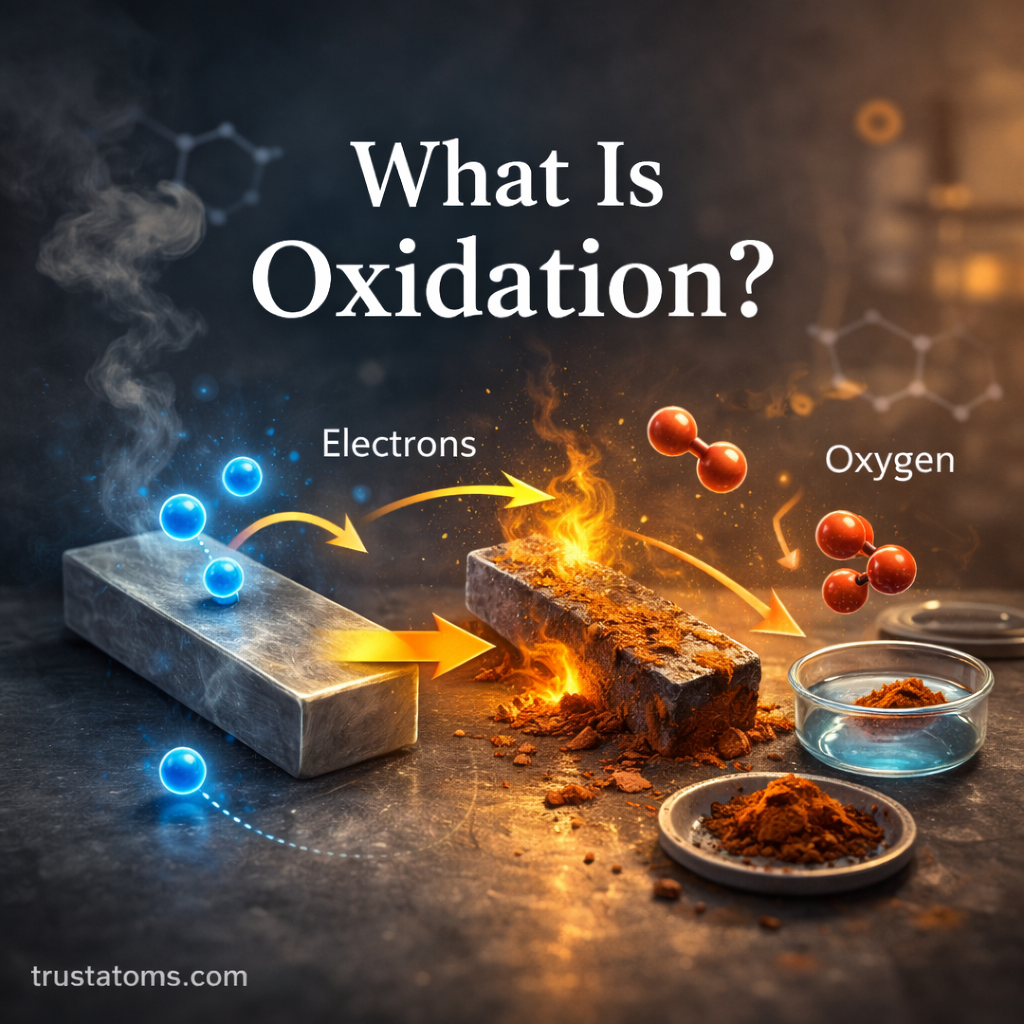
Oxidation is a fundamental chemical process in which a substance loses electrons during a reaction. It is one half of a broader type of reaction known as an oxidation-reduction (redox) reaction.
Although the word “oxidation” originally referred to reactions involving oxygen, modern chemistry defines it more precisely as electron loss, whether oxygen is involved or not.
Oxidation plays a critical role in everything from rust forming on metal to how your body produces energy.
The Modern Definition of Oxidation
In chemistry today, oxidation is defined as:
Loss of electrons by a substance during a chemical reaction.
When oxidation occurs, another substance must gain those electrons. That paired process is called reduction.
A helpful memory tool:
- OIL = Oxidation Is Loss
- RIG = Reduction Is Gain
Electrons are always transferred between substances — they don’t disappear.
The Historical Meaning of Oxidation
Originally, oxidation referred specifically to reactions involving oxygen.
For example:
- Iron reacting with oxygen to form rust
- Wood burning in oxygen
- Carbon reacting with oxygen to form carbon dioxide
Over time, scientists discovered that many reactions without oxygen behaved the same way — they involved electron transfer. That led to the modern, broader definition.
What Happens During Oxidation?
When a substance oxidizes:
- It loses one or more electrons
- Its oxidation number increases
- It often becomes more positively charged
Because electrons carry negative charge, losing them makes the atom or molecule less negative (or more positive).
Oxidation always occurs together with reduction in what is called a redox reaction.
Everyday Examples of Oxidation
Oxidation is happening all around us.
1. Rusting of Iron
Iron reacts with oxygen and moisture in the air to form iron oxide (rust).
This is a slow oxidation process that weakens metal over time.
2. Burning (Combustion)
When fuels burn, they react with oxygen.
Examples:
- Wood in a fireplace
- Gasoline in a car engine
- Natural gas on a stove
These are rapid oxidation reactions that release energy as heat and light.
3. Cellular Respiration
Inside your body, glucose is oxidized to produce energy.
This controlled oxidation process powers:
- Muscle movement
- Brain activity
- Organ function
Without oxidation, life as we know it wouldn’t exist.
4. Browning of Fruit
When you cut an apple, it turns brown.
This happens because enzymes in the fruit react with oxygen, causing oxidation.
Oxidation vs. Reduction
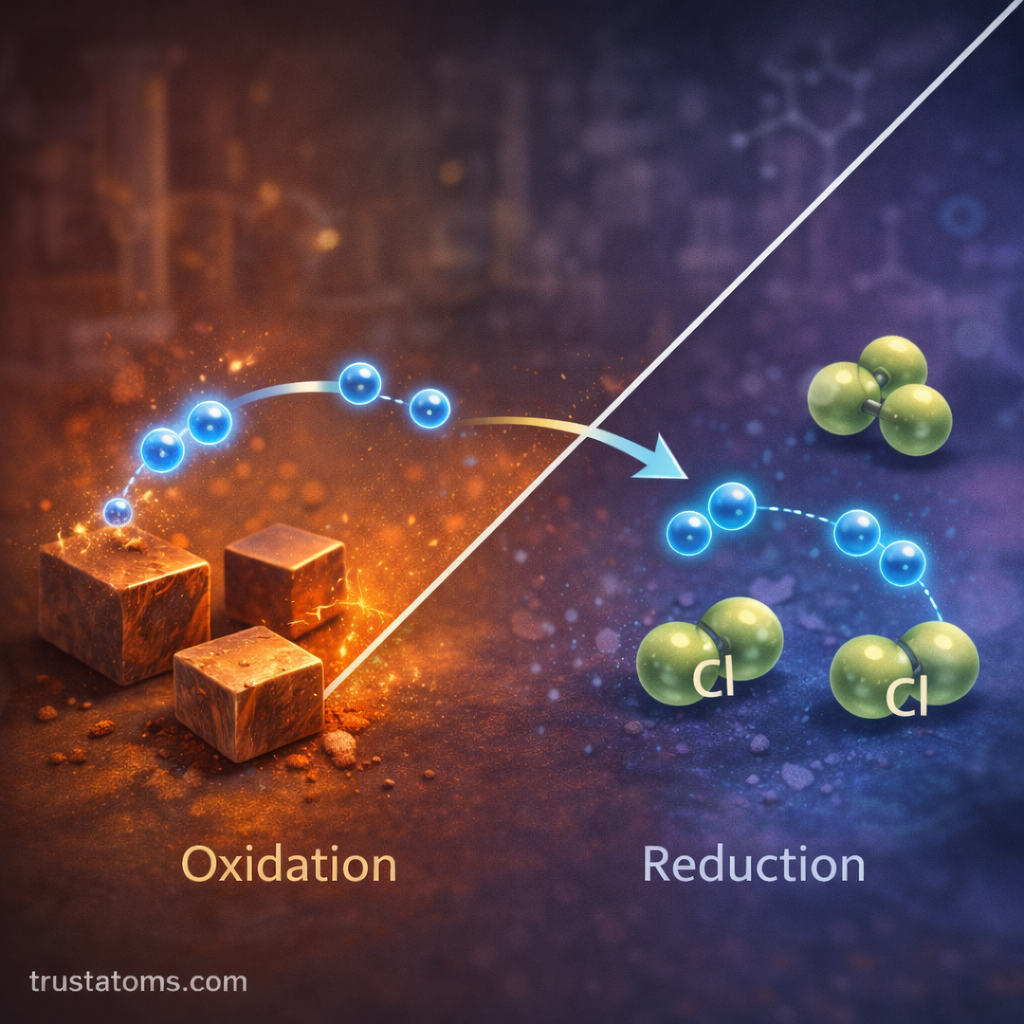
Oxidation and reduction always occur together.
Here’s how they relate:
- Oxidation = loss of electrons
- Reduction = gain of electrons
If one substance loses electrons, another must gain them.
For example:
- Sodium loses an electron (oxidation)
- Chlorine gains that electron (reduction)
This electron exchange forms ionic compounds and drives many chemical processes.
Oxidation Numbers Explained Simply
Chemists use oxidation numbers (or oxidation states) to track electron movement.
An oxidation number:
- Represents the apparent charge of an atom
- Helps determine whether oxidation or reduction has occurred
If an oxidation number increases → oxidation occurred
If an oxidation number decreases → reduction occurred
Tracking these changes makes balancing redox reactions easier.
Why Oxidation Is Important in Chemistry
Oxidation is essential in many fields:
- Industrial manufacturing
- Energy production
- Environmental chemistry
- Electrochemistry (batteries and fuel cells)
- Biological systems
It explains how metals corrode, how fuels release energy, and how living cells convert nutrients into usable power.
Oxidation in Electrochemistry
In batteries, oxidation occurs at the anode.
During battery operation:
- One material oxidizes (loses electrons)
- Electrons flow through a circuit
- Another material reduces (gains electrons)
This electron flow produces electrical energy.
Without oxidation, modern electronics would not function.
Common Misconceptions About Oxidation
Many people assume oxidation always involves oxygen. That’s not true.
Oxidation can occur:
- Without oxygen
- In solution
- In biological systems
- In electrical systems
The key factor is always electron loss, not oxygen alone.
How to Identify Oxidation in a Reaction
To determine if oxidation is occurring:
- Check if electrons are lost
- Observe if oxidation numbers increase
- Look for electron transfer between substances
If any of these occur, oxidation is taking place.
Final Thoughts
Oxidation is a core concept in chemistry that explains how substances lose electrons during reactions. From rusting metals to cellular respiration and battery power, oxidation drives both everyday and industrial processes.
Understanding oxidation gives you a clearer picture of how matter changes, how energy flows, and how chemical reactions shape the world around us.