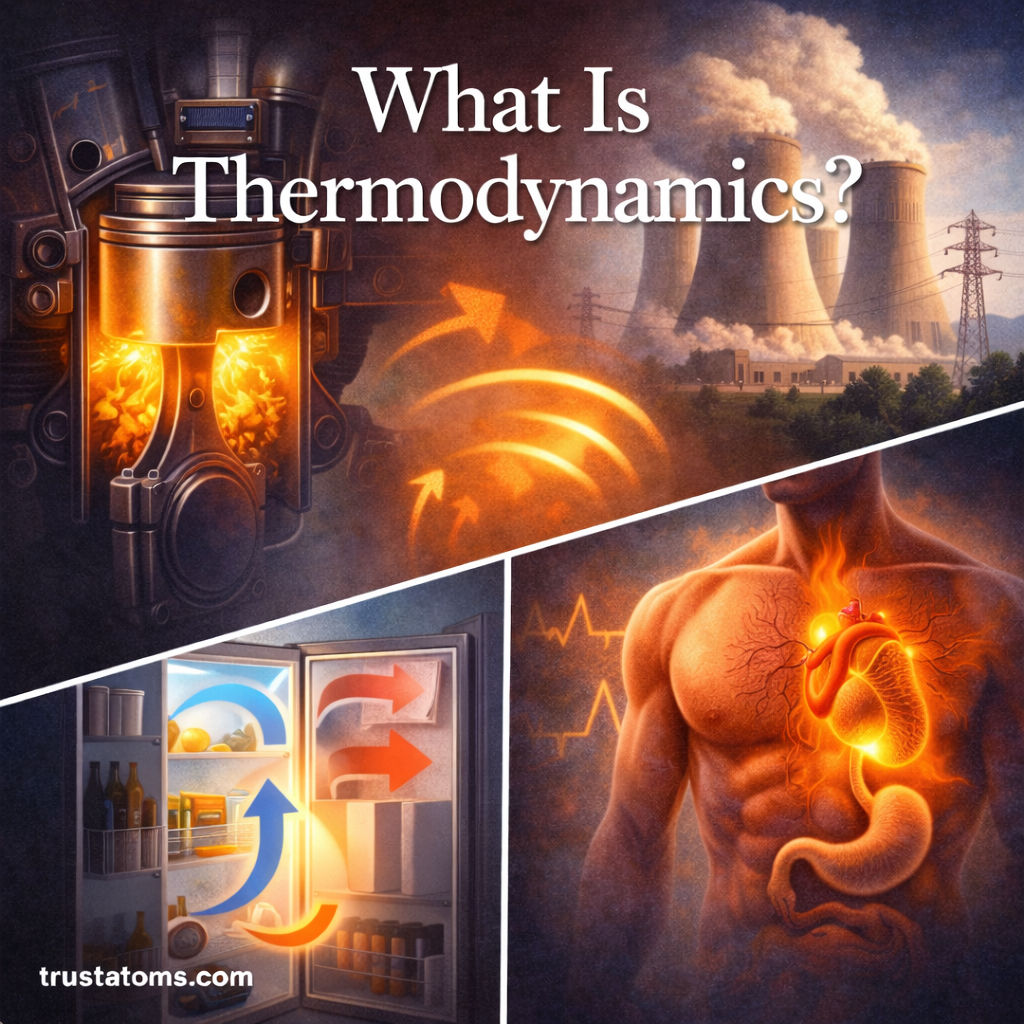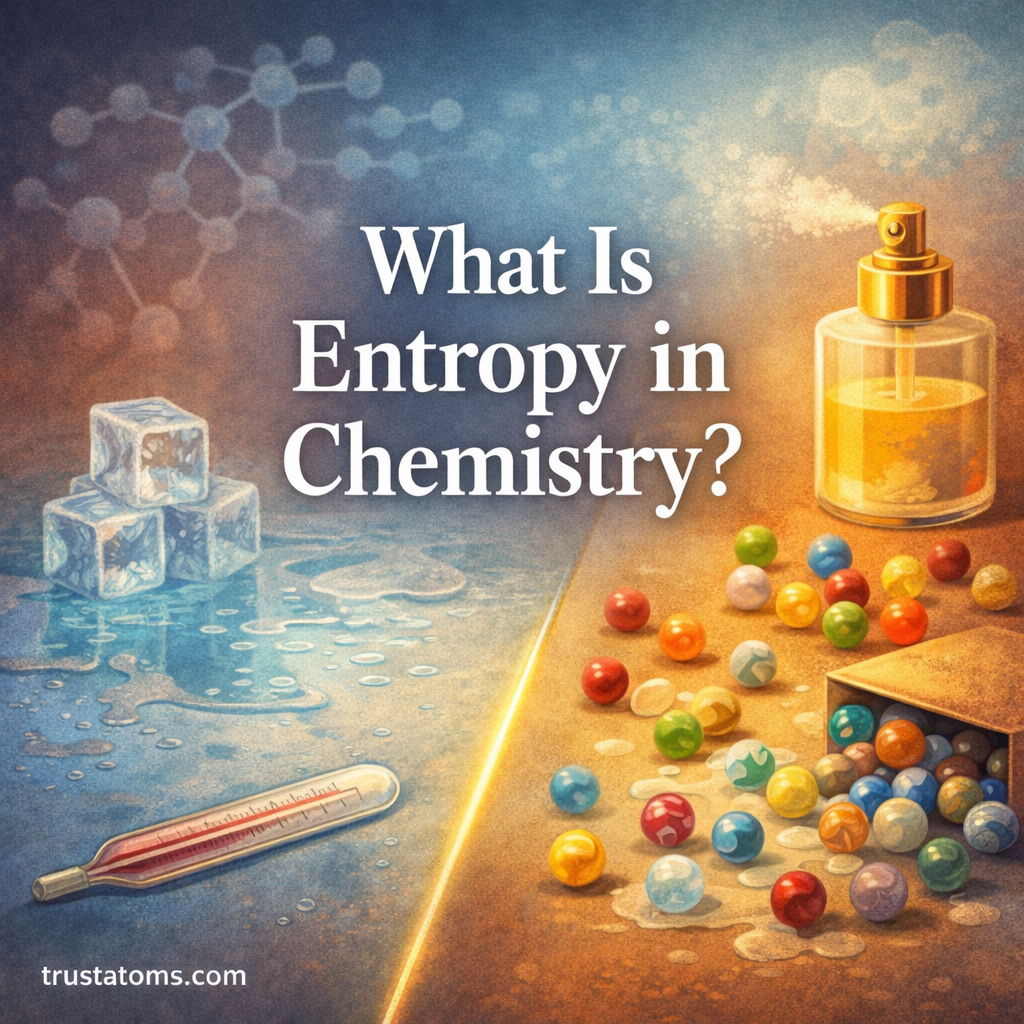
Entropy is a fundamental concept in chemistry and thermodynamics that describes the level of disorder or randomness in a system. It helps scientists understand how energy spreads and how chemical reactions naturally move toward more probable states.
In simple terms, entropy measures how organized or disorganized particles are within a system. As systems change, entropy often increases because energy and matter tend to distribute more evenly over time.
Understanding entropy is essential for explaining why certain chemical reactions happen spontaneously while others do not.
The Basic Meaning of Entropy
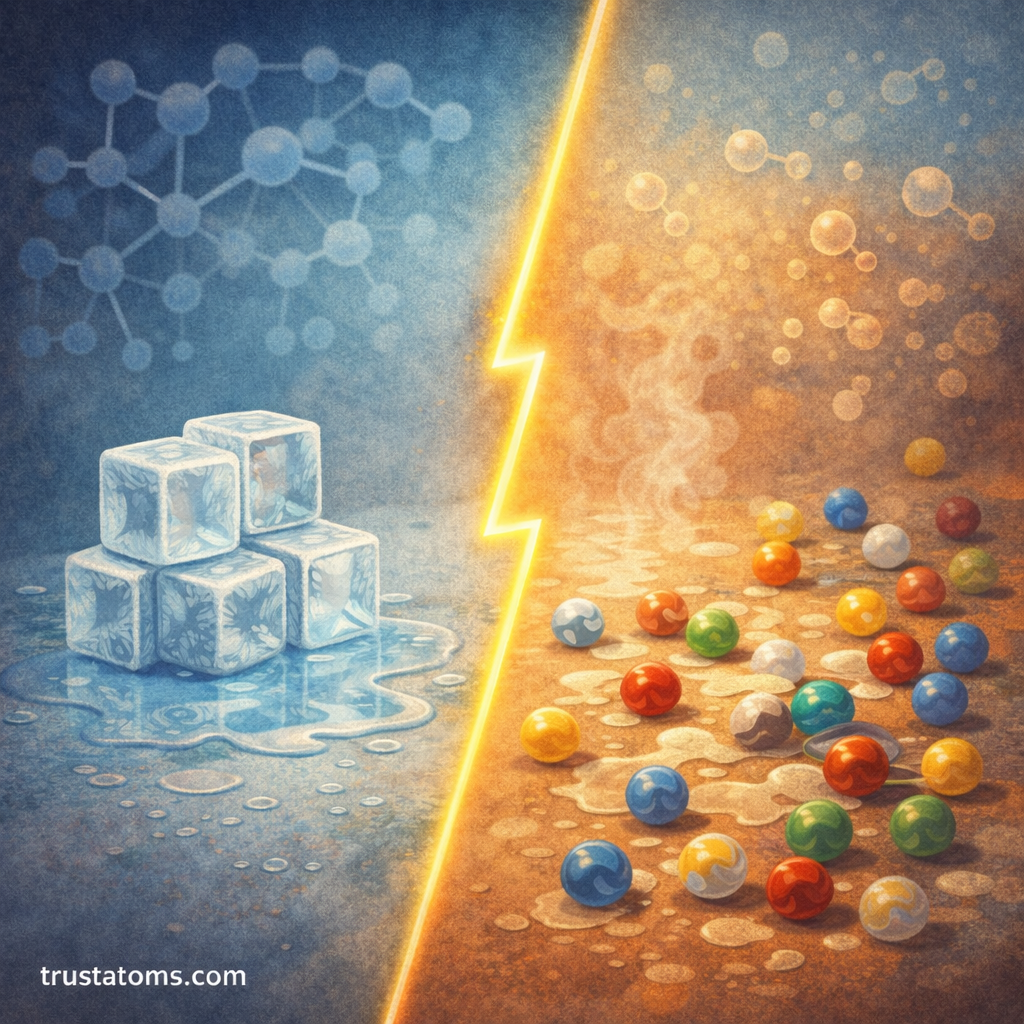
Entropy is represented by the symbol S and reflects how energy and matter are arranged in a system.
A system with high entropy has:
- Greater randomness
- More possible arrangements of particles
- More evenly distributed energy
A system with low entropy has:
- More order
- Fewer possible arrangements
- Energy concentrated in specific places
Chemists often focus on entropy change, written as ΔS, which describes how disorder changes during a reaction or process.
Why Entropy Matters in Chemistry
Entropy plays a major role in predicting whether chemical reactions will occur naturally.
Many natural processes tend to move toward greater entropy, meaning:
- Particles spread out
- Energy disperses
- Systems become more disordered
Chemists use entropy to:
- Predict reaction spontaneity
- Understand energy flow in reactions
- Analyze equilibrium systems
- Study phase changes such as melting and evaporation
Entropy works alongside other thermodynamic factors, especially enthalpy and temperature, to determine how reactions behave.
Entropy and the Second Law of Thermodynamics
One of the most important scientific principles involving entropy is the Second Law of Thermodynamics.
This law states that:
The total entropy of an isolated system always increases over time.
In practical terms, this means natural processes tend to move toward greater disorder.
Examples include:
- Ice melting into liquid water
- Gas spreading out to fill a container
- Heat moving from warmer objects to cooler ones
These processes increase the number of possible ways particles and energy can be arranged.
Entropy Changes in Chemical Reactions
During chemical reactions, entropy may increase or decrease depending on how particles rearrange.
Reactions That Increase Entropy
Entropy increases when particles become more spread out or disordered.
Common examples include:
- Solids dissolving into liquids
- Liquids evaporating into gases
- Chemical reactions that produce more gas molecules
These processes create more possible particle arrangements, increasing disorder.
Reactions That Decrease Entropy
Entropy decreases when particles become more organized.
Examples include:
- Gas condensing into liquid
- Freezing of liquids into solids
- Chemical reactions forming fewer molecules
Although entropy decreases locally in these cases, the overall entropy of the surroundings may still increase.
Entropy and States of Matter
Different states of matter naturally have different levels of entropy.
From lowest to highest entropy:
- Solid – particles tightly packed and ordered
- Liquid – particles more mobile but still close together
- Gas – particles widely spaced and highly disordered
Because gas particles have many possible positions and movements, gases generally have the highest entropy.
Phase changes often involve large entropy changes because particle freedom changes significantly.
How Chemists Measure Entropy
Entropy is measured using thermodynamic data and experimental methods.
Standard entropy values are typically reported in units of:
joules per mole per kelvin (J/mol·K)
Chemists calculate entropy change using the relationship between products and reactants:
ΔS = S(products) − S(reactants)
These values help scientists determine how disorder changes during chemical reactions.
Entropy in Everyday Life
Although entropy is a scientific concept, its effects appear in everyday situations.
Examples include:
- Ice cubes melting in a drink
- Perfume scent spreading across a room
- Hot coffee gradually cooling
- Air mixing in the atmosphere
Each of these processes involves energy dispersing and systems moving toward greater randomness.
Entropy vs Enthalpy
Entropy is closely related to enthalpy, but the two describe different aspects of energy.
- Enthalpy (H) measures heat energy absorbed or released.
- Entropy (S) measures the distribution and disorder of energy.
Both factors combine in a key thermodynamic equation called Gibbs free energy, which determines whether reactions occur spontaneously.
Understanding both enthalpy and entropy allows chemists to predict how reactions behave under different conditions.
Final Thoughts
Entropy is a central concept in chemistry that helps explain how energy spreads and why natural processes tend toward greater disorder. By measuring entropy changes, scientists can better understand chemical reactions, phase transitions, and energy flow in physical systems.
From melting ice to the mixing of gases, entropy provides a powerful framework for understanding how matter and energy behave in the natural world.