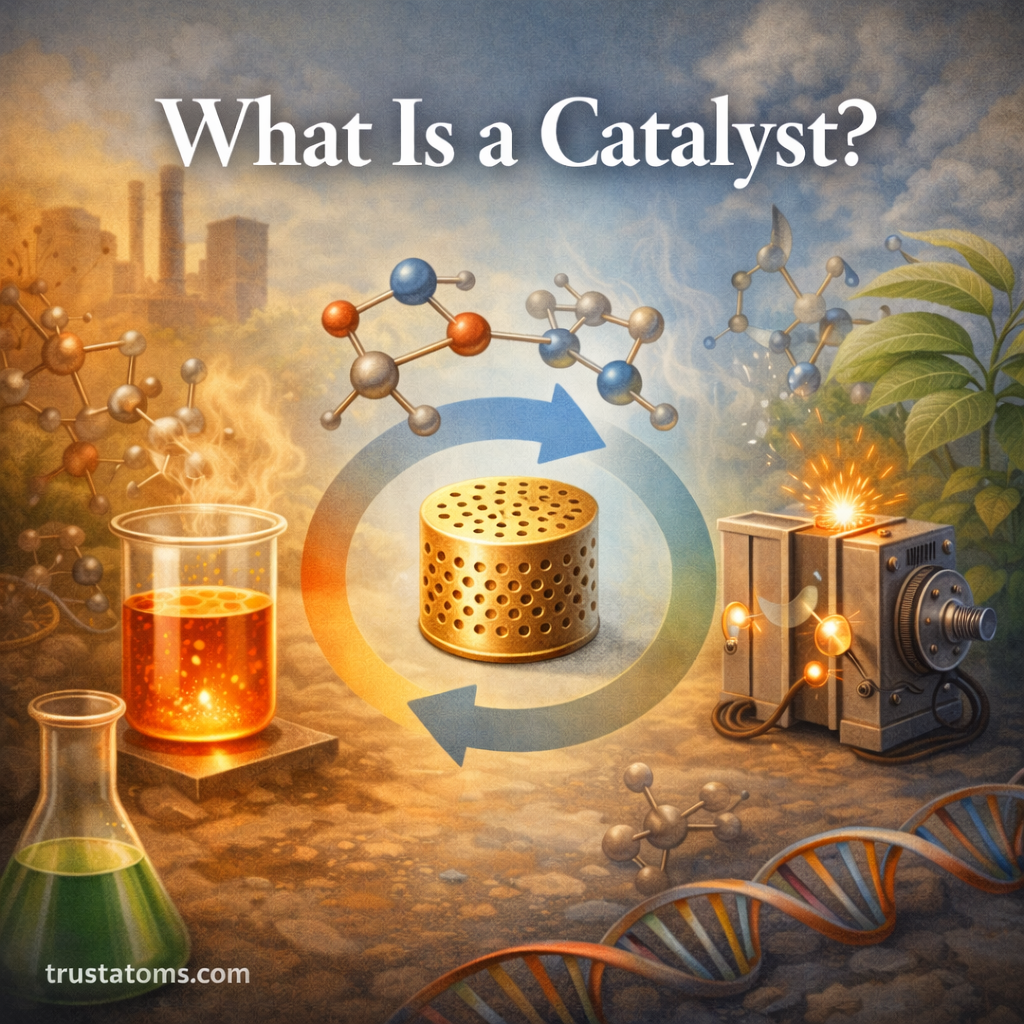
A catalyst is a substance that speeds up a chemical reaction without being permanently consumed in the process. Catalysts are essential in chemistry because they make reactions occur faster or under milder conditions, often saving time, energy, and resources.
Many reactions that would normally take hours, days, or even years can occur almost instantly when a catalyst is present. Catalysts play a major role in industrial chemistry, environmental systems, and biological processes.
The Basic Definition of a Catalyst
In chemistry, a catalyst is a substance that increases the rate of a chemical reaction while remaining chemically unchanged at the end of the reaction.
Key characteristics of catalysts include:
- They speed up reactions
- They are not permanently consumed
- They often lower the energy required for a reaction to occur
- They can be reused multiple times
Because catalysts are not used up, even small amounts can dramatically influence chemical reactions.
How Catalysts Work
To understand catalysts, it’s helpful to understand activation energy.
Activation energy is the minimum amount of energy required for a chemical reaction to begin.
Without a catalyst:
- Molecules must collide with enough energy to break existing bonds
- This may happen slowly or rarely
With a catalyst:
- The catalyst provides an alternative reaction pathway
- This pathway requires less activation energy
- More molecular collisions become successful reactions
As a result, the reaction proceeds much faster.
Why Catalysts Do Not Get Used Up
Although catalysts participate in reactions, they are regenerated during the process.
A catalyst may temporarily:
- Form intermediate compounds
- Interact with reactants
- Rearrange chemical bonds
However, by the end of the reaction cycle, the catalyst returns to its original chemical form.
This allows it to continue speeding up additional reactions.
Types of Catalysts
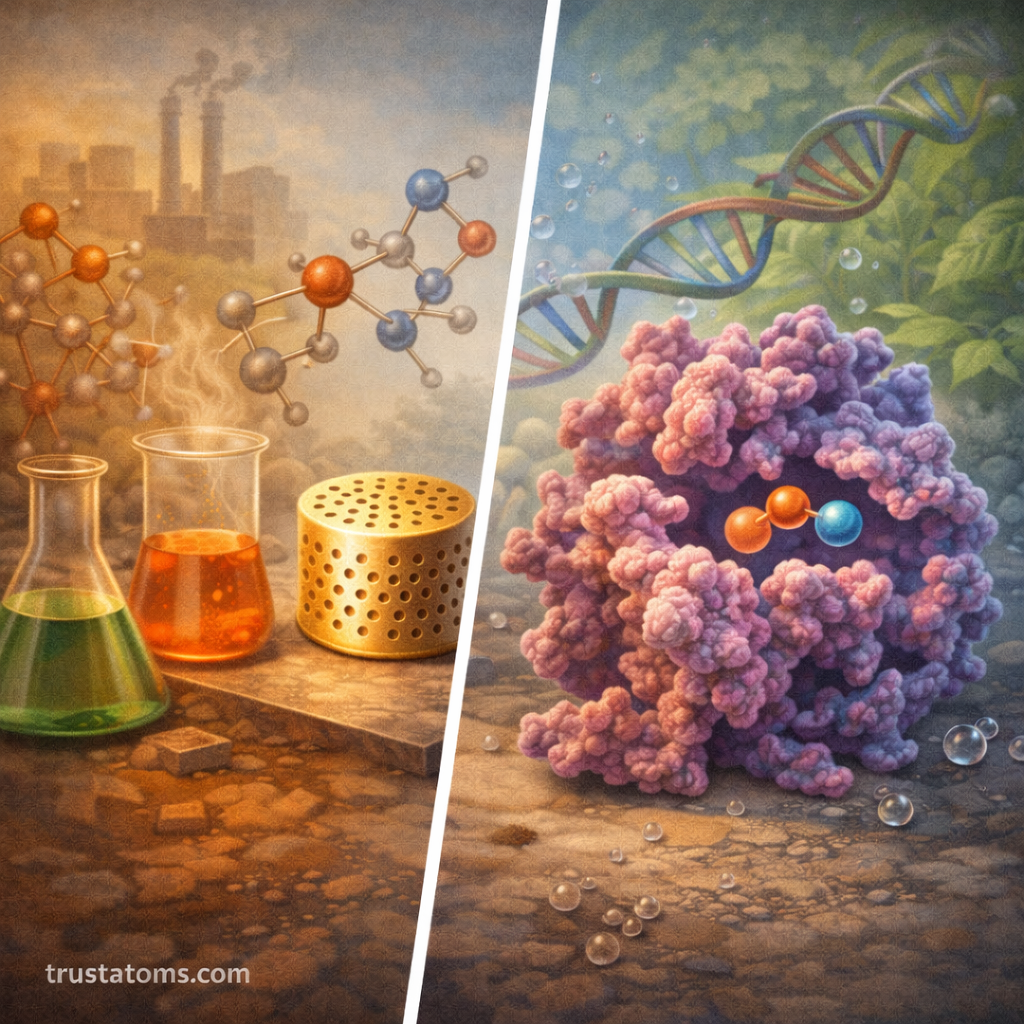
There are several types of catalysts used in chemistry and industry.
Homogeneous Catalysts
Homogeneous catalysts exist in the same phase as the reactants.
Examples include:
- Liquid catalysts used in solution reactions
- Certain acid catalysts in chemical synthesis
Because they mix evenly with reactants, homogeneous catalysts often produce very efficient reactions.
Heterogeneous Catalysts
Heterogeneous catalysts exist in a different phase than the reactants.
Common examples include:
- Solid catalysts interacting with gases
- Solid catalysts used in liquid reactions
In these reactions, the chemical process often occurs on the surface of the catalyst.
Many industrial catalysts are heterogeneous because they are easier to separate and reuse.
Enzymes (Biological Catalysts)
Enzymes are specialized catalysts found in living organisms.
They control biochemical reactions that support life.
Examples include:
- Digestive enzymes breaking down food
- Enzymes involved in cellular respiration
- Enzymes that help build proteins and DNA
Enzymes are extremely efficient and often highly specific, meaning each enzyme usually catalyzes only one type of reaction.
Real-World Examples of Catalysts
Catalysts are involved in many everyday and industrial processes.
Industrial Chemical Production
Large-scale manufacturing depends heavily on catalysts.
Examples include:
- Ammonia production for fertilizers
- Petroleum refining
- Plastic and polymer manufacturing
Catalysts help these reactions occur more efficiently and economically.
Environmental Protection
Catalysts are used to reduce pollution.
One well-known example is the catalytic converter in automobiles.
Catalytic converters:
- Transform harmful exhaust gases
- Convert carbon monoxide into carbon dioxide
- Convert nitrogen oxides into nitrogen and oxygen
These reactions help reduce air pollution.
Biological Processes
Life itself depends on catalysts.
Without enzymes, many biochemical reactions would occur far too slowly to sustain life.
For example:
- Digestive enzymes speed up food breakdown
- Enzymes in cells release energy from nutrients
- DNA replication depends on enzyme catalysts
These reactions must happen quickly and reliably for organisms to survive.
Factors That Affect Catalysts
Although catalysts speed up reactions, several factors influence how well they work.
Surface Area
For solid catalysts, more exposed surface area allows more reactions to occur at once.
Finely divided catalysts often perform better than larger pieces.
Temperature
Higher temperatures increase molecular motion, which can increase reaction rates.
However, very high temperatures can sometimes damage catalysts, especially biological enzymes.
Concentration of Reactants
Higher concentrations of reactants increase the likelihood of successful molecular collisions.
This can enhance the overall effect of the catalyst.
Catalyst vs Reactant
It is important to distinguish catalysts from reactants.
Reactants:
- Are consumed during a reaction
- Form the final products
Catalysts:
- Speed up the reaction
- Are not consumed
- Remain available after the reaction
Because of this difference, catalysts are often used repeatedly in chemical processes.
Key Takeaways
Catalysts are substances that accelerate chemical reactions without being permanently changed.
Important ideas to remember include:
- Catalysts lower activation energy
- They increase reaction speed
- They are not consumed during reactions
- They can be homogeneous, heterogeneous, or biological
- They are essential in industry, environmental protection, and biology
From industrial manufacturing to the biochemical reactions that power life, catalysts play a critical role in making chemical processes efficient and possible.