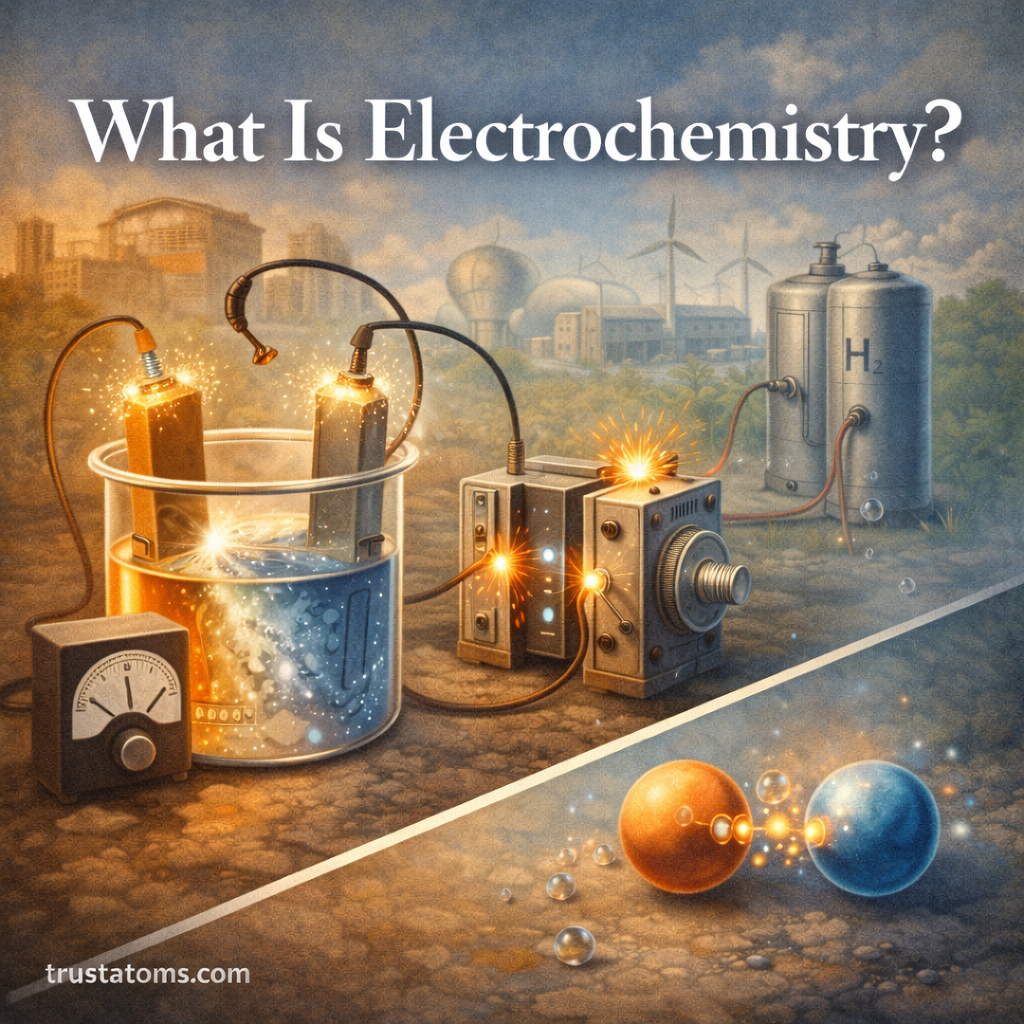
Electrochemistry is the branch of chemistry that studies the relationship between chemical reactions and electricity. It focuses on how chemical reactions can produce electrical energy and how electrical energy can drive chemical reactions.
This field connects chemistry, physics, and engineering, and it plays an important role in modern technologies such as batteries, fuel cells, corrosion prevention, and electroplating.
Understanding electrochemistry helps scientists design energy systems, improve electronics, and develop new methods for storing and converting energy.
The Basic Concept of Electrochemistry
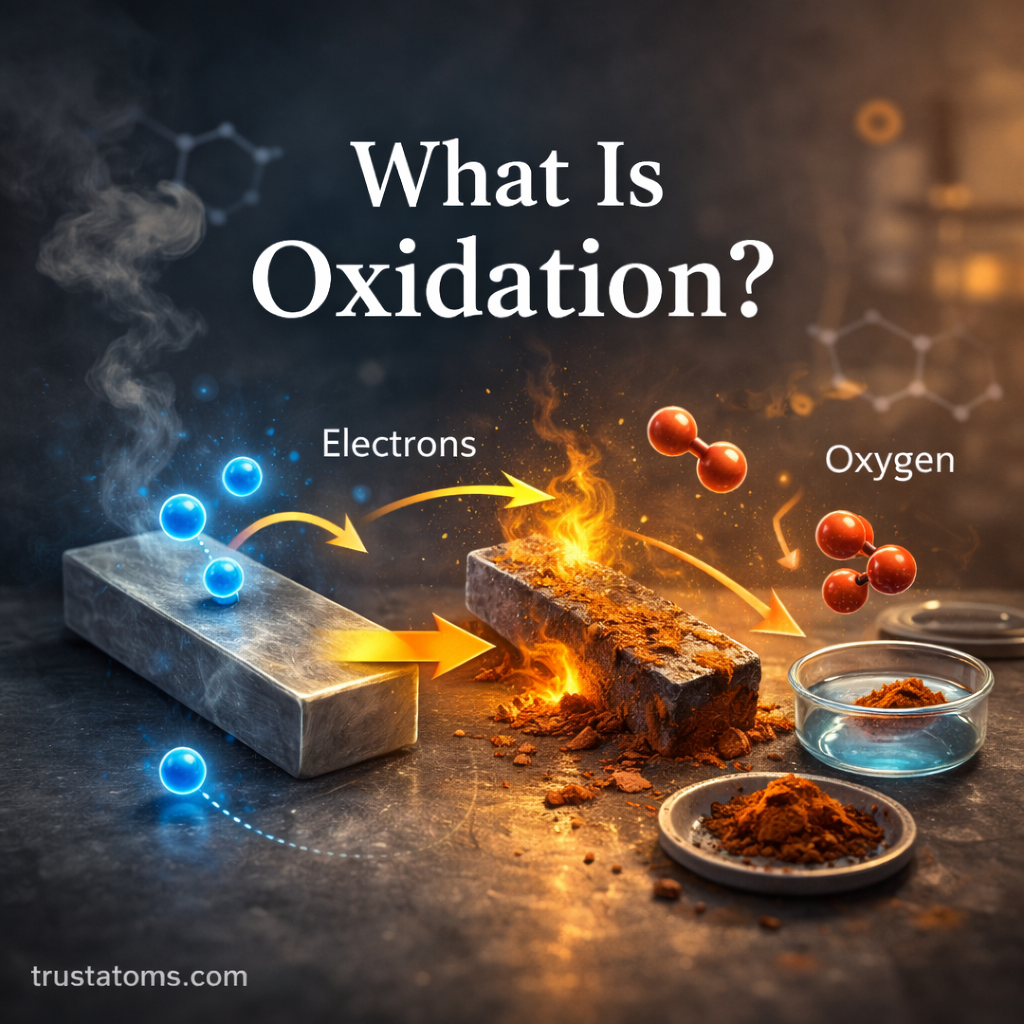
Electrochemistry revolves around redox reactions, which are chemical reactions involving the transfer of electrons between substances.
In these reactions:
- One substance loses electrons
- Another substance gains electrons
This movement of electrons can generate electrical current or be driven by electricity.
Electrochemistry studies how these electron transfers occur and how they can be controlled or used in practical applications.
Oxidation and Reduction
Electrochemistry is built on two key processes.
Oxidation
Oxidation occurs when a substance loses electrons.
Examples include:
- Metals reacting with oxygen
- Iron rusting
- Fuel molecules releasing electrons during energy production
Reduction
Reduction occurs when a substance gains electrons.
Examples include:
- Metal ions gaining electrons to form solid metals
- Oxygen accepting electrons in fuel cells
- Chemical compounds forming new bonds through electron gain
Because oxidation and reduction always occur together, they are called redox reactions.
How Electrochemical Systems Work
Electrochemical systems convert between chemical energy and electrical energy.
These systems usually contain:
- Two electrodes
- An electrolyte solution
- A pathway for electrons to flow
Electrodes
Electrodes are conductive materials where chemical reactions occur.
Two types of electrodes are used:
- Anode – where oxidation occurs
- Cathode – where reduction occurs
Electrolyte
The electrolyte is a substance that allows ions to move between electrodes. This movement helps maintain charge balance during the reaction.
Electrolytes may be:
- Liquid solutions
- Molten salts
- Solid ionic conductors
Types of Electrochemical Cells
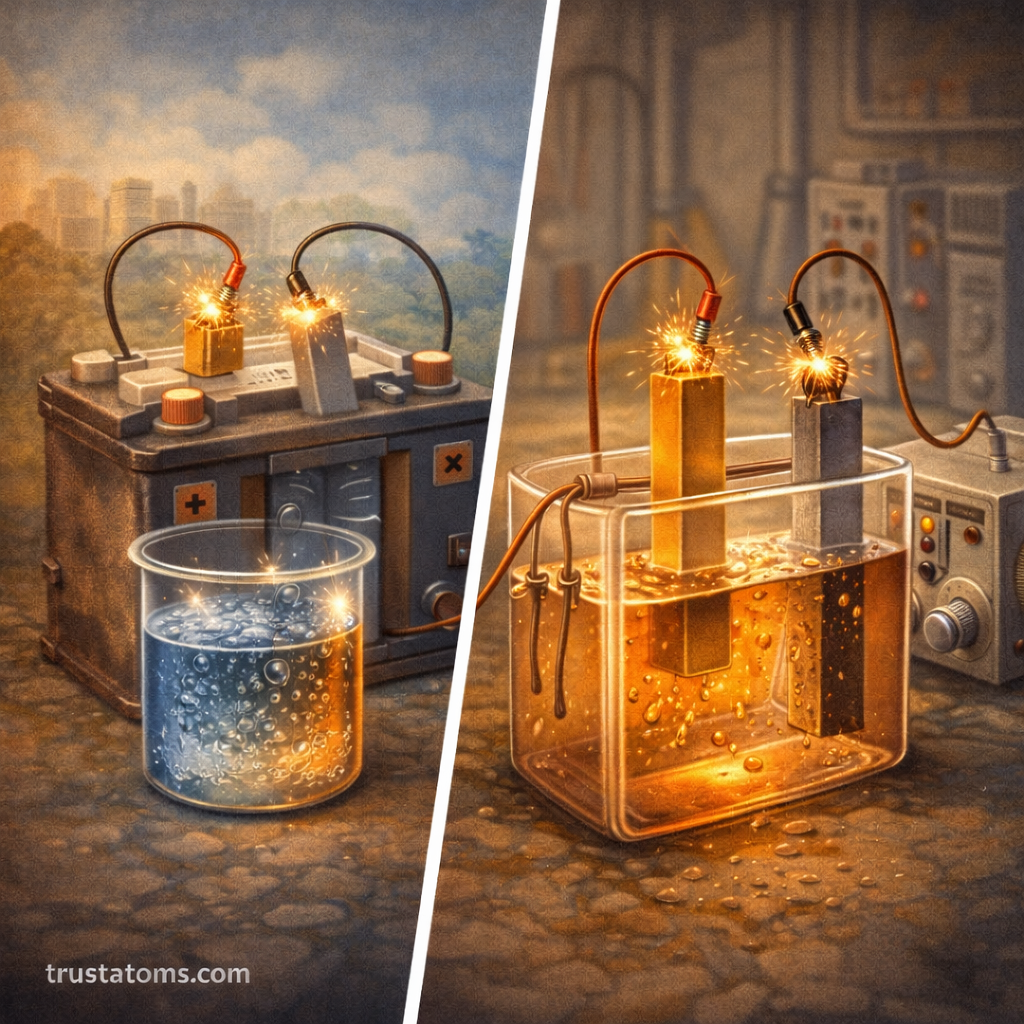
Electrochemistry commonly involves two main types of cells.
Galvanic (Voltaic) Cells
Galvanic cells generate electricity from spontaneous chemical reactions.
These cells convert chemical energy into electrical energy.
Examples include:
- Batteries
- Fuel cells
- Certain biological energy systems
In galvanic cells:
- Electrons flow through an external circuit
- Electrical current is produced
These systems are widely used in portable electronics and energy storage.
Electrolytic Cells
Electrolytic cells use electrical energy to force chemical reactions that would not occur naturally.
In these cells:
- Electricity drives the chemical reaction
- Chemical energy is stored or materials are produced
Examples include:
- Electroplating metals
- Aluminum production
- Water electrolysis to produce hydrogen and oxygen
Electrolytic cells are essential in industrial manufacturing.
Electrochemistry in Everyday Life
Electrochemistry is involved in many technologies used every day.
Batteries
Batteries are one of the most common electrochemical devices.
They convert chemical energy into electricity through controlled redox reactions.
Examples include:
- Lithium-ion batteries in smartphones
- Car batteries
- Rechargeable household batteries
Corrosion and Rust
Corrosion is an electrochemical process where metals gradually break down through oxidation.
Rust formation on iron occurs when:
- Iron loses electrons
- Oxygen and water react with the metal
Understanding electrochemistry helps engineers design coatings and protective systems that slow corrosion.
Electroplating
Electroplating uses electrochemical reactions to coat objects with thin layers of metal.
Common electroplated materials include:
- Gold
- Silver
- Nickel
- Chromium
This process improves appearance, corrosion resistance, and durability.
Fuel Cells
Fuel cells generate electricity through electrochemical reactions involving fuels such as hydrogen.
Unlike batteries, fuel cells can produce electricity continuously as long as fuel is supplied.
Fuel cells are being explored for:
- Clean energy systems
- Electric vehicles
- Backup power systems
Why Electrochemistry Is Important
Electrochemistry plays a critical role in modern science and technology.
It helps scientists and engineers:
- Develop efficient energy storage systems
- Design renewable energy technologies
- Prevent corrosion damage
- Improve industrial manufacturing
- Understand biological energy processes
As the world moves toward cleaner and more sustainable energy systems, electrochemistry is becoming even more important.
Key Takeaways
Electrochemistry studies the connection between chemical reactions and electrical energy.
Important points to remember include:
- Electrochemistry focuses on electron transfer reactions
- Oxidation involves losing electrons
- Reduction involves gaining electrons
- Electrochemical cells convert chemical energy to electricity or vice versa
- Batteries, corrosion, electroplating, and fuel cells all rely on electrochemical processes
Because it links chemistry and electricity, electrochemistry plays a central role in energy technologies and many modern industrial processes.