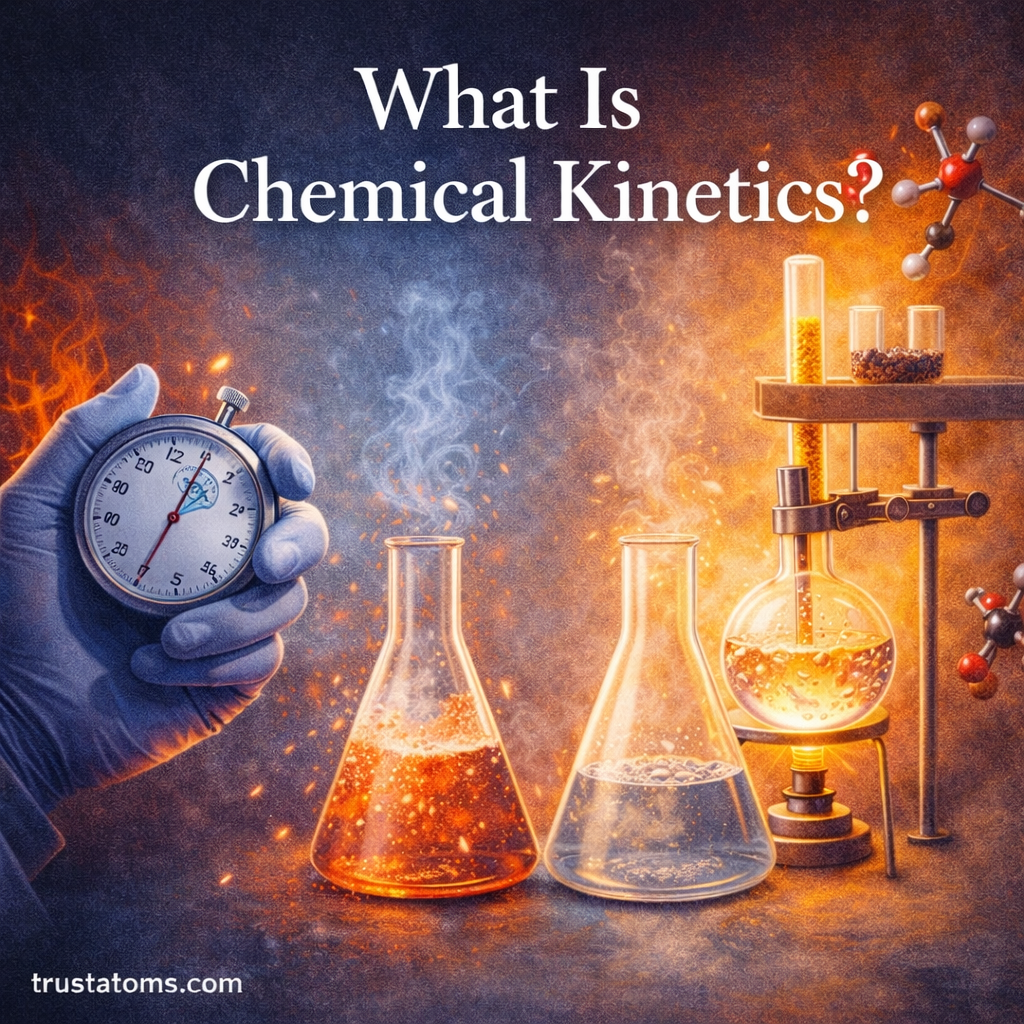
Chemical kinetics is the branch of chemistry that studies how fast chemical reactions occur and what factors influence their speed. While thermodynamics explains whether a reaction can happen, chemical kinetics focuses on how quickly the reaction takes place and the steps involved in the process.
Understanding reaction rates is important in many fields, including medicine, environmental science, engineering, and industrial manufacturing. By studying chemical kinetics, scientists can control reactions to make them safer, more efficient, and more predictable.
Understanding the Basics of Chemical Kinetics
In any chemical reaction, reactants transform into products. Chemical kinetics examines the rate at which this transformation happens and the mechanisms behind it.
The reaction rate describes how quickly reactants are consumed or products are formed over time.
For example:
- Some reactions happen almost instantly, like an explosion.
- Others occur slowly, such as the rusting of iron.
Chemical kinetics helps scientists understand why these differences occur and how they can be controlled.
Reaction Rate Explained
The reaction rate measures how quickly the concentration of a substance changes during a chemical reaction.
It can be expressed as:
- The decrease in reactant concentration over time
- The increase in product concentration over time
For example:
If a reactant disappears quickly, the reaction rate is fast. If the reactant changes slowly, the reaction rate is slow.
Chemists measure reaction rates using experiments that monitor concentration changes, temperature changes, or gas production.
Factors That Affect Reaction Rates
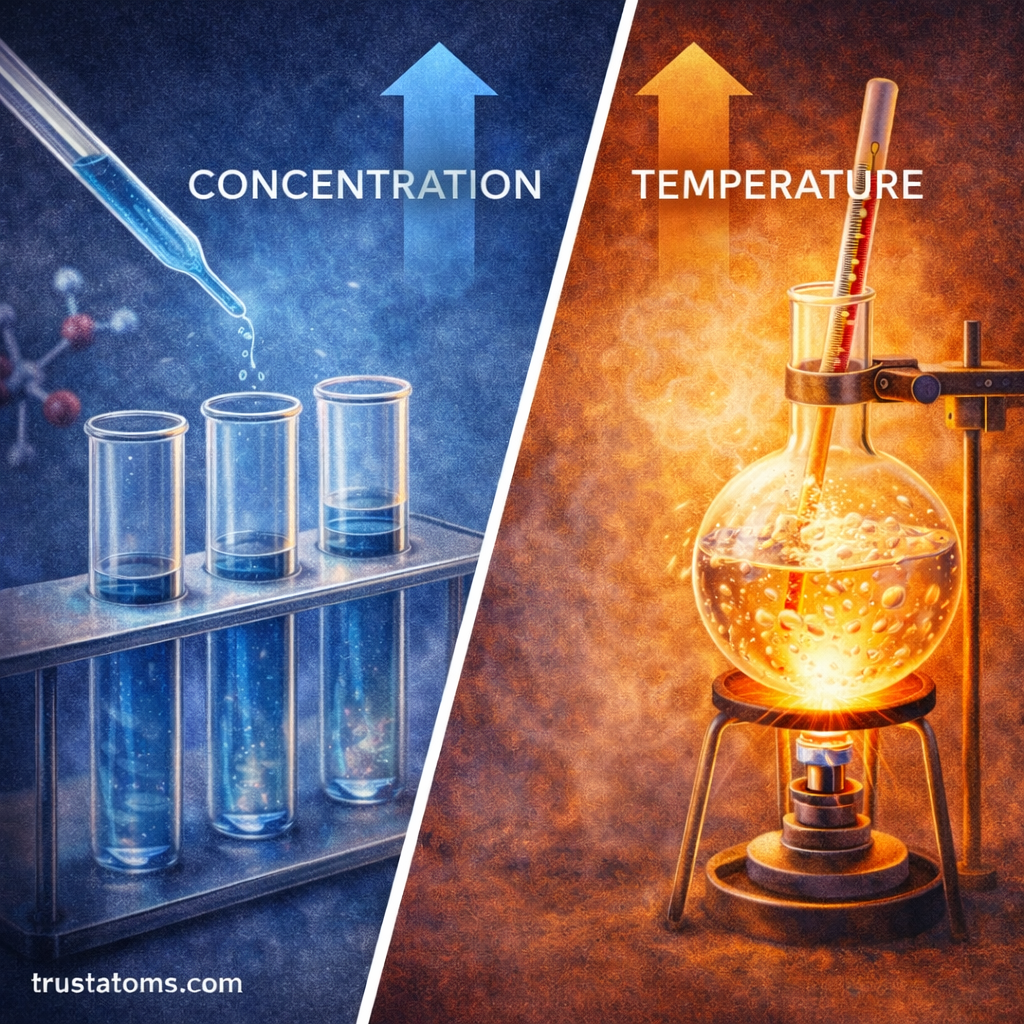
Several factors influence how quickly chemical reactions occur. Understanding these variables allows scientists to predict and control reaction speed.
1. Concentration of Reactants
Higher concentrations of reactants increase the likelihood that particles will collide.
More collisions usually lead to faster reaction rates.
Example:
- Stronger acid solutions react faster with metals than diluted acids.
2. Temperature
Temperature plays a major role in reaction speed.
When temperature increases:
- Molecules move faster
- Collisions happen more often
- Collisions occur with greater energy
As a result, reactions typically occur faster at higher temperatures.
3. Surface Area
For reactions involving solids, the amount of exposed surface area affects reaction rate.
Greater surface area allows more particles to interact at the same time.
Example:
- Powdered substances react faster than solid chunks.
4. Catalysts
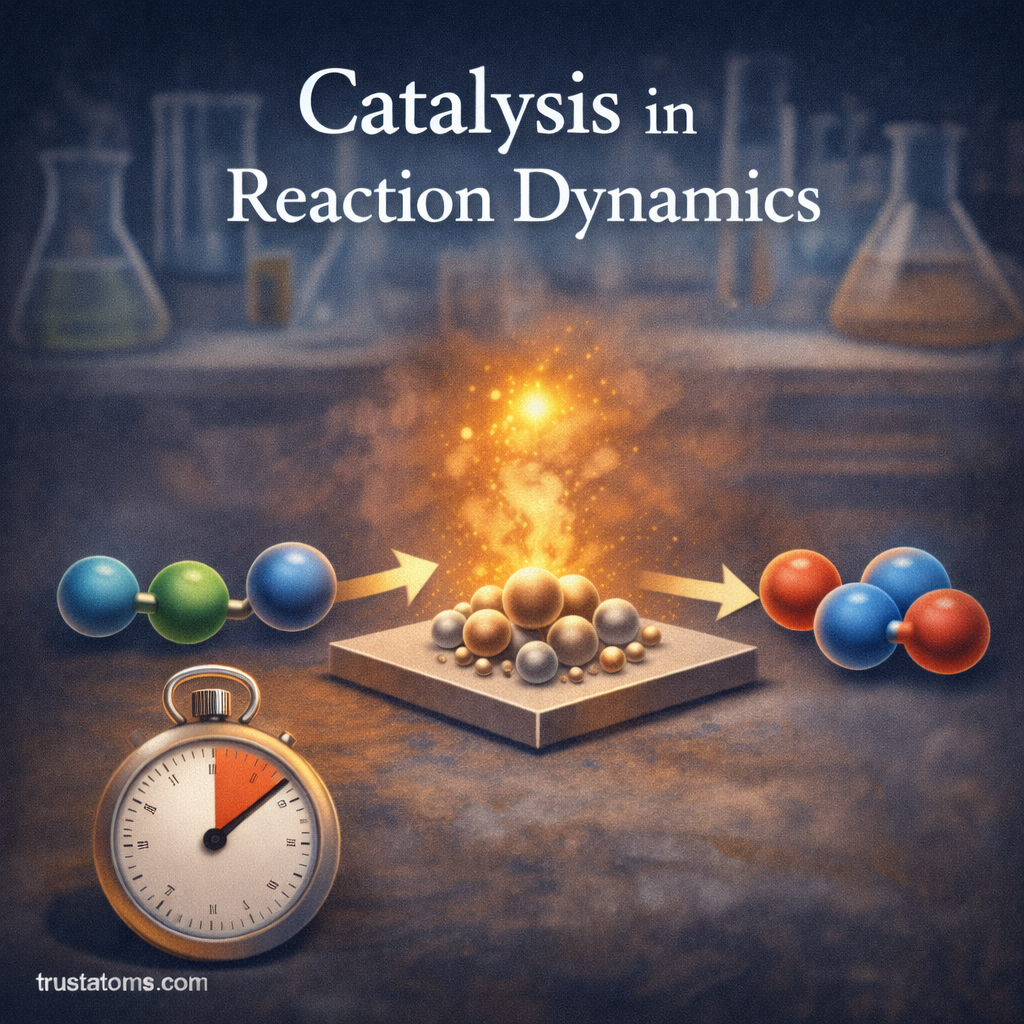
A catalyst is a substance that speeds up a chemical reaction without being consumed in the process.
Catalysts work by lowering the activation energy required for the reaction.
Examples include:
- Enzymes in biological systems
- Catalytic converters in vehicles
- Industrial catalysts used in chemical manufacturing
5. Nature of the Reactants
Some substances react naturally faster than others.
Factors that influence this include:
- Bond strength
- Molecular structure
- Physical state (solid, liquid, gas)
For example, ionic compounds in water often react faster than complex organic molecules.
Collision Theory in Chemical Kinetics
One of the key ideas behind chemical kinetics is collision theory.
Collision theory explains that chemical reactions occur when particles collide with:
- Enough energy to break existing bonds
- Proper orientation to form new bonds
Not every collision results in a reaction. Only effective collisions lead to chemical change.
This theory helps explain why factors like temperature and concentration affect reaction speed.
Activation Energy and Reaction Speed
Every chemical reaction requires a certain amount of energy to begin. This minimum energy requirement is called activation energy.
Activation energy represents the barrier that reactants must overcome before a reaction can proceed.
Key points about activation energy:
- Higher activation energy usually leads to slower reactions
- Catalysts reduce activation energy
- Increased temperature helps molecules overcome the energy barrier
Once reactants pass the activation energy threshold, the reaction can continue.
Why Chemical Kinetics Is Important
Chemical kinetics has many practical applications across science and industry.
Industrial Manufacturing
Manufacturers rely on reaction rate control to produce chemicals efficiently.
Examples include:
- Pharmaceutical production
- Fertilizer manufacturing
- Plastic and polymer production
Optimizing reaction speed improves productivity and reduces costs.
Environmental Science
Chemical kinetics helps scientists understand environmental processes such as:
- Atmospheric reactions affecting climate
- Water purification processes
- Pollutant breakdown in ecosystems
These insights help protect natural systems and public health.
Medicine and Biology
In biological systems, reaction rates determine how quickly essential processes occur.
Examples include:
- Enzyme reactions in metabolism
- Drug absorption in the body
- Cellular chemical pathways
Understanding these reactions helps improve medical treatments and drug design.
Reaction Mechanisms in Chemical Kinetics
Many chemical reactions occur in multiple steps rather than a single event. These steps are known as a reaction mechanism.
A reaction mechanism describes:
- The sequence of intermediate steps
- Temporary molecules formed during the process
- The overall pathway from reactants to products
By studying reaction mechanisms, chemists gain deeper insight into how reactions occur and how they can be controlled.
Final Thoughts
Chemical kinetics is essential for understanding the speed and behavior of chemical reactions. By studying reaction rates, activation energy, and reaction mechanisms, scientists can explain why some reactions happen quickly while others take much longer.
This knowledge helps industries improve manufacturing processes, supports environmental research, and advances medical science. As a result, chemical kinetics remains one of the most important fields in chemistry for understanding and controlling chemical change.