In chemistry, the term alcohol refers to a specific group of organic compounds that contain a characteristic functional group. While the word often brings to mind beverages like ethanol in drinks, alcohols are actually a broad class of chemicals used in medicine, fuels, cleaning products, and industrial manufacturing.
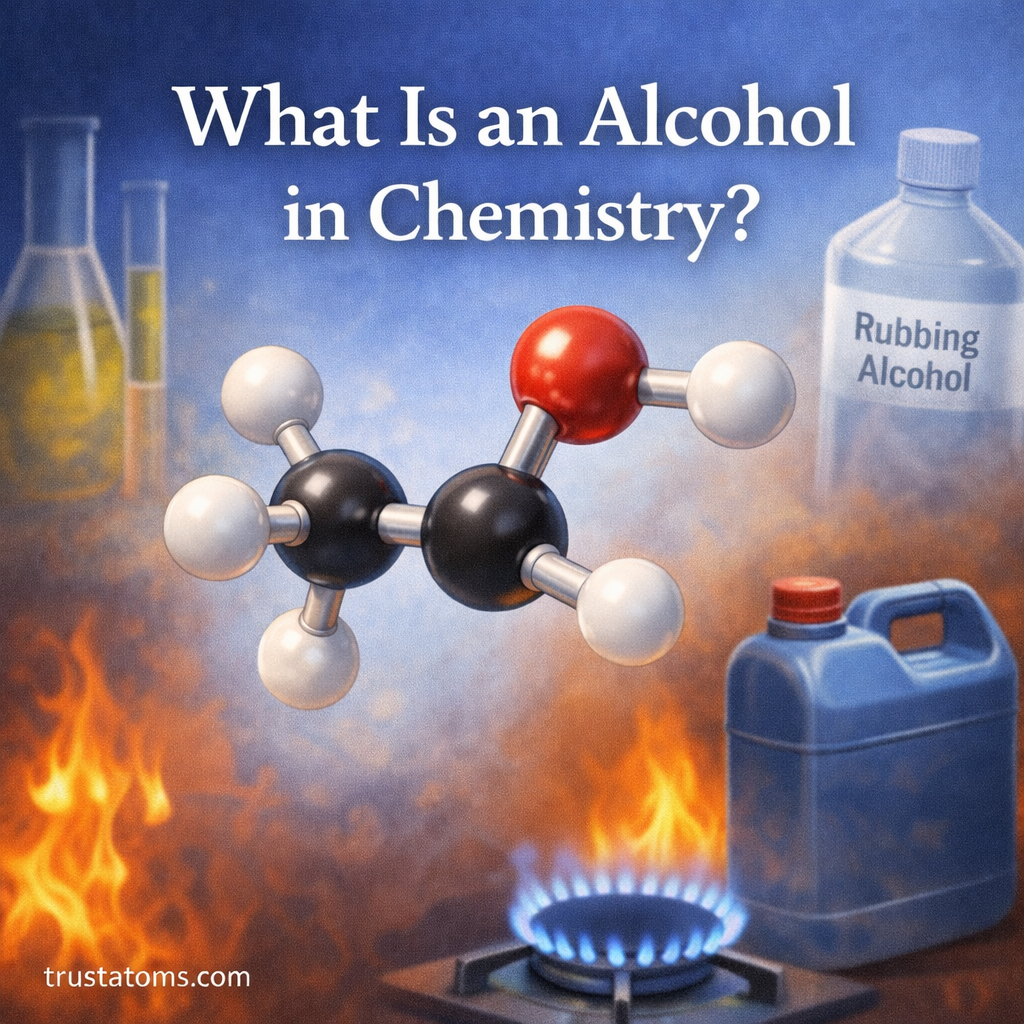
An alcohol in chemistry is an organic compound that contains a hydroxyl group (-OH) attached to a carbon atom. This small structural feature gives alcohols many unique chemical and physical properties.
Alcohols play an important role in organic chemistry, biology, and industry, making them one of the most commonly studied functional groups.
Definition of an Alcohol in Chemistry
An alcohol is an organic molecule in which a hydroxyl group (-OH) is bonded to a saturated carbon atom.
Alcohols are typically derived from hydrocarbons where one hydrogen atom is replaced by the hydroxyl group.
The general structure of an alcohol can be described as:
R–OH
Where:
- R represents a carbon-containing chain or group
- OH represents the hydroxyl group
This hydroxyl group is responsible for many of the chemical behaviors associated with alcohols.
Key Characteristics of Alcohols
Alcohols share several defining properties that distinguish them from other organic compounds.
Presence of the Hydroxyl Group
The most important feature of alcohols is the hydroxyl (-OH) functional group.
This group:
- Contains oxygen and hydrogen
- Can form hydrogen bonds
- Influences how alcohol molecules interact with other substances
Polar Molecules
Unlike many hydrocarbons, alcohols are partially polar molecules because of the oxygen atom in the hydroxyl group.
This polarity allows alcohols to:
- Interact with water molecules
- Participate in hydrogen bonding
- Dissolve certain polar substances
Variable Solubility in Water
The ability of alcohols to dissolve in water depends on the size of the molecule.
Generally:
- Small alcohols dissolve easily in water
- Larger alcohols become less soluble
This happens because longer carbon chains behave more like nonpolar hydrocarbons.
Moderate Reactivity
Alcohols are moderately reactive compared with many hydrocarbons. Their hydroxyl group allows them to participate in several chemical reactions.
Common reactions include:
- Oxidation
- Dehydration
- Ester formation
These reactions are widely used in both laboratories and industry.
Examples of Common Alcohols
There are many alcohol compounds, but a few are especially important in chemistry and everyday life.
Some well-known alcohols include:
- Methanol – used as a fuel and industrial solvent
- Ethanol – found in alcoholic beverages and used as a disinfectant
- Isopropanol – commonly used as rubbing alcohol and cleaning agent
- Butanol – used in chemical manufacturing and fuel research
- Glycerol – found in cosmetics, food products, and pharmaceuticals
Each of these compounds contains the hydroxyl group but differs in carbon chain length and structure.
Classification of Alcohols
Alcohols can be grouped based on how the carbon atom connected to the hydroxyl group is bonded to other carbons.
Primary Alcohols
In primary alcohols, the carbon attached to the hydroxyl group is connected to only one other carbon atom.
Primary alcohols often appear in simpler molecules and can be oxidized to form aldehydes or acids.
Example:
- Ethanol
Secondary Alcohols
In secondary alcohols, the carbon attached to the hydroxyl group is bonded to two other carbon atoms.
Secondary alcohols can oxidize to form ketones.
Example:
- Isopropanol
Tertiary Alcohols
In tertiary alcohols, the carbon attached to the hydroxyl group is bonded to three other carbon atoms.
These alcohols are generally more resistant to oxidation.
Example:
- Tert-butanol
Physical Properties of Alcohols
Alcohols have several distinctive physical properties due to hydrogen bonding.
Boiling Points
Alcohols often have higher boiling points than hydrocarbons with similar molecular sizes.
This occurs because hydrogen bonds between molecules require additional energy to break.
Hydrogen Bonding
The hydroxyl group allows alcohol molecules to form hydrogen bonds with each other and with water.
Hydrogen bonding influences:
- Boiling point
- Solubility
- Viscosity
Odor and Appearance
Many alcohols are:
- Colorless liquids
- Slightly sweet-smelling
- Flammable
However, properties can vary depending on molecular size and structure.
Chemical Reactions of Alcohols
Alcohols participate in many chemical reactions that are important in organic chemistry.
Oxidation Reactions
Alcohols can be oxidized to produce other organic compounds.
Examples include:
- Primary alcohol → aldehyde → carboxylic acid
- Secondary alcohol → ketone
Dehydration Reactions
When alcohols lose water molecules, they can form alkenes.
This process is called dehydration and is commonly used in organic synthesis.
Ester Formation
Alcohols can react with acids to form esters.
Esters are widely used in:
- Fragrances
- Flavorings
- Industrial chemicals
Industrial and Everyday Uses of Alcohols
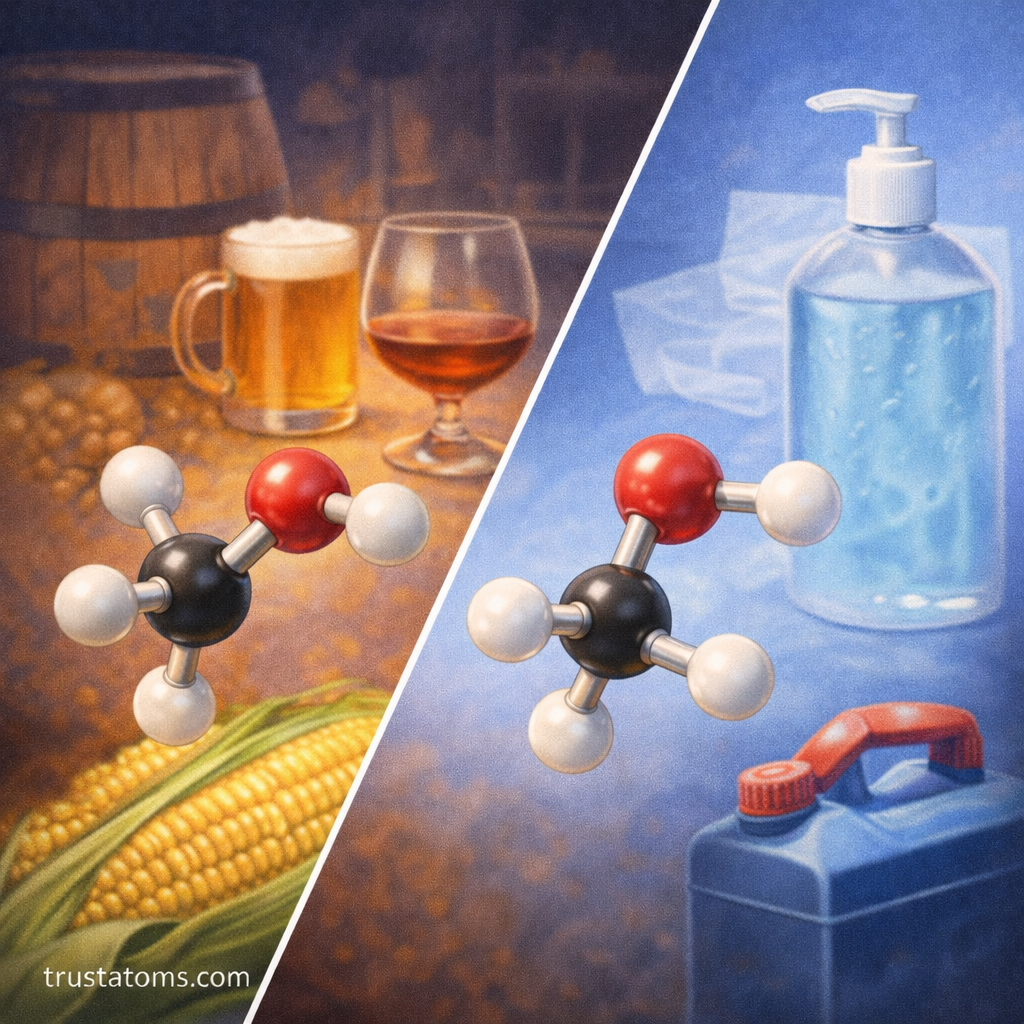
Alcohols are widely used across many industries.
Medical and Sanitizing Uses
Certain alcohols are commonly used as disinfectants.
Examples include:
- Ethanol
- Isopropanol
These substances help kill bacteria and viruses on surfaces and skin.
Fuel and Energy Applications
Some alcohols are used as alternative fuels or fuel additives.
Examples include:
- Ethanol blended into gasoline
- Methanol used in certain fuel systems
Chemical Manufacturing
Alcohols are key building blocks for producing:
- Plastics
- Pharmaceuticals
- Synthetic materials
- Cleaning agents
Because they react easily with other chemicals, alcohols are essential in many manufacturing processes.
Why Alcohols Matter in Chemistry
Alcohols are a foundational topic in organic chemistry because they introduce the concept of functional groups. The hydroxyl group dramatically changes how a molecule behaves compared with simple hydrocarbons.
By studying alcohols, chemists gain insight into:
- Molecular polarity
- Hydrogen bonding
- Organic reaction mechanisms
- Industrial chemical synthesis
Understanding alcohols also helps explain many everyday products, from disinfectants and fuels to cosmetics and food ingredients.
Final Thoughts
In chemistry, an alcohol is an organic compound that contains a hydroxyl group attached to a carbon atom. This functional group gives alcohols unique chemical and physical properties that distinguish them from simple hydrocarbons.
Alcohols are widely used in medicine, fuels, industrial manufacturing, and biological systems. Because of their versatility and importance, they remain a central topic in the study of organic chemistry.