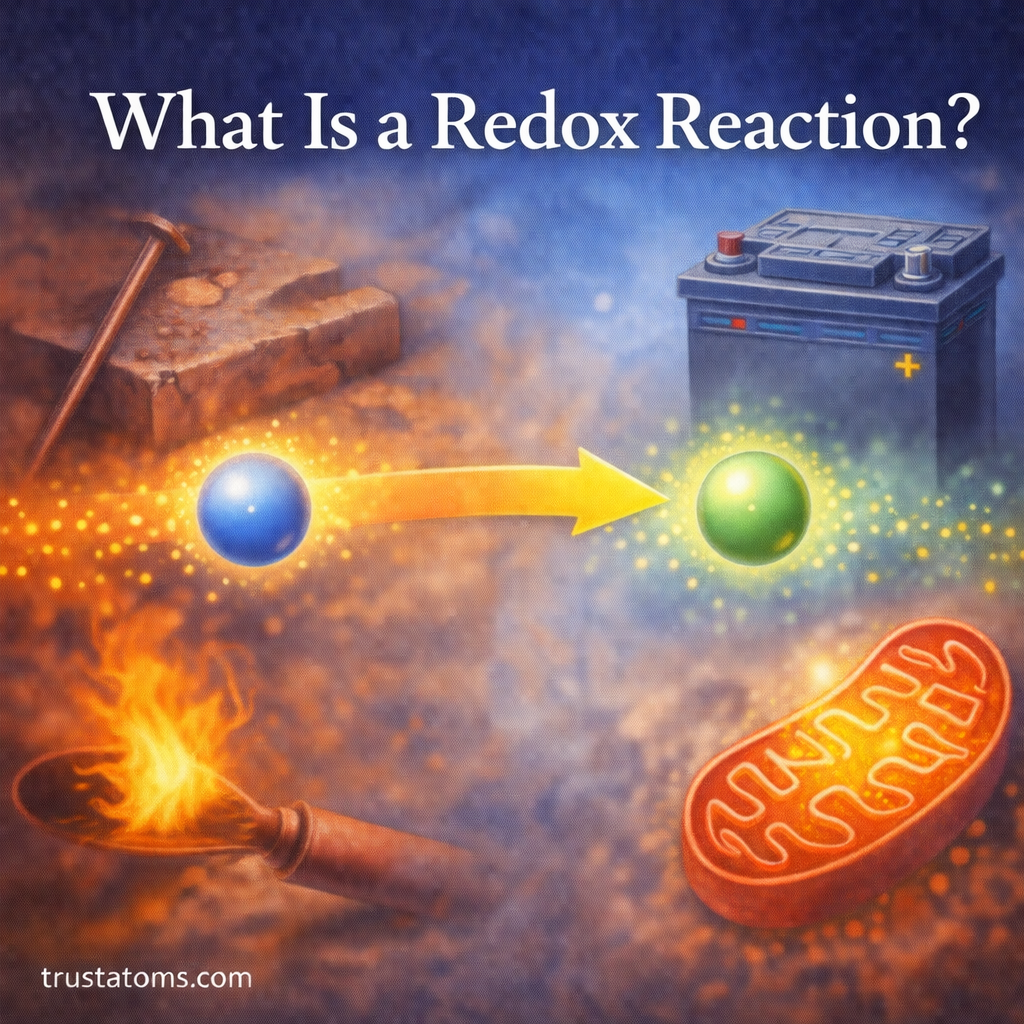
A redox reaction is one of the most important types of chemical reactions in science. These reactions are responsible for many natural processes, from how batteries produce electricity to how living organisms generate energy.
The term redox comes from two words: reduction and oxidation. In every redox reaction, one substance loses electrons while another substance gains electrons.
In simple terms, a redox reaction is a chemical reaction in which electrons are transferred between substances. This movement of electrons causes changes in the oxidation states of the reacting molecules.
Redox reactions are essential in chemistry, biology, environmental science, and industrial processes.
Definition of a Redox Reaction
A redox reaction is a chemical reaction that involves the transfer of electrons between two substances.
The reaction always includes two simultaneous processes:
- Oxidation – the loss of electrons
- Reduction – the gain of electrons
Because electrons cannot simply disappear or appear on their own, oxidation and reduction always occur together.
A helpful way to remember this concept is:
- Oxidation Is Loss
- Reduction Is Gain
Understanding Oxidation
Oxidation occurs when a substance loses electrons during a chemical reaction.
When electrons are lost:
- The oxidation state of the substance increases
- The atom becomes more positively charged
Historically, oxidation referred specifically to reactions involving oxygen. However, modern chemistry defines oxidation more broadly as any loss of electrons, whether oxygen is involved or not.
Examples of Oxidation
Common oxidation processes include:
- Metal rusting
- Fuel combustion
- Cellular respiration
In each case, a substance loses electrons as part of the reaction.
Understanding Reduction
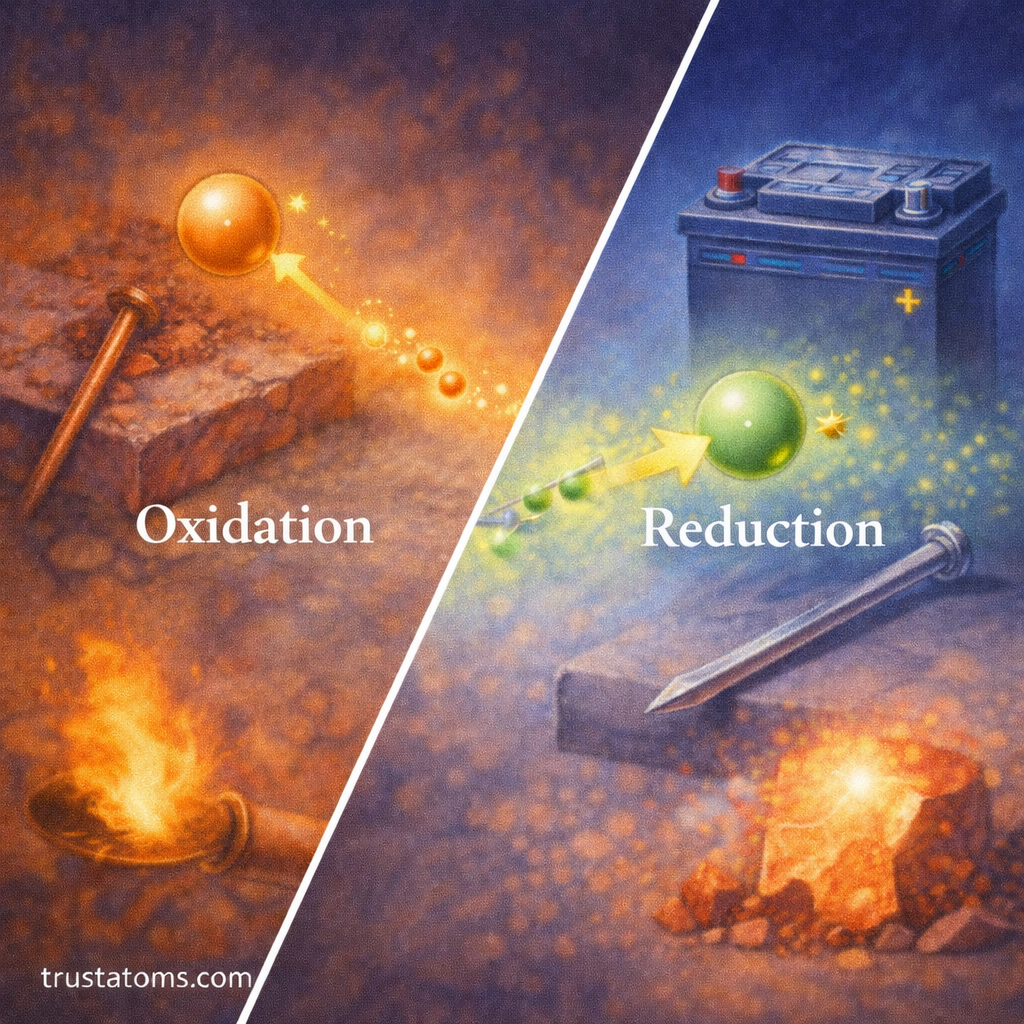
Reduction occurs when a substance gains electrons during a reaction.
When electrons are gained:
- The oxidation state of the substance decreases
- The atom becomes more negatively charged
Reduction often happens alongside oxidation because the electrons lost by one substance must be gained by another.
Examples of Reduction
Examples of reduction include:
- The formation of metals from metal ores
- Reactions occurring inside batteries
- Certain metabolic reactions in living organisms
Reduction helps complete the electron transfer required for redox reactions.
The Role of Oxidizing and Reducing Agents
In redox reactions, certain substances help facilitate the transfer of electrons.
Two important terms are used to describe these roles.
Oxidizing Agent
An oxidizing agent is a substance that causes another substance to lose electrons.
Key characteristics:
- It accepts electrons
- It becomes reduced during the reaction
Reducing Agent
A reducing agent is a substance that causes another substance to gain electrons.
Key characteristics:
- It donates electrons
- It becomes oxidized during the reaction
These two agents work together to enable the redox process.
Examples of Redox Reactions
Redox reactions occur in many everyday situations.
Rusting of Iron
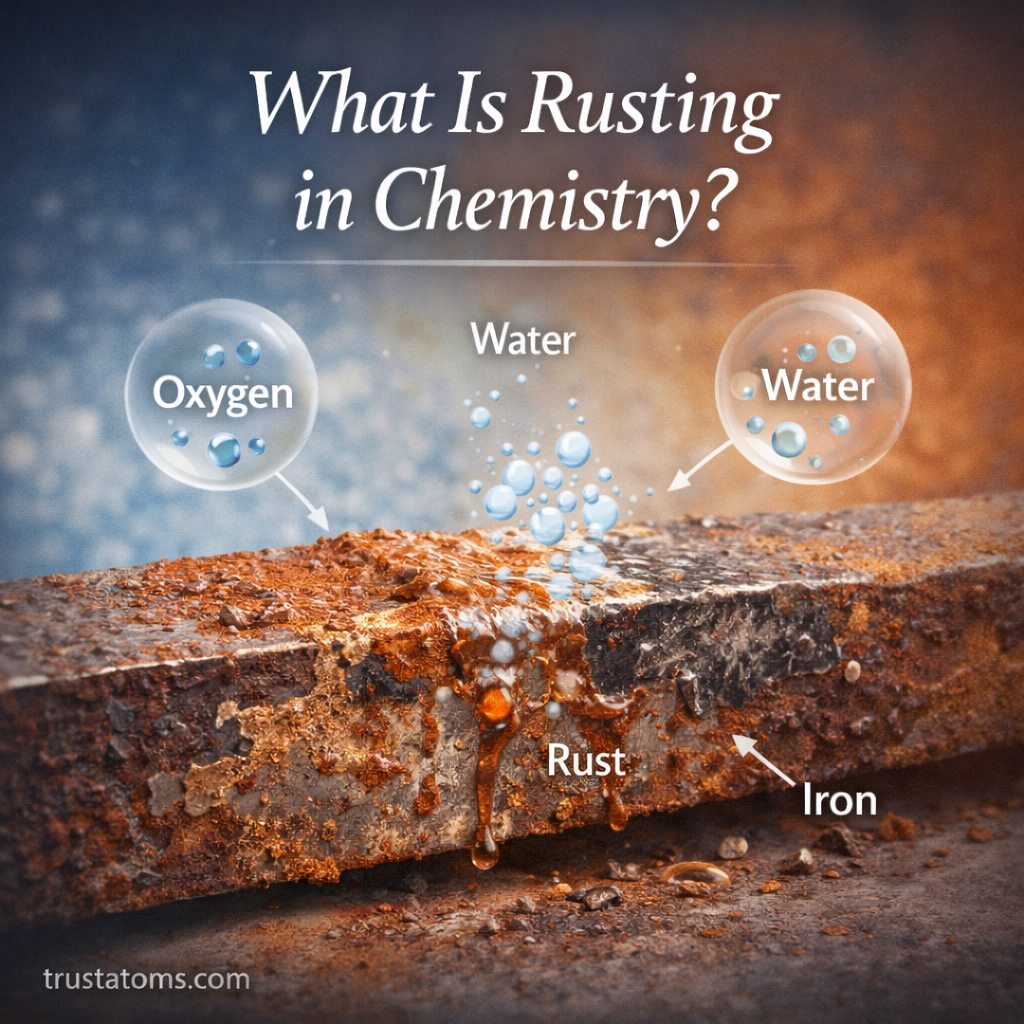
When iron reacts with oxygen and moisture in the air, it forms rust.
In this reaction:
- Iron loses electrons (oxidation)
- Oxygen gains electrons (reduction)
This process gradually converts iron into iron oxide.
Combustion Reactions
Burning fuels such as gasoline or natural gas involves redox reactions.
During combustion:
- The fuel is oxidized
- Oxygen is reduced
The reaction releases energy in the form of heat and light.
Batteries and Electricity
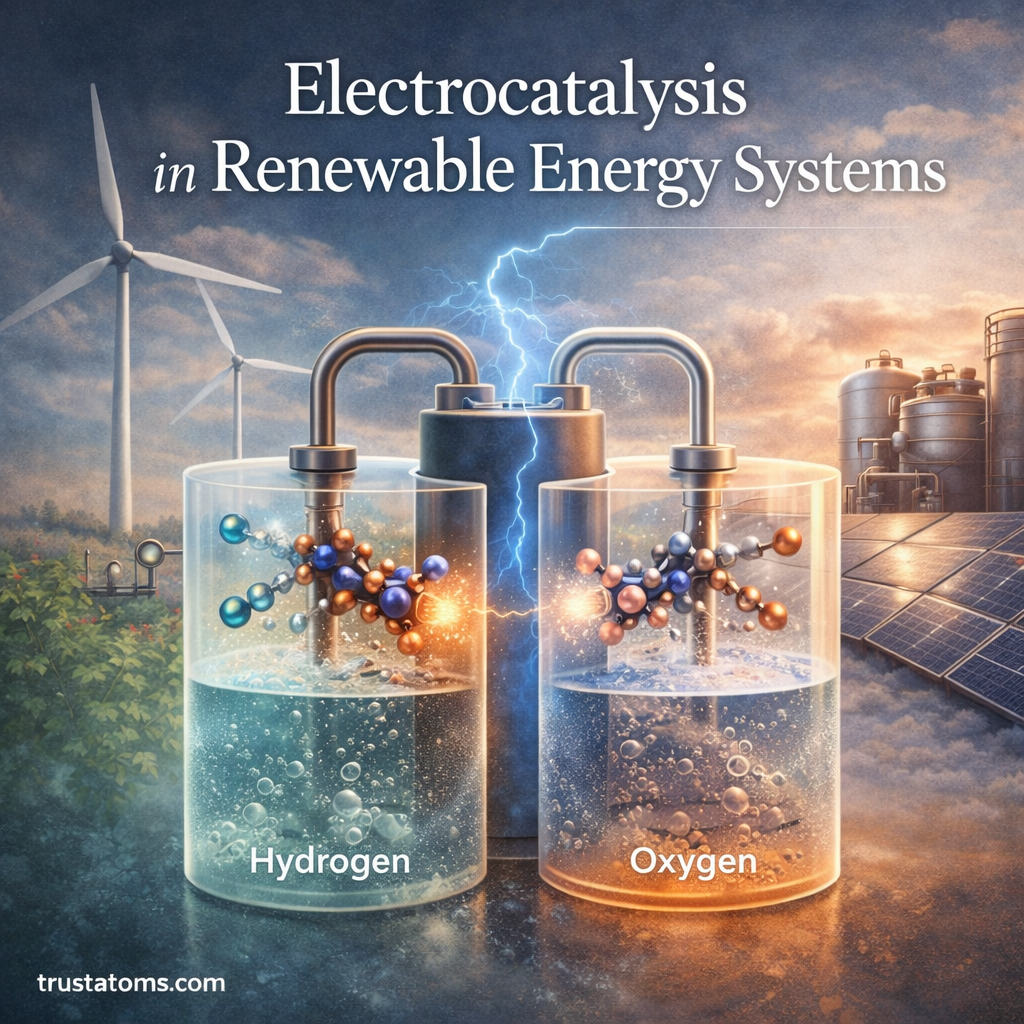
Batteries rely on redox reactions to generate electrical energy.
Inside a battery:
- One electrode undergoes oxidation
- The other electrode undergoes reduction
The movement of electrons between electrodes produces electric current.
Redox Reactions in Biology
Redox reactions are critical for life. Many biological processes depend on the transfer of electrons.
Cellular Respiration
Cells produce energy through a series of redox reactions.
In cellular respiration:
- Glucose molecules are oxidized
- Oxygen molecules are reduced
This process releases energy used to power cellular activities.
Photosynthesis
Plants also rely on redox chemistry during photosynthesis.
In this process:
- Water molecules are oxidized
- Carbon dioxide is reduced to form glucose
These reactions allow plants to convert sunlight into chemical energy.
Identifying a Redox Reaction
Chemists often determine whether a reaction is a redox reaction by examining changes in oxidation states.
A reaction is considered a redox reaction if:
- One substance loses electrons
- Another substance gains electrons
- Oxidation states change during the reaction
If no electron transfer occurs, the reaction is not considered redox.
Why Redox Reactions Matter
Redox reactions play a central role in many scientific and technological processes.
They are important in:
- Energy production
- Industrial chemistry
- Environmental processes
- Biological systems
- Metal extraction and corrosion
Understanding redox chemistry allows scientists to design better batteries, improve energy systems, and study how living organisms generate energy.
Final Thoughts
A redox reaction is a chemical reaction involving the transfer of electrons between substances. One substance loses electrons through oxidation, while another gains electrons through reduction.
These reactions are fundamental to many natural and technological processes, including rusting, combustion, energy production, and biological metabolism. By understanding how redox reactions work, scientists can better explain how matter and energy interact in both chemical and biological systems.