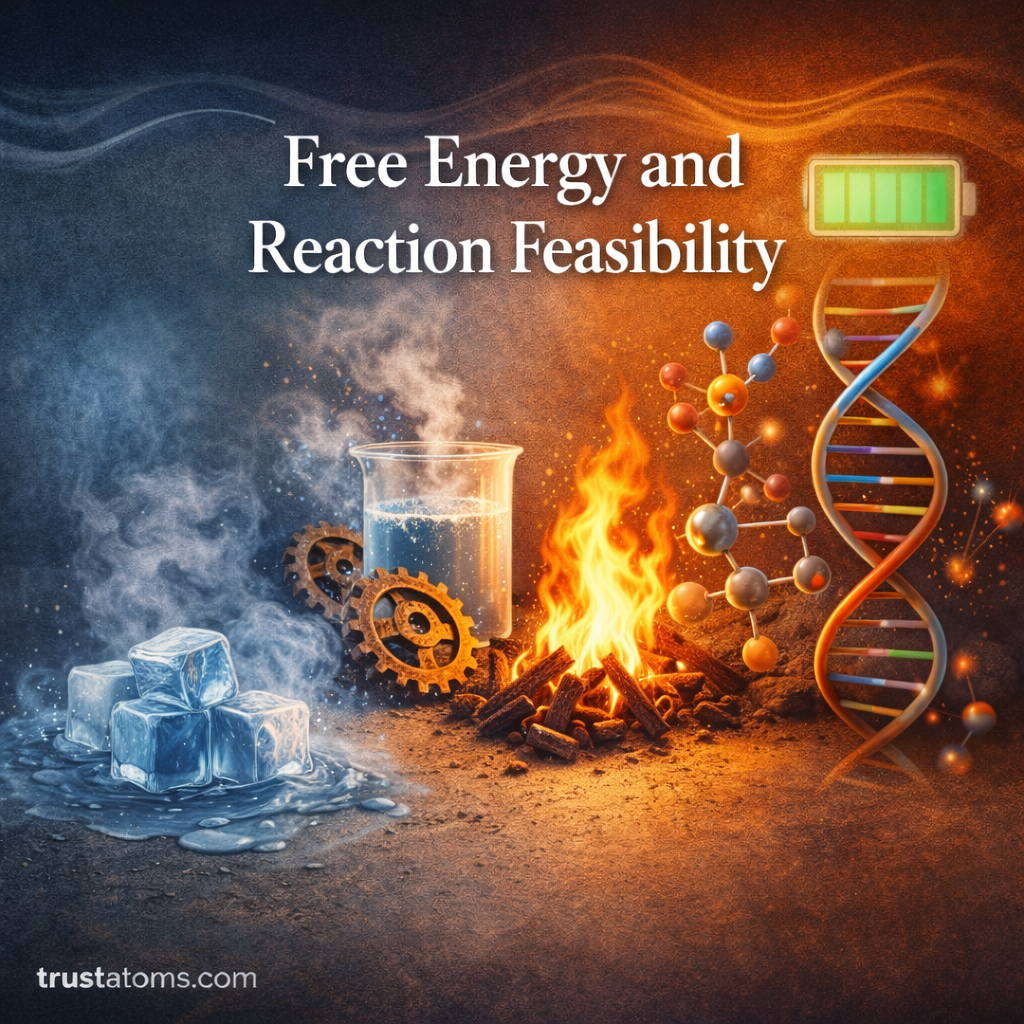
Chemical reactions occur constantly in nature—from the metabolism in living cells to industrial chemical production. However, not every possible reaction happens naturally. Some reactions proceed on their own, while others require continuous energy input.
To understand why certain reactions occur and others do not, chemists use the concept of free energy, specifically Gibbs free energy. This thermodynamic quantity helps determine whether a reaction is feasible under specific conditions.
Free energy combines the effects of energy changes and entropy to predict whether a chemical reaction will occur spontaneously.
What Is Free Energy?
Free energy refers to the usable energy available to do work in a system. In chemistry, the most commonly used form is Gibbs free energy, often simply called free energy.
Gibbs free energy measures the amount of energy available for a chemical reaction to occur at constant temperature and pressure.
In practical terms, free energy helps answer an important question:
- Will a reaction occur naturally under the given conditions?
If a reaction lowers the system’s free energy, it tends to occur spontaneously.
The Concept of Gibbs Free Energy
Gibbs free energy combines two major thermodynamic concepts:
- Enthalpy (heat energy change)
- Entropy (degree of disorder or energy distribution)
Together, these factors determine whether a reaction will proceed naturally.
Chemists describe the change in Gibbs free energy during a reaction as ΔG (delta G).
The value of ΔG indicates whether a reaction is favorable.
Interpreting ΔG Values
The sign of ΔG tells us about reaction feasibility:
- ΔG < 0 (negative) → Reaction is spontaneous
- ΔG > 0 (positive) → Reaction is non-spontaneous
- ΔG = 0 → Reaction is at equilibrium
A negative ΔG means the system releases usable energy and the reaction can proceed without external input.
What Does Reaction Feasibility Mean?
Reaction feasibility refers to whether a reaction can occur naturally under specific conditions.
A reaction may be chemically possible but still not feasible if it requires more energy than it releases.
For example:
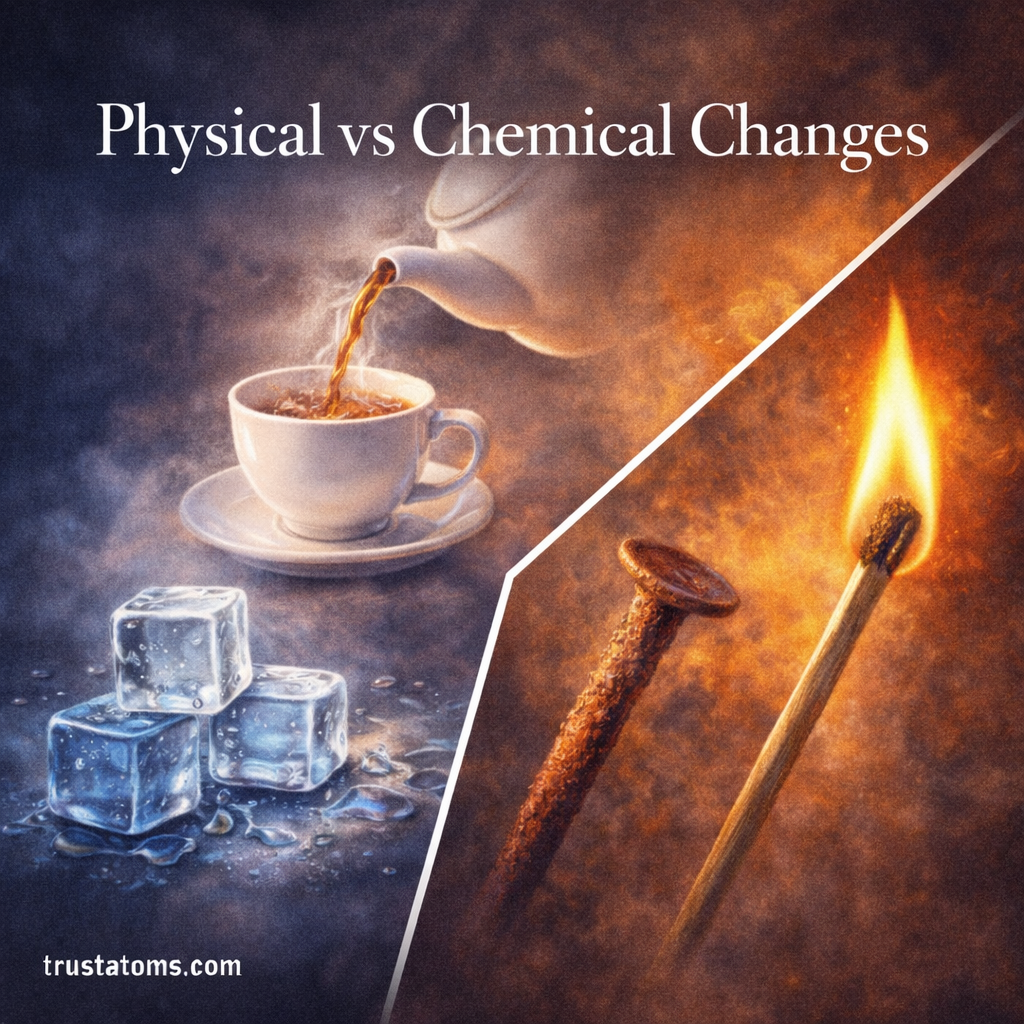
- Rusting of iron is feasible and occurs naturally.
- Breaking down stable compounds may require continuous energy input.
Feasibility is determined by thermodynamic factors, not just the presence of reactants.
Spontaneity vs Reaction Rate
A common misconception is that spontaneous reactions occur quickly. In reality, spontaneity and reaction rate are different concepts.
Thermodynamics determines whether a reaction is feasible, while kinetics determines how fast it occurs.
Examples:
- Rusting of iron is spontaneous but slow.
- Explosions are spontaneous and fast.
- Diamond turning into graphite is thermodynamically favorable but extremely slow.
Therefore, even if a reaction has negative free energy, it may require activation energy to begin.
Factors That Influence Free Energy
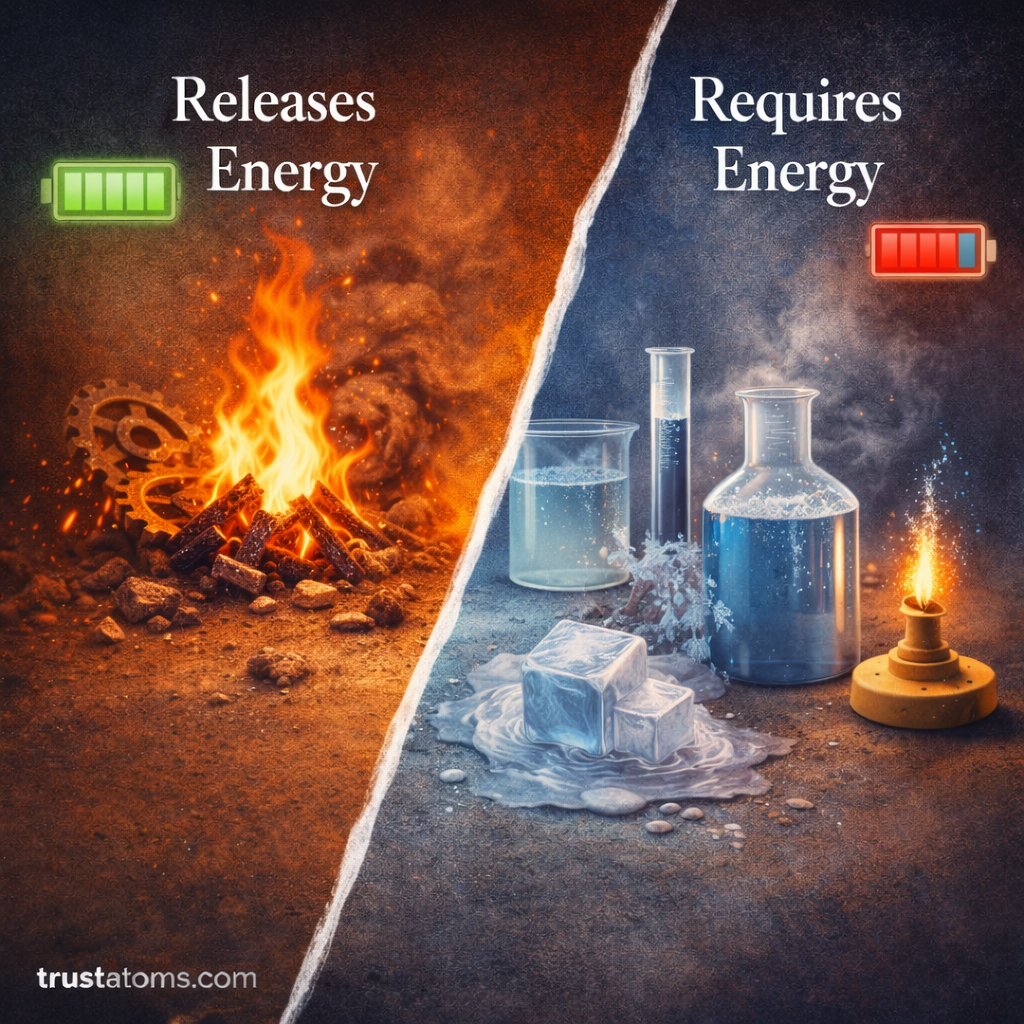
Several factors affect the free energy change of a reaction.
1. Enthalpy (Heat Energy)
Enthalpy describes whether heat is released or absorbed.
- Exothermic reactions release heat and often lower free energy.
- Endothermic reactions absorb heat and may require energy input.
2. Entropy (Disorder)
Entropy measures how energy and particles are distributed.
Reactions tend to favor states where:
- particles spread out
- energy disperses
- disorder increases
An increase in entropy can help make a reaction spontaneous.
3. Temperature
Temperature strongly influences reaction feasibility.
Some reactions become favorable only at certain temperatures.
For example:
- Ice melting is spontaneous above 0°C
- Certain chemical reactions occur only when heated
Temperature changes affect both entropy and energy distribution.
Predicting Reaction Feasibility
Chemists use thermodynamic data to determine whether a reaction is feasible.
Several steps are typically involved:
- Identify the reactants and products.
- Evaluate enthalpy changes.
- Consider entropy changes.
- Calculate or estimate Gibbs free energy.
If the overall change in free energy is negative, the reaction is thermodynamically favorable.
Free Energy and Chemical Equilibrium
Free energy also explains why reactions reach equilibrium.
When a reaction begins, free energy usually decreases as reactants form products.
Eventually, the system reaches a point where:
- forward and reverse reactions occur at equal rates
- no net change occurs in concentrations
At this point:
- ΔG equals zero
- the system is at equilibrium
Equilibrium represents the lowest free energy state under the given conditions.
Free Energy in Biological Systems
Free energy is essential for understanding biological processes.
Living organisms rely on chemical reactions that involve energy transfer.
Examples include:
- cellular respiration
- photosynthesis
- ATP production
- metabolic reactions
Cells often couple reactions together so that energy released from one reaction drives another reaction forward.
This allows organisms to carry out processes that would otherwise be unfavorable.
Industrial and Environmental Applications
Understanding free energy is important in many practical fields.
Chemical Manufacturing
Industries use free energy calculations to:
- optimize chemical reactions
- reduce energy costs
- increase production efficiency
Energy Technologies
Free energy principles guide technologies such as:
- batteries
- fuel cells
- energy storage systems
Environmental Chemistry
Free energy also helps scientists understand processes like:
- pollutant breakdown
- atmospheric chemical reactions
- natural mineral formation
Common Misunderstandings About Free Energy
Several misconceptions often arise when discussing free energy.
Key clarifications include:
- A spontaneous reaction does not necessarily occur quickly.
- Negative free energy does not guarantee immediate reaction.
- External energy may still be needed to overcome activation barriers.
- Feasibility depends on conditions such as temperature and pressure.
Understanding these points helps prevent confusion when studying chemical thermodynamics.
Why Free Energy Matters in Chemistry
Free energy provides a powerful tool for predicting chemical behavior.
Chemists rely on Gibbs free energy to:
- determine reaction feasibility
- understand equilibrium systems
- analyze biological energy transfer
- design industrial chemical processes
- study environmental reactions
By combining energy changes and entropy effects, free energy gives a complete picture of how and why chemical reactions occur.
Final Thoughts
Free energy is one of the most important concepts in chemistry for predicting whether reactions will occur. By considering both energy changes and entropy, Gibbs free energy helps determine whether a process is thermodynamically feasible.
Although spontaneity does not guarantee speed, it reveals the direction in which natural processes tend to move. From cellular metabolism to industrial chemical production, free energy provides a framework for understanding how energy flows through chemical systems.
Mastering the concept of free energy allows scientists to better predict, control, and apply chemical reactions in both natural and engineered environments.