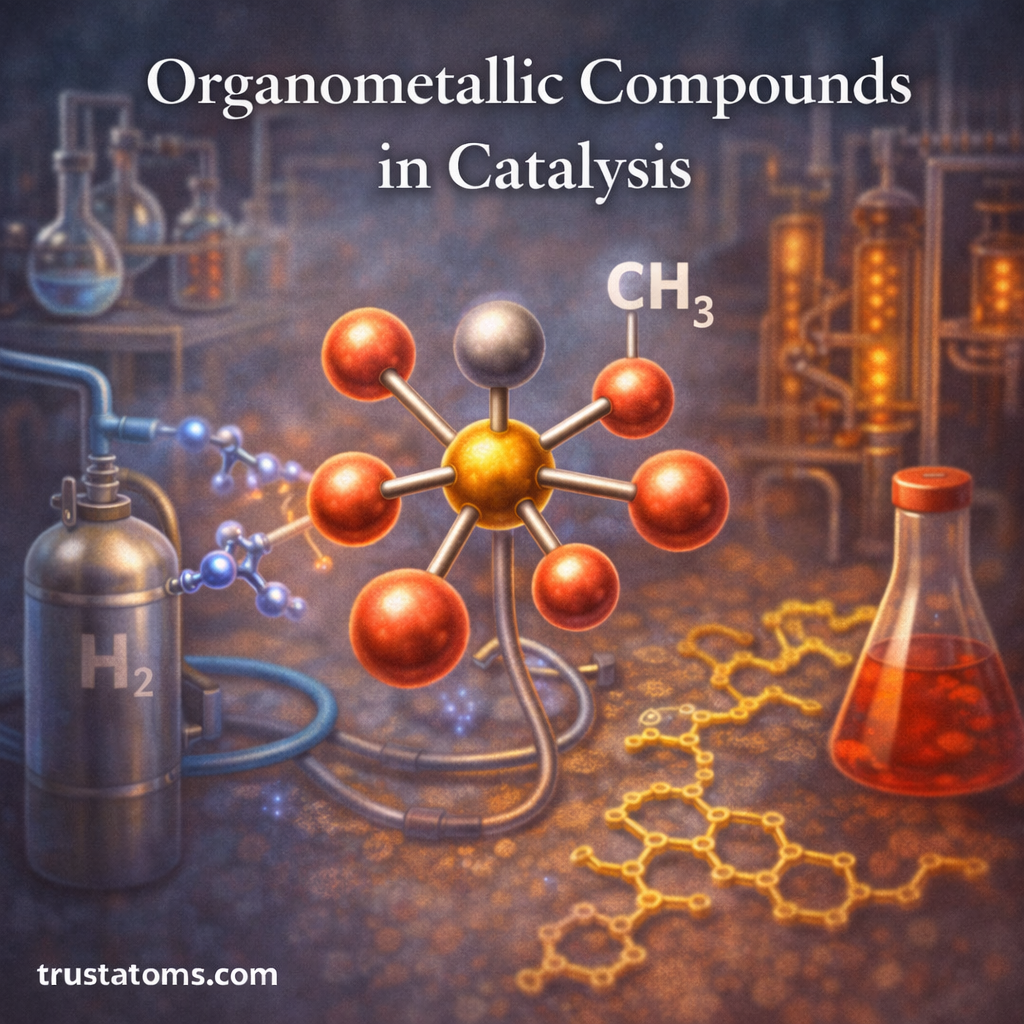
Organometallic compounds are a fascinating class of substances that play a critical role in modern chemical reactions. These compounds contain metal–carbon bonds, linking a metal atom directly to an organic molecule. Because of this unique structure, organometallic compounds often serve as highly effective catalysts in chemical processes.
In catalysis, organometallic compounds help accelerate reactions, improve efficiency, and enable transformations that might otherwise be difficult or impossible. They are widely used in industries such as pharmaceuticals, plastics manufacturing, energy production, and environmental chemistry.
Understanding how organometallic compounds function in catalytic systems is an important topic in inorganic and industrial chemistry.
What Are Organometallic Compounds?
Organometallic compounds are molecules that contain a direct bond between a metal atom and a carbon atom from an organic group.
The metal component is often a transition metal, while the organic component may include groups such as:
- Alkyl groups
- Aryl groups
- Carbonyl ligands
- Alkene or alkyne fragments
Common metals involved in organometallic chemistry include:
- Nickel
- Palladium
- Platinum
- Iron
- Ruthenium
These compounds form the foundation of many catalytic systems used in chemical synthesis.
Why Organometallic Compounds Make Effective Catalysts
Organometallic compounds are powerful catalysts because of their ability to interact with both organic molecules and metal centers.
Key properties that support catalytic activity include:
- Flexible oxidation states of the metal
- Ability to form temporary bonds with reactants
- Stabilization of reaction intermediates
- Control over reaction pathways
These characteristics allow organometallic catalysts to lower activation energy and improve reaction efficiency.
Many catalytic cycles depend on the ability of the metal center to repeatedly bind and release molecules during the reaction.
The Organometallic Catalytic Cycle
Most organometallic catalytic reactions follow a repeating sequence known as a catalytic cycle. During this cycle, the catalyst participates in several intermediate steps before returning to its original form.
A typical catalytic cycle includes:
- Coordination of reactants to the metal center
- Activation of chemical bonds in the reactants
- Formation of new bonds between molecules
- Release of the final product
- Regeneration of the catalyst
Because the catalyst is regenerated at the end of the cycle, it can continue facilitating additional reactions.
Key Types of Organometallic Catalytic Reactions
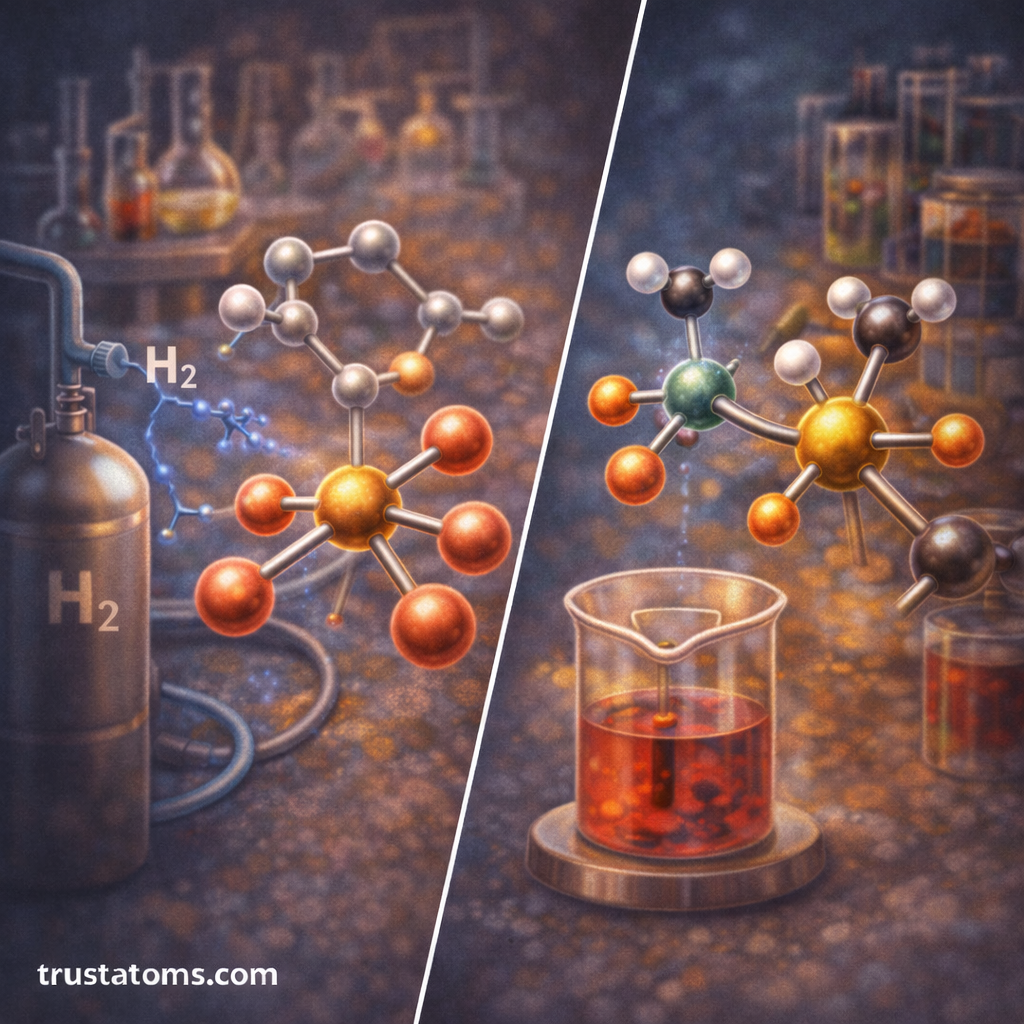
Organometallic chemistry enables a wide variety of reactions that are essential in chemical manufacturing.
Hydrogenation Reactions
Hydrogenation adds hydrogen atoms to unsaturated organic molecules such as alkenes and alkynes.
Organometallic catalysts help:
- Activate hydrogen gas
- Transfer hydrogen atoms to organic substrates
- Control the speed and selectivity of the reaction
These reactions are used in:
- Food processing
- Fuel production
- Pharmaceutical synthesis
Carbon–Carbon Coupling Reactions
Carbon–carbon bond formation is one of the most important transformations in organic chemistry.
Transition metal organometallic catalysts allow chemists to link carbon atoms efficiently through reactions such as:
- Cross-coupling reactions
- Polymerization processes
- Fine chemical synthesis
These reactions are widely used in the production of complex molecules.
Polymerization Reactions
Organometallic catalysts are crucial for producing many modern plastics.
They help control the polymerization of small molecules into long chains. Important examples include:
- Polyethylene production
- Polypropylene synthesis
- Synthetic rubber manufacturing
Catalysts allow chemists to control properties such as polymer length, branching, and structure.
Industrial Importance of Organometallic Catalysis
Organometallic catalysts are used in many large-scale industrial processes because they offer high efficiency and selectivity.
Some major applications include:
- Production of plastics and polymers
- Pharmaceutical manufacturing
- Petrochemical processing
- Agricultural chemical synthesis
- Fuel refining
These catalysts often allow reactions to occur under milder conditions, reducing energy costs and improving sustainability.
In many cases, a small amount of catalyst can process a large quantity of reactants, making the process economically viable.
Organometallic Catalysts in Environmental Chemistry
Modern research focuses on using organometallic catalysts to improve environmental sustainability.
These catalysts can help:
- Reduce industrial waste
- Improve energy efficiency
- Convert carbon dioxide into useful chemicals
- Support renewable fuel production
Scientists are continually developing new catalytic systems that operate under environmentally friendly conditions.
Challenges in Organometallic Catalysis
Despite their advantages, organometallic catalysts can present challenges.
Some issues include:
- Sensitivity to air or moisture
- High cost of certain metals
- Catalyst deactivation during reactions
- Difficulty in catalyst recovery
Researchers are actively working to design catalysts that are more stable, affordable, and recyclable.
Advances in catalyst design continue to expand the possibilities of organometallic chemistry.
Why Organometallic Catalysis Matters
Organometallic catalysis is one of the most important tools in modern chemistry. It allows chemists to construct complex molecules efficiently and with precise control.
This field influences many scientific areas, including:
- Synthetic chemistry
- Materials science
- Energy research
- Environmental technology
- Pharmaceutical development
As new catalysts are discovered, organometallic chemistry continues to drive innovation in chemical manufacturing and sustainable technologies.
Final Thoughts
Organometallic compounds bridge the gap between organic and inorganic chemistry through their unique metal–carbon bonds. Their ability to activate molecules and guide chemical transformations makes them essential catalysts in both laboratory research and large-scale industrial processes.
From producing plastics to synthesizing life-saving medicines, organometallic catalysts support many technologies that shape modern society. Continued research in this field promises even more efficient and sustainable chemical reactions in the future.