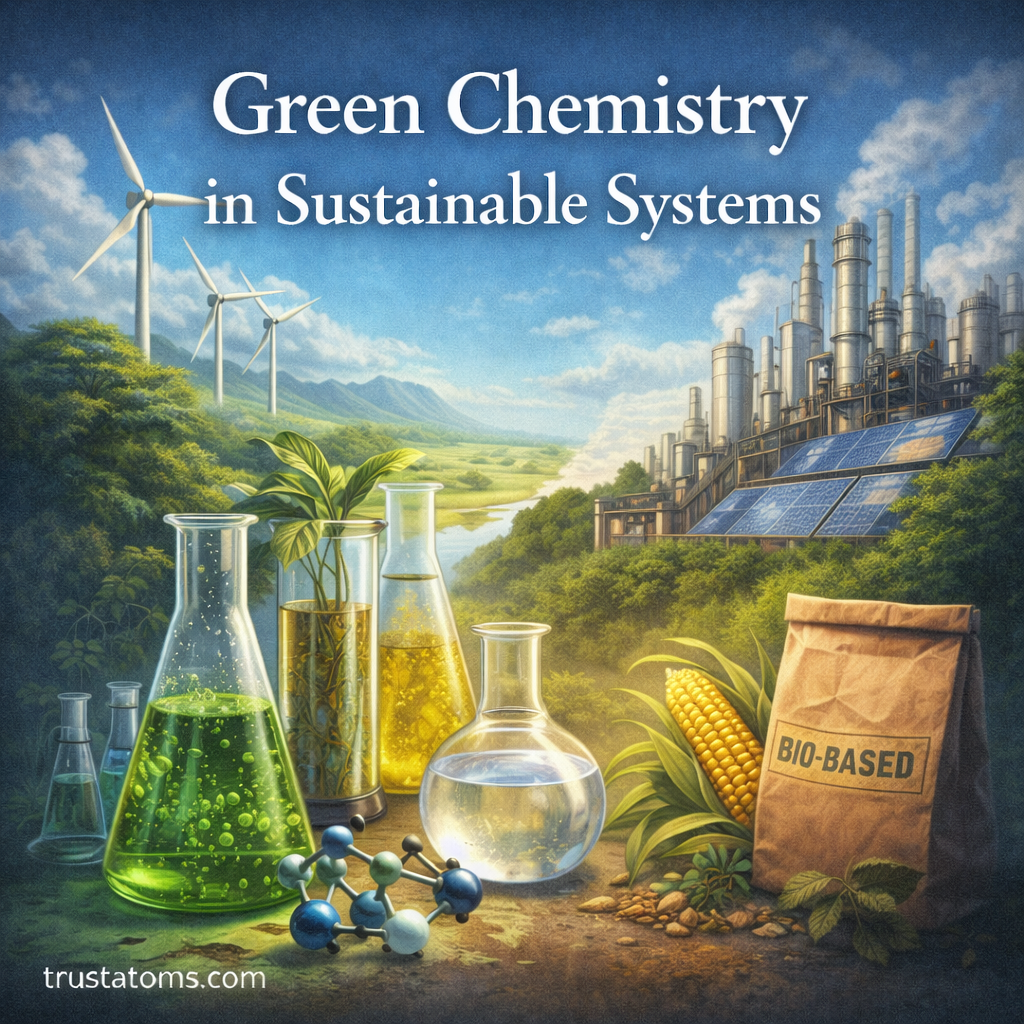
Green chemistry is an approach to chemical design and production that prioritizes environmental protection, resource efficiency, and human safety. Instead of focusing only on producing chemical products, green chemistry aims to reduce pollution, waste, and hazardous substances throughout the entire chemical lifecycle.
In modern science and industry, sustainability has become a major goal. Green chemistry helps industries create processes that use fewer resources, generate less waste, and minimize environmental impact. By designing safer chemicals and cleaner production methods, scientists can support both technological progress and environmental responsibility.
Understanding green chemistry provides insight into how chemical science contributes to building more sustainable systems in energy, manufacturing, agriculture, and materials development.
What Is Green Chemistry?
Green chemistry refers to the design of chemical products and processes that reduce or eliminate the use and generation of hazardous substances.
Unlike traditional approaches that manage pollution after it occurs, green chemistry focuses on preventing pollution at the source. This means redesigning chemical reactions and production systems to minimize environmental harm from the beginning.
Green chemistry principles are applied across many fields, including:
- Industrial manufacturing
- Pharmaceutical development
- Agricultural chemistry
- Materials science
- Energy technologies
By applying these principles, scientists aim to create chemical systems that are both effective and environmentally responsible.
The Goals of Green Chemistry
The main objective of green chemistry is to make chemical processes safer and more sustainable without sacrificing performance or efficiency.
Key goals include:
- Reducing chemical waste
- Using safer solvents and materials
- Improving energy efficiency
- Designing biodegradable products
- Preventing pollution during production
These goals help reduce environmental damage while supporting economic and technological growth.
The 12 Principles of Green Chemistry
Green chemistry is guided by a set of widely recognized principles that help scientists design safer and more sustainable chemical processes.
Core Principles
The 12 principles include:
- Prevent waste rather than treating or cleaning it up.
- Design safer chemical syntheses.
- Use less hazardous chemical substances.
- Design safer chemicals and products.
- Use safer solvents and reaction conditions.
- Increase energy efficiency in chemical processes.
- Use renewable raw materials when possible.
- Reduce unnecessary chemical derivatization.
- Use catalysts rather than excess reagents.
- Design chemicals that break down safely in the environment.
- Monitor processes in real time to prevent pollution.
- Minimize the potential for chemical accidents.
These principles serve as guidelines for researchers developing new materials, reactions, and manufacturing systems.
Waste Reduction in Chemical Systems
Traditional chemical processes often generate significant waste, including unused reagents, byproducts, and solvents. Green chemistry aims to reduce or eliminate this waste by improving reaction efficiency.
Methods for Waste Reduction
Scientists apply several strategies to reduce waste:
- Improving reaction selectivity
- Using catalytic reactions
- Reducing excess reactants
- Designing efficient reaction pathways
- Recycling reaction materials
Efficient reactions convert a larger percentage of starting materials into useful products, reducing the need for waste treatment.
Renewable Resources in Chemical Production
Many traditional chemical processes rely on fossil fuels or nonrenewable raw materials. Green chemistry encourages the use of renewable resources whenever possible.
Examples of Renewable Chemical Feedstocks
Common renewable sources include:
- Plant-based materials
- Agricultural byproducts
- Biomass-derived chemicals
- Bio-based polymers
- Renewable biological oils
Using renewable resources helps reduce reliance on finite resources and can lower the carbon footprint of chemical manufacturing.
Safer Solvents and Reaction Conditions
Solvents are widely used in chemical reactions to dissolve substances and enable chemical transformations. However, many traditional solvents can be toxic or environmentally harmful.
Green chemistry promotes the use of safer alternatives.
Safer Solvent Options
Examples include:
- Water-based solvent systems
- Bio-derived solvents
- Supercritical carbon dioxide
- Solvent-free reactions
These alternatives can reduce toxicity, improve safety, and minimize environmental contamination.
Energy Efficiency in Green Chemistry
Chemical reactions often require heat, pressure, or specialized conditions that consume energy. Green chemistry encourages methods that reduce energy consumption.
Strategies for Improving Energy Efficiency
Some approaches include:
- Running reactions at lower temperatures
- Using more efficient catalysts
- Designing shorter reaction pathways
- Utilizing renewable energy sources
Energy-efficient processes reduce both operational costs and environmental impact.
Catalysts in Sustainable Chemical Processes
Catalysts are substances that accelerate chemical reactions without being consumed. They play a major role in green chemistry because they improve efficiency and reduce waste.
Benefits of Catalysis
Catalytic reactions often:
- Require smaller amounts of chemicals
- Produce fewer unwanted byproducts
- Operate under milder conditions
- Improve reaction speed and efficiency
Catalysts are widely used in industries such as petroleum refining, pharmaceuticals, and environmental chemistry.
Green Chemistry in Industry
Many industries have adopted green chemistry practices to improve sustainability and meet environmental regulations.
Industrial Applications
Examples include:
- Cleaner pharmaceutical manufacturing
- Bio-based plastics and materials
- Low-emission fuel technologies
- Sustainable agricultural chemicals
- Eco-friendly cleaning products
These innovations help reduce environmental impact while maintaining product quality and production efficiency.
Environmental Benefits of Green Chemistry
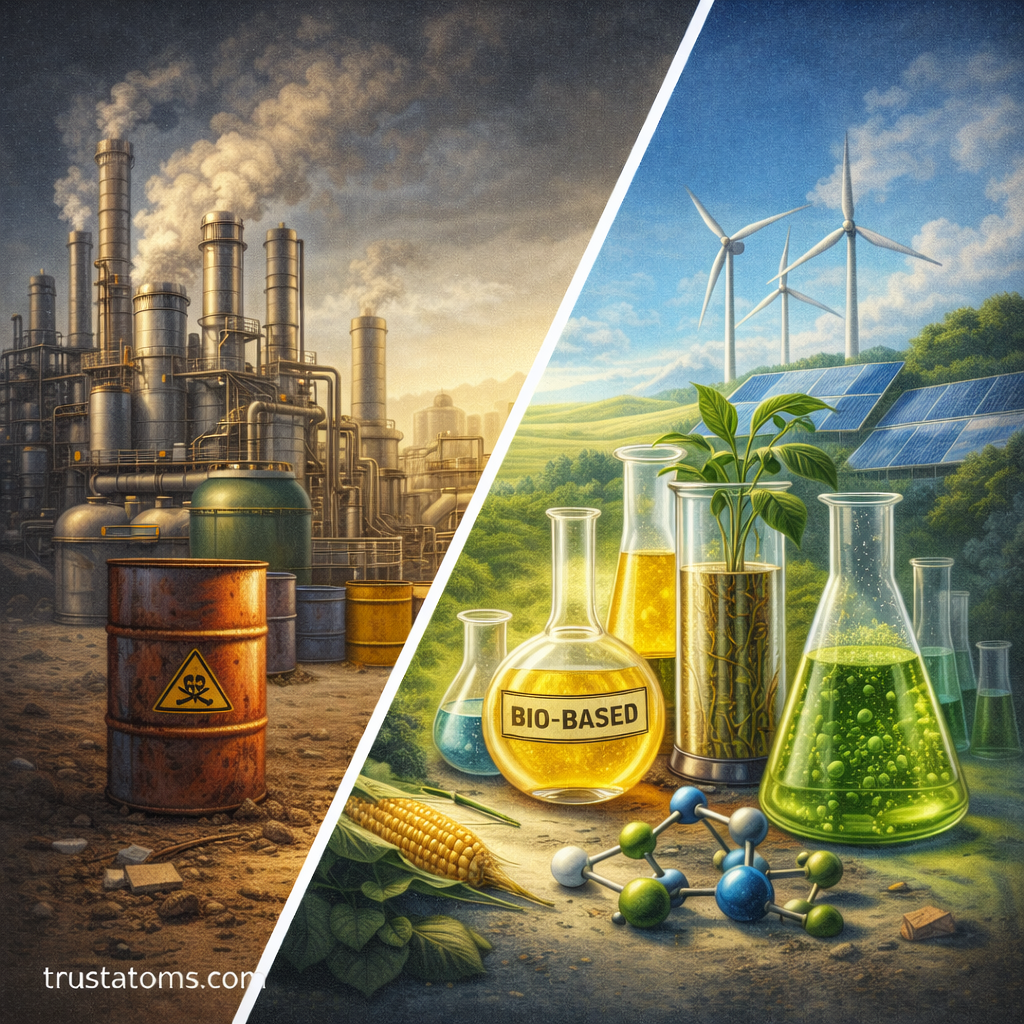
Green chemistry contributes to environmental protection in several ways.
Key Environmental Advantages
Green chemistry helps:
- Reduce chemical pollution
- Minimize hazardous waste
- Lower greenhouse gas emissions
- Protect ecosystems
- Improve workplace safety
These benefits support broader sustainability goals in both industry and society.
Future Trends in Green Chemistry
As environmental concerns continue to grow, green chemistry research is expanding rapidly. Scientists are exploring new technologies that make chemical systems even more sustainable.
Emerging Areas of Research
Important developments include:
- Biodegradable polymers
- Carbon-neutral chemical processes
- Advanced catalytic materials
- Circular chemical manufacturing
- Sustainable energy storage materials
These innovations aim to transform chemical industries into systems that operate efficiently while preserving natural resources.
Final Thoughts
Green chemistry represents a shift toward more responsible chemical science. By designing safer materials, reducing waste, and improving energy efficiency, chemists can help build sustainable systems that benefit both society and the environment.
As industries adopt greener production methods and researchers develop new sustainable technologies, green chemistry will continue to play a central role in shaping the future of science, manufacturing, and environmental protection.