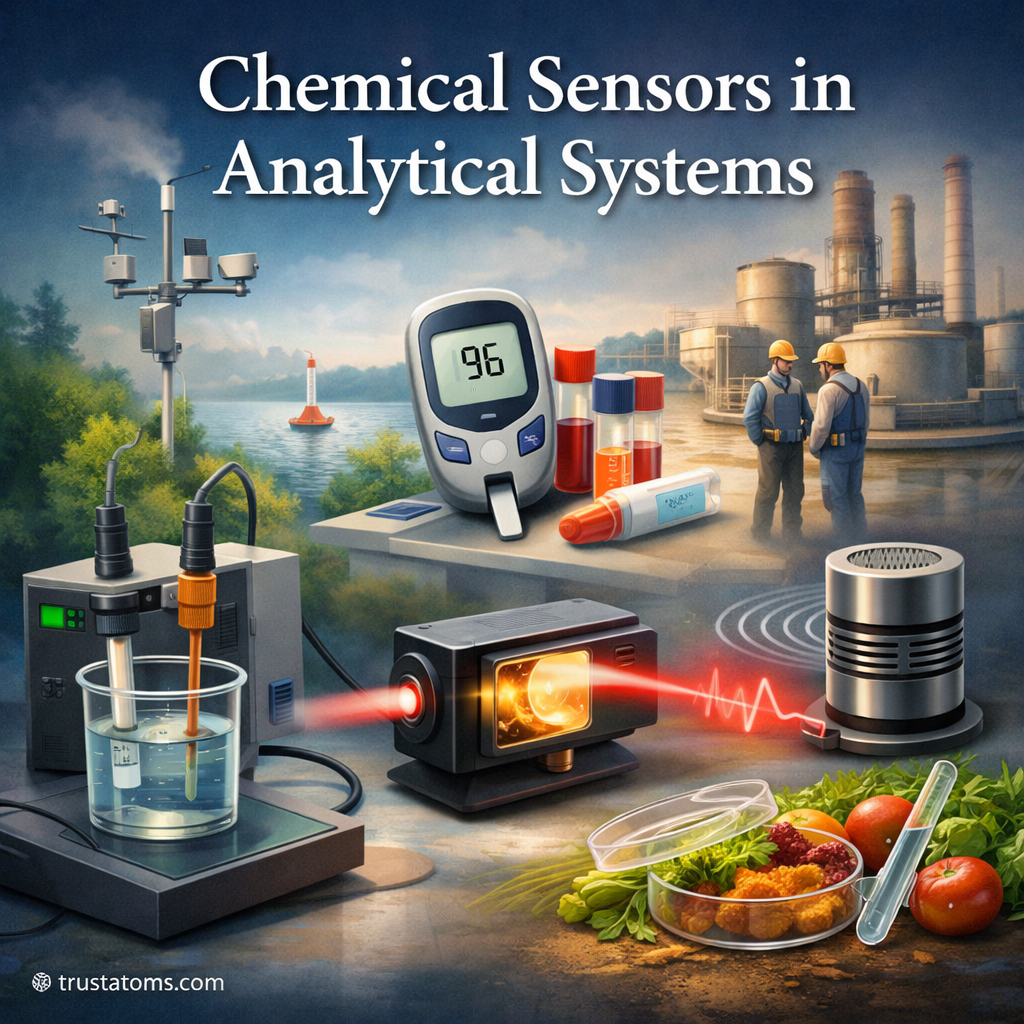
Chemical sensors play a vital role in modern analytical systems. These devices detect and measure specific chemical substances in gases, liquids, or solids, helping scientists monitor environmental conditions, ensure food safety, analyze medical samples, and control industrial processes.
From detecting air pollutants to measuring glucose levels in the body, chemical sensors provide rapid and precise information about chemical composition. Their ability to convert chemical interactions into measurable signals makes them essential tools in laboratories, manufacturing facilities, healthcare, and environmental monitoring.
What Are Chemical Sensors?
A chemical sensor is a device that identifies the presence or concentration of a chemical substance by converting a chemical reaction or interaction into a measurable signal, typically electrical.
Most chemical sensors consist of two main components:
- Recognition element – interacts selectively with a specific chemical substance
- Transducer – converts the chemical interaction into an electrical signal
This signal can then be processed, displayed, or analyzed by analytical instruments.
Basic Sensor Operation
The general process of chemical sensing involves:
- A target chemical interacts with the sensor’s recognition material.
- The interaction causes a physical or chemical change.
- The transducer converts that change into an electrical signal.
- The system analyzes the signal to determine concentration or presence.
This process allows analytical systems to provide real-time chemical measurements.
Types of Chemical Sensors
Chemical sensors are categorized based on the type of signal they produce or the detection method used.
Electrochemical Sensors
Electrochemical sensors measure electrical signals generated by chemical reactions.
Common types include:
- Potentiometric sensors – measure voltage changes
- Amperometric sensors – measure electric current from oxidation or reduction reactions
- Conductometric sensors – measure changes in electrical conductivity
Applications include:
- Blood glucose monitoring
- Oxygen detection
- Water quality analysis
Optical Sensors
Optical sensors detect chemical substances through changes in light properties.
They measure changes in:
- Absorbance
- Fluorescence
- Luminescence
- Refractive index
Examples include sensors used in environmental monitoring to detect pollutants in air and water.
Semiconductor Gas Sensors
These sensors detect gases through changes in electrical resistance of semiconductor materials when exposed to chemicals.
They are commonly used for:
- Air quality monitoring
- Gas leak detection
- Industrial safety systems
Piezoelectric Sensors
Piezoelectric chemical sensors detect mass changes on a surface using vibrating crystals.
When chemicals bind to the sensor surface, the vibration frequency changes, allowing precise measurement of chemical presence.
Applications include:
- Trace chemical detection
- Environmental monitoring
- Laboratory analytical instruments
Key Components of Chemical Sensor Systems
A functional chemical sensing system involves multiple integrated parts.
Recognition Layer
This layer selectively interacts with the target chemical.
Common materials include:
- Metal oxides
- Polymers
- Enzymes
- Antibodies
- Nanomaterials
Selectivity is crucial so the sensor responds only to the intended chemical.
Transducer
The transducer converts chemical interactions into measurable signals.
Examples include:
- Electrodes
- Optical detectors
- Piezoelectric crystals
- Semiconductor materials
The efficiency of this conversion determines sensor sensitivity and accuracy.
Signal Processing Unit
The electronic system interprets the sensor signal and converts it into meaningful data.
This may include:
- Amplifiers
- Microcontrollers
- Data converters
- Display systems
Advanced systems can connect to computers or cloud monitoring networks.
Applications of Chemical Sensors in Analytical Systems
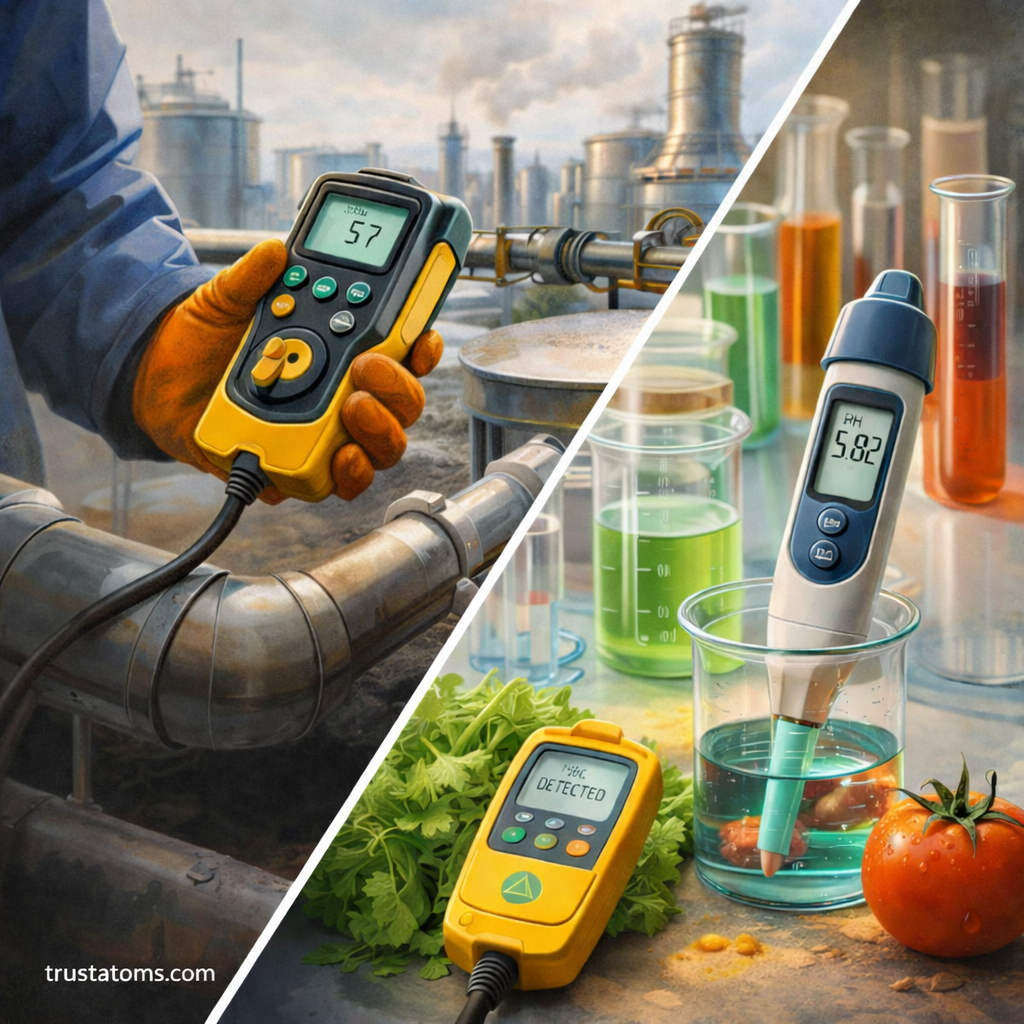
Chemical sensors are widely used across scientific and industrial fields.
Environmental Monitoring
Chemical sensors help detect pollutants and hazardous chemicals in the environment.
Examples include monitoring:
- Air pollutants such as nitrogen oxides
- Carbon monoxide levels
- Water contaminants
- Soil chemical composition
Portable sensors allow real-time field measurements.
Medical Diagnostics
Many diagnostic devices rely on chemical sensors to analyze biological samples.
Common examples include:
- Blood glucose sensors for diabetes management
- Breath analyzers for alcohol detection
- Biosensors for detecting biomarkers in blood or saliva
These sensors provide rapid and non-invasive health monitoring.
Industrial Process Control
Chemical sensors help maintain safe and efficient manufacturing conditions.
Industries use sensors to monitor:
- Gas leaks
- Chemical concentrations
- Reaction conditions
- Combustion efficiency
Automated systems can adjust processes based on sensor data.
Food Safety and Quality Control
Chemical sensors ensure food products meet safety standards.
They detect:
- Spoilage indicators
- Contaminants
- Gas composition in food packaging
- Residual pesticides
This helps maintain product quality and consumer safety.
Important Performance Characteristics of Chemical Sensors
The effectiveness of a chemical sensor depends on several key performance factors.
Sensitivity
Sensitivity describes how well the sensor detects small concentrations of a chemical.
Highly sensitive sensors can detect trace levels of substances.
Selectivity
Selectivity determines how accurately the sensor identifies a specific chemical without interference from others.
Good selectivity is essential for reliable measurements.
Response Time
Response time refers to how quickly the sensor reacts to a chemical change.
Fast response times are important for safety monitoring and real-time analysis.
Stability and Durability
Sensors must maintain consistent performance over time and under different environmental conditions.
Factors affecting stability include:
- Temperature
- Humidity
- Chemical exposure
- Mechanical stress
Advances in Chemical Sensor Technology
Recent advances are significantly improving chemical sensor capabilities.
Nanotechnology
Nanomaterials increase sensor sensitivity due to their large surface area and unique electronic properties.
Examples include:
- Carbon nanotubes
- Graphene
- Metal nanoparticles
These materials allow detection of extremely small chemical concentrations.
Biosensors
Biosensors use biological molecules such as enzymes, DNA, or antibodies to detect specific substances.
They are widely used in medical diagnostics and biotechnology.
Smart Sensor Networks
Modern chemical sensors can be integrated into wireless networks for large-scale monitoring.
Applications include:
- Smart cities air-quality systems
- Industrial safety monitoring
- Environmental research networks
These systems enable continuous real-time data collection.
Challenges in Chemical Sensor Development
Despite their benefits, chemical sensors face several design challenges.
Common challenges include:
- Cross-sensitivity to unwanted chemicals
- Sensor drift over time
- Limited lifespan of biological sensing elements
- Calibration requirements
- Environmental interference
Ongoing research aims to improve reliability, accuracy, and long-term stability.
Final Thoughts
Chemical sensors are essential components of analytical systems used across science, medicine, environmental monitoring, and industry. By converting chemical interactions into measurable signals, they provide fast and reliable information about chemical composition.
As technology advances, innovations in nanomaterials, biosensing, and smart monitoring systems are expanding the capabilities of chemical sensors. These improvements are helping scientists and engineers detect chemicals with greater precision, enabling safer industries, healthier environments, and more effective medical diagnostics.