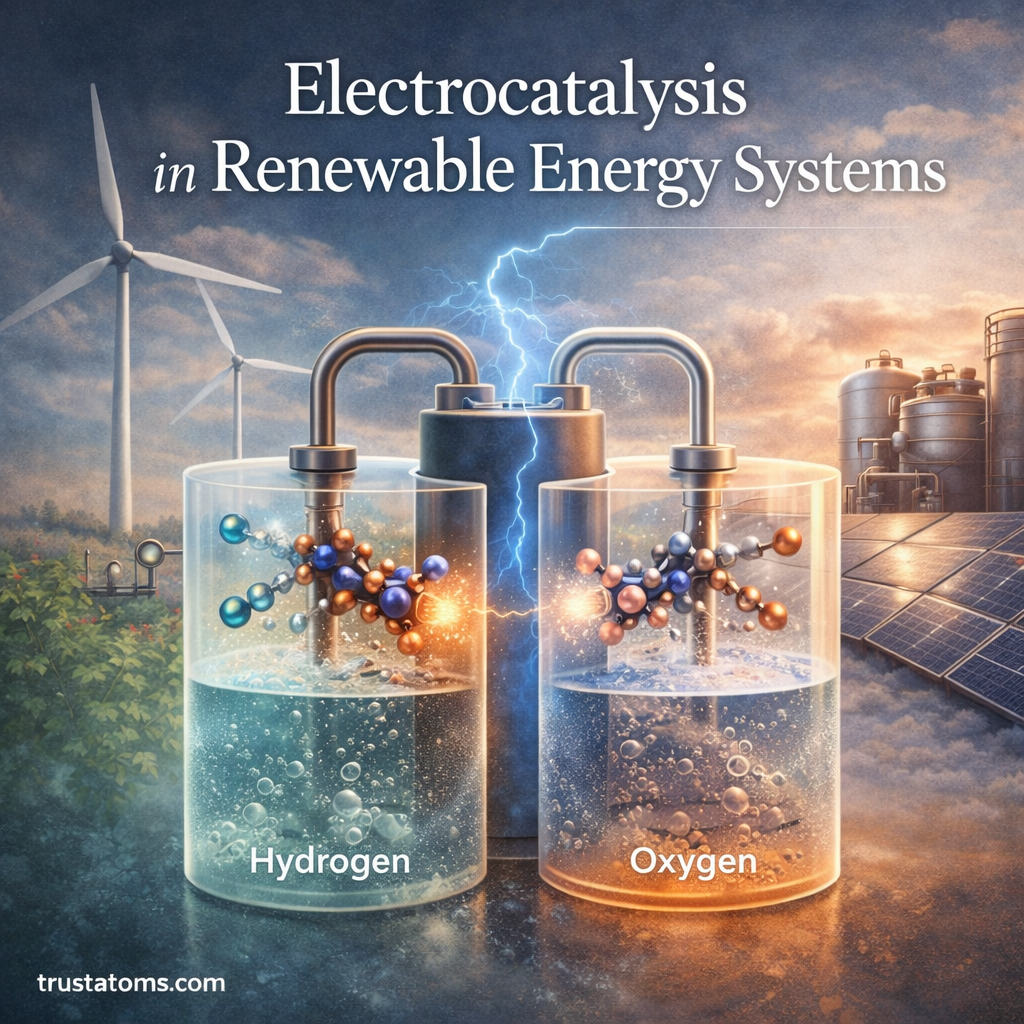
Electrocatalysis plays a critical role in many modern renewable energy technologies. It involves the use of catalysts to accelerate chemical reactions that occur at electrodes during electrochemical processes.
These reactions are fundamental to technologies such as hydrogen fuel production, fuel cells, carbon dioxide conversion, and advanced battery systems. By improving reaction efficiency, electrocatalysts help renewable energy systems operate more effectively, reducing energy losses and enabling cleaner energy solutions.
As the global demand for sustainable energy grows, electrocatalysis has become a key area of research in chemistry, materials science, and energy engineering.
What Is Electrocatalysis?
Electrocatalysis is the process of using a catalyst to increase the rate of an electrochemical reaction at an electrode surface.
Electrochemical reactions involve the transfer of electrons between chemical species. These reactions occur in devices such as:
- Electrolyzers
- Fuel cells
- Batteries
- Carbon capture systems
Electrocatalysts lower the energy barrier required for these reactions, allowing them to occur more quickly and efficiently.
Without effective electrocatalysts, many renewable energy technologies would operate too slowly or require excessive energy input.
How Electrocatalysis Works
Electrocatalytic reactions take place at the interface between an electrode and an electrolyte solution.
The general process involves several steps:
- Reactants approach the electrode surface
Molecules such as water, oxygen, hydrogen ions, or carbon dioxide move toward the electrode. - Adsorption on the catalyst surface
The reactant molecules temporarily attach to the catalyst. - Electron transfer reactions
Electrons move between the electrode and the reactants, causing chemical transformations. - Formation of reaction products
New molecules form through bond rearrangements. - Desorption of products
The products detach from the catalyst and move away from the electrode.
Efficient catalysts optimize these steps so reactions occur rapidly and with minimal energy loss.
Importance of Electrocatalysis in Renewable Energy
Electrocatalysis improves the performance and practicality of many sustainable energy technologies.
Key benefits include:
- Higher energy conversion efficiency
- Reduced energy input requirements
- Faster reaction rates
- Lower operating costs
- Improved durability of energy systems
These advantages make electrocatalysis essential for transitioning to low-carbon energy systems.
Key Electrocatalytic Reactions in Energy Systems
Several important electrochemical reactions rely heavily on electrocatalysts.
Hydrogen Evolution Reaction (HER)
The hydrogen evolution reaction produces hydrogen gas from water during electrolysis.
This reaction occurs at the cathode in water electrolyzers.
Hydrogen produced through this process can be used as a clean fuel or energy storage medium. Efficient catalysts are required to reduce the energy needed to split water molecules.
Common catalysts for HER include:
- Platinum
- Nickel-based materials
- Molybdenum sulfide
Oxygen Evolution Reaction (OER)
The oxygen evolution reaction occurs at the anode during water splitting.
This reaction produces oxygen gas and is typically slower and more energy-intensive than hydrogen production.
Catalysts used for OER include:
- Iridium oxide
- Ruthenium oxide
- Transition metal oxides
Improving OER catalysts is a major focus in renewable energy research.
Oxygen Reduction Reaction (ORR)
The oxygen reduction reaction is critical in fuel cells.
In fuel cells, oxygen reacts with hydrogen to generate electricity and water. Efficient ORR catalysts allow fuel cells to operate with high efficiency.
Materials used for ORR catalysts include:
- Platinum nanoparticles
- Carbon-supported catalysts
- Nitrogen-doped carbon materials
Carbon Dioxide Reduction Reaction (CO₂RR)
Electrocatalysts can convert carbon dioxide into useful chemicals and fuels.
Possible products include:
- Carbon monoxide
- Methanol
- Ethylene
- Formic acid
This process has the potential to recycle carbon emissions while producing valuable industrial compounds.
Types of Electrocatalyst Materials
Electrocatalysts are typically made from materials that can facilitate electron transfer and chemical transformations.
Noble Metal Catalysts
Noble metals are highly active catalysts used in many electrochemical reactions.
Examples include:
- Platinum
- Palladium
- Iridium
- Ruthenium
These materials offer excellent catalytic performance but are often expensive and scarce.
Transition Metal Catalysts
Researchers are developing catalysts made from more abundant elements.
Common examples include:
- Nickel
- Cobalt
- Iron
- Manganese
These metals can form oxides, sulfides, or phosphides that function as effective catalysts.
Carbon-Based Catalysts
Carbon materials are also widely studied in electrocatalysis.
Examples include:
- Graphene
- Carbon nanotubes
- Nitrogen-doped carbon materials
These materials provide large surface areas and good electrical conductivity.
Nanostructured Catalysts
Nanomaterials improve catalyst performance by increasing surface area and exposing more active sites.
Examples include:
- Nanoparticles
- Nanowires
- Nanoflakes
These structures allow more reactant molecules to interact with the catalyst surface.
Applications in Renewable Energy Technologies
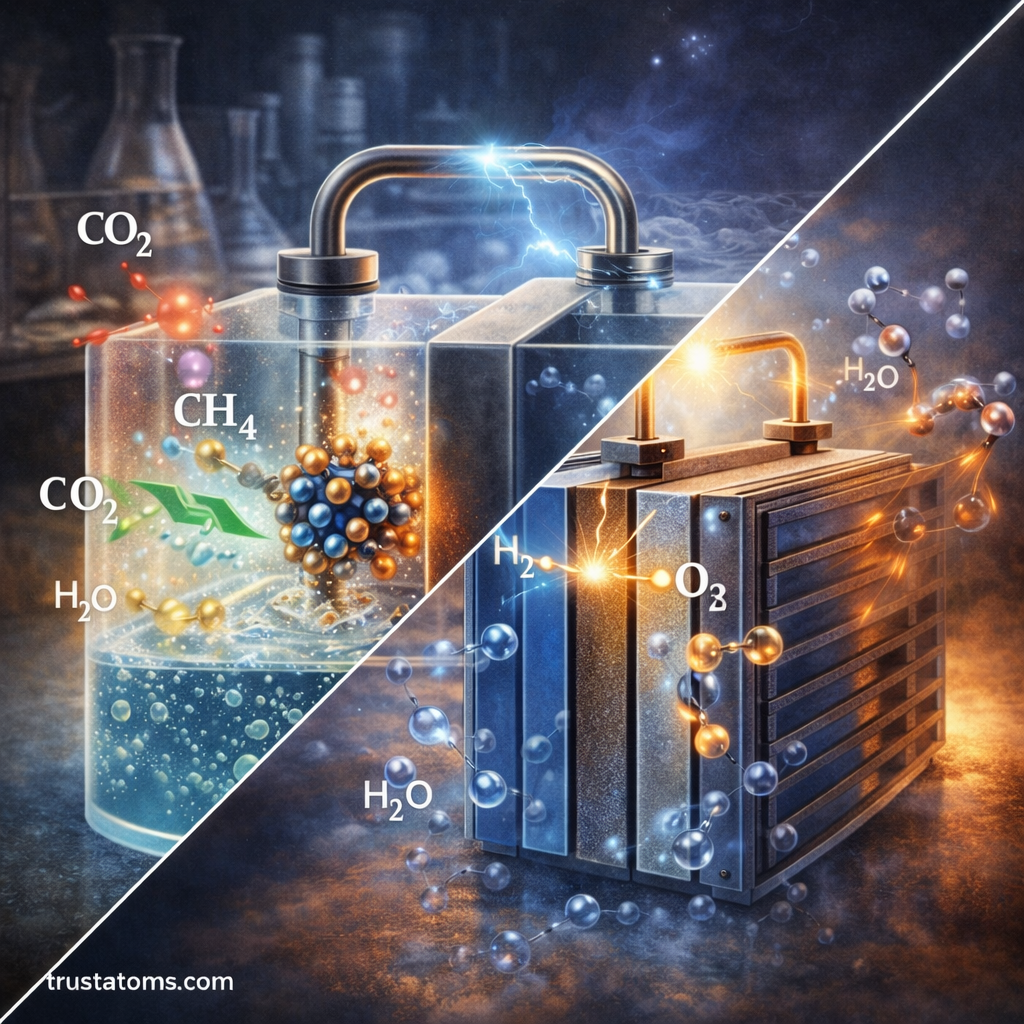
Electrocatalysis supports several major renewable energy technologies.
Water Electrolysis
Electrolysis splits water into hydrogen and oxygen using electricity.
Electrocatalysts improve the efficiency of both the hydrogen evolution and oxygen evolution reactions, making hydrogen production more practical for large-scale energy storage.
Fuel Cells
Fuel cells generate electricity through electrochemical reactions between hydrogen and oxygen.
Electrocatalysts accelerate these reactions, enabling fuel cells to power:
- Electric vehicles
- Backup power systems
- Portable electronics
- Grid energy storage
Metal-Air Batteries
Metal-air batteries use oxygen from the air as part of their electrochemical reactions.
Electrocatalysts are necessary to facilitate oxygen reduction and oxygen evolution reactions, improving battery efficiency and rechargeability.
Carbon Capture and Conversion
Electrocatalytic systems can convert captured carbon dioxide into useful chemicals or fuels.
This approach may help reduce atmospheric carbon levels while producing valuable energy products.
Challenges in Electrocatalysis Research
Although electrocatalysis offers major benefits, several challenges remain.
Catalyst Cost
Many high-performance catalysts rely on expensive noble metals.
Developing affordable alternatives is an important research goal.
Catalyst Stability
Electrocatalysts can degrade over time due to corrosion, poisoning, or structural changes.
Improving long-term durability is necessary for commercial applications.
Reaction Efficiency
Some electrochemical reactions still require high energy inputs.
Scientists continue working to improve catalytic activity and selectivity.
Large-Scale Production
Scaling up catalyst manufacturing while maintaining performance is a key engineering challenge.
The Future of Electrocatalysis
Electrocatalysis will continue to play a major role in the development of sustainable energy systems.
Advances in materials science, nanotechnology, and computational chemistry are helping researchers design better catalysts with higher efficiency and lower cost.
Emerging areas of research include:
- Artificial photosynthesis
- Electrochemical ammonia production
- Advanced hydrogen generation systems
- Carbon-neutral fuel synthesis
As renewable energy technologies expand worldwide, electrocatalysis will remain a cornerstone of clean energy innovation.