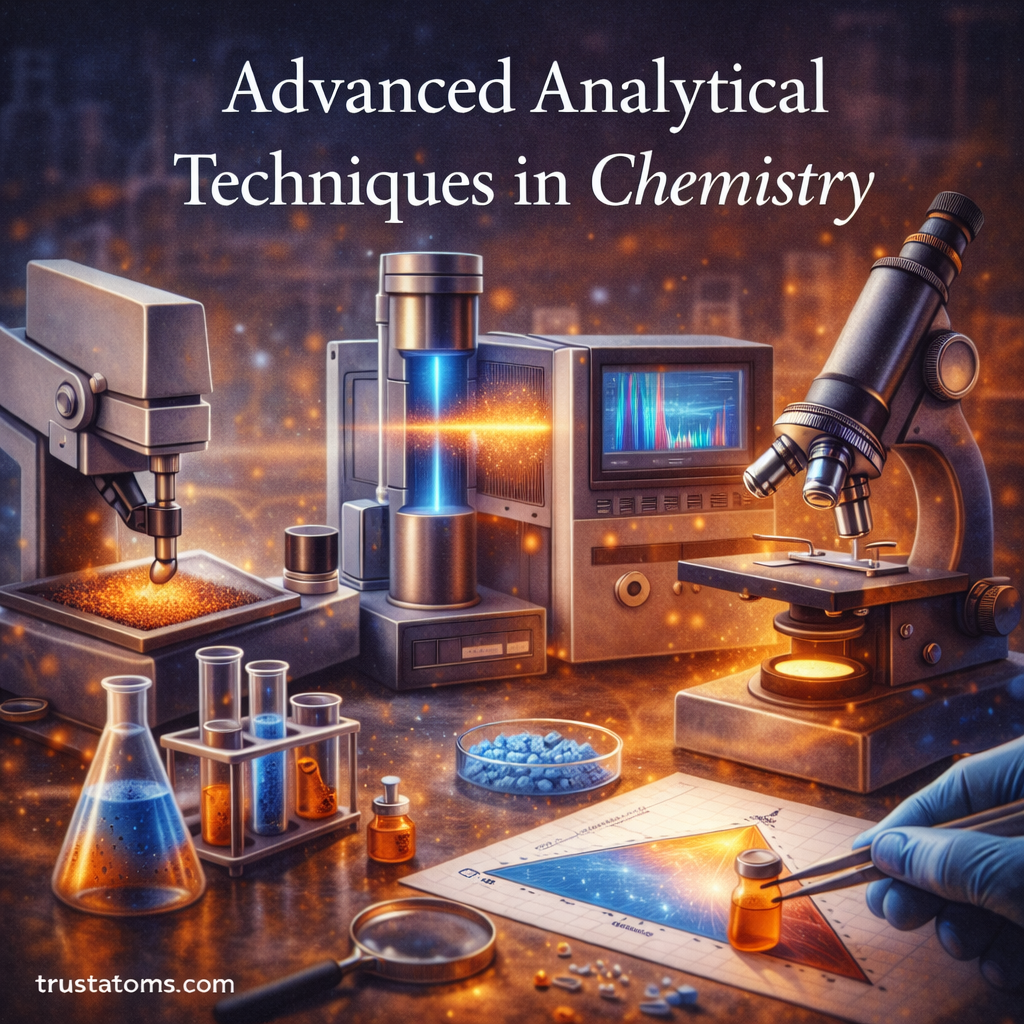
Modern chemistry depends heavily on analytical techniques that allow scientists to identify substances, determine chemical structures, and measure concentrations with high precision. Advanced analytical techniques have transformed how chemists study materials, biological systems, environmental samples, and industrial products.
These methods use sophisticated instruments and technologies to analyze matter at molecular and atomic levels. From pharmaceutical development to environmental monitoring, advanced chemical analysis helps researchers understand complex chemical systems and ensure quality and safety in many industries.
What Are Analytical Techniques in Chemistry?
Analytical techniques are methods used to determine the chemical composition and structure of substances.
These techniques help chemists answer questions such as:
- What elements or compounds are present in a sample?
- How much of each substance is present?
- What is the molecular structure of the compound?
- How do molecules interact with one another?
Analytical chemistry provides tools for both qualitative analysis (identifying substances) and quantitative analysis (measuring amounts).
Why Advanced Analytical Techniques Are Important
Advanced techniques allow scientists to study extremely small quantities of material with remarkable accuracy.
They are essential for:
- Drug development and pharmaceutical testing
- Environmental pollution monitoring
- Food safety analysis
- Materials research
- Forensic science investigations
These technologies enable scientists to detect trace chemicals that may exist in concentrations as low as parts per billion.
Chromatography Techniques
Chromatography is a widely used method for separating and analyzing mixtures of chemicals.
The technique works by passing a sample through a stationary phase while a mobile phase carries components at different speeds.
Gas Chromatography (GC)
Gas chromatography separates volatile compounds in a gas phase.
Key features include:
- High sensitivity for organic compounds
- Fast separation of chemical mixtures
- Often combined with mass spectrometry for identification
GC is commonly used in environmental testing, toxicology, and food analysis.
High-Performance Liquid Chromatography (HPLC)
High-performance liquid chromatography is used for compounds that are not easily vaporized.
Applications include:
- Pharmaceutical purity testing
- Biological molecule analysis
- Food and beverage quality control
HPLC provides excellent separation of complex chemical mixtures.
Spectroscopy Techniques
Spectroscopy analyzes how matter interacts with electromagnetic radiation. Different forms of radiation reveal different chemical properties.
Infrared Spectroscopy (IR)
Infrared spectroscopy measures how molecules absorb infrared light.
This technique helps identify:
- Functional groups in molecules
- Chemical bonds
- Molecular structure
IR spectroscopy is commonly used for organic compound identification.
Ultraviolet-Visible Spectroscopy (UV-Vis)
UV-Vis spectroscopy measures how molecules absorb ultraviolet and visible light.
It is widely used to determine:
- Concentration of solutions
- Reaction progress
- Electronic transitions in molecules
This method is particularly useful in biochemical and environmental studies.
Nuclear Magnetic Resonance (NMR) Spectroscopy
NMR spectroscopy provides detailed information about molecular structure.
By studying how atomic nuclei respond to magnetic fields, chemists can determine:
- Molecular connectivity
- Chemical environments of atoms
- Structural features of complex molecules
NMR is one of the most powerful tools in organic chemistry and pharmaceutical research.
Mass Spectrometry
Mass spectrometry identifies molecules based on their mass-to-charge ratio.
The process involves:
- Ionizing molecules
- Separating ions according to mass
- Detecting and measuring ion signals
Mass spectrometry is widely used for:
- Identifying unknown compounds
- Measuring molecular weights
- Detecting trace contaminants
When combined with chromatography techniques, it provides extremely detailed chemical analysis.
X-ray Diffraction
X-ray diffraction is used to determine the atomic structure of crystalline materials.
When X-rays interact with a crystal lattice, they produce diffraction patterns that reveal the arrangement of atoms within the structure.
This method is essential in fields such as:
- Structural chemistry
- Materials science
- Protein structure determination
- Pharmaceutical crystallography
Electrochemical Analysis
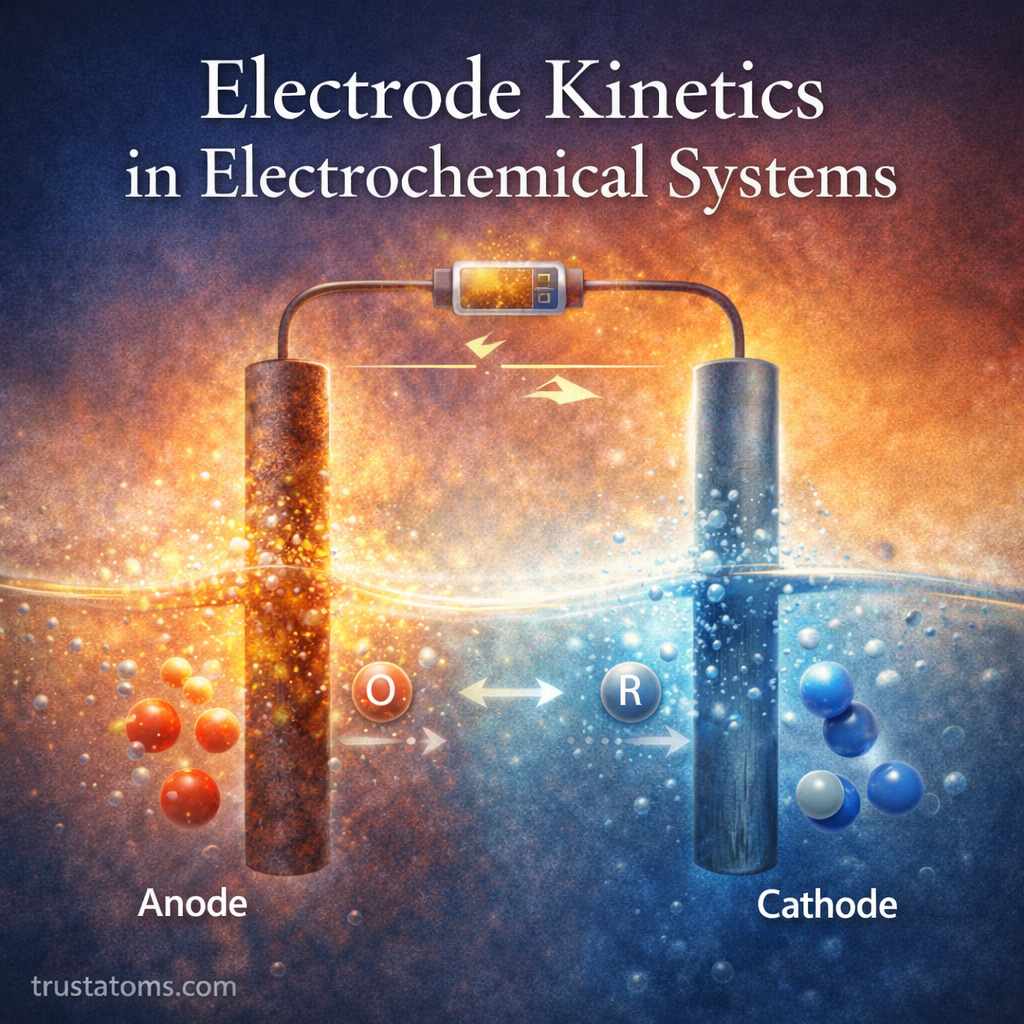
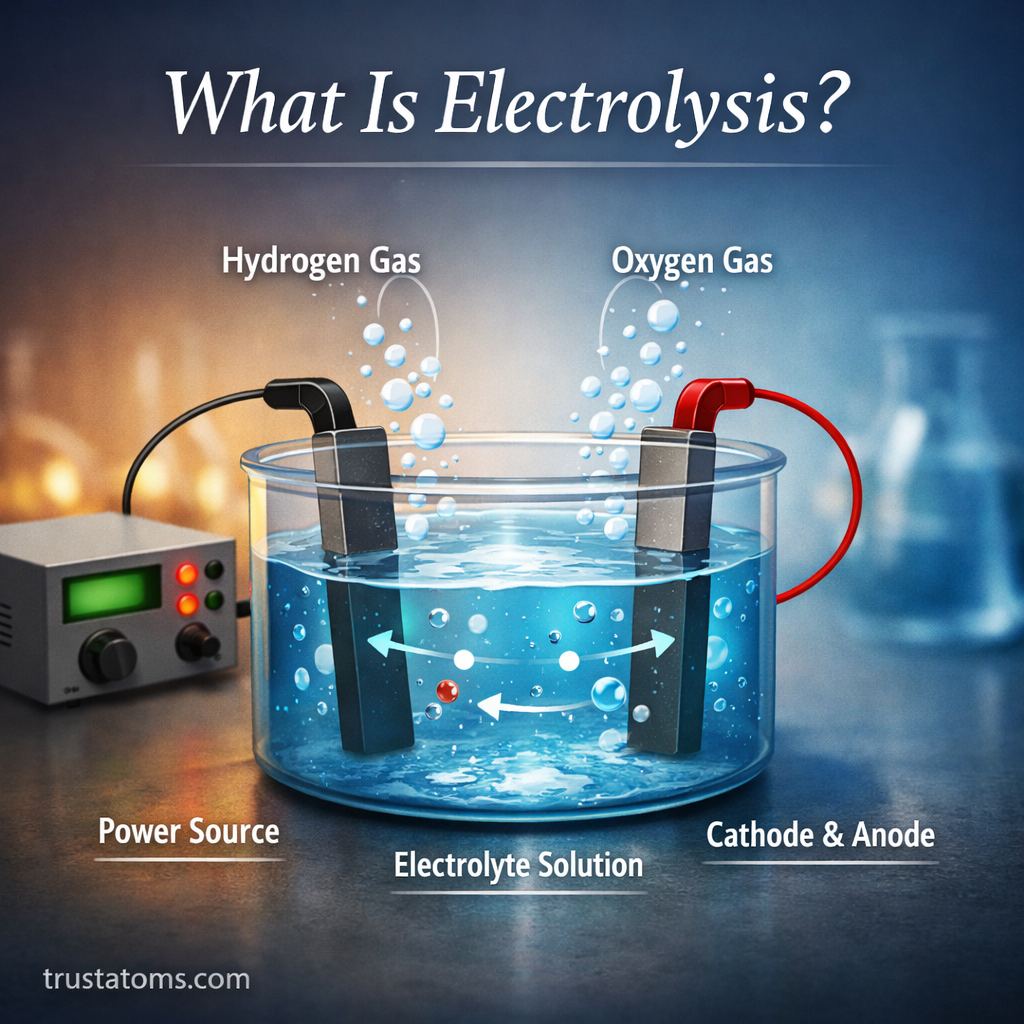
Electrochemical techniques measure chemical properties through electrical signals.
Common electrochemical methods include:
- Potentiometry
- Voltammetry
- Amperometry
These techniques are used in:
- Environmental monitoring
- Biosensors
- Battery research
- Corrosion studies
Electrochemical analysis is valuable because it can provide real-time measurements of chemical reactions.
Microscopy in Chemical Analysis
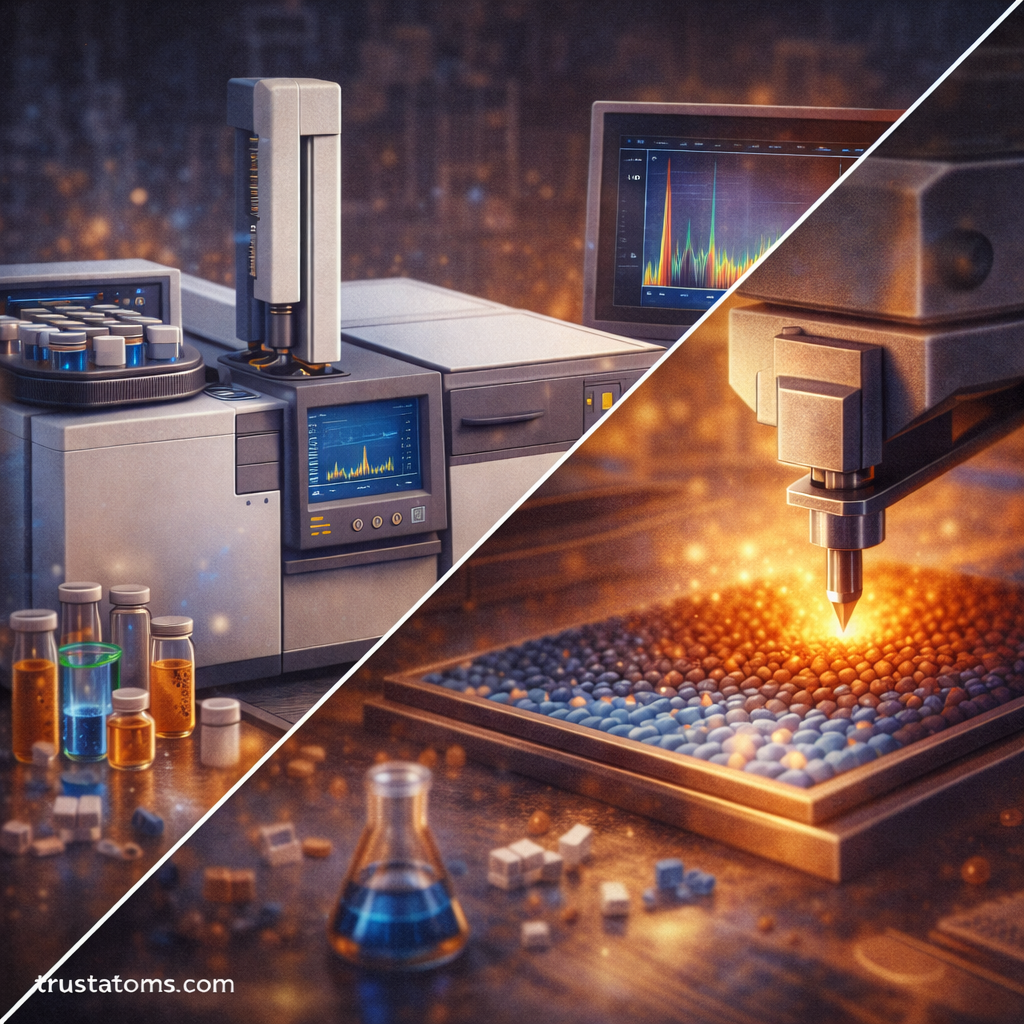
Advanced microscopy allows scientists to visualize chemical structures and materials at extremely small scales.
Electron Microscopy
Electron microscopes use beams of electrons instead of light to create images with very high resolution.
Types include:
- Scanning electron microscopy (SEM)
- Transmission electron microscopy (TEM)
These instruments help study nanoparticles, crystal structures, and material surfaces.
Atomic Force Microscopy (AFM)
Atomic force microscopy measures surface properties at the nanoscale by scanning a tiny probe across a material.
AFM can analyze:
- Surface texture
- Nanostructures
- Mechanical properties of materials
This technique is widely used in nanotechnology and materials research.
Applications of Advanced Analytical Techniques
Advanced analytical chemistry supports many areas of science and industry.
Pharmaceutical Research
Analytical techniques ensure drug safety, purity, and effectiveness.
They help scientists:
- Identify active compounds
- Monitor chemical stability
- Study drug metabolism
Environmental Monitoring
Sensitive analytical instruments detect pollutants in air, water, and soil.
Examples include measuring:
- Heavy metals
- Pesticides
- Industrial chemicals
These measurements help protect ecosystems and public health.
Food Safety and Quality Control
Chemical analysis helps identify contaminants and ensure product quality in the food industry.
Applications include:
- Nutrient analysis
- Detection of food additives
- Identification of spoilage compounds
Materials Science
Analytical techniques help researchers develop new materials with specific properties.
These methods allow scientists to analyze:
- Crystal structures
- Surface composition
- Chemical interactions
Challenges in Advanced Chemical Analysis
Despite their powerful capabilities, advanced analytical techniques also present challenges.
Common limitations include:
- High instrument costs
- Complex sample preparation
- Need for specialized training
- Large volumes of data requiring interpretation
Researchers continue developing new technologies that are faster, more sensitive, and easier to use.
The Future of Analytical Chemistry
The field of analytical chemistry is rapidly evolving with advances in instrumentation, automation, and computational analysis.
Emerging trends include:
- Miniaturized analytical devices
- Portable chemical sensors
- Artificial intelligence in data analysis
- Real-time chemical monitoring
These innovations are making chemical analysis more accessible and more powerful than ever before.
By combining advanced instruments with modern data science, chemists can explore chemical systems in unprecedented detail, opening new possibilities in science, medicine, and technology.