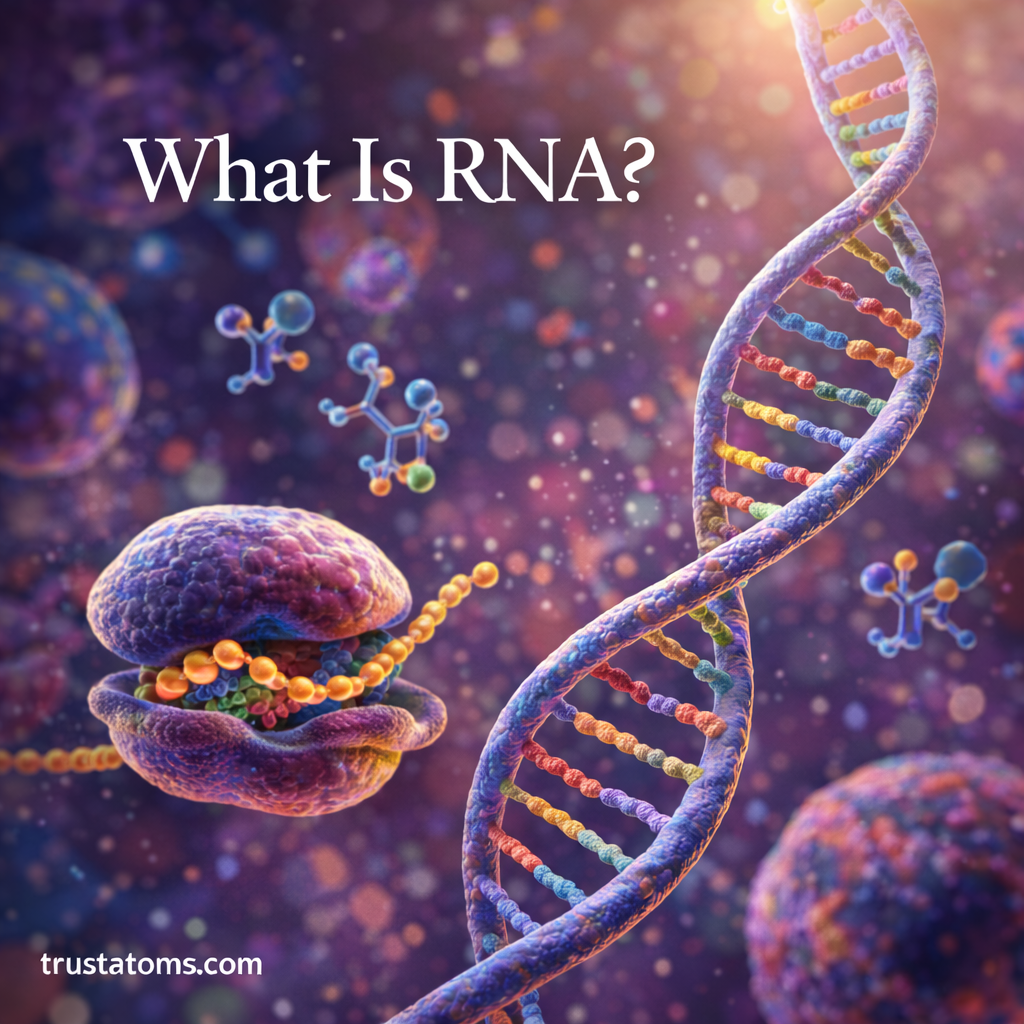
RNA is a molecule that plays a crucial role in how genetic information is used inside living cells. While DNA stores the instructions for life, RNA helps carry out those instructions, particularly during the process of building proteins.
The term RNA stands for ribonucleic acid, and it acts as an important intermediary between DNA and the proteins that perform most biological functions.
Understanding RNA is essential to understanding genetics, cell biology, and modern biotechnology.
The Basic Definition of RNA
RNA is a single-stranded molecule that helps convert genetic information into functional proteins.
Its primary roles include:
- Carrying genetic instructions from DNA
- Helping assemble proteins
- Regulating gene activity
- Supporting many cellular processes
In simple terms, RNA acts as a messenger and helper molecule that allows cells to use the information stored in DNA.
Where RNA Is Found in Cells
RNA is found throughout the cell and participates in several important biological activities.
In eukaryotic cells, RNA is produced in the nucleus, where DNA is located. Once created, many RNA molecules move to the cytoplasm, where proteins are assembled.
In prokaryotic cells, which lack a nucleus, RNA is produced directly in the cytoplasm.
Because RNA is involved in protein production, it is commonly found near ribosomes, the cellular structures responsible for assembling proteins.
The Structure of RNA
RNA is structurally similar to DNA but has several important differences.
Single-Stranded Structure
Unlike DNA, which forms a double helix, RNA is typically single-stranded. This allows RNA molecules to fold into different shapes that help them perform specific functions.
Nucleotides
RNA is made of repeating building blocks called nucleotides.
Each nucleotide contains:
- A sugar molecule (ribose)
- A phosphate group
- A nitrogenous base
These nucleotides link together to form the RNA strand.
The Four RNA Bases
RNA contains four nitrogenous bases, similar to DNA but with one important difference.
The four bases in RNA are:
- Adenine (A)
- Uracil (U)
- Cytosine (C)
- Guanine (G)
In RNA, uracil replaces thymine, which is found in DNA.
Base pairing still follows a predictable pattern:
- Adenine pairs with uracil
- Cytosine pairs with guanine
The Main Types of RNA
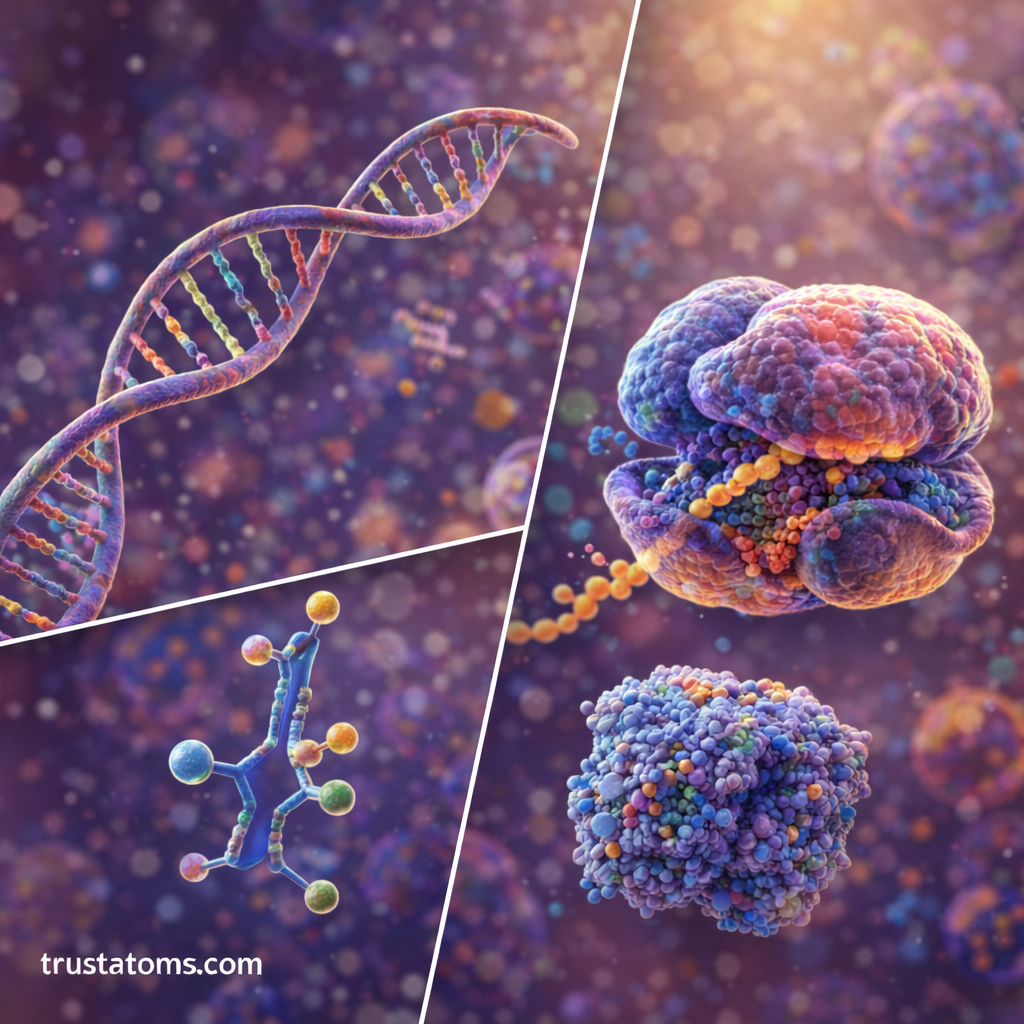
Several types of RNA exist, each performing a specific role in the cell.
Messenger RNA (mRNA)
Messenger RNA carries genetic instructions from DNA to the ribosomes, where proteins are produced.
Key roles of mRNA include:
- Copying genetic information from DNA
- Transporting that information to ribosomes
- Providing the template for protein assembly
This process is called transcription.
Transfer RNA (tRNA)
Transfer RNA helps assemble proteins by bringing the correct amino acids to the ribosome.
Its main functions include:
- Recognizing specific genetic codes in mRNA
- Delivering the corresponding amino acids
- Helping build protein chains in the correct order
Ribosomal RNA (rRNA)
Ribosomal RNA forms a major structural component of ribosomes.
Its roles include:
- Helping form ribosome structure
- Supporting the protein-building process
- Catalyzing chemical reactions during protein synthesis
Together, these three RNA types work to translate genetic information into functional proteins.
RNA and Protein Synthesis
RNA plays a central role in protein synthesis, the process by which cells build proteins.
This process occurs in two major stages.
1. Transcription
During transcription:
- DNA unwinds inside the nucleus.
- A segment of DNA is copied into messenger RNA.
- The mRNA molecule carries the genetic code out of the nucleus.
2. Translation
During translation:
- Ribosomes read the mRNA sequence.
- Transfer RNA brings the appropriate amino acids.
- Amino acids link together to form a protein.
Proteins created through this process perform countless roles in the body, including:
- Enzyme activity
- Structural support
- Cellular signaling
- Immune responses
Additional Functions of RNA
Although RNA is best known for its role in protein synthesis, scientists have discovered that it also performs many other functions.
Examples include:
- Regulating gene expression
- Controlling when proteins are produced
- Assisting in RNA processing
- Supporting cellular defense mechanisms
Some specialized RNA molecules can even act like enzymes, speeding up chemical reactions within cells.
RNA vs DNA
RNA and DNA are closely related molecules but differ in several important ways.
Key differences include:
RNA:
- Usually single-stranded
- Contains ribose sugar
- Uses uracil instead of thymine
- Plays an active role in protein production
DNA:
- Double-stranded helix
- Contains deoxyribose sugar
- Uses thymine instead of uracil
- Stores long-term genetic information
These differences allow DNA and RNA to work together efficiently within cells.
Why RNA Is Important in Modern Science
RNA has become a major focus of modern biological research.
Scientists study RNA to understand:
- Gene regulation
- Disease development
- Viral infections
- Cellular communication
RNA technology is also used in important medical advances, including:
- mRNA vaccines
- Genetic research tools
- Emerging gene therapies
These developments highlight RNA’s importance in both biology and medicine.
Final Thoughts
RNA is a vital molecule that allows cells to interpret and use the genetic information stored in DNA. By carrying instructions, assembling proteins, and regulating cellular processes, RNA acts as a key link between genetic information and biological function.
From basic cell activity to modern medical breakthroughs, RNA continues to play a central role in our understanding of life at the molecular level.