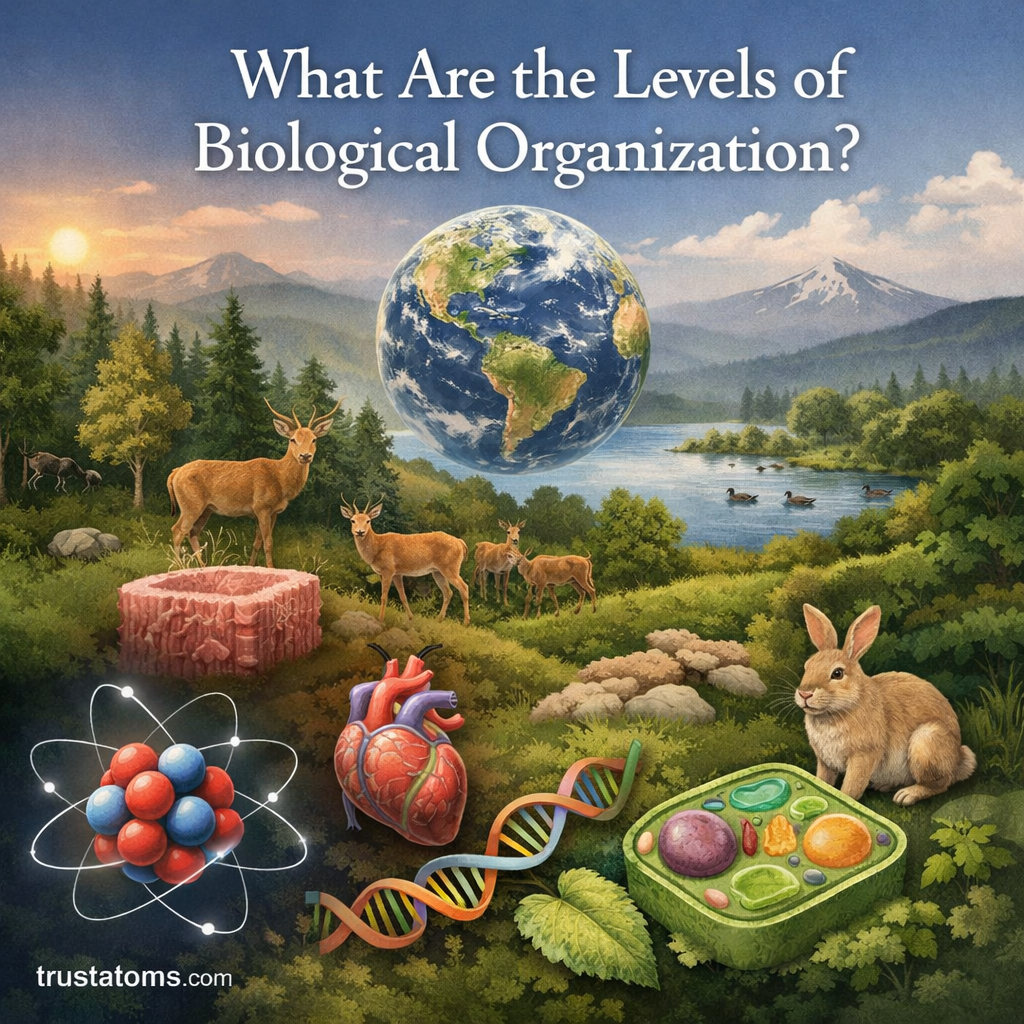
Biology studies life from the smallest microscopic structures to the largest ecosystems on Earth. To understand how life functions, scientists organize living systems into a structured hierarchy known as the levels of biological organization.
Each level builds upon the one before it, forming increasingly complex structures that allow life to function, grow, and interact with the environment. From tiny atoms inside cells to entire ecosystems, these levels help scientists study biology in a clear and organized way.
Understanding these levels is one of the foundations of biology because it explains how simple components combine to form complex living systems.
Why Biological Organization Matters
Biological organization helps scientists explain how life works at different scales. For example:
- A biochemist studies molecules inside cells.
- A cell biologist studies how cells function.
- An ecologist studies how organisms interact with their environment.
Even though these scientists study different levels, all levels are connected. Changes at one level can affect the others.
The Main Levels of Biological Organization
Living systems are typically organized into a hierarchy that progresses from the smallest chemical components to the entire biosphere.
1. Atom
Atoms are the smallest units of matter that retain the properties of an element.
Common atoms in living organisms include:
- Carbon
- Hydrogen
- Oxygen
- Nitrogen
- Phosphorus
- Sulfur
These atoms form the chemical foundation of life.
2. Molecule
Molecules form when atoms bond together.
Important biological molecules include:
- Water (H₂O)
- Oxygen (O₂)
- Glucose
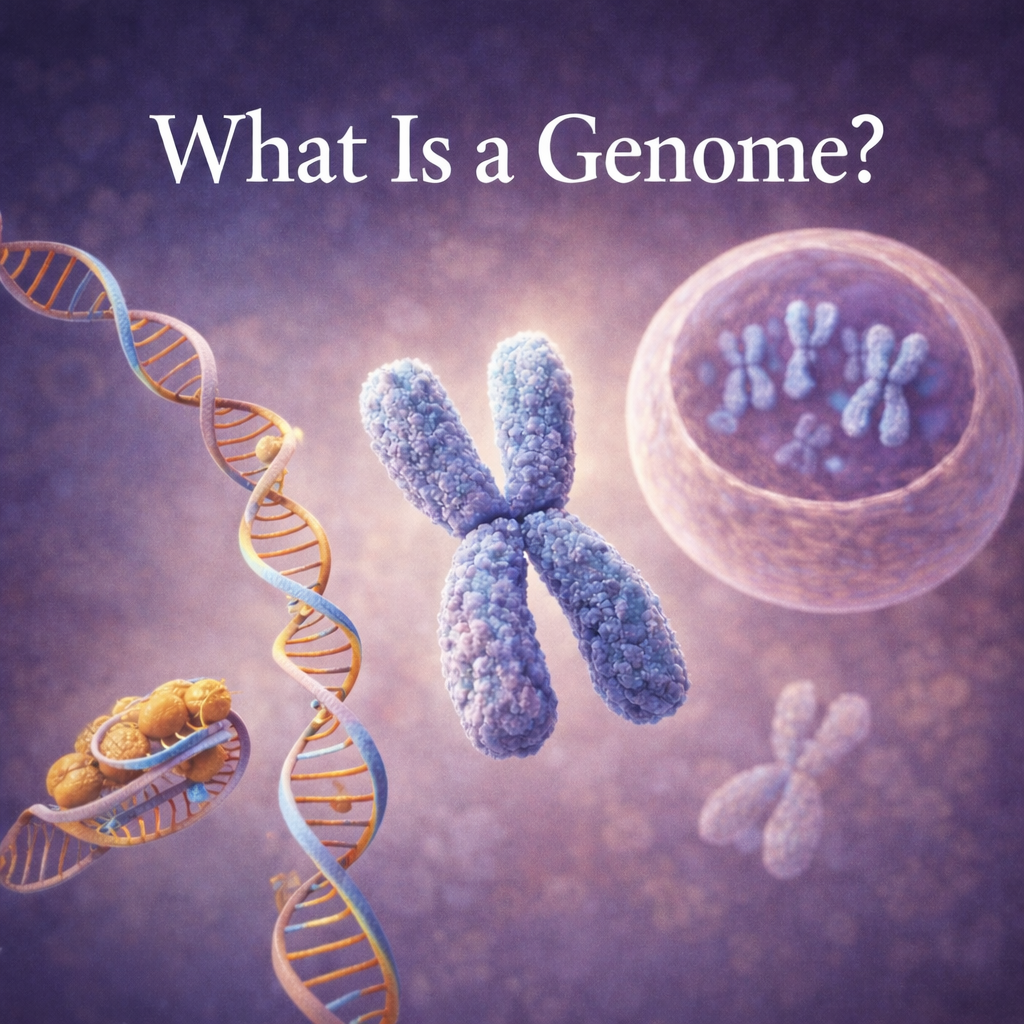
- DNA
- Proteins
These molecules carry out chemical reactions necessary for life.
3. Organelle
Organelles are specialized structures inside cells that perform specific functions.
Examples include:
- Nucleus — stores genetic information
- Mitochondria — produces energy
- Ribosomes — build proteins
- Endoplasmic reticulum — helps process molecules
Organelles allow cells to operate efficiently by dividing tasks.
4. Cell
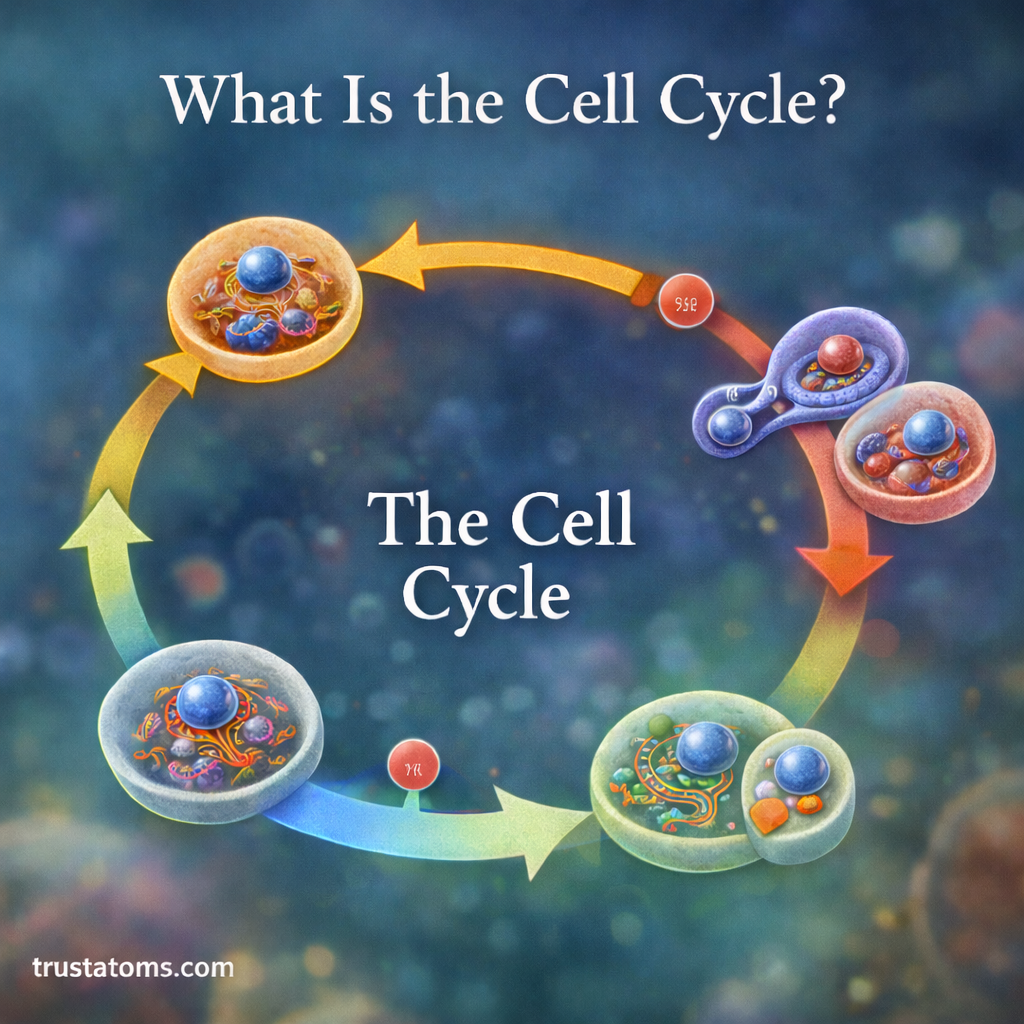
The cell is the smallest unit of life capable of carrying out all essential biological processes.
Cells can be:
- Prokaryotic — simple cells without a nucleus (bacteria)
- Eukaryotic — complex cells with a nucleus (plants, animals, fungi)
All living organisms are made of one or more cells.
5. Tissue
A tissue is a group of similar cells working together to perform a specific function.
Examples in animals include:
- Muscle tissue
- Nervous tissue
- Epithelial tissue
- Connective tissue
In plants, tissues include vascular tissue and dermal tissue.
6. Organ
Organs are structures composed of multiple tissues that work together to perform specialized tasks.
Examples in the human body include:
- Heart
- Lungs
- Brain
- Liver
Each organ performs critical functions that support survival.
7. Organ System
An organ system consists of multiple organs working together to perform major biological functions.
Examples include:
- Circulatory system
- Digestive system
- Nervous system
- Respiratory system
- Immune system
Organ systems coordinate complex processes necessary for maintaining life.
8. Organism
An organism is a complete living individual capable of carrying out all life processes independently.
Examples include:
- Humans
- Trees
- Dogs
- Bacteria
- Mushrooms
Organisms maintain internal balance, grow, reproduce, and respond to their environment.
9. Population
A population is a group of organisms of the same species living in the same area at the same time.
Examples:
- A herd of deer in a forest
- A colony of bacteria in a petri dish
- A school of fish in a lake
Population biology studies how these groups grow, interact, and change over time.
10. Community
A community consists of multiple populations of different species living and interacting in the same environment.
Examples include:
- Plants
- Animals
- Fungi
- Microorganisms
All these species interact through relationships such as:
- Predation
- Competition
- Symbiosis
11. Ecosystem
An ecosystem includes all living organisms in an area plus the nonliving environment they interact with.
Nonliving components include:
- Water
- Soil
- Air
- Sunlight
- Temperature
Examples of ecosystems:
- Forests
- Coral reefs
- Deserts
- Wetlands
Energy flow and nutrient cycles connect living and nonliving parts of ecosystems.
12. Biosphere
The biosphere is the largest level of biological organization.
It includes:
- All ecosystems
- All living organisms on Earth
- The regions of land, water, and atmosphere that support life
Essentially, the biosphere represents the global sum of all life on Earth.
The Hierarchy of Biological Organization (Summary)
From smallest to largest, the levels of biological organization are:
- Atom
- Molecule
- Organelle
- Cell
- Tissue
- Organ
- Organ system
- Organism
- Population
- Community
- Ecosystem
- Biosphere
Each level builds upon the one before it, forming a complex network of biological structures and interactions.
How the Levels Work Together
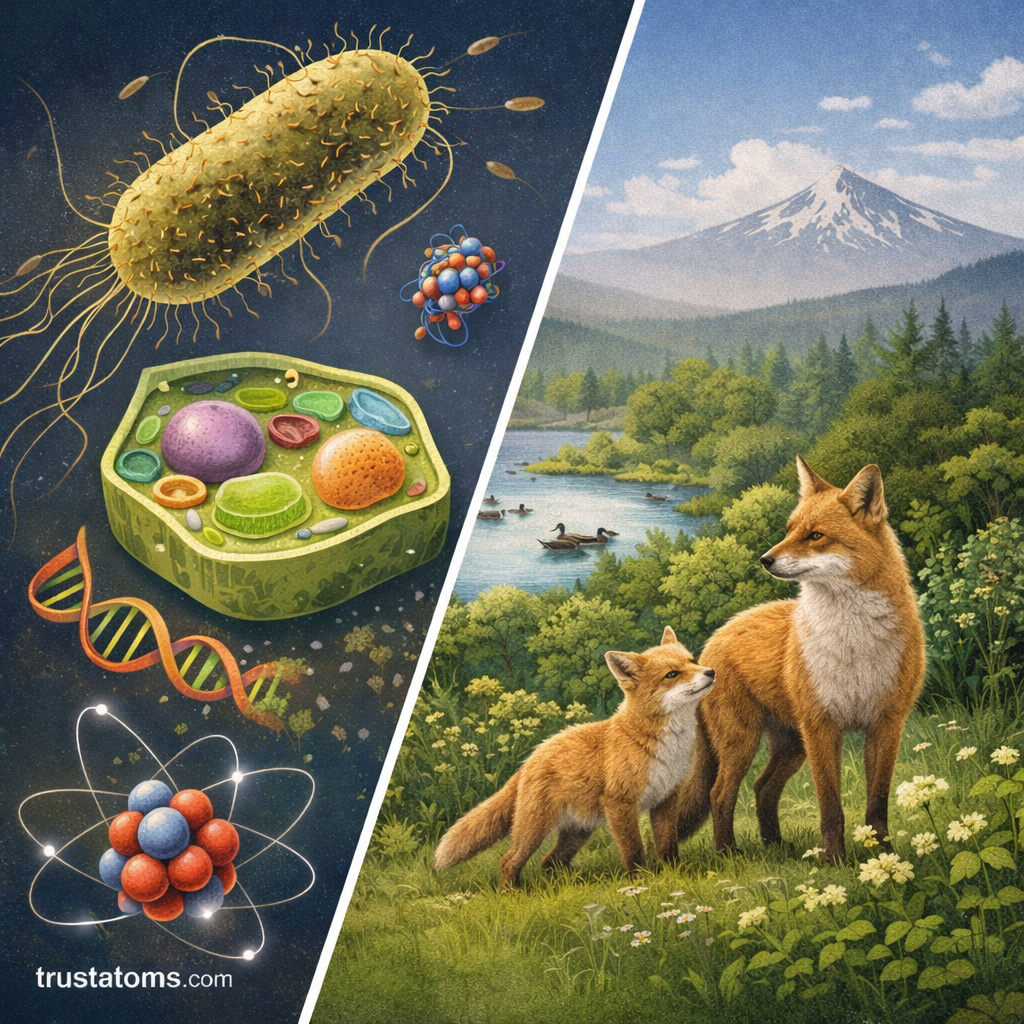
Biological organization shows how life functions as an interconnected system.
For example:
- Atoms combine to form molecules.
- Molecules form organelles.
- Organelles make up cells.
- Cells form tissues and organs.
- Organs work together in systems.
- Organisms interact with others in populations and ecosystems.
Because each level depends on the others, changes at one level can influence the entire system.
Final Thoughts
The levels of biological organization provide a framework for understanding life from its smallest chemical components to the global biosphere. This hierarchy allows scientists to study complex living systems in manageable layers while recognizing that every level is connected.
By understanding these levels, students and researchers can better see how life functions, evolves, and interacts with the environment at every scale.