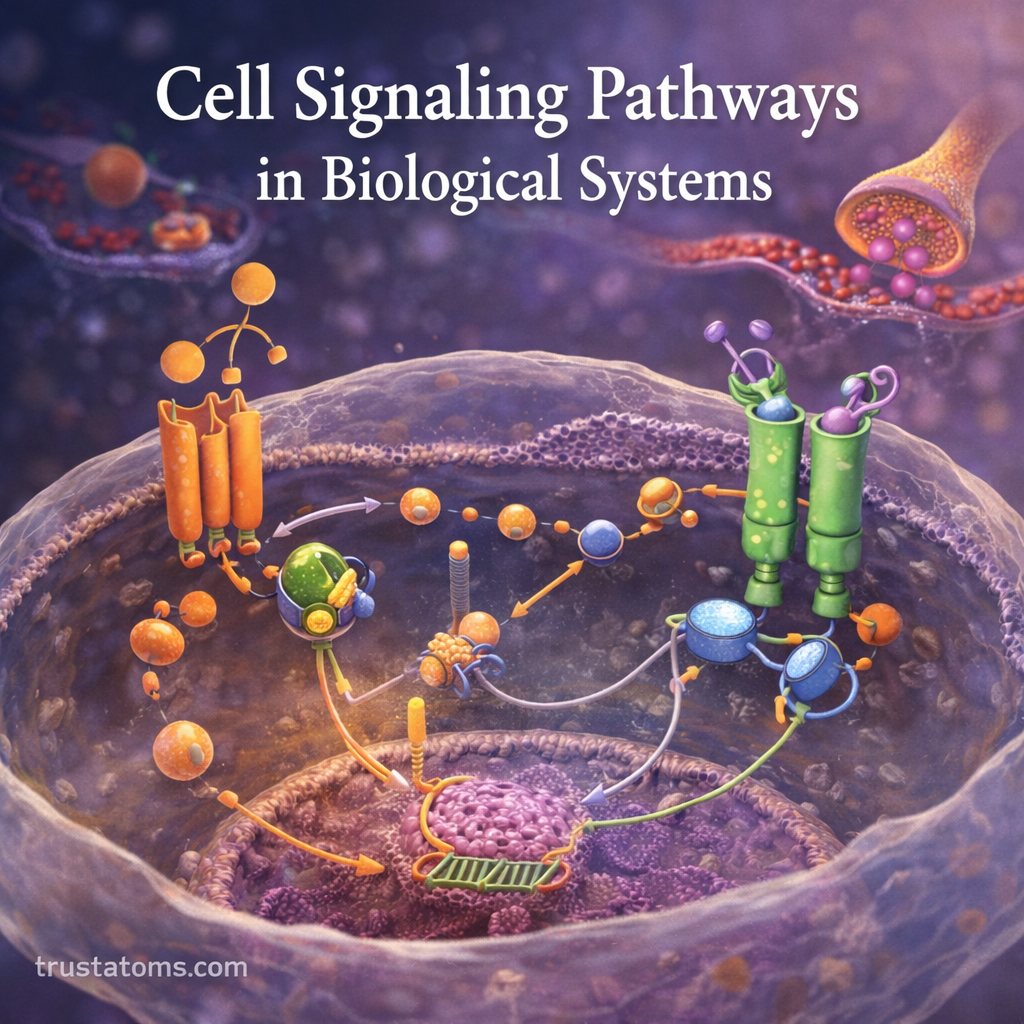
Cells constantly communicate with their environment and with other cells in the body. This communication allows organisms to coordinate growth, respond to external stimuli, regulate metabolism, and maintain internal balance. The processes that enable this communication are known as cell signaling pathways.
Cell signaling pathways involve the detection of signals, transmission of information inside the cell, and the generation of a specific response. These systems operate through networks of molecules that interact in carefully regulated sequences.
Understanding cell signaling is fundamental in biology because it explains how cells coordinate complex functions in multicellular organisms and how disruptions in signaling can lead to disease.
What Are Cell Signaling Pathways?
Cell signaling pathways are sequences of molecular interactions that allow cells to receive, process, and respond to signals.
These signals may originate from:
- Other cells
- The extracellular environment
- Internal cellular conditions
A typical signaling pathway involves three main stages:
- Signal reception – detection of the signal by a receptor
- Signal transduction – transmission of the signal inside the cell
- Cellular response – activation of a specific biological effect
These steps allow cells to convert external signals into meaningful actions.
Types of Cellular Signals
Cells communicate through a variety of signaling mechanisms depending on the distance between communicating cells.
Autocrine Signaling
In autocrine signaling, a cell releases signaling molecules that act on the same cell that produced them.
Common features include:
- Self-regulation of cellular behavior
- Important roles in immune responses
- Regulation of cell growth and differentiation
This form of signaling allows cells to fine-tune their own activity.
Paracrine Signaling
Paracrine signaling occurs when a cell releases molecules that affect nearby cells.
Examples include:
- Growth factors affecting neighboring cells
- Local immune system signaling
- Tissue repair and regeneration signals
Because these signals travel short distances, they are usually quickly broken down after release.
Endocrine Signaling
Endocrine signaling involves hormones that travel through the bloodstream to reach distant target cells.
Characteristics include:
- Long-distance communication
- Slower response times
- System-wide physiological regulation
Examples of endocrine signaling include insulin regulating blood sugar and thyroid hormones controlling metabolism.
Synaptic Signaling
Synaptic signaling occurs in the nervous system when neurons release neurotransmitters across synapses.
Key features:
- Extremely fast communication
- Highly targeted signaling
- Precise control of nerve impulses
This system enables rapid responses such as muscle contraction and sensory perception.
Key Components of Cell Signaling Pathways
Several molecular components work together to form functional signaling pathways.
Signaling Molecules (Ligands)
Signaling molecules, also called ligands, initiate the signaling process.
Examples include:
- Hormones
- Neurotransmitters
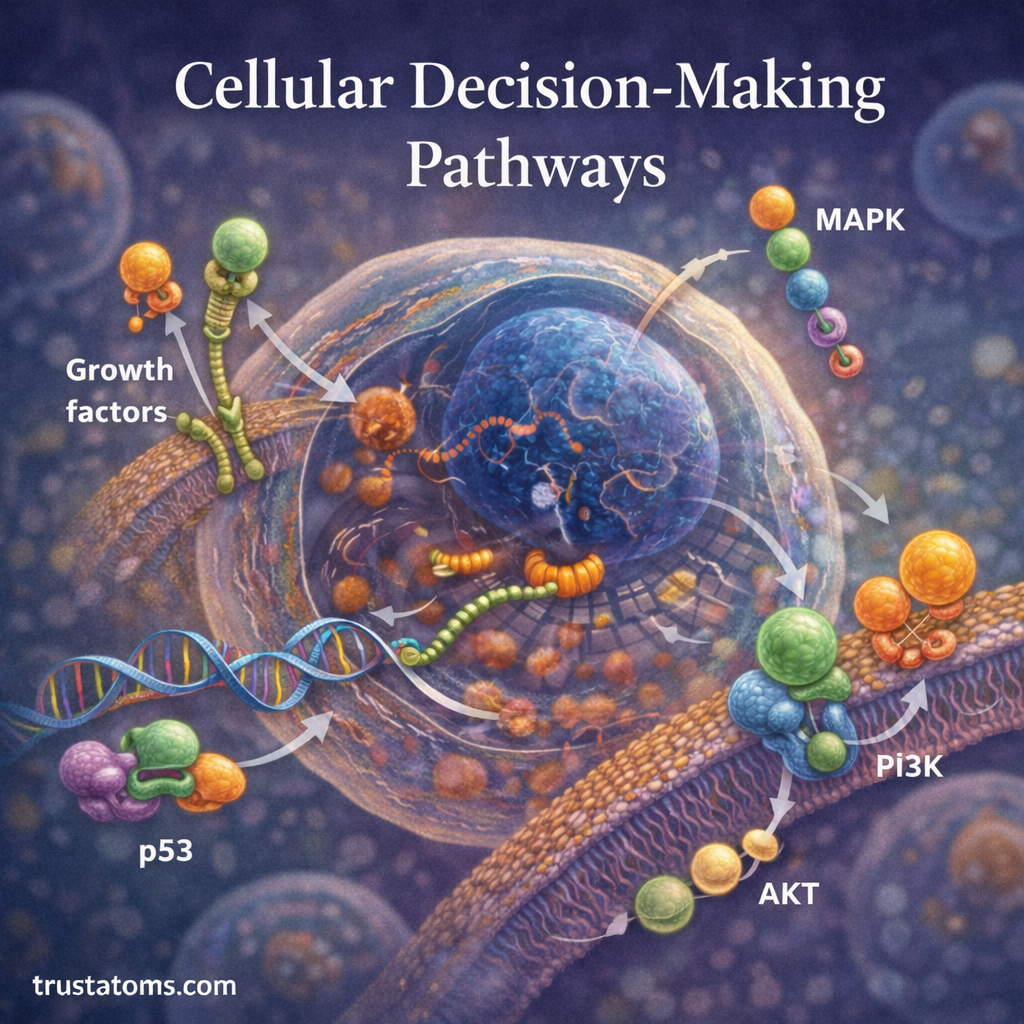
- Growth factors
- Cytokines
These molecules bind to specific receptors on or inside target cells.
Receptors
Receptors are proteins that detect signaling molecules.
There are two main categories:
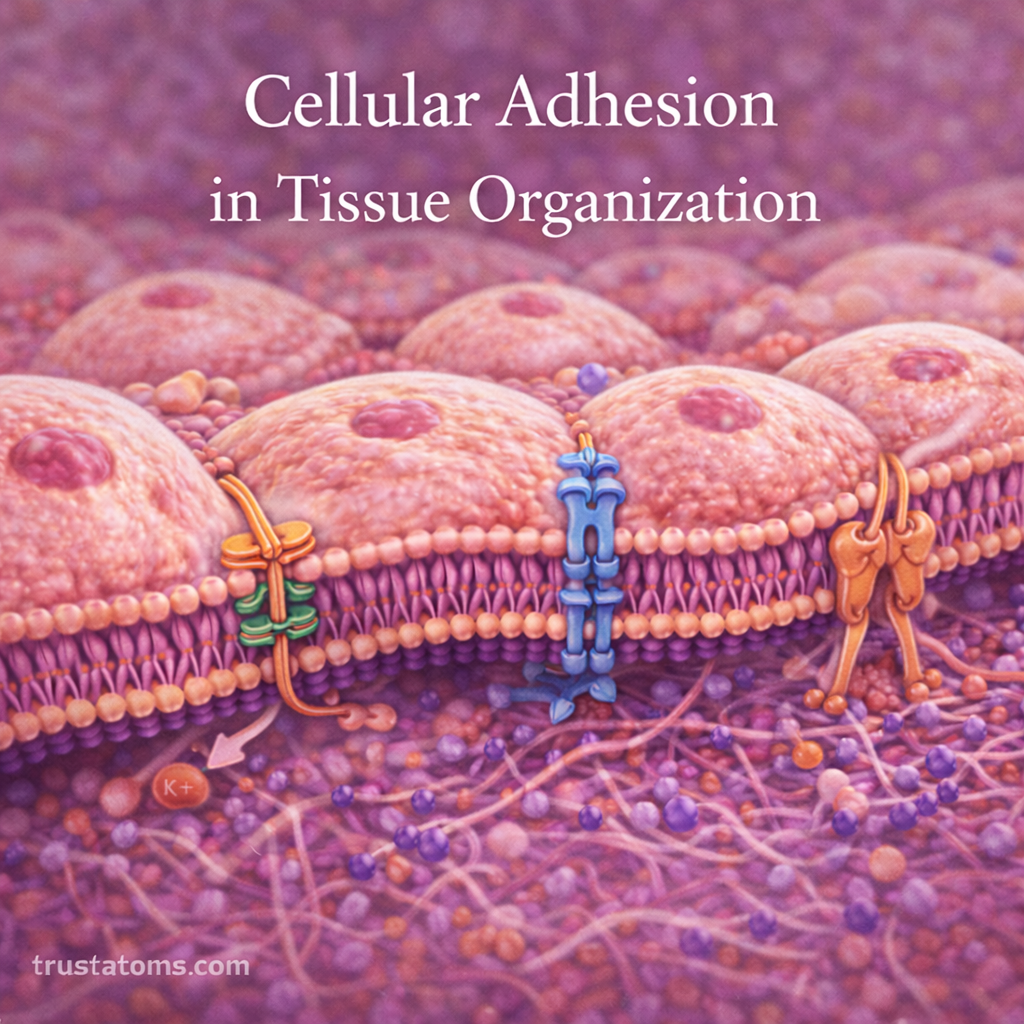
- Cell surface receptors
- Intracellular receptors
Cell surface receptors detect signals that cannot cross the cell membrane, while intracellular receptors interact with molecules that can enter the cell.
Binding of a ligand to a receptor activates the signaling pathway.
Signal Transduction Proteins
Once a receptor is activated, the signal must be relayed through the cell.
This process involves signal transduction proteins, including:
- Protein kinases
- Secondary messengers
- Adapter proteins
- Enzymes
These molecules amplify and distribute the signal to different cellular targets.
Cellular Effectors
Effectors are the molecules responsible for generating the final cellular response.
Examples include:
- Transcription factors that regulate gene expression
- Enzymes that alter metabolic activity
- Structural proteins that change cell shape
The type of effector activated determines the outcome of the signaling pathway.
Major Types of Cell Signaling Pathways
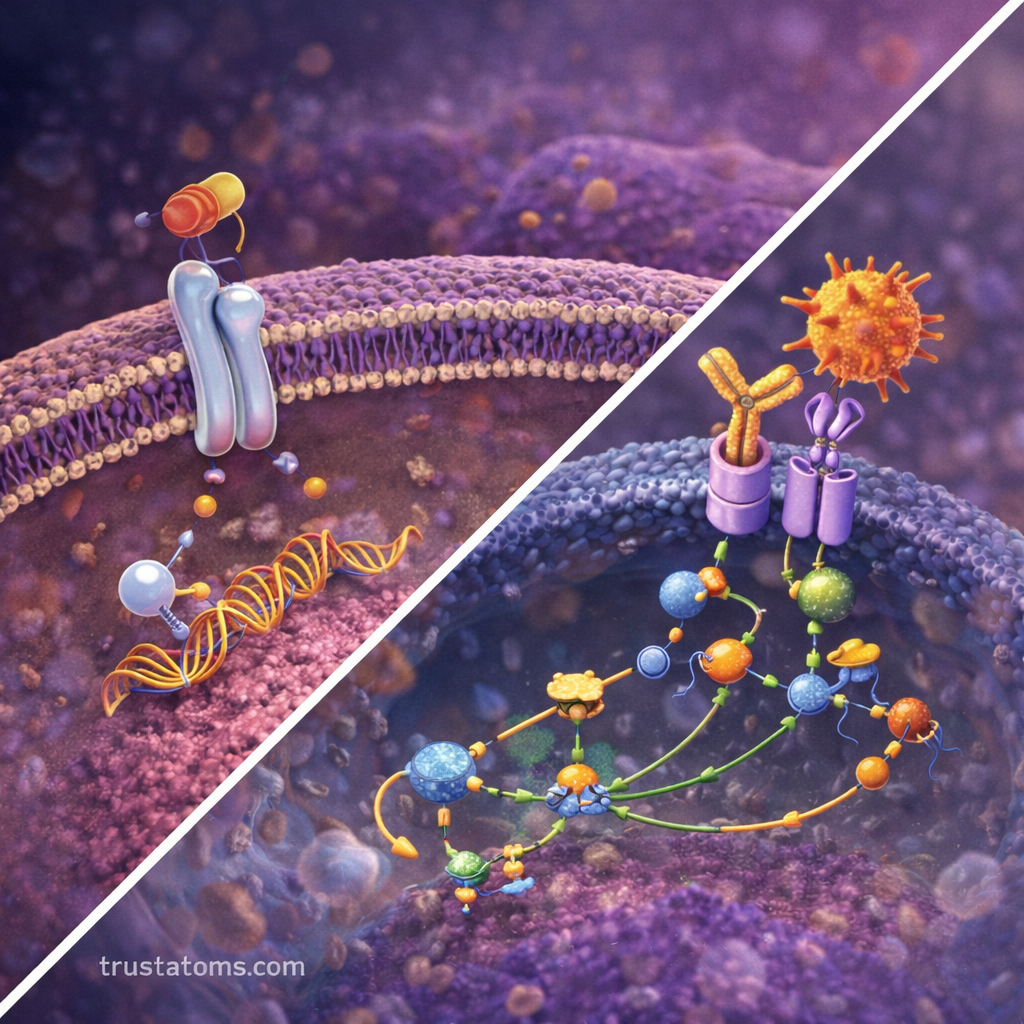
Biological systems use several well-known signaling pathways to regulate cellular behavior.
G Protein-Coupled Receptor (GPCR) Pathways
G protein-coupled receptors are one of the largest receptor families in biology.
These receptors:
- Detect hormones, neurotransmitters, and sensory signals
- Activate intracellular G proteins
- Trigger cascades involving second messengers
GPCR pathways play roles in:
- Vision
- Smell
- Immune responses
- Cardiovascular regulation
Receptor Tyrosine Kinase (RTK) Pathways
Receptor tyrosine kinases are enzymes that activate signaling cascades when ligands bind to them.
These pathways are involved in:
- Cell growth
- Cell differentiation
- Tissue development
- Wound healing
RTK pathways are highly regulated because excessive activity can lead to cancer.
Ion Channel Signaling
Ion channels regulate the movement of ions across cell membranes.
These channels open in response to signals and allow ions such as:
- Sodium
- Potassium
- Calcium
- Chloride
Ion movement changes electrical activity in cells, particularly in neurons and muscle cells.
Intracellular Receptor Pathways
Some signaling molecules can cross the cell membrane and bind directly to receptors inside the cell.
These receptors often regulate gene expression.
Examples include signaling molecules such as:
- Steroid hormones
- Thyroid hormones
- Vitamin D
Because these pathways influence gene transcription, their effects often last longer than other signaling responses.
Signal Amplification in Cellular Communication
One important feature of signaling pathways is signal amplification.
A single signaling molecule can trigger a cascade that activates many downstream molecules.
For example:
- A ligand binds to one receptor.
- The receptor activates several signaling proteins.
- Each protein activates additional molecules.
This cascading effect allows small signals to generate large biological responses.
Amplification ensures cells can respond efficiently even when signal concentrations are low.
Regulation of Cell Signaling Pathways
Cells must tightly regulate signaling pathways to prevent inappropriate responses.
Regulation mechanisms include:
- Receptor deactivation
- Signal molecule degradation
- Feedback inhibition
- Protein phosphorylation and dephosphorylation
Without proper regulation, signaling pathways could remain active longer than needed, potentially leading to cellular dysfunction.
Cell Signaling and Disease
Many diseases arise from disruptions in cell signaling systems.
Examples include:
- Cancer, where growth signaling pathways become overactive
- Diabetes, involving impaired insulin signaling
- Autoimmune diseases, caused by abnormal immune signaling
- Neurodegenerative disorders, linked to disrupted neuronal communication
Because signaling pathways are central to cellular function, they are important targets for modern medical treatments and pharmaceutical research.
Why Cell Signaling Pathways Matter
Cell signaling pathways allow organisms to coordinate biological processes across tissues and organ systems.
They enable cells to:
- Respond to environmental changes
- Communicate with neighboring cells
- Control growth and development
- Maintain internal balance
- Adapt to stress and injury
Without these communication networks, multicellular life would not be able to function as integrated biological systems.
For scientists and researchers, studying signaling pathways provides critical insights into cellular behavior, disease mechanisms, and potential medical therapies.