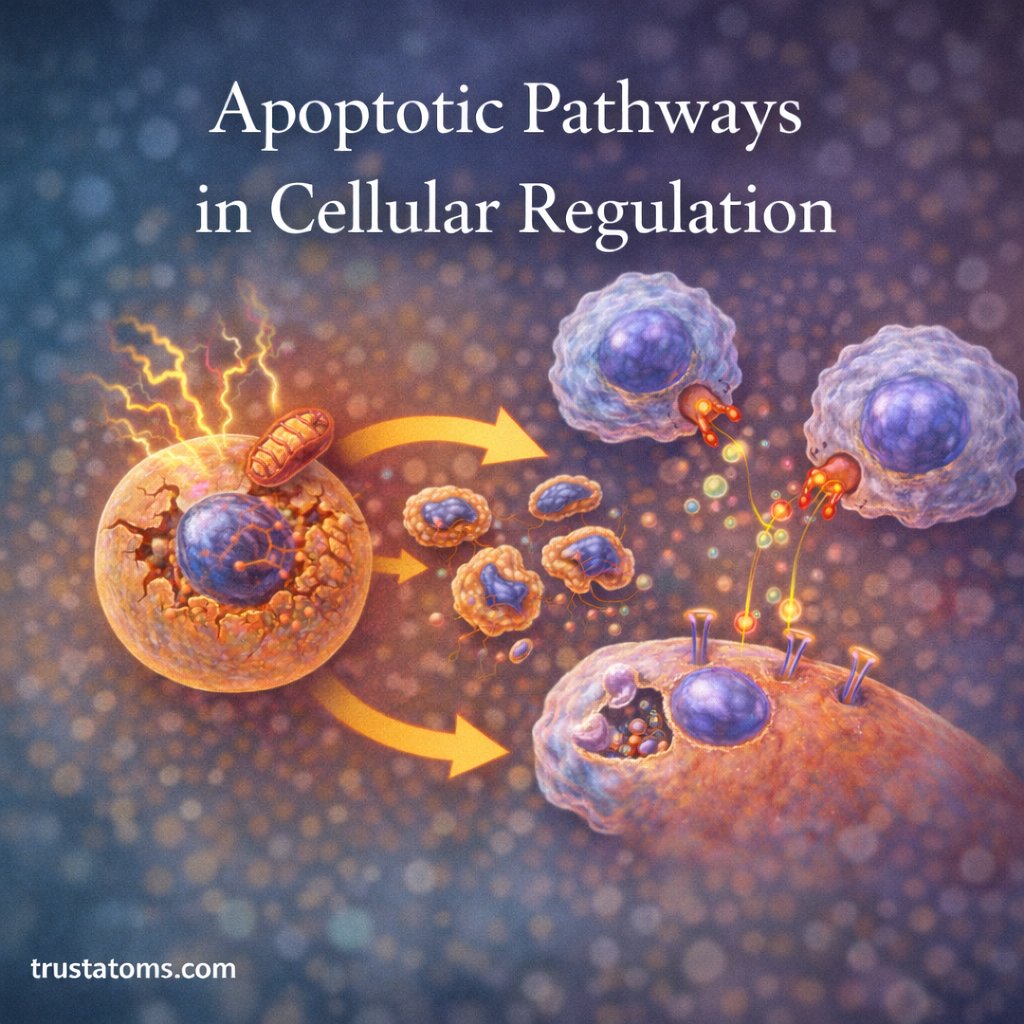
Cells in living organisms must constantly balance growth, repair, and removal. One of the most important mechanisms for maintaining this balance is apoptosis, or programmed cell death. Through apoptosis, cells can safely dismantle themselves when they become damaged, unnecessary, or potentially harmful.
Apoptotic pathways are the molecular signaling routes that trigger and control this process. These pathways allow cells to respond to internal stress or external signals and activate a controlled sequence of events that leads to cell death.
Understanding apoptotic pathways is essential for explaining how tissues remain healthy, how development occurs properly, and how diseases such as cancer emerge when these pathways fail.
What Are Apoptotic Pathways?
Apoptotic pathways are the biochemical signaling systems that initiate and regulate programmed cell death.
These pathways involve networks of proteins that detect cellular problems and activate enzymes responsible for dismantling the cell in an orderly way.
Apoptotic pathways help maintain cellular balance by:
- Eliminating damaged or defective cells
- Preventing uncontrolled cell growth
- Supporting normal tissue development
- Protecting the body from infected cells
When functioning correctly, apoptotic pathways ensure that cells live only as long as they are needed.
Why Cellular Regulation Requires Apoptosis
Cells constantly experience stress, DNA damage, and environmental changes. Without proper regulation, damaged cells could accumulate and disrupt normal biological functions.
Apoptosis helps regulate cell populations by ensuring that:
- Cells with severe DNA damage are removed
- Excess cells produced during development are eliminated
- Immune system cells that may attack healthy tissues are destroyed
- Aging or malfunctioning cells are replaced
This controlled removal process maintains tissue stability and prevents disease.
The Two Major Apoptotic Pathways
Apoptosis can be activated through two main signaling routes: the intrinsic pathway and the extrinsic pathway.
These pathways detect different types of signals but ultimately activate the same cell-destruction machinery.
Intrinsic Pathway (Mitochondrial Pathway)
The intrinsic pathway is triggered by signals originating from inside the cell.
This pathway often activates when the cell detects internal damage or severe stress.
Common triggers include:
- DNA damage
- Lack of oxygen
- Nutrient deprivation
- Oxidative stress
- Irreparable cellular injury
When these conditions occur, mitochondria release proteins that activate enzymes responsible for apoptosis.
Key steps in the intrinsic pathway include:
- Detection of cellular damage
- Activation of pro-apoptotic proteins
- Release of mitochondrial signaling molecules
- Activation of caspase enzymes
- Controlled breakdown of cellular structures
Because mitochondria regulate energy production, they also play a critical role in determining whether a cell survives or undergoes apoptosis.
Extrinsic Pathway (Death Receptor Pathway)
The extrinsic pathway begins when signals from outside the cell activate receptors on the cell surface.
These receptors are known as death receptors.
External signals often come from immune system cells that identify infected or abnormal cells.
When a death receptor is activated, it starts a cascade of molecular events that lead to apoptosis.
Important steps in the extrinsic pathway include:
- Binding of signaling molecules to cell surface receptors
- Activation of adaptor proteins inside the cell
- Activation of caspase enzymes
- Initiation of cellular breakdown
This pathway allows the immune system to remove harmful cells in a controlled manner.
The Role of Caspases in Apoptosis
Caspases are specialized enzymes that drive the apoptotic process.
These enzymes exist in inactive forms inside the cell until an apoptotic signal activates them.
Once activated, caspases begin breaking down key cellular components.
Their functions include:
- Cleaving structural proteins
- Fragmenting DNA
- Degrading regulatory proteins
- Activating additional caspases
This cascade of enzyme activity ensures that apoptosis proceeds efficiently and cannot easily be reversed.
Regulation of Apoptotic Pathways
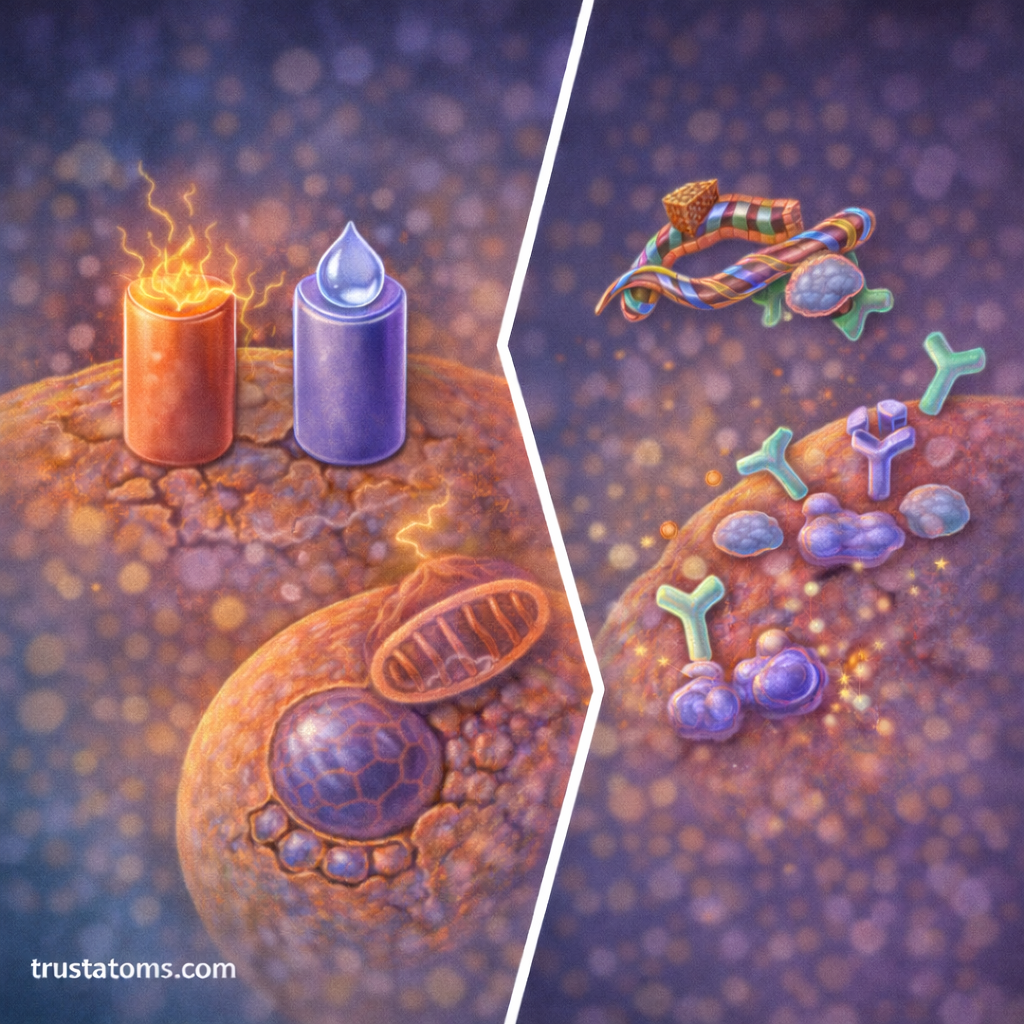
Apoptosis must be tightly regulated so that cells do not die unnecessarily.
Cells use several regulatory proteins to control apoptotic pathways.
Important regulatory components include:
Bcl-2 Family Proteins
These proteins control the intrinsic apoptotic pathway by regulating mitochondrial activity.
They include:
- Pro-apoptotic proteins that promote cell death
- Anti-apoptotic proteins that protect the cell
The balance between these proteins determines whether the cell survives.
Inhibitor of Apoptosis Proteins (IAPs)
These proteins block caspase activity and prevent apoptosis from progressing.
They help ensure that apoptosis occurs only when appropriate signals are present.
Tumor Suppressor Proteins
Certain proteins detect DNA damage and can trigger apoptosis when damage cannot be repaired.
One well-known example is the p53 protein, which plays a major role in preventing cancer development.
Apoptotic Pathways in Development
Apoptotic pathways are essential during embryonic development.
During early growth, many cells are produced that must later be removed to shape tissues and organs.
Examples of apoptosis during development include:
- Separation of fingers and toes
- Removal of excess neurons in the brain
- Formation of hollow structures such as ducts and cavities
Without apoptotic regulation, normal body structures would not form correctly.
Apoptotic Pathways and Disease
Disruptions in apoptotic pathways can lead to serious health problems.
Cancer
Cancer cells often avoid apoptosis, allowing them to grow uncontrollably.
Mutations in apoptotic regulators can disable the cell’s ability to self-destruct.
Neurodegenerative Diseases
Excessive activation of apoptotic pathways may contribute to diseases such as:
- Alzheimer’s disease
- Parkinson’s disease
- Huntington’s disease
In these conditions, neurons may undergo unnecessary apoptosis.
Autoimmune Disorders
If apoptotic pathways fail to remove harmful immune cells, the immune system may begin attacking healthy tissues.
Apoptosis in Medical Research
Because apoptotic pathways are central to many diseases, they are a major focus of biomedical research.
Scientists are studying apoptosis to develop treatments that:
- Trigger apoptosis in cancer cells
- Prevent excessive cell death in neurodegenerative diseases
- Improve immune system regulation
- Support regenerative medicine
Targeting apoptotic pathways allows researchers to restore balance in cellular regulation.
Final Thoughts
Apoptotic pathways are fundamental to cellular regulation and biological stability. Through complex signaling networks, cells can detect damage, respond to stress, and initiate programmed cell death when necessary.
These pathways ensure that defective or unnecessary cells are safely removed, maintaining tissue health and preventing disease.
As research continues to uncover the molecular details of apoptotic regulation, scientists are gaining powerful tools for developing treatments that restore normal cellular balance in many human diseases.