Cells constantly face internal wear and tear. Proteins become damaged, organelles lose efficiency, and metabolic waste accumulates during normal biological activity. To stay healthy, cells must continually clean, recycle, and repair their internal components. One of the most important systems responsible for this process is autophagy.
Autophagy is a cellular recycling mechanism that helps remove damaged structures and repurpose useful materials. This process allows cells to maintain stability, adapt to stress, and preserve energy efficiency. Without autophagy, damaged components would accumulate inside cells, eventually interfering with normal biological function.
Scientists consider autophagy one of the key maintenance systems that helps cells remain functional over time.
What Is Autophagy?
Autophagy comes from the Greek words meaning “self-eating.” In biological terms, it refers to the process by which cells break down and recycle their own internal components.
Rather than allowing damaged materials to build up, cells isolate unwanted structures and deliver them to specialized compartments where they are broken down into reusable molecules.
Autophagy serves several important roles in cellular maintenance:
- Removing damaged proteins
- Recycling worn-out organelles
- Maintaining energy balance
- Supporting cellular repair
- Protecting cells during stress
By continually clearing out defective materials, autophagy helps preserve cellular stability and efficiency.
Why Cellular Recycling Is Necessary
Cells operate through thousands of biochemical reactions every second. These processes naturally produce byproducts and damaged structures.
Over time, cells accumulate:
- Misfolded proteins
- Defective mitochondria
- Oxidized molecules
- Aggregated protein clusters
- Cellular debris
If these materials are not removed, they can interfere with metabolism, disrupt signaling pathways, and contribute to cellular aging.
Autophagy prevents this buildup by identifying and removing cellular components that are no longer functioning properly.
The Basic Steps of Autophagy
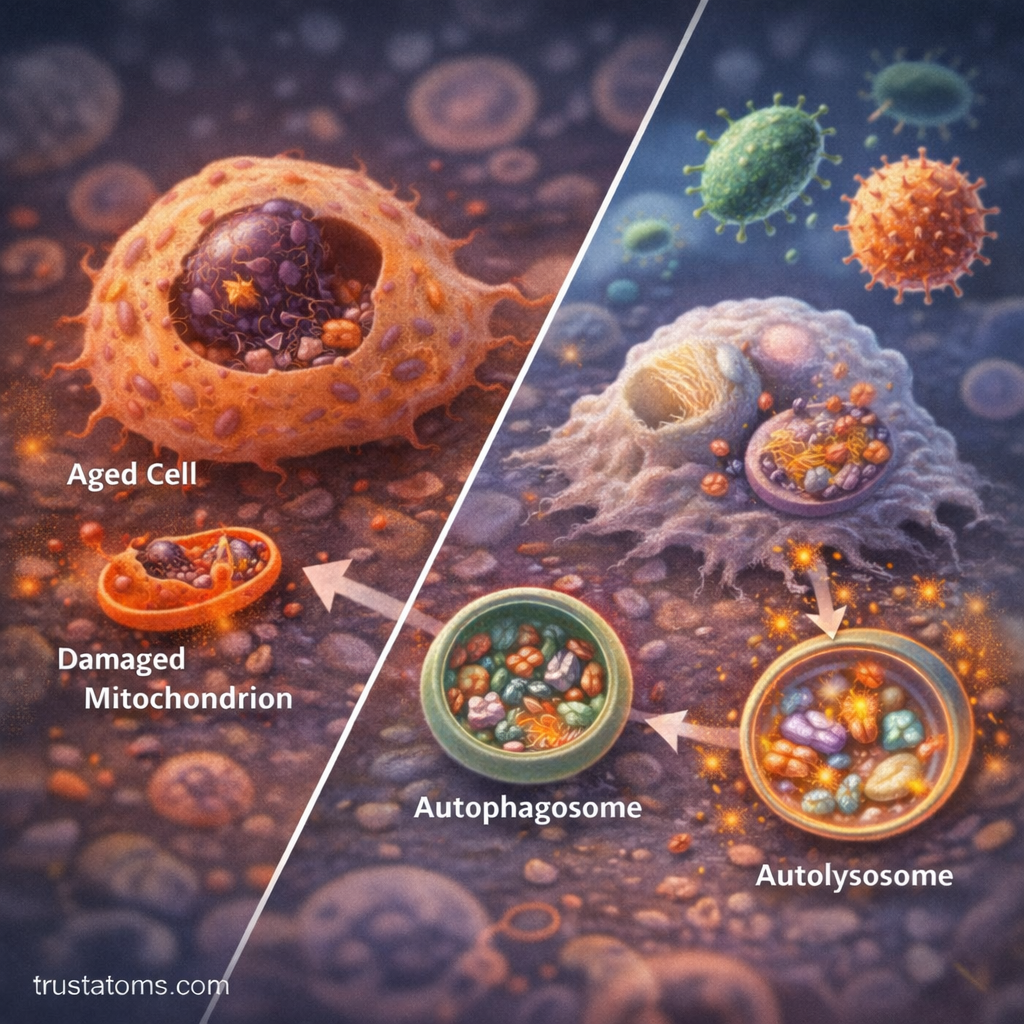
Autophagy occurs through a multi-step process that carefully isolates and degrades cellular materials.
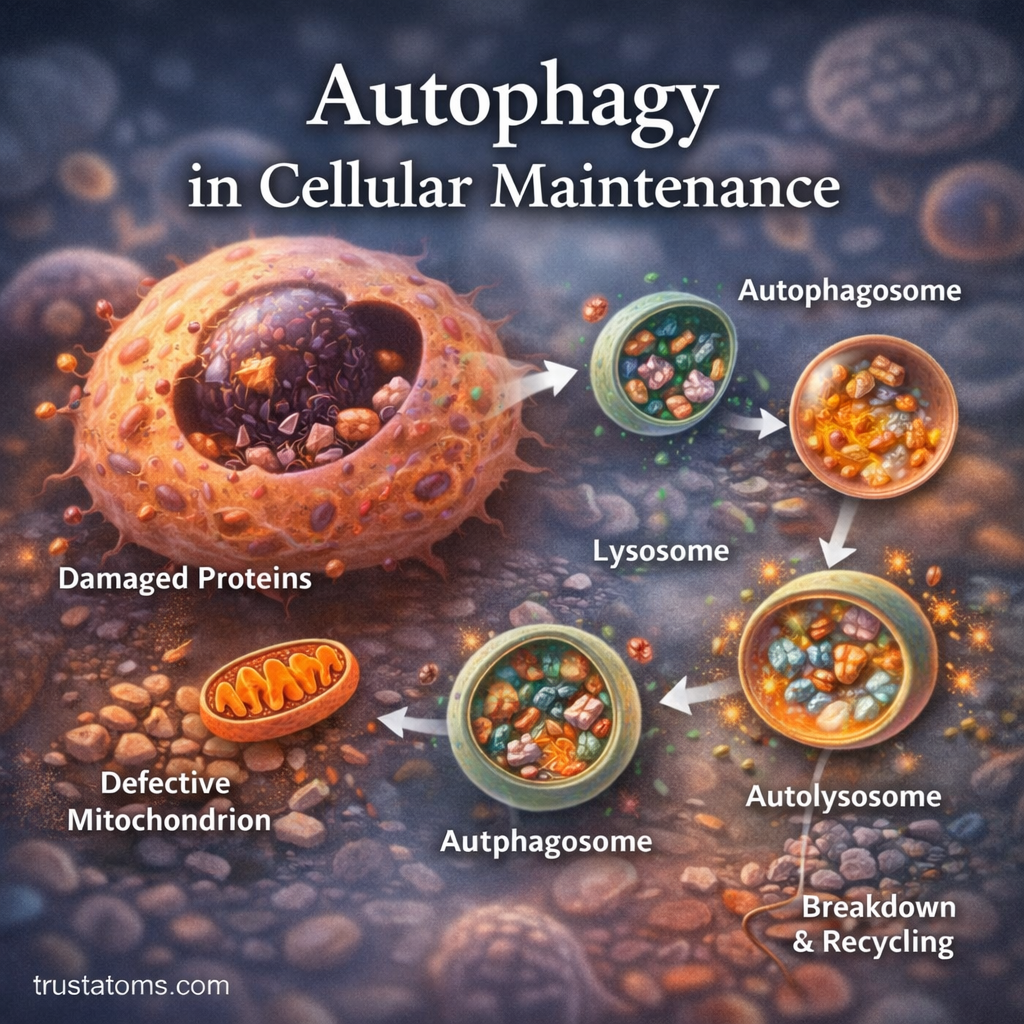
1. Initiation
The process begins when the cell detects stress or damage. Signals such as nutrient shortage, protein misfolding, or organelle damage activate autophagy pathways.
2. Formation of the Isolation Membrane
A membrane structure begins to form around the material that needs to be removed. This membrane expands and gradually surrounds the targeted cellular components.
3. Autophagosome Development
Once the membrane fully encloses the material, it forms a structure known as an autophagosome. This vesicle contains the damaged proteins or organelles that will be recycled.
4. Fusion With Lysosomes
The autophagosome then merges with a lysosome, a cellular compartment filled with digestive enzymes.
5. Breakdown and Recycling
Inside the lysosome, enzymes break down the contents of the autophagosome into smaller molecules such as amino acids and fatty acids. These molecules can then be reused by the cell for energy or rebuilding structures.
This recycling process allows cells to conserve resources while maintaining internal order.
Types of Autophagy
Autophagy can occur in several different forms depending on the cellular material being removed.
Macroautophagy
Macroautophagy is the most widely studied form. It involves the formation of autophagosomes that capture large portions of cellular material.
This process can target entire organelles, including mitochondria and sections of the cytoplasm.
Microautophagy
Microautophagy occurs when lysosomes directly engulf small portions of the cytoplasm without forming an autophagosome.
This process is generally used for smaller-scale recycling tasks.
Chaperone-Mediated Autophagy
In chaperone-mediated autophagy, specific proteins are identified by molecular chaperones and transported directly into lysosomes for degradation.
This form of autophagy focuses on selective protein removal rather than bulk recycling.
Autophagy and Energy Balance
Autophagy becomes particularly important when cells experience nutrient shortages.
During periods of limited energy availability, autophagy helps cells survive by breaking down internal components and recycling them into usable nutrients.
This process provides:
- Amino acids for protein synthesis
- Fatty acids for energy production
- Sugars for metabolic pathways
In this way, autophagy allows cells to temporarily support essential biological processes even when external nutrients are scarce.
The Role of Autophagy in Cellular Quality Control
Autophagy also functions as a quality control system inside cells.
By removing defective components, the process helps maintain healthy cellular structures.
Examples of quality control functions include:
- Removing damaged mitochondria through mitophagy
- Eliminating toxic protein aggregates
- Recycling worn-out cellular machinery
- Preventing buildup of malfunctioning proteins
Without these processes, cellular efficiency would gradually decline.
Autophagy and Cellular Stress Response
Cells frequently encounter stress conditions such as oxidative damage, toxins, or infection. Autophagy helps protect cells during these challenges.
During stress conditions, autophagy may:
- Remove damaged organelles
- Reduce toxic molecular buildup
- Provide emergency energy
- Support immune defense mechanisms
This adaptive response allows cells to recover from environmental or metabolic stress more effectively.
Autophagy and Aging
Autophagy plays a major role in how cells age over time. In younger cells, autophagy operates efficiently and keeps cellular components well maintained.
However, autophagy activity often declines as organisms grow older.
When autophagy slows down, cells may accumulate:
- Damaged proteins
- Defective mitochondria
- Aggregated molecular waste
This buildup can contribute to age-related cellular dysfunction.
Researchers are studying how maintaining healthy autophagy activity might support long-term cellular health.
Autophagy and Disease Research
Because autophagy influences cellular stability, researchers have linked it to several biological conditions.
Imbalances in autophagy activity may contribute to:
- Neurodegenerative disorders
- Metabolic diseases
- Immune system dysfunction
- Certain types of cancer
Scientists are exploring how regulating autophagy could potentially improve cellular resilience and disease resistance.
Understanding this process also provides insight into how cells maintain internal balance under challenging conditions.
Factors That Influence Autophagy Activity
Autophagy levels are influenced by several biological and environmental factors.
Nutrient Availability
Low nutrient levels can activate autophagy, helping cells recycle internal materials for survival.
Cellular Stress
Exposure to oxidative stress or cellular damage can trigger autophagy as a protective response.
Hormonal Signals
Certain hormones and metabolic signals regulate autophagy pathways to balance energy needs.
Cellular Age
Older cells may experience reduced autophagy efficiency, which can contribute to cellular aging.
Why Autophagy Matters in Biology
Autophagy is essential for maintaining healthy cells. By continuously recycling damaged materials and supporting metabolic balance, the process allows cells to adapt to changing conditions.
Key benefits of autophagy include:
- Preserving cellular structure
- Preventing toxic buildup
- Supporting metabolic stability
- Improving cellular survival during stress
- Maintaining long-term cellular health
Because of its wide-ranging effects, autophagy remains a major focus of modern biological research.
Final Thoughts
Autophagy is one of the most important maintenance systems within cells. Through a carefully regulated recycling process, cells remove damaged structures, recover valuable materials, and maintain internal balance.
From energy management to quality control, autophagy supports nearly every aspect of cellular health. When functioning properly, it helps cells remain efficient, adaptable, and resilient.
As research continues, scientists are gaining deeper insight into how autophagy shapes aging, disease resistance, and overall biological stability.