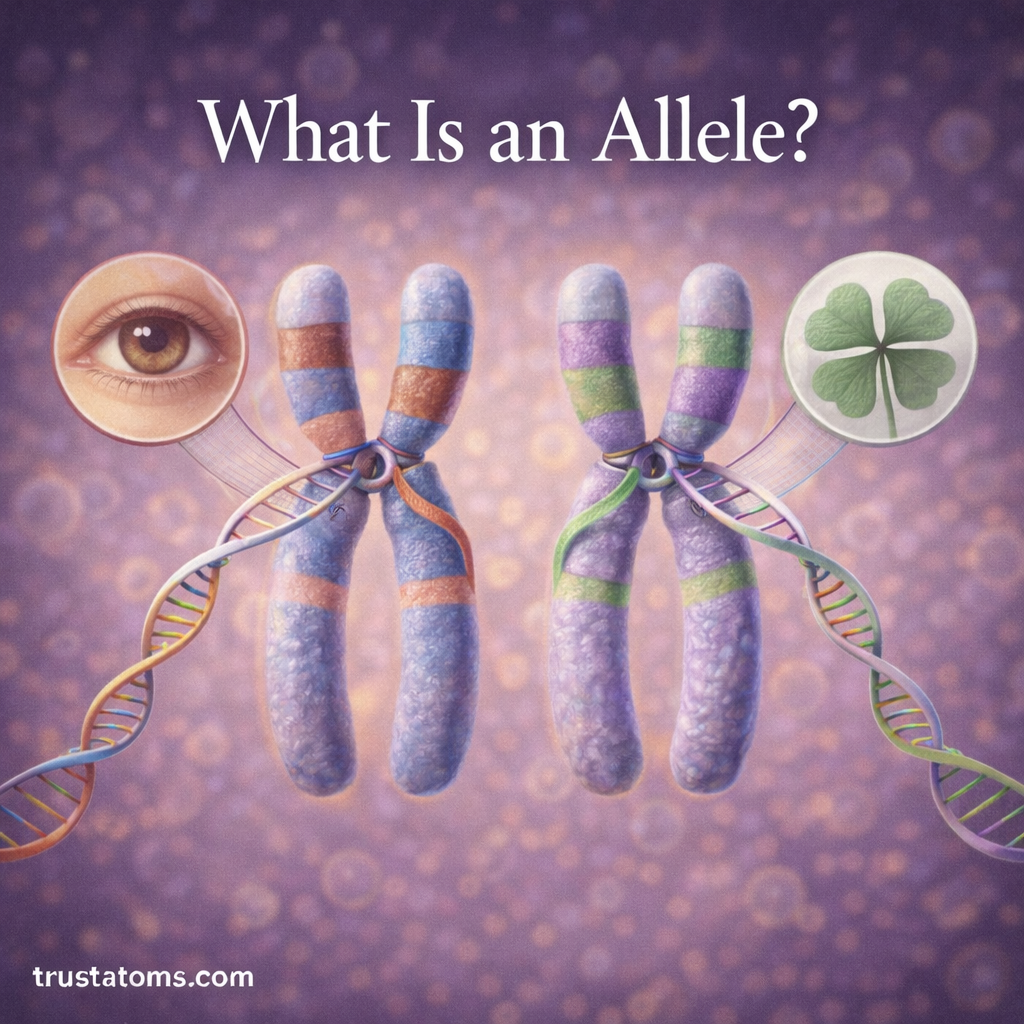
An allele is a specific version of a gene found at a particular location on a chromosome. Genes control traits such as eye color, blood type, and height, and alleles represent the different forms those genes can take.
Most organisms inherit two copies of each gene—one from each parent. Because of this, individuals often carry two alleles for a single gene. These alleles can be the same or different, which influences how a trait appears.
Alleles are a key concept in genetics because they help explain why individuals of the same species can display different physical characteristics.
Understanding Genes and Genetic Variation
Genes are segments of DNA that contain instructions for building proteins. These proteins influence how cells function and how traits develop in an organism.
However, genes are not always identical across individuals. Variations in the DNA sequence of a gene create different alleles.
For example, a gene responsible for eye color may have multiple alleles that contribute to different eye colors such as brown, blue, or green.
These variations contribute to the genetic diversity observed within populations.
Where Alleles Are Located
Alleles occupy the same position, called a locus, on homologous chromosomes.
In organisms that reproduce sexually:
- One chromosome is inherited from the mother
- One chromosome is inherited from the father
Each chromosome carries its own allele for a particular gene.
Because of this, an individual may have:
- Two identical alleles
- Two different alleles
This combination influences how a trait is expressed.
Homozygous vs. Heterozygous Alleles
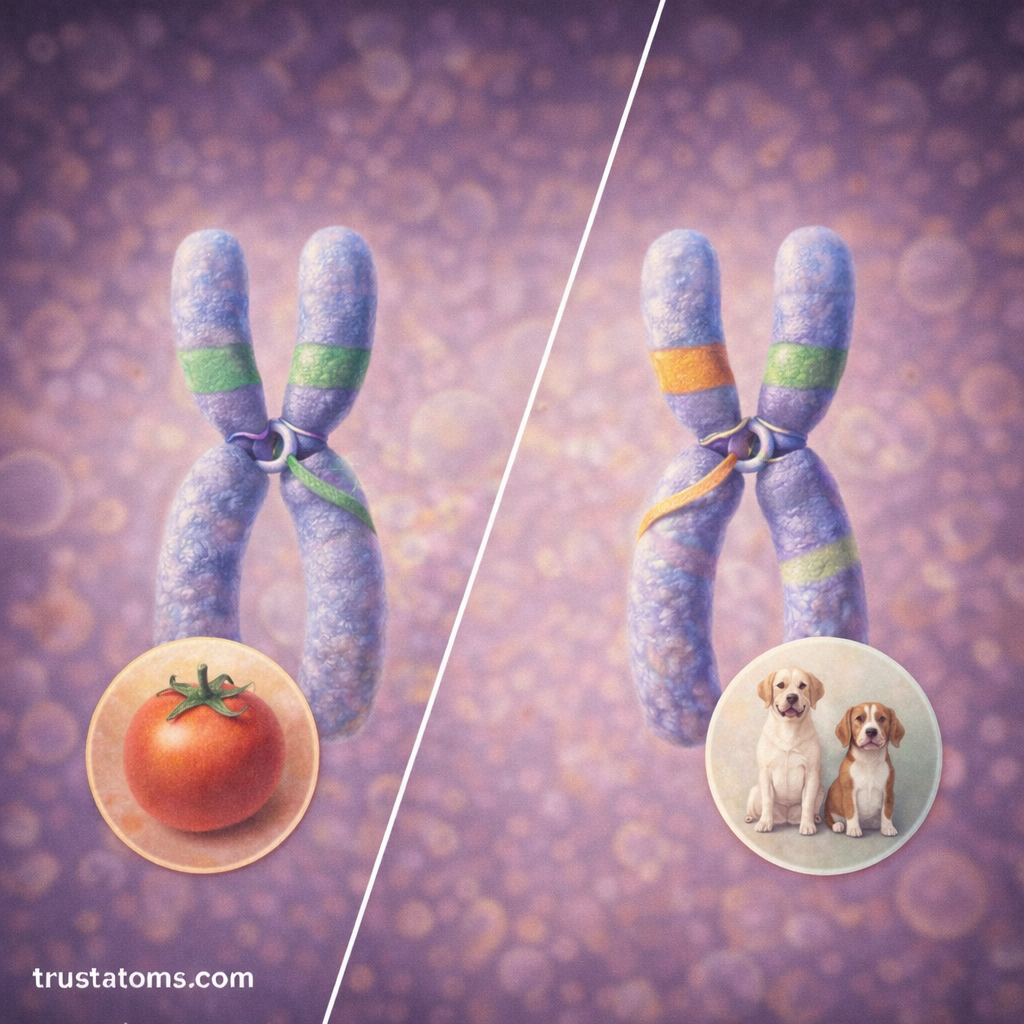
The relationship between two alleles of a gene determines how traits appear.
Homozygous
An organism is homozygous when it carries two identical alleles for a gene.
Examples include:
- Two alleles for brown eye color
- Two alleles for a specific blood type
Homozygous combinations often produce predictable trait expressions.
Heterozygous
An organism is heterozygous when it carries two different alleles for a gene.
In this case, one allele may influence the trait more strongly than the other, depending on dominance relationships.
Heterozygous combinations often contribute to genetic diversity.
Dominant and Recessive Alleles
Some alleles can mask the effects of others.
Dominant Alleles
A dominant allele expresses its trait even if only one copy is present.
If an organism carries one dominant allele and one recessive allele, the dominant trait usually appears.
Recessive Alleles
A recessive allele only influences the trait if two copies are present.
If a recessive allele is paired with a dominant allele, its effect may remain hidden.
For example:
- Brown eye alleles are often dominant
- Blue eye alleles are typically recessive
These dominance relationships were first studied extensively by the scientist Gregor Mendel.
How Alleles Influence Traits
Alleles affect the traits of organisms by influencing how proteins are produced or how genes are regulated.
Different alleles may:
- Produce slightly different proteins
- Alter how much protein is produced
- Change when or where a gene is active
These differences can affect physical characteristics, biological functions, and susceptibility to certain diseases.
Alleles and Genetic Diversity
Alleles are one of the main sources of genetic variation within populations.
Genetic diversity is important because it allows populations to adapt to changing environments.
Processes that contribute to allele variation include:
- Mutation
- Genetic recombination
- Sexual reproduction
These mechanisms introduce new allele combinations that may improve survival and reproduction.
Multiple Alleles in Populations
While individuals typically carry only two alleles for a gene, many genes have more than two possible alleles within a population.
This is known as multiple allele variation.
A well-known example is the ABO blood group system, which includes three main alleles:
- A
- B
- O
Different combinations of these alleles produce the four major blood types: A, B, AB, and O.
Alleles and Genetic Disorders
Some genetic disorders result from harmful alleles.
These alleles may:
- Produce nonfunctional proteins
- Disrupt normal cellular processes
- Affect development or metabolism
Genetic conditions may be inherited in different ways depending on how alleles behave.
Examples include:
- Dominant genetic disorders
- Recessive inherited diseases
- Conditions influenced by multiple genes
Studying alleles helps scientists understand how these disorders arise and how they may be treated or prevented.
Final Thoughts
An allele is a specific version of a gene that contributes to the genetic diversity of living organisms. By inheriting different combinations of alleles from their parents, individuals develop unique traits and biological characteristics.
Alleles play a central role in inheritance, evolution, and population genetics. Understanding how alleles work helps scientists explain variation within species, study genetic diseases, and explore how organisms adapt over time.