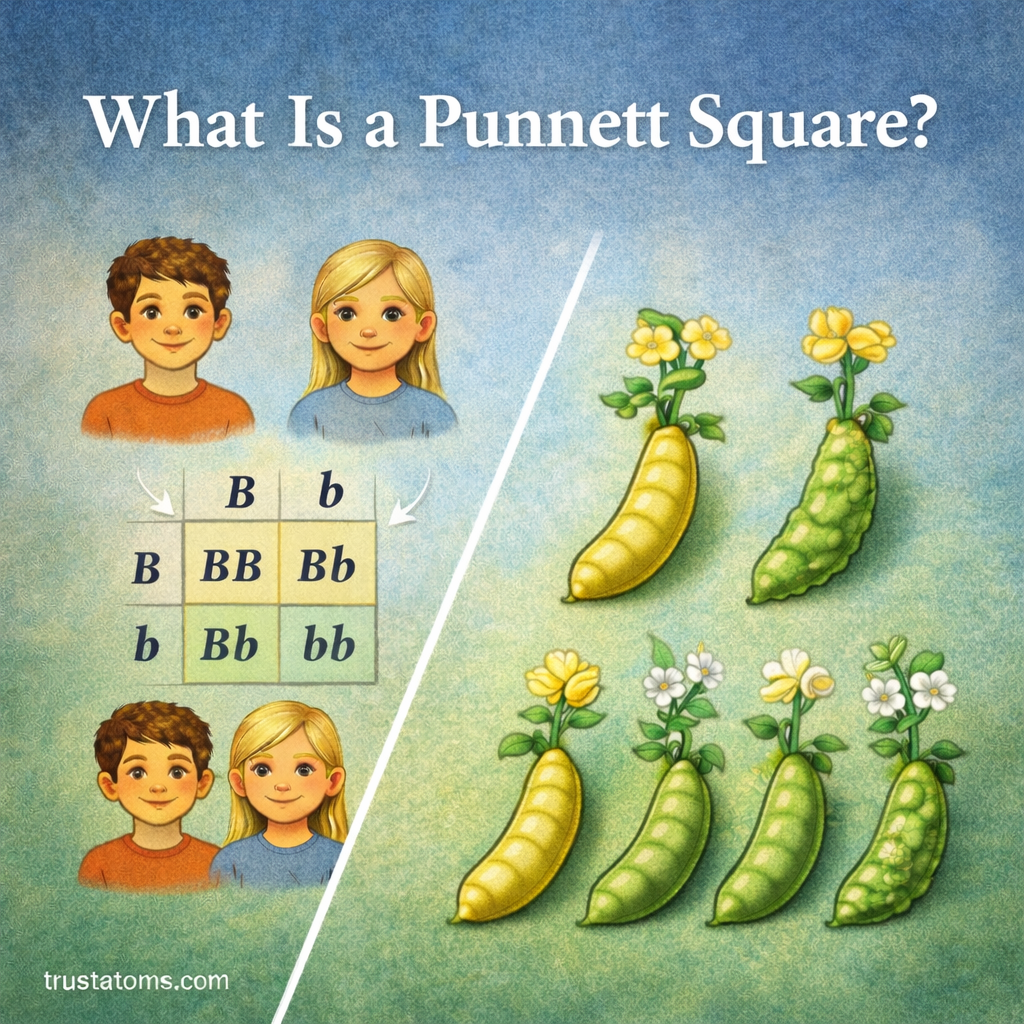
A Punnett square is a simple diagram used in genetics to predict how traits may be inherited from parents to offspring. It helps scientists, students, and researchers understand how different gene combinations can produce certain physical traits or genetic conditions.
The tool was developed in the early 1900s by British geneticist Reginald Punnett, building on earlier work about inheritance patterns discovered through plant breeding studies.
Punnett squares remain one of the easiest ways to visualize how dominant and recessive alleles combine during reproduction.
Understanding the Basics of Genetic Inheritance
To understand a Punnett square, it helps to review some core genetic concepts.
Genes
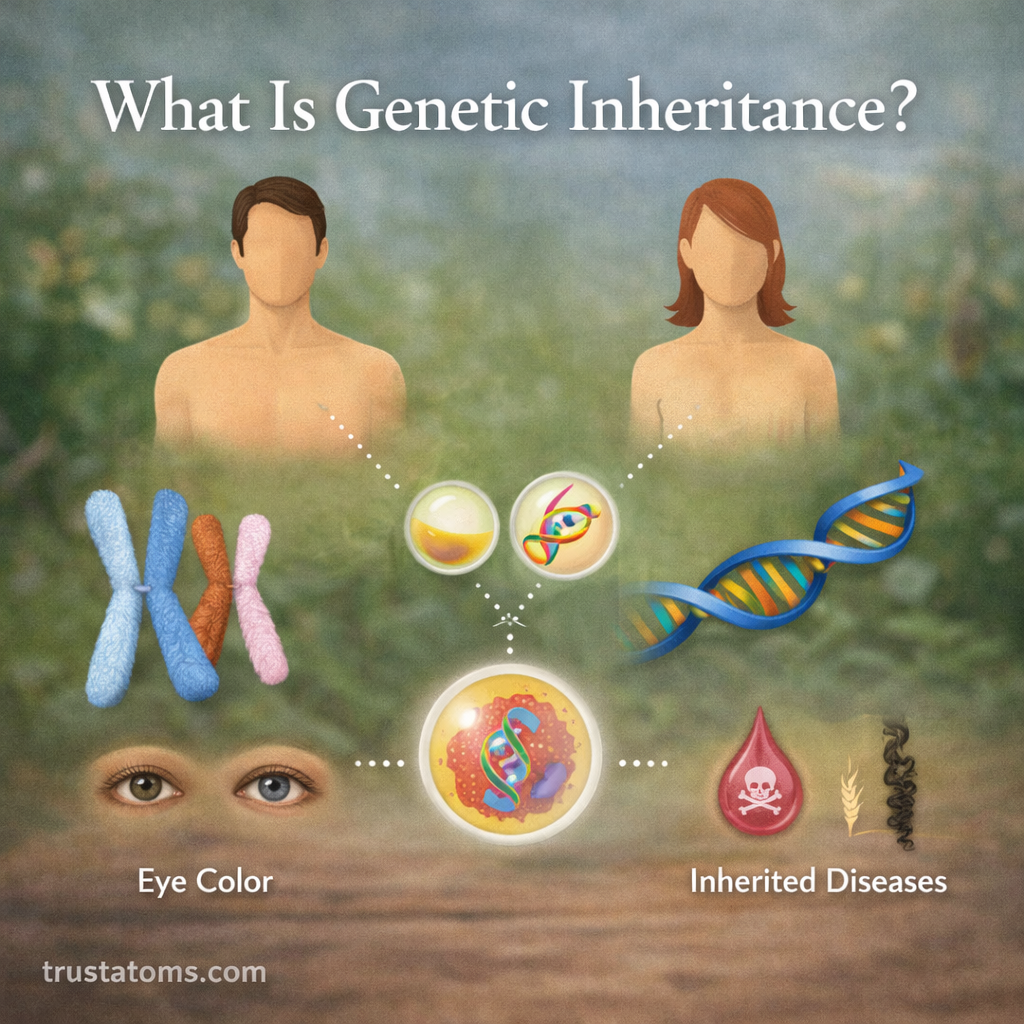
Genes are segments of DNA that carry instructions for building proteins and determining traits such as:
- Eye color
- Hair texture
- Blood type
- Height tendencies
- Certain inherited conditions
Humans typically inherit two copies of each gene, one from each parent.
Alleles
An allele is a specific version of a gene. For example, a gene related to eye color may have different alleles such as:
- Brown eye allele
- Blue eye allele
Each parent contributes one allele to their child.
What a Punnett Square Shows
A Punnett square is a grid diagram that displays all possible allele combinations that offspring could inherit from their parents.
It helps answer questions such as:
- What traits are most likely to appear?
- What are the chances of a recessive trait appearing?
- Could offspring become carriers of a gene?
The diagram does not guarantee outcomes but instead shows probabilities.
Structure of a Punnett Square
A typical Punnett square has four boxes arranged in a grid.
Parent Alleles
- One parent’s alleles are written across the top.
- The other parent’s alleles are written along the left side.
Possible Combinations
Each box represents a possible allele combination that an offspring could inherit.
For example:
Parent 1: Aa
Parent 2: Aa
Possible offspring combinations:
- AA
- Aa
- Aa
- aa
This produces a probability pattern showing how often certain traits may appear.
Step-by-Step: How to Use a Punnett Square
Using a Punnett square involves a few straightforward steps.
1. Identify Parent Genotypes
Determine the genetic makeup (genotype) of each parent.
Example:
- Parent 1: Aa
- Parent 2: Aa
2. Draw the Grid
Create a 2×2 square to represent possible genetic outcomes.
3. Place Parent Alleles
- Write one parent’s alleles across the top.
- Write the other parent’s alleles along the left side.
4. Fill the Boxes
Combine one allele from the top with one from the side for each square.
Example combinations:
- AA
- Aa
- Aa
- aa
5. Interpret the Results
This example produces the following probabilities:
- 25% AA
- 50% Aa
- 25% aa
If the dominant allele determines the visible trait, then 75% of offspring would show the dominant trait, while 25% would show the recessive trait.
Dominant vs Recessive Traits in Punnett Squares
Punnett squares are commonly used to study dominant and recessive inheritance.
Dominant Alleles
A dominant allele expresses its trait when only one copy is present.
Example:
- A = dominant allele
- AA or Aa = dominant trait appears
Recessive Alleles
A recessive allele only shows its trait when two copies are inherited.
Example:
- aa = recessive trait appears
Punnett squares help illustrate how these allele combinations influence trait probabilities.
Types of Punnett Squares
Punnett squares can be used to study different inheritance patterns.
Monohybrid Cross
A monohybrid cross tracks the inheritance of one gene.
Example:
- Eye color
- Earlobe attachment
- Tongue rolling ability
This type typically uses a 2×2 Punnett square.
Dihybrid Cross
A dihybrid cross tracks two genes at the same time.
Examples might include:
- Seed color and seed shape in plants
- Coat color and fur length in animals
Dihybrid crosses use a larger 4×4 Punnett square.
What Punnett Squares Can Predict
Punnett squares are valuable for predicting genetic probabilities.
They help estimate:
- The likelihood of certain traits appearing
- Whether offspring may be carriers of a recessive gene
- Probabilities of inherited genetic conditions
- Outcomes of plant or animal breeding
Because genetics involves chance, Punnett squares show probability rather than certainty.
Limitations of Punnett Squares
While Punnett squares are extremely useful, they simplify real-world genetics.
Many traits do not follow simple dominant–recessive patterns.
Examples include:
- Incomplete dominance – traits blend together
- Codominance – both alleles appear equally
- Polygenic traits – multiple genes influence one trait
Human characteristics such as height, skin tone, and intelligence involve many interacting genes rather than a single gene pair.
Why Punnett Squares Are Important
Punnett squares remain a foundational tool in genetics education and research.
They help scientists and students:
- Understand inheritance patterns
- Study genetic disorders
- Predict outcomes in plant and animal breeding
- Visualize allele combinations
- Learn the fundamentals of heredity
Even with advanced genetic technology today, the Punnett square remains one of the clearest visual tools for understanding basic inheritance patterns.
Final Thoughts
A Punnett square is a simple but powerful diagram used to predict how genes are passed from parents to offspring. By organizing allele combinations into a grid, it reveals the probability of different genetic outcomes.
Although real-world genetics can be far more complex, Punnett squares provide a clear starting point for understanding how traits are inherited across generations.
They continue to be widely used in classrooms, laboratories, and genetic research to explore the fascinating science of heredity.