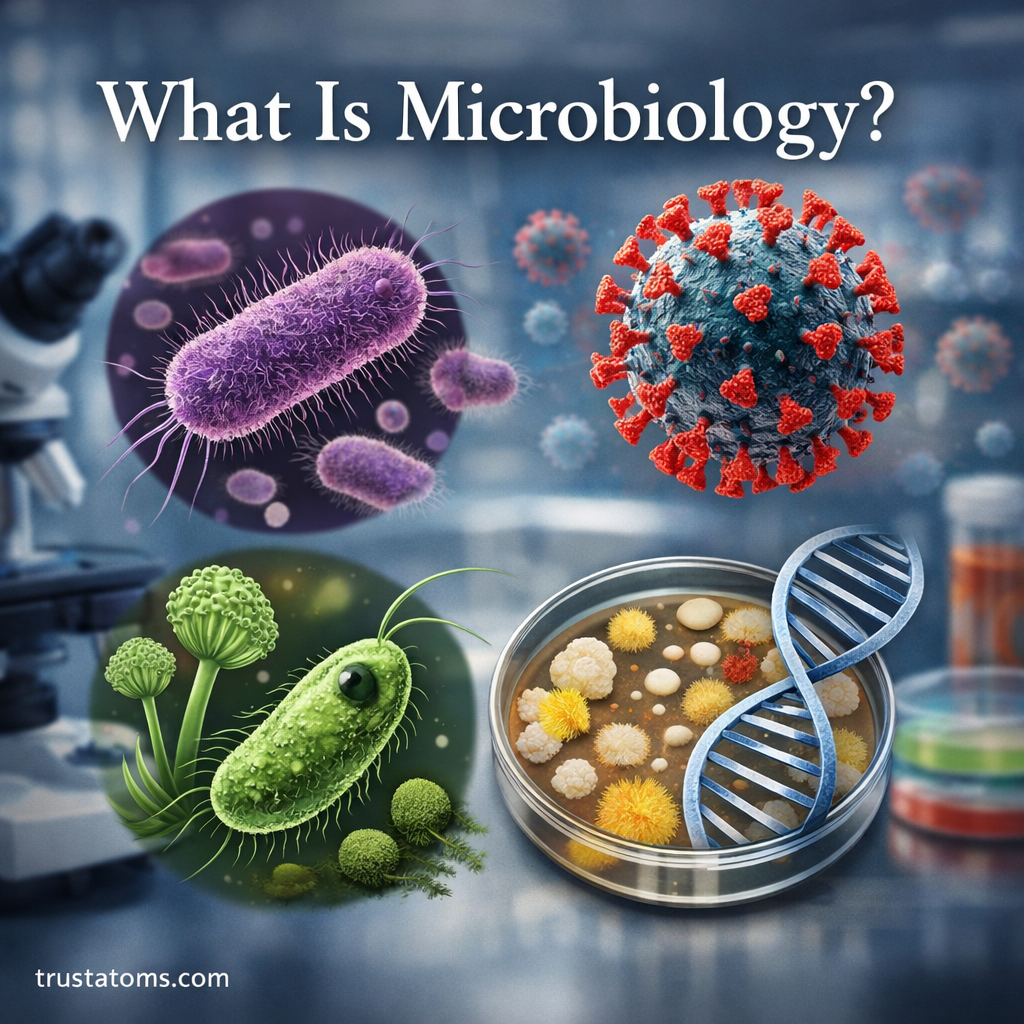
Microbiology is the branch of biology that studies microscopic organisms—living things so small they can only be seen with a microscope. These organisms include bacteria, viruses, fungi, protozoa, and certain algae. Despite their tiny size, microorganisms play massive roles in ecosystems, medicine, industry, and even the human body.
Microbiology helps scientists understand how these organisms live, grow, interact, and influence the world around us. From causing infectious diseases to helping produce foods like yogurt and cheese, microbes are both powerful and essential to life on Earth.
Definition of Microbiology
Microbiology is the scientific study of microorganisms, often called microbes. These organisms are typically single-celled or extremely small multicellular organisms that are invisible to the naked eye.
The field examines:
- The structure and function of microbes
- Their genetics and reproduction
- Their roles in ecosystems
- Their effects on human health and disease
- Their applications in medicine, agriculture, and biotechnology
Microbiology combines principles from several scientific disciplines, including biology, chemistry, genetics, and medicine.
Types of Microorganisms Studied in Microbiology
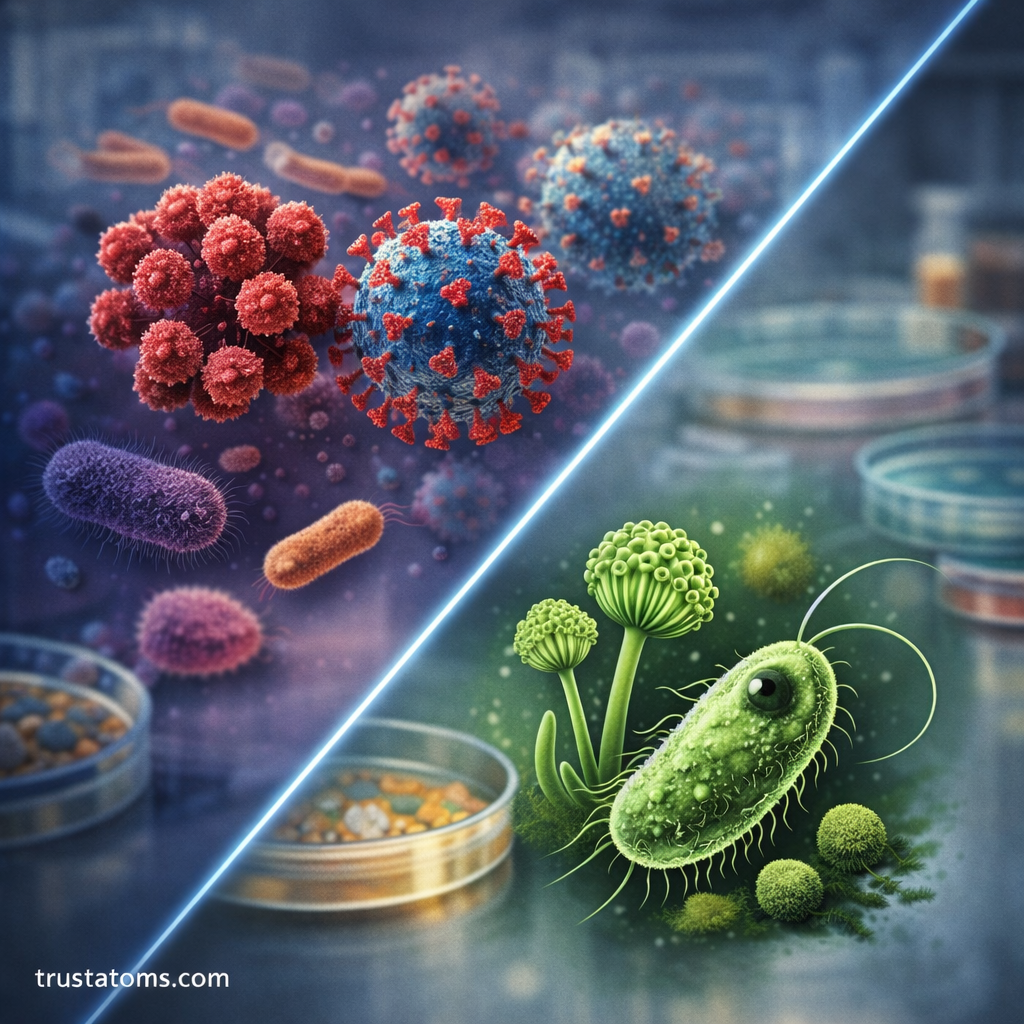
Microbiology covers several major categories of microscopic life.
Bacteria
Bacteria are single-celled prokaryotic organisms that lack a nucleus. They are found almost everywhere on Earth, including soil, water, air, and inside living organisms.
Some bacteria cause diseases, but many are beneficial. For example:
- Gut bacteria help digest food
- Soil bacteria help plants grow
- Certain bacteria produce antibiotics and vitamins
Viruses
Viruses are extremely small infectious particles that can only reproduce inside host cells.
Unlike bacteria, viruses are not considered fully living organisms because they cannot carry out life processes independently. They infect animals, plants, bacteria, and even other viruses.
Examples include:
- Influenza virus
- Coronavirus
- HIV
Fungi
Some fungi are microscopic, including yeasts and molds. These organisms are eukaryotic and have more complex cell structures than bacteria.
Microscopic fungi are important because they:
- Decompose organic matter
- Produce antibiotics like penicillin
- Help ferment foods and beverages
Protozoa
Protozoa are single-celled eukaryotic organisms that often live in water or moist environments. Many move using specialized structures like cilia or flagella.
Some protozoa are harmless, while others cause diseases such as:
- Malaria
- Amoebic dysentery
Microscopic Algae
Certain algae are microscopic and perform photosynthesis, producing oxygen and forming the base of aquatic food chains.
They are essential for:
- Ocean ecosystems
- Global oxygen production
- Carbon cycling
Why Microbiology Is Important
Microbiology is one of the most important fields of science because microorganisms influence nearly every aspect of life on Earth.
Medicine and Human Health
Microbiology helps scientists:
- Identify disease-causing microbes
- Develop vaccines
- Create antibiotics and antiviral drugs
- Understand immune system responses
Medical microbiology is crucial for controlling infectious diseases and improving global health.
Environmental Science
Microbes play key roles in ecosystems by:
- Recycling nutrients
- Decomposing organic matter
- Supporting soil fertility
- Breaking down pollutants
Environmental microbiology studies how microorganisms help maintain the balance of ecosystems.
Food Production
Microbes are essential in the production of many foods and beverages.
Examples include:
- Yogurt and cheese (bacterial fermentation)
- Bread (yeast fermentation)
- Beer and wine (yeast fermentation)
Without microorganisms, many traditional foods would not exist.
Biotechnology and Industry
Microorganisms are used in biotechnology to produce valuable products such as:
- Insulin
- Enzymes
- Biofuels
- Antibiotics
Scientists also use microbes in genetic engineering to develop new medicines and agricultural solutions.
Major Branches of Microbiology
Microbiology is divided into specialized areas depending on the organisms studied or the applications involved.
Bacteriology
The study of bacteria, including their structure, genetics, and roles in disease or environmental processes.
Virology
The study of viruses and viral infections in humans, animals, plants, and microorganisms.
Mycology
The study of fungi, including molds, yeasts, and fungal diseases.
Parasitology
Focuses on protozoa and parasitic organisms that live inside hosts.
Immunology
Examines how the immune system interacts with microbes and protects the body from infection.
Tools Used in Microbiology
Because microbes are microscopic, specialized tools are necessary to study them.
Common microbiology tools include:
- Light microscopes for viewing cells
- Electron microscopes for extremely small structures
- Petri dishes for growing microbes in cultures
- DNA sequencing technology for analyzing microbial genetics
Laboratory techniques allow scientists to isolate, identify, and analyze microorganisms in detail.
Microbes in the Human Body
The human body contains trillions of microorganisms known collectively as the human microbiome.
These microbes live on the skin, in the mouth, and especially in the digestive system.
They help by:
- Breaking down food
- Producing vitamins
- Supporting immune system function
- Protecting against harmful pathogens
A healthy microbiome is essential for overall health.
The History of Microbiology
Microbiology began in the 17th century with the invention of early microscopes.
Key historical milestones include:
- Antonie van Leeuwenhoek (1670s) – First observed microorganisms under a microscope
- Louis Pasteur (1800s) – Developed germ theory and pasteurization
- Robert Koch (1800s) – Identified bacteria responsible for diseases like tuberculosis
These discoveries transformed medicine and established microbiology as a scientific discipline.
The Future of Microbiology
Modern microbiology continues to evolve rapidly. Researchers are now exploring:
- Microbiome therapies
- Antibiotic resistance
- Genetic engineering of microbes
- Synthetic biology
- Microbes in space environments
These advances may lead to new treatments, sustainable technologies, and deeper understanding of life itself.
Final Thoughts
Microbiology reveals an unseen world that profoundly shapes life on Earth. Although microorganisms are tiny, they influence ecosystems, health, food production, and technology on a global scale.
By studying microbes, scientists gain insights into disease prevention, environmental sustainability, and biological processes that affect every living organism. Microbiology continues to be one of the most impactful and rapidly advancing areas of science.