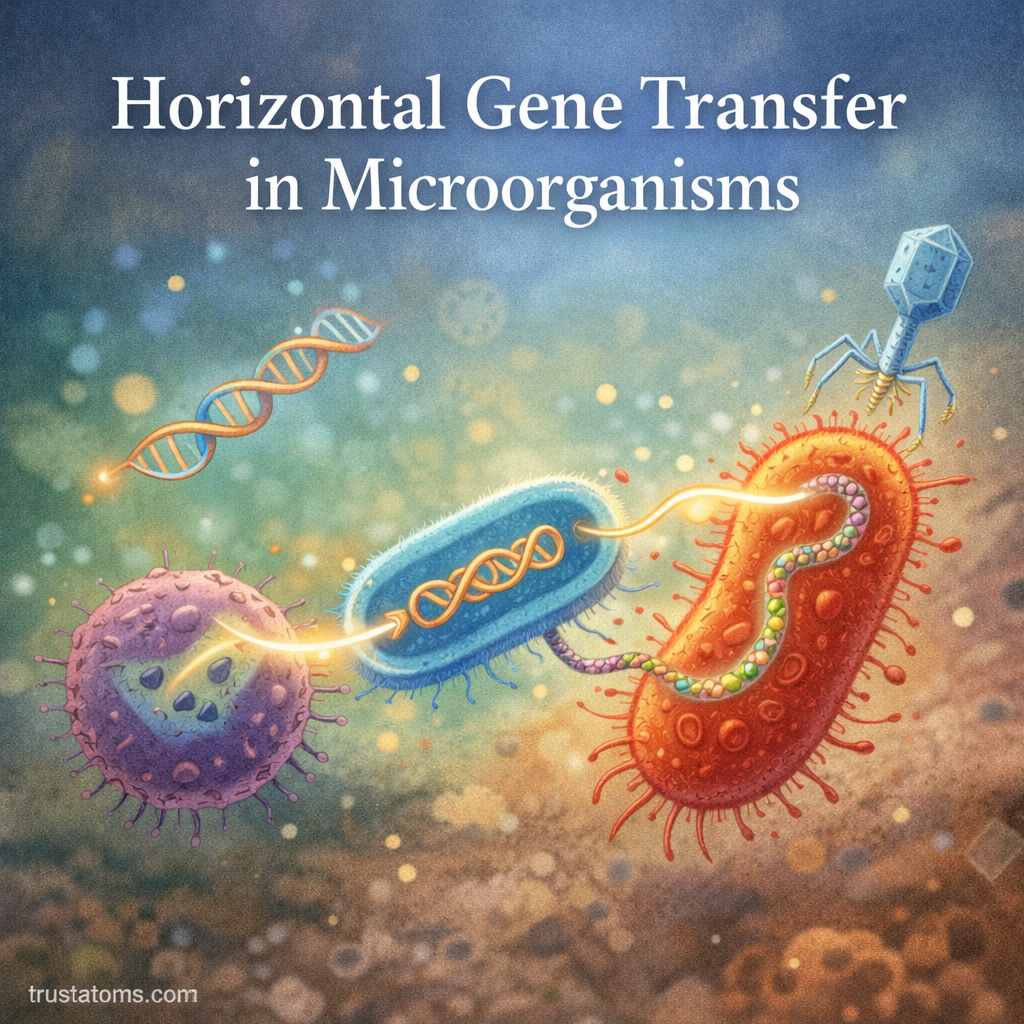
Microorganisms evolve and adapt at remarkable speeds. One reason for this rapid evolution is a process called horizontal gene transfer (HGT). Unlike traditional inheritance, where genes pass from parent to offspring, horizontal gene transfer allows microorganisms to exchange genetic material directly with unrelated organisms.
This process plays a major role in microbial evolution, antibiotic resistance, and environmental adaptation. By sharing genes across species boundaries, microorganisms can quickly acquire new abilities that help them survive in changing conditions.
Understanding horizontal gene transfer provides important insights into microbiology, medicine, and biotechnology.
What Is Horizontal Gene Transfer?
Horizontal gene transfer is the movement of genetic material between organisms that are not in a parent-offspring relationship.
This differs from vertical gene transfer, where genes are passed down through reproduction.
Through horizontal gene transfer, microorganisms can acquire genes that enable them to:
- Resist antibiotics
- Metabolize new nutrients
- Adapt to extreme environments
- Produce toxins or defensive compounds
This gene exchange occurs frequently among bacteria and other microorganisms, significantly accelerating evolutionary change.
Why Horizontal Gene Transfer Matters
Horizontal gene transfer influences many biological processes and ecosystems.
Some of its most important impacts include:
Rapid Evolution
Microbial populations can gain beneficial traits almost instantly by acquiring genes from neighboring organisms rather than waiting for mutations to occur.
Spread of Antibiotic Resistance
One of the most studied examples of horizontal gene transfer is the spread of antibiotic resistance genes among bacteria.
Resistance genes can move between species, allowing pathogens to quickly become resistant to treatments.
Microbial Adaptation
HGT helps microbes adapt to new environments, such as:
- Deep ocean hydrothermal vents
- Highly acidic environments
- Polluted soils
- Human and animal microbiomes
Genetic Diversity
Gene exchange increases genetic diversity within microbial communities, helping ecosystems remain stable and adaptable.
The Three Main Mechanisms of Horizontal Gene Transfer
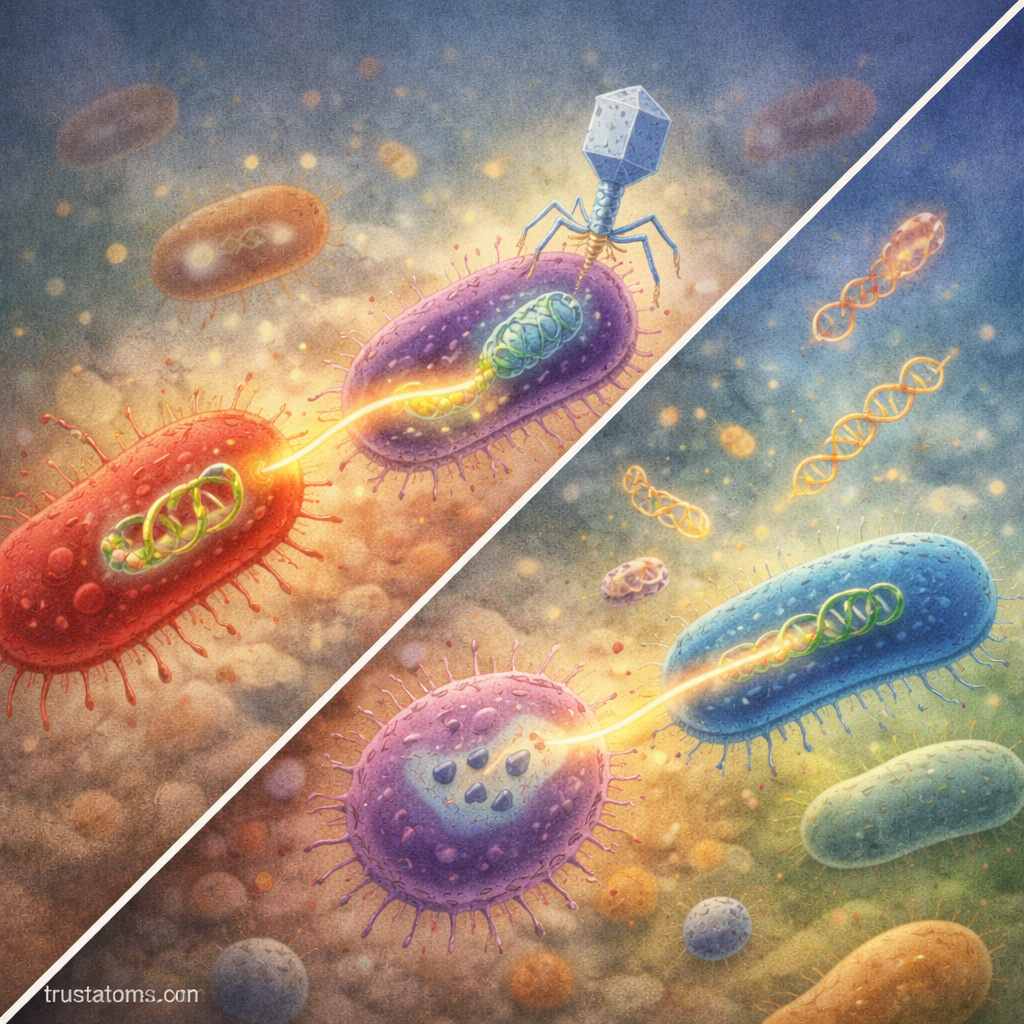
Microorganisms transfer genetic material through three primary mechanisms:
- Transformation
- Transduction
- Conjugation
Each mechanism involves different biological processes.
Transformation
Transformation occurs when a microorganism takes up free DNA from its surrounding environment.
This DNA often comes from:
- Dead microbial cells
- Cell fragments
- DNA released into the environment
How Transformation Works
The process typically follows several steps:
- DNA is released into the environment.
- A nearby bacterial cell recognizes and absorbs the DNA.
- The DNA integrates into the host genome or exists as a separate genetic element.
If the new DNA provides a beneficial trait, the microorganism may gain a survival advantage.
Example
Some bacteria can acquire genes that allow them to break down new types of nutrients simply by absorbing environmental DNA.
Transduction
Transduction occurs when viruses transfer genetic material between microorganisms.
Viruses that infect bacteria are called bacteriophages.
How Transduction Works
During viral replication:
- A bacteriophage infects a bacterial cell.
- The virus copies its genetic material inside the host.
- Occasionally, fragments of bacterial DNA are mistakenly packaged into viral particles.
- When the virus infects another cell, it delivers the previous host’s DNA.
This accidental transfer allows genes to move between bacterial populations.
Types of Transduction
There are two main forms:
Generalized transduction
- Random fragments of bacterial DNA are transferred.
Specialized transduction
- Specific genes near viral integration sites are transferred.
Conjugation
Conjugation is a process where two bacterial cells directly transfer genetic material through physical contact.
This mechanism is sometimes described as microbial “mating,” although it does not involve reproduction.
How Conjugation Works
The process involves several steps:
- A donor cell forms a structure called a sex pilus.
- The pilus connects the donor cell to a recipient cell.
- A copy of genetic material is transferred through the connection.
- The recipient cell incorporates the new DNA.
Conjugation often transfers small circular DNA molecules known as plasmids.
Importance of Plasmids
Plasmids frequently carry genes that provide beneficial traits, including:
- Antibiotic resistance
- Toxin production
- Metabolic abilities
- Environmental tolerance
Because plasmids replicate independently, they can spread rapidly through microbial populations.
Horizontal Gene Transfer and Antibiotic Resistance
Horizontal gene transfer is a major driver of antibiotic-resistant bacteria.
In hospitals and clinical environments, bacteria can share resistance genes through plasmids and other mobile genetic elements.
This process allows resistance to spread even between unrelated bacterial species.
Common resistance genes transferred through HGT include those that:
- Break down antibiotics
- Modify antibiotic targets
- Pump antibiotics out of cells
Because of horizontal gene transfer, bacterial populations can evolve resistance faster than new drugs are developed.
Mobile Genetic Elements
Horizontal gene transfer often involves specialized DNA segments known as mobile genetic elements.
These genetic components can move between genomes.
Examples include:
Plasmids
Small circular DNA molecules that replicate independently of the bacterial chromosome.
Transposons
Also known as “jumping genes,” transposons can move between locations within a genome or between different DNA molecules.
Integrons
Genetic structures that capture and organize gene cassettes, often including antibiotic resistance genes.
These elements act as vehicles that transport genes between microorganisms.
Horizontal Gene Transfer in Natural Ecosystems
HGT is not limited to laboratory environments or human pathogens. It occurs widely in nature.
Examples include:
Soil Microbial Communities
Soil contains diverse microbial populations that frequently exchange genes related to nutrient metabolism and environmental adaptation.
Marine Microorganisms
Ocean microbes exchange genes that allow them to survive in nutrient-poor waters or extreme temperatures.
Microbiomes
Microbial communities within animals and humans can exchange genes that affect digestion, metabolism, and immune interactions.
These exchanges contribute to the dynamic nature of microbial ecosystems.
Detecting Horizontal Gene Transfer
Scientists use several methods to identify gene transfer events.
Genome Sequencing
Comparing microbial genomes can reveal genes that appear to originate from unrelated species.
Unusual genetic patterns may indicate horizontal transfer.
Phylogenetic Analysis
Researchers analyze evolutionary relationships among genes.
If a gene’s evolutionary history differs from that of the organism, it may have been acquired through HGT.
Molecular Markers
Specific DNA sequences can identify mobile genetic elements that facilitate gene transfer.
These techniques help scientists track how genes move across microbial populations.
Applications of Horizontal Gene Transfer Research
Understanding horizontal gene transfer has many scientific and medical applications.
Antibiotic Resistance Monitoring
Tracking HGT helps researchers monitor how resistance spreads across bacterial populations.
Biotechnology
Scientists use gene transfer mechanisms to insert beneficial genes into microorganisms for:
- Medicine production
- Industrial enzymes
- Biofuel development
Environmental Remediation
Engineered microbes may use transferred genes to break down pollutants in contaminated environments.
Microbiome Engineering
Future therapies may involve introducing beneficial genes into microbial communities within the human body.
Final Thoughts
Horizontal gene transfer demonstrates that microbial evolution is far more dynamic than once believed. Instead of evolving slowly through mutation alone, microorganisms can rapidly acquire new capabilities by sharing genetic material.
This ability allows microbes to adapt to changing environments, colonize new habitats, and develop resistance to medical treatments. While horizontal gene transfer presents challenges—especially in the spread of antibiotic resistance—it also offers opportunities for scientific innovation.
By studying how genes move across microbial communities, researchers continue to uncover new insights into evolution, medicine, and the complex biological networks that shape life on Earth.