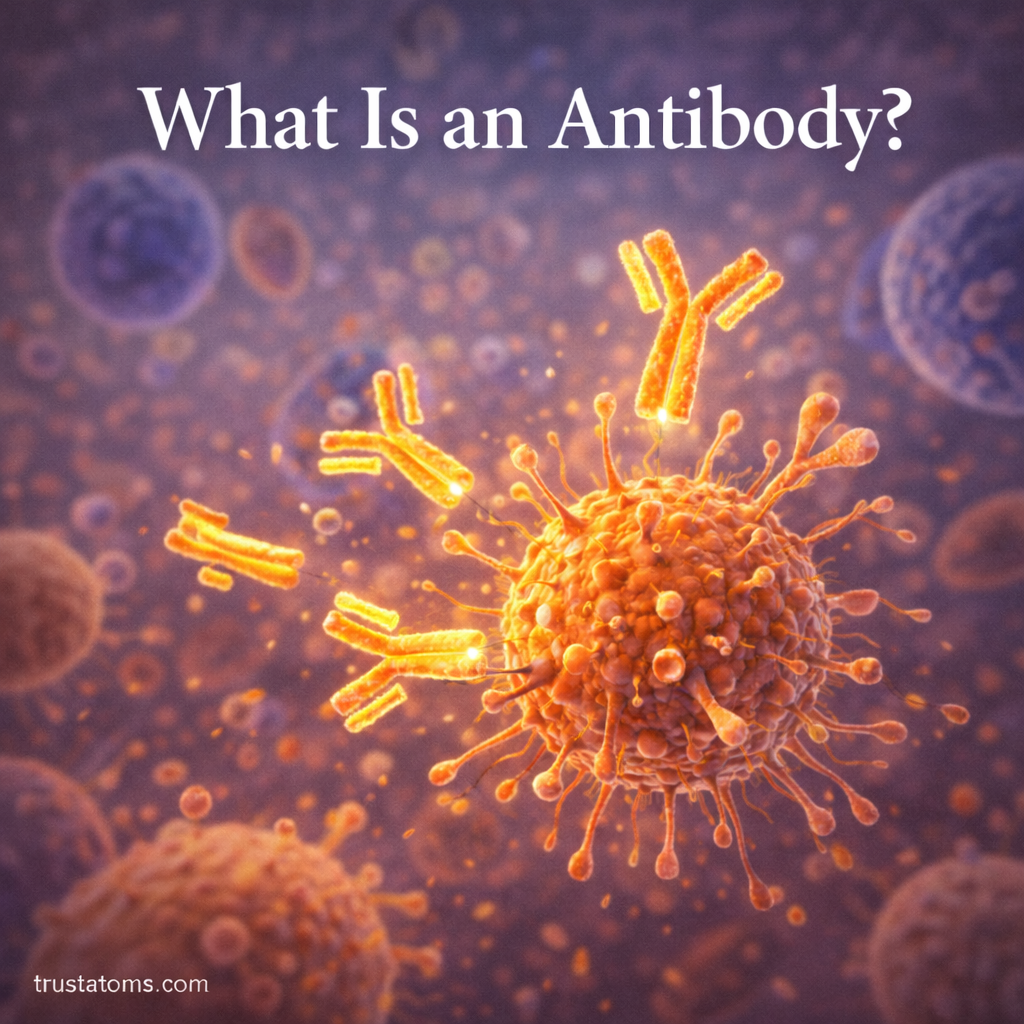
Antibodies are specialized proteins produced by the immune system to help identify and neutralize harmful pathogens such as bacteria, viruses, and toxins. They play a crucial role in the body’s defense system by recognizing foreign substances and helping immune cells eliminate them.
Also known as immunoglobulins, antibodies are an essential component of adaptive immunity. Once the immune system produces antibodies against a specific pathogen, the body can often respond more quickly if the same pathogen appears again.
Understanding antibodies helps explain how the immune system fights infections, how vaccines work, and how medical tests detect diseases.
What Are Antibodies?
An antibody is a protein produced by B lymphocytes (B cells) that binds specifically to foreign molecules called antigens.
Antigens are substances that the immune system recognizes as harmful or unfamiliar. These may include:
- Viruses
- Bacteria
- Parasites
- Fungal cells
- Toxins
- Certain chemicals or allergens
Each antibody is designed to recognize a particular antigen with high specificity.
The Structure of an Antibody
Antibodies have a distinctive Y-shaped structure that allows them to bind to antigens effectively.
The structure consists of several key parts.
Heavy Chains
Two long protein chains form the backbone of the antibody.
These chains help determine the antibody’s overall class and function.
Light Chains
Two shorter protein chains attach to the heavy chains and contribute to antigen binding.
Antigen-Binding Sites
At the tips of the Y-shaped structure are regions called antigen-binding sites.
These sites match specific shapes on antigens, allowing antibodies to attach precisely to pathogens.
This highly specific interaction is often compared to a lock-and-key mechanism.
How Antibodies Work
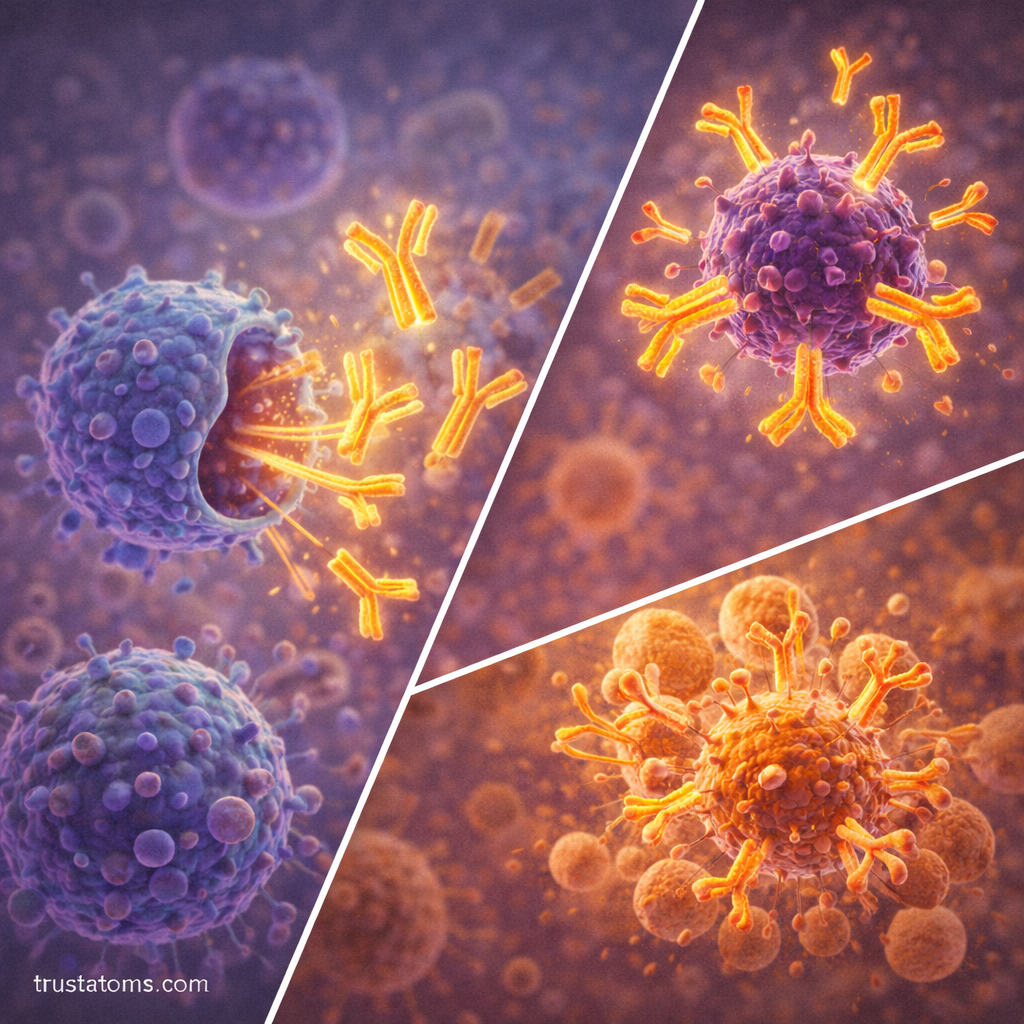
Antibodies help eliminate pathogens through several biological mechanisms.
Neutralization
Antibodies can block pathogens from entering cells.
For example:
- Antibodies may attach to viruses and prevent them from infecting host cells.
Opsonization
Antibodies can mark pathogens for destruction.
When antibodies coat a microbe, immune cells such as macrophages can recognize and destroy the marked pathogen more easily.
Complement Activation
Antibodies can activate the complement system, a group of proteins that helps destroy pathogens.
The complement system can:
- Break open bacterial cells
- Enhance inflammation
- Recruit immune cells to infection sites
Agglutination
Antibodies can cause pathogens to clump together.
This clustering makes it easier for immune cells to identify and eliminate invading microbes.
Types of Antibodies
The human immune system produces several classes of antibodies, each with specific roles.
IgG (Immunoglobulin G)
IgG is the most common antibody found in blood and body fluids.
It is important for:
- Long-term immunity
- Protection against bacteria and viruses
- Crossing the placenta to protect developing babies
IgM (Immunoglobulin M)
IgM is usually the first antibody produced during an infection.
It plays a key role in the early stages of immune response.
IgA (Immunoglobulin A)
IgA protects mucosal surfaces such as:
- The respiratory tract
- The digestive system
- Saliva and tears
It helps prevent pathogens from entering the body.
IgE (Immunoglobulin E)
IgE is associated with allergic reactions and defense against parasitic infections.
It triggers immune responses involving histamine release.
IgD (Immunoglobulin D)
IgD is less common and mainly functions in the activation of B cells.
How Antibodies Are Produced
Antibody production begins when the immune system detects an antigen.
The process typically follows these steps:
- A pathogen enters the body.
- Immune cells recognize the foreign antigen.
- B cells become activated.
- Activated B cells differentiate into plasma cells.
- Plasma cells produce large quantities of antibodies.
Some activated B cells become memory B cells, which remain in the body long after the infection is cleared.
These memory cells enable the immune system to respond faster during future infections.
Antibodies and Immunological Memory
One of the most important features of antibodies is their role in immunological memory.
After an infection:
- Memory B cells remain in the body
- These cells recognize the same antigen if it appears again
- Antibody production occurs much faster during future exposures
This memory-based immunity explains why many diseases occur only once or rarely recur.
How Vaccines Use Antibodies
Vaccines stimulate antibody production without causing the actual disease.
They introduce harmless components of pathogens into the body, allowing the immune system to prepare for future infections.
Vaccines help the immune system:
- Produce antibodies against the pathogen
- Generate memory B cells
- Respond quickly if exposed to the real pathogen
This process protects individuals and helps prevent the spread of infectious diseases.
Antibodies in Medical Testing
Antibodies are also widely used in medical diagnostics.
Many laboratory tests detect antibodies to determine whether a person has been exposed to a specific pathogen.
Examples include:
- Blood tests for viral infections
- Allergy testing
- Diagnostic tests for autoimmune diseases
Antibody-based tests can identify both current and past infections.
Antibody Therapies in Medicine
Scientists have developed treatments that use antibodies to fight disease.
These therapies are known as monoclonal antibody treatments.
Monoclonal antibodies are laboratory-produced antibodies designed to target specific molecules.
They are used to treat conditions such as:
- Certain cancers
- Autoimmune diseases
- Viral infections
- Inflammatory disorders
Antibody therapies represent an important area of modern medicine.
Factors That Influence Antibody Production
Several factors affect how effectively the body produces antibodies.
These include:
- Age
- Nutrition
- Genetic factors
- Overall immune health
- Previous exposure to pathogens
A strong and balanced immune system supports effective antibody responses.
Final Thoughts
Antibodies are one of the most important tools the immune system uses to defend the body against infection. By recognizing and binding to specific antigens, antibodies help neutralize pathogens, activate immune responses, and mark harmful microbes for destruction.
Their ability to provide targeted defense and long-term immune memory makes antibodies central to how the body prevents and fights disease.
Research on antibodies continues to advance medicine, improving vaccines, diagnostic tests, and innovative therapies that help protect human health.