Pathogen transmission refers to the ways in which disease-causing microorganisms spread from one host to another. These microorganisms—called pathogens—include viruses, bacteria, fungi, and parasites that can cause infections in humans, animals, and plants.
Understanding how pathogens spread is a fundamental concept in biology, epidemiology, and public health. By identifying transmission routes, scientists and healthcare professionals can develop strategies to prevent disease outbreaks and protect populations.
What Is a Pathogen?
A pathogen is any microorganism capable of causing disease in a host organism. Pathogens invade the body, multiply, and disrupt normal biological functions.
Common types of pathogens include:
- Viruses – extremely small infectious particles that require host cells to reproduce
- Bacteria – single-celled organisms that can multiply independently
- Fungi – organisms such as molds or yeasts that can infect tissues
- Parasites – organisms that live in or on a host and obtain nutrients from it
Not all microorganisms are harmful, but pathogenic species have evolved mechanisms that allow them to infect hosts and spread.
What Is Pathogen Transmission?
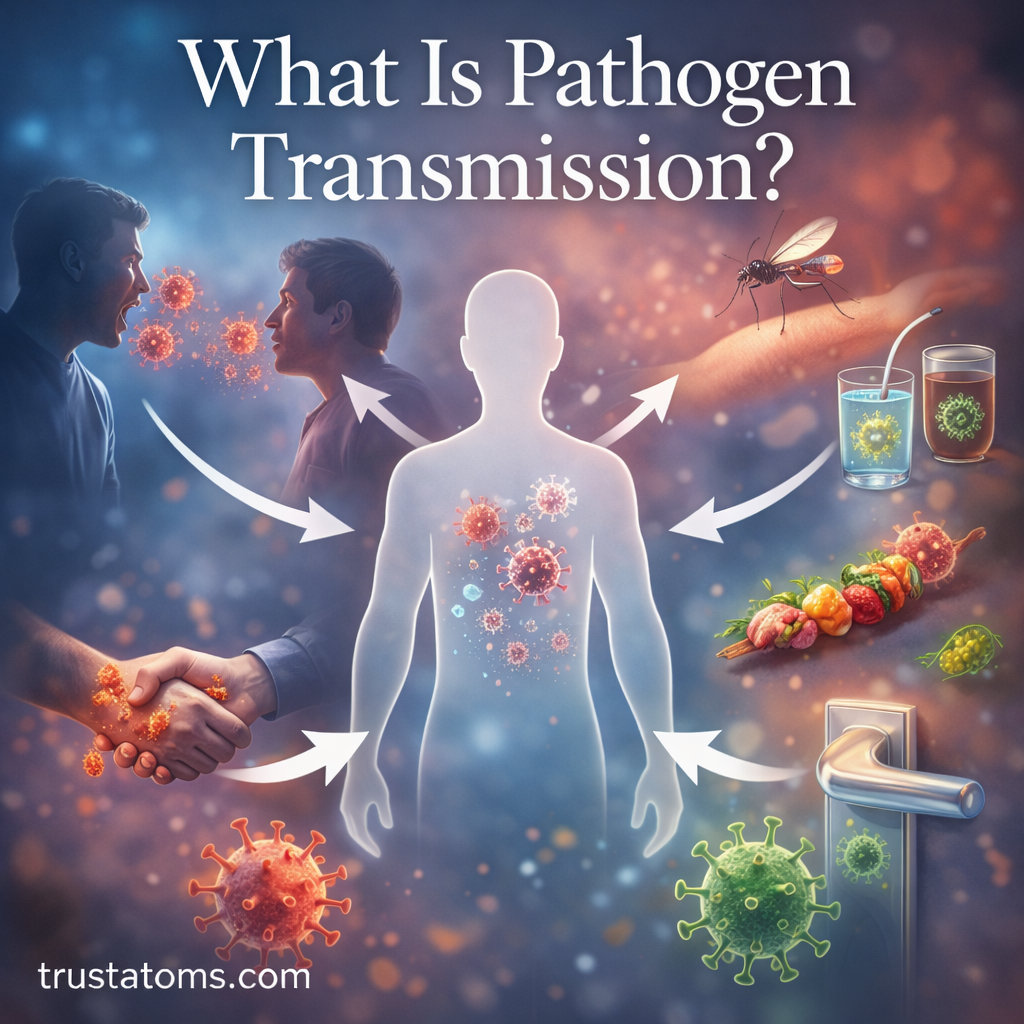
Pathogen transmission is the process by which infectious agents move from one host to another, allowing diseases to spread through populations.
Transmission occurs when a pathogen leaves one infected host and successfully enters another host where it can reproduce.
For transmission to happen, several steps are involved:
- The pathogen must exit the infected host.
- It must survive in the environment or within a vector.
- It must reach a new host.
- It must enter the new host’s body and begin infection.
If any of these steps fail, transmission cannot occur.
Major Types of Pathogen Transmission
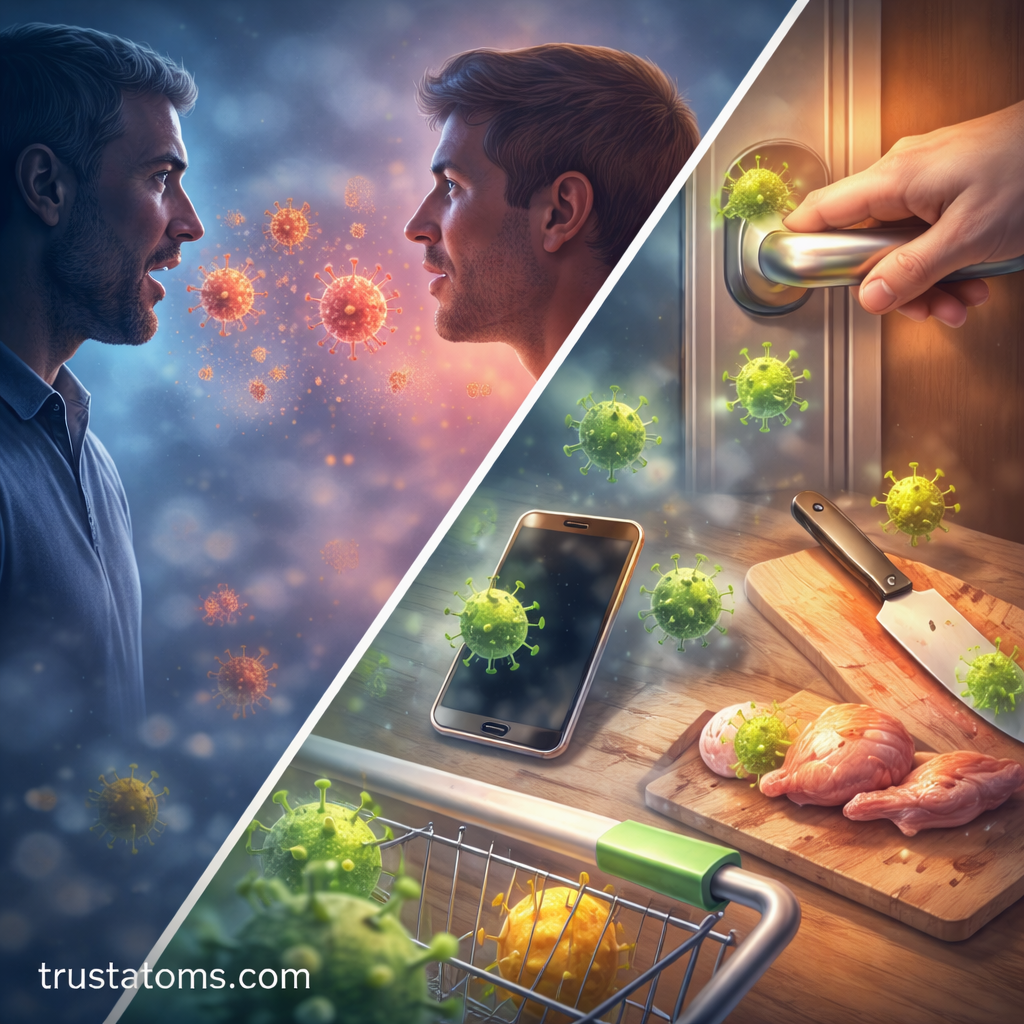
Biologists categorize pathogen transmission into several main types depending on how the microorganism spreads.
Direct Transmission
Direct transmission occurs when pathogens spread through immediate physical contact between individuals.
Examples include:
- Touching infected skin or wounds
- Kissing or close contact
- Sexual transmission
- Exposure to bodily fluids
Diseases such as herpes or certain bacterial infections often spread through direct contact.
Indirect Transmission
Indirect transmission occurs when pathogens spread through intermediate objects or environments rather than direct contact.
Common sources include:
- Contaminated surfaces (called fomites)
- Shared objects like utensils or towels
- Airborne particles
- Contaminated water or food
Indirect transmission allows pathogens to spread even when individuals never directly interact.
Airborne Transmission
Some pathogens travel through the air in tiny droplets or aerosol particles released when people cough, sneeze, talk, or breathe.
These particles can remain suspended in the air and infect others who inhale them.
Examples of airborne diseases include:
- Influenza
- Measles
- Tuberculosis
Airborne transmission can allow diseases to spread rapidly, especially in crowded indoor environments.
Vector-Borne Transmission
Vector-borne transmission occurs when another organism—called a vector—carries pathogens from one host to another.
Vectors are typically insects or animals.
Common examples include:
- Mosquitoes transmitting malaria
- Ticks spreading Lyme disease
- Fleas carrying plague bacteria
In these cases, the pathogen often multiplies inside the vector before infecting a new host.
Foodborne and Waterborne Transmission
Pathogens can also spread through contaminated food or water.
This type of transmission occurs when pathogens enter the digestive system after being consumed.
Common sources include:
- Undercooked meat
- Contaminated produce
- Polluted drinking water
- Improper food handling
Diseases such as salmonella and cholera often spread through foodborne or waterborne pathways.
The Chain of Infection
Pathogen transmission is often explained using the chain of infection, a biological model that describes how diseases spread.
The chain consists of six main components:
- Infectious agent – the pathogen causing disease
- Reservoir – the environment or organism where the pathogen lives
- Portal of exit – how the pathogen leaves the host
- Mode of transmission – how the pathogen spreads
- Portal of entry – how the pathogen enters a new host
- Susceptible host – an organism vulnerable to infection
Breaking any link in this chain can stop the spread of disease.
Factors That Influence Transmission
Several biological and environmental factors affect how easily pathogens spread.
Important factors include:
- Population density – crowded areas increase transmission opportunities
- Hygiene and sanitation – poor sanitation allows pathogens to survive and spread
- Environmental conditions – temperature and humidity can influence pathogen survival
- Immune system strength – individuals with weaker immune systems are more susceptible
- Vaccination levels – immunization reduces the number of vulnerable hosts
These factors help explain why some diseases spread quickly while others remain localized.
Preventing Pathogen Transmission
Public health strategies aim to interrupt transmission pathways and reduce disease spread.
Common prevention measures include:
- Regular handwashing
- Vaccination programs
- Safe food handling
- Clean water systems
- Proper sanitation and waste management
- Isolation of infected individuals during outbreaks
By targeting transmission routes, communities can significantly reduce infection rates.
Why Understanding Transmission Matters
Studying pathogen transmission helps scientists and public health experts predict, monitor, and control infectious diseases.
Understanding transmission patterns allows researchers to:
- Track outbreaks
- Develop vaccines and treatments
- Improve infection control practices
- Protect vulnerable populations
- Prevent global pandemics
Advances in microbiology, epidemiology, and biotechnology continue to improve our ability to detect and limit pathogen transmission.
Final Thoughts
Pathogen transmission is the biological process that allows infectious diseases to spread between hosts. By moving through direct contact, contaminated environments, airborne particles, vectors, or food and water sources, pathogens can rapidly affect populations.
Understanding these transmission pathways is essential for controlling outbreaks, improving healthcare responses, and protecting public health worldwide.