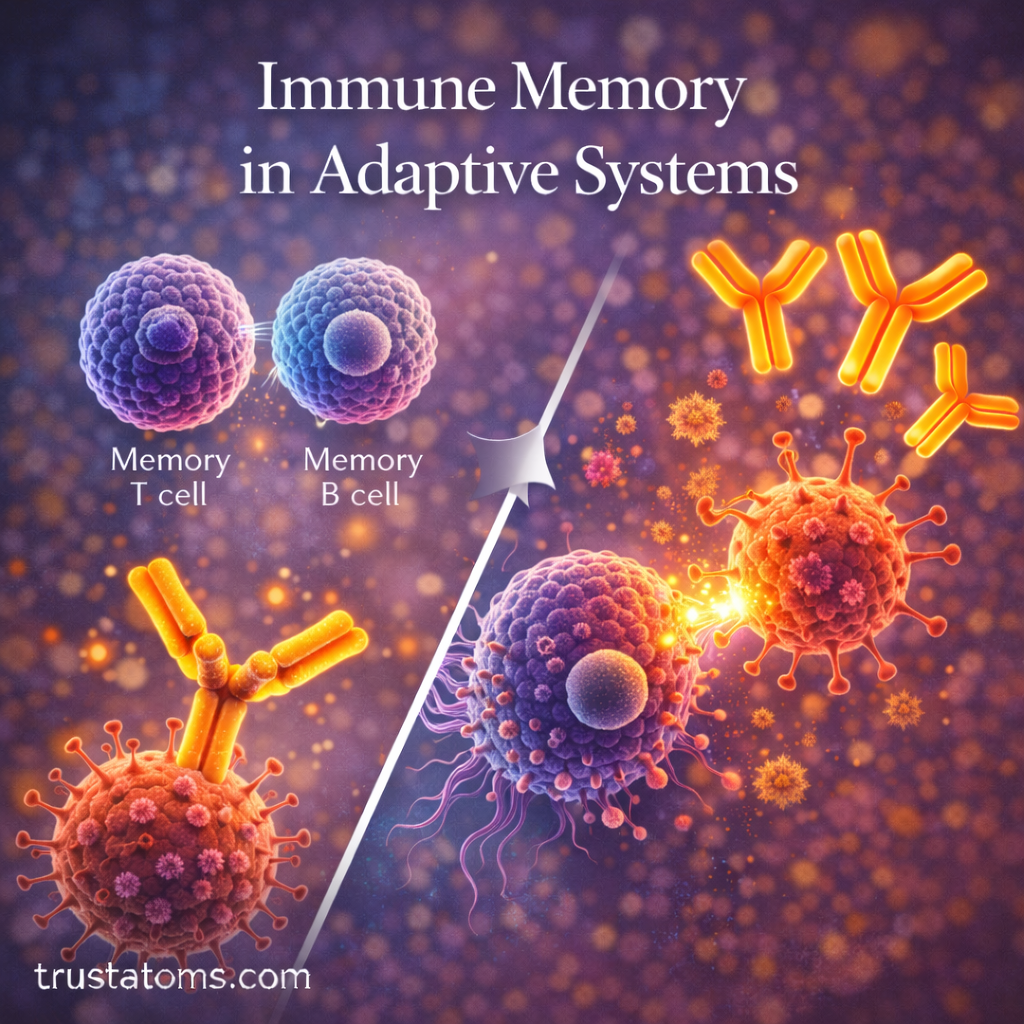
Immune memory is one of the most remarkable features of the adaptive immune system. It allows organisms—especially vertebrates—to remember previously encountered pathogens and respond to them more quickly and effectively in the future.
This biological memory forms the basis of long-term immunity and is the reason vaccines can provide lasting protection against many infectious diseases. By retaining specialized immune cells that recognize specific pathogens, the adaptive immune system can prevent reinfection or significantly reduce disease severity.
Understanding immune memory is essential in immunology, medicine, and vaccine development.
What Is Immune Memory?
Immune memory refers to the ability of the adaptive immune system to remember a pathogen after the first exposure.
When the body encounters a pathogen for the first time, the immune response may take several days to fully activate. During this process, the immune system produces specialized cells that target the invading microorganism.
After the infection is cleared, some of these cells remain in the body as memory cells, allowing for a much faster response if the same pathogen returns.
Key features of immune memory include:
- Long-term recognition of specific pathogens
- Faster immune responses during repeated infections
- Stronger antibody production upon re-exposure
- Reduced severity or prevention of disease
This biological mechanism provides long-lasting protection against previously encountered microbes.
The Primary Immune Response
The first time the immune system encounters a pathogen, it generates what is known as the primary immune response.
During this stage:
- The pathogen enters the body.
- Antigens from the pathogen are detected by immune cells.
- B cells and T cells become activated.
- Antibodies and specialized immune responses develop.
This initial response is slower because the immune system must first identify the pathogen and develop targeted defenses.
The primary immune response typically involves:
- Gradual antibody production
- Activation of immune signaling pathways
- Formation of memory cells
Once the infection is controlled, memory cells remain in the body.
The Secondary Immune Response
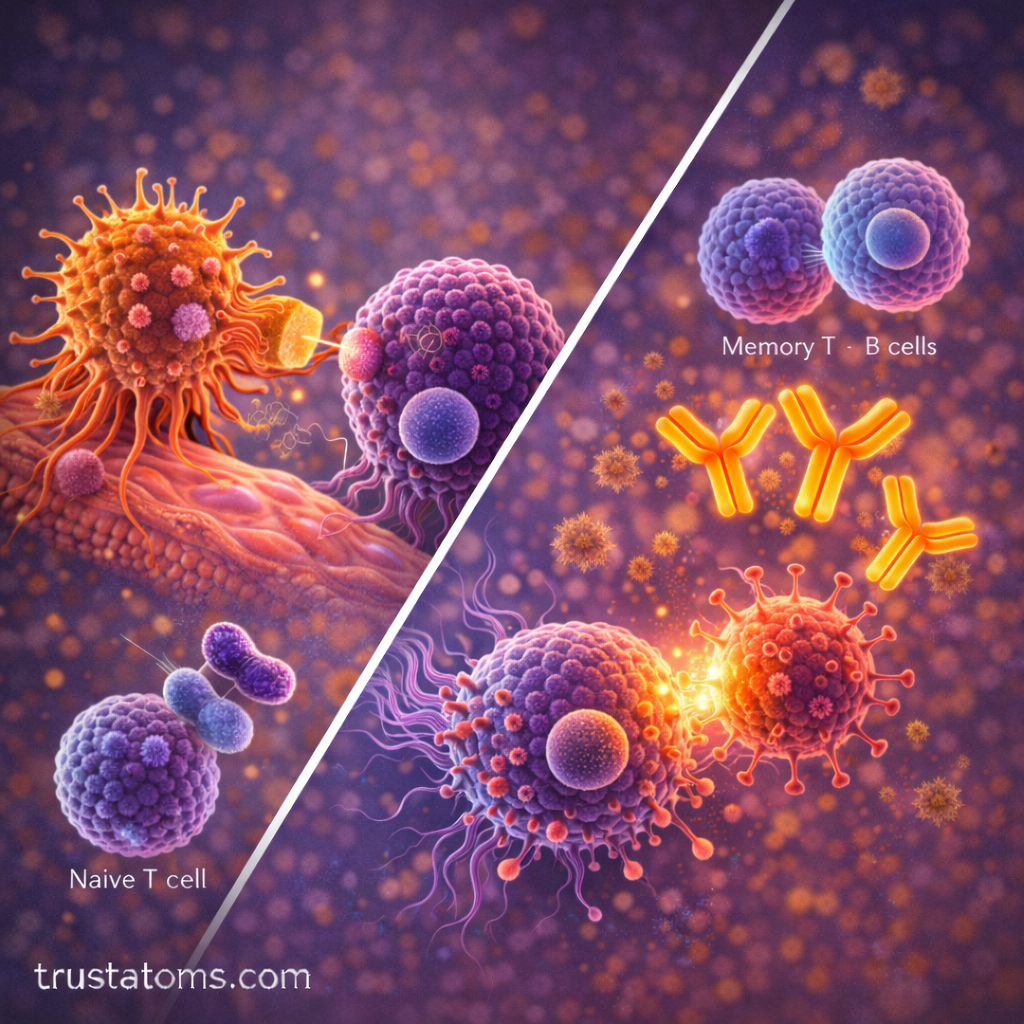
If the same pathogen enters the body again, the immune system triggers a secondary immune response.
This response is much faster and stronger because the immune system already recognizes the pathogen.
Characteristics of the secondary response include:
- Rapid activation of memory cells
- Faster antibody production
- Higher antibody concentrations
- Improved pathogen elimination
In many cases, the secondary response eliminates the pathogen before noticeable symptoms appear.
Types of Immune Memory Cells
Two major types of immune memory cells contribute to long-term protection.
Memory B Cells
Memory B cells are responsible for recognizing previously encountered pathogens and producing antibodies.
When a familiar antigen is detected, these cells rapidly transform into plasma cells, which produce large amounts of antibodies.
These antibodies help by:
- Neutralizing pathogens
- Marking microbes for destruction
- Blocking viral entry into cells
Memory B cells can remain in the body for many years.
Memory T Cells
Memory T cells help coordinate immune responses against pathogens.
There are different types of memory T cells that provide protection:
- Helper memory T cells support immune coordination
- Cytotoxic memory T cells quickly destroy infected cells
These cells allow the immune system to rapidly detect infected tissues and eliminate pathogens.
How Immune Memory Develops
Immune memory develops during the adaptive immune response following infection or vaccination.
Several biological processes contribute to the formation of memory cells.
Key steps include:
- Pathogen recognition by immune cells
- Activation and expansion of B and T lymphocytes
- Elimination of the infection
- Survival of a subset of lymphocytes as memory cells
These long-lived cells remain in the bloodstream, lymph nodes, or tissues, ready to respond to future infections.
Immune Memory and Vaccination
Vaccines rely on the principle of immune memory to protect individuals from disease.
Instead of causing a full infection, vaccines introduce harmless components of a pathogen, such as:
- Weakened microorganisms
- Inactivated pathogens
- Specific proteins from the pathogen
- Genetic instructions that produce antigen fragments
This exposure stimulates the immune system to create memory cells without causing illness.
As a result, when the real pathogen enters the body later, the immune system can respond rapidly and prevent serious disease.
Vaccination has been one of the most successful public health tools for controlling infectious diseases.
Duration of Immune Memory
The duration of immune memory varies depending on the pathogen and the immune response.
Some infections produce lifelong immunity, while others require periodic booster vaccinations.
Factors that influence immune memory include:
- The type of pathogen
- Strength of the immune response
- Individual health and genetics
- Age and immune system function
- Vaccine design and effectiveness
Scientists continue studying immune memory to improve vaccine durability and disease prevention strategies.
Why Immune Memory Is Important
Immune memory provides several critical advantages for organisms with adaptive immune systems.
These benefits include:
- Faster immune responses to recurring infections
- Long-term protection against pathogens
- Reduced disease severity
- Improved survival rates during outbreaks
- Enhanced effectiveness of vaccination programs
Without immune memory, the body would have to relearn how to fight each infection every time it encountered a pathogen.
Final Thoughts
Immune memory is a defining feature of adaptive immunity that allows the body to recognize and respond to pathogens more effectively after initial exposure. Through the formation of memory B cells and memory T cells, the immune system can provide long-term protection against disease.
This remarkable biological capability not only protects individuals from reinfection but also forms the foundation for modern vaccination strategies. By understanding immune memory, scientists continue to develop better vaccines and treatments to combat infectious diseases.