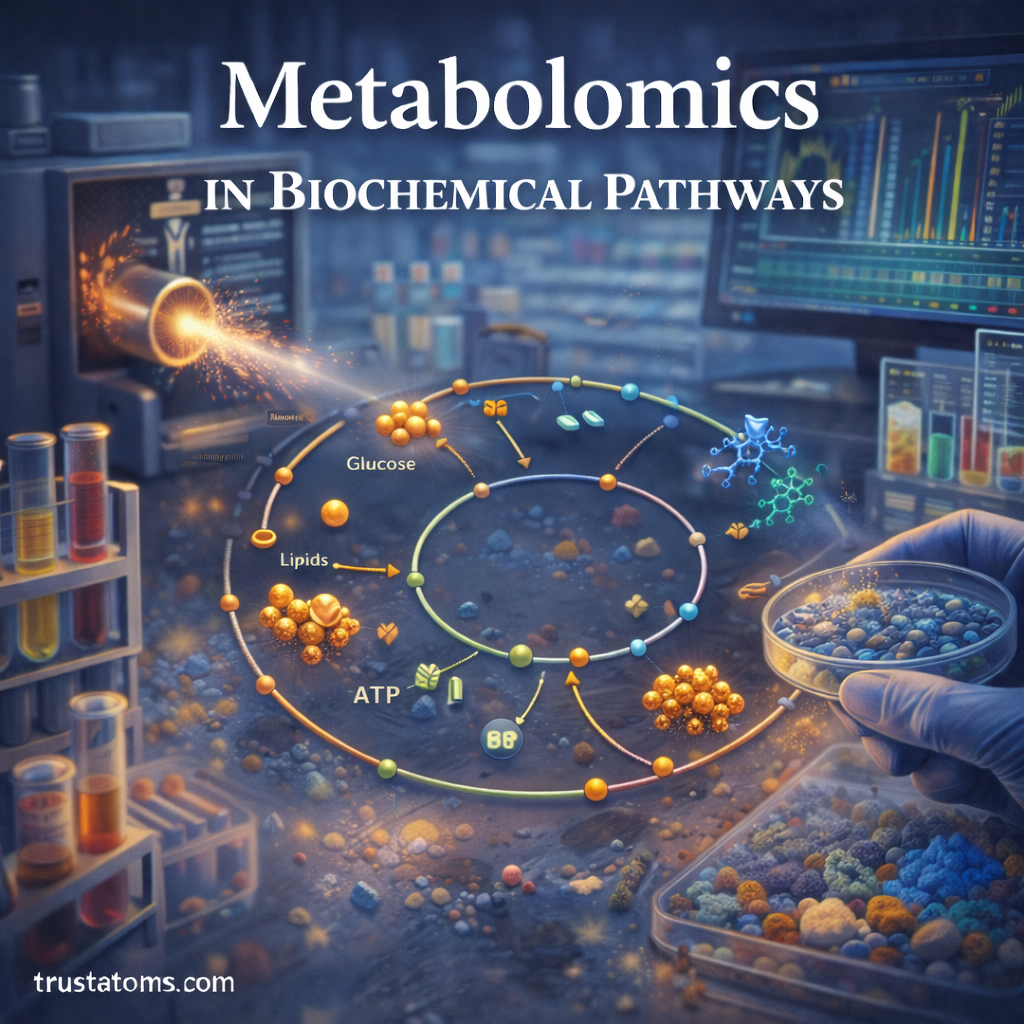
Metabolomics is the scientific study of small molecules known as metabolites that are produced during cellular metabolism. These molecules play a key role in biochemical pathways that support life, including energy production, nutrient processing, and cellular communication.
In molecular biology and biochemistry, metabolomics helps scientists understand how metabolic processes function inside cells. By analyzing metabolites, researchers can observe how biological systems respond to changes such as disease, environmental stress, or genetic variation.
Because metabolites represent the final products of many cellular processes, metabolomics provides a direct snapshot of cellular activity and biochemical pathways.
What Is Metabolomics?
Metabolomics is the large-scale study of metabolites within cells, tissues, or organisms.
Metabolites are small molecules involved in metabolic reactions, including:
- Sugars
- Amino acids
- Lipids (fats)
- Organic acids
- Nucleotides
- Vitamins and cofactors
These molecules participate in chemical reactions that sustain life.
By measuring metabolite levels, scientists can gain insight into how cells produce energy, synthesize molecules, and regulate biochemical processes.
Understanding Biochemical Pathways
Biochemical pathways are sequences of chemical reactions that occur within living cells.
Each step in a pathway is usually controlled by enzymes that convert molecules from one form to another.
Common metabolic pathways include:
- Glycolysis (energy production from glucose)
- The citric acid cycle (cellular respiration)
- Lipid metabolism
- Amino acid synthesis
- Nucleotide metabolism
Metabolomics allows researchers to analyze how these pathways operate and how they change under different conditions.
Why Metabolomics Is Important in Biology
Metabolomics plays an important role in understanding biological systems because metabolites reflect real-time cellular activity.
Key reasons metabolomics is valuable include:
- Monitoring metabolic changes in disease
- Understanding cellular responses to environmental stress
- Identifying biomarkers for medical diagnostics
- Studying drug metabolism
- Investigating how genetic changes affect metabolism
Because metabolites are closely linked to biochemical reactions, metabolomics provides insight that genomics and proteomics alone cannot fully explain.
How Metabolomics Studies Work
Metabolomics research involves identifying and measuring metabolites in biological samples.
Most studies follow several common steps.
1. Sample Collection
Researchers collect biological samples containing metabolites.
Common sample types include:
- Blood or plasma
- Urine
- Tissue samples
- Cell cultures
- Plant tissues
These samples contain thousands of different metabolites.
2. Metabolite Extraction
Scientists isolate metabolites from the sample using chemical extraction techniques.
The goal is to separate metabolites from proteins, DNA, and other cellular components.
3. Analytical Measurement
Advanced laboratory instruments analyze the metabolites.
The most commonly used technologies include:
- Mass spectrometry (MS)
- Nuclear magnetic resonance (NMR) spectroscopy
- Gas chromatography (GC)
- Liquid chromatography (LC)
These tools allow researchers to identify and measure metabolite concentrations.
4. Data Processing and Analysis
Metabolomics generates large datasets that require computational analysis.
Researchers use bioinformatics tools to:
- Identify metabolic patterns
- Compare metabolite levels between samples
- Map metabolites to biochemical pathways
These analyses help scientists understand how metabolism changes under different conditions.
Major Technologies Used in Metabolomics
Several analytical technologies are essential for metabolomics research.
Mass Spectrometry
Mass spectrometry measures the mass of molecules to identify metabolites.
It is widely used because it can detect very small quantities of metabolites with high accuracy.
Nuclear Magnetic Resonance (NMR) Spectroscopy
NMR spectroscopy analyzes molecular structures based on how atoms interact with magnetic fields.
This technique allows scientists to identify metabolites without destroying the sample.
Chromatography Techniques
Chromatography separates metabolites before analysis.
Common chromatography methods include:
- Gas chromatography (GC)
- Liquid chromatography (LC)
These methods improve the accuracy of metabolite identification.
Applications of Metabolomics in Biochemical Research

Metabolomics has many important applications in biology, medicine, and biotechnology.
Studying Metabolic Pathways
Metabolomics allows scientists to observe how metabolites move through biochemical pathways.
Researchers can:
- Identify metabolic bottlenecks
- Understand enzyme activity
- Detect pathway disruptions
This information helps explain how cells produce energy and synthesize essential molecules.
Disease Research and Biomarker Discovery
Metabolic changes often occur when diseases develop.
Metabolomics helps researchers identify biomarkers, which are measurable biological indicators of disease.
Examples include metabolic signatures associated with:
- Cancer
- Diabetes
- Cardiovascular disease
- Neurodegenerative disorders
These biomarkers can help doctors detect diseases earlier.
Drug Development and Pharmacology
Metabolomics is also used in pharmaceutical research.
Scientists study how drugs interact with metabolic pathways to understand:
- Drug effectiveness
- Potential side effects
- Drug metabolism in the body
This information helps improve drug safety and therapeutic outcomes.
Nutrition and Health Studies
Metabolomics allows researchers to study how diet influences metabolism.
Scientists analyze metabolites to understand how the body processes nutrients such as:
- Carbohydrates
- Fats
- Proteins
- Vitamins
This research helps develop better nutritional recommendations and dietary therapies.
Agricultural and Environmental Research
Metabolomics is also applied in plant biology and environmental science.
Researchers use metabolomics to:
- Study plant stress responses
- Improve crop quality and yield
- Understand plant metabolism
- Investigate microbial ecosystems
These insights help support sustainable agriculture and environmental health.
Advantages of Metabolomics
Metabolomics offers several advantages for studying biological systems.
Key benefits include:
- Direct measurement of metabolic activity
- Ability to study complex biochemical pathways
- Identification of disease-related metabolic changes
- Integration with genomics and proteomics data
Together, these advantages provide a more complete picture of cellular biology.
Challenges in Metabolomics
Despite its advantages, metabolomics research faces several challenges.
Some difficulties include:
- Large numbers of metabolites in biological systems
- Variability between biological samples
- Complex data analysis
- High costs of advanced instrumentation
Researchers continue to develop improved technologies and computational methods to address these challenges.
The Future of Metabolomics
Metabolomics is an expanding field with growing importance in biological research.
Future developments may include:
- Improved metabolite detection technologies
- Integration with systems biology approaches
- More personalized healthcare based on metabolic profiles
- Better understanding of metabolic diseases
As technologies improve, metabolomics will continue to reveal how biochemical pathways shape cellular function and human health.
Final Thoughts
Metabolomics provides powerful insight into the biochemical pathways that drive life at the cellular level. By studying the small molecules involved in metabolism, scientists can observe how cells produce energy, respond to environmental changes, and develop diseases.
Together with genomics and proteomics, metabolomics contributes to a deeper understanding of biological systems and supports advancements in medicine, biotechnology, and environmental science.