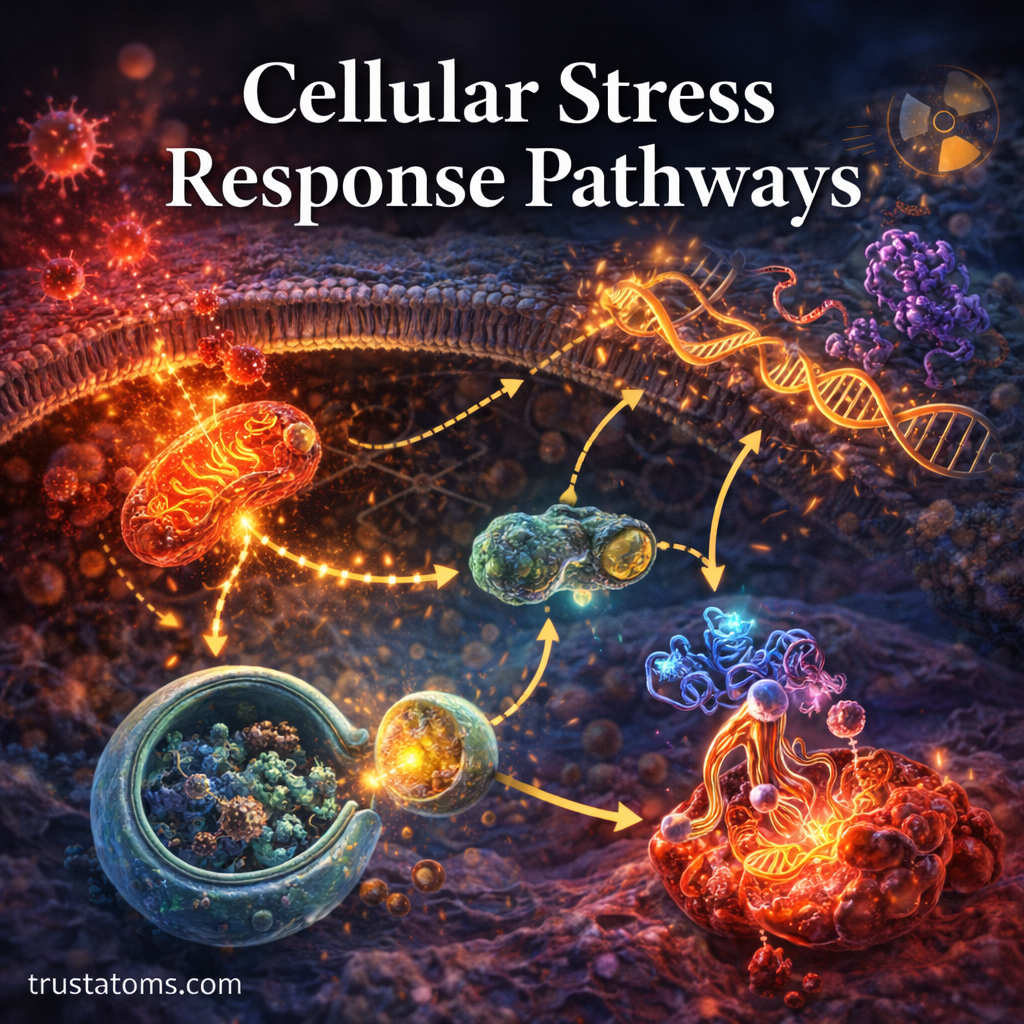
Cells constantly face challenges from their environment. Changes in temperature, nutrient availability, toxins, radiation, and infections can disrupt normal cellular processes. To survive these conditions, cells rely on specialized defense mechanisms known as cellular stress response pathways.
These pathways detect damage or unfavorable conditions and activate protective responses. They help repair cellular components, restore balance, or initiate programmed cell death if the damage is too severe.
Understanding cellular stress response pathways is important for studying aging, disease development, immune defense, and cellular adaptation.
What Are Cellular Stress Response Pathways?
Cellular stress response pathways are molecular systems that detect and respond to harmful conditions affecting a cell.
When stress is detected, signaling pathways activate genes and proteins that help the cell cope with damage.
These responses may include:
- Repairing damaged DNA or proteins
- Stabilizing cellular structures
- Removing damaged molecules
- Adjusting metabolism
- Initiating programmed cell death
The goal of these responses is to maintain cellular homeostasis, which is the stable internal environment necessary for cell survival.
Common Sources of Cellular Stress
Cells can encounter many types of stress that disrupt normal biological functions.
Environmental Stress
External environmental factors can damage cellular structures.
Examples include:
- Heat shock or extreme temperatures
- Ultraviolet (UV) radiation
- Toxic chemicals
- Oxidative stress from pollutants
These stresses often damage DNA, proteins, or cellular membranes.
Metabolic Stress
Cells must maintain a balance of energy and nutrients to function properly.
Metabolic stress occurs when cells experience:
- Nutrient shortages
- Low oxygen levels (hypoxia)
- Excess reactive oxygen species (ROS)
- Imbalanced metabolic reactions
These conditions interfere with normal cellular metabolism.
Protein Folding Stress
Proteins must fold into specific shapes to function correctly.
However, cellular stress can cause proteins to misfold or accumulate.
This type of stress occurs in the endoplasmic reticulum, a cellular structure responsible for protein processing.
If misfolded proteins build up, the cell activates specialized stress responses to restore normal function.
Major Cellular Stress Response Pathways
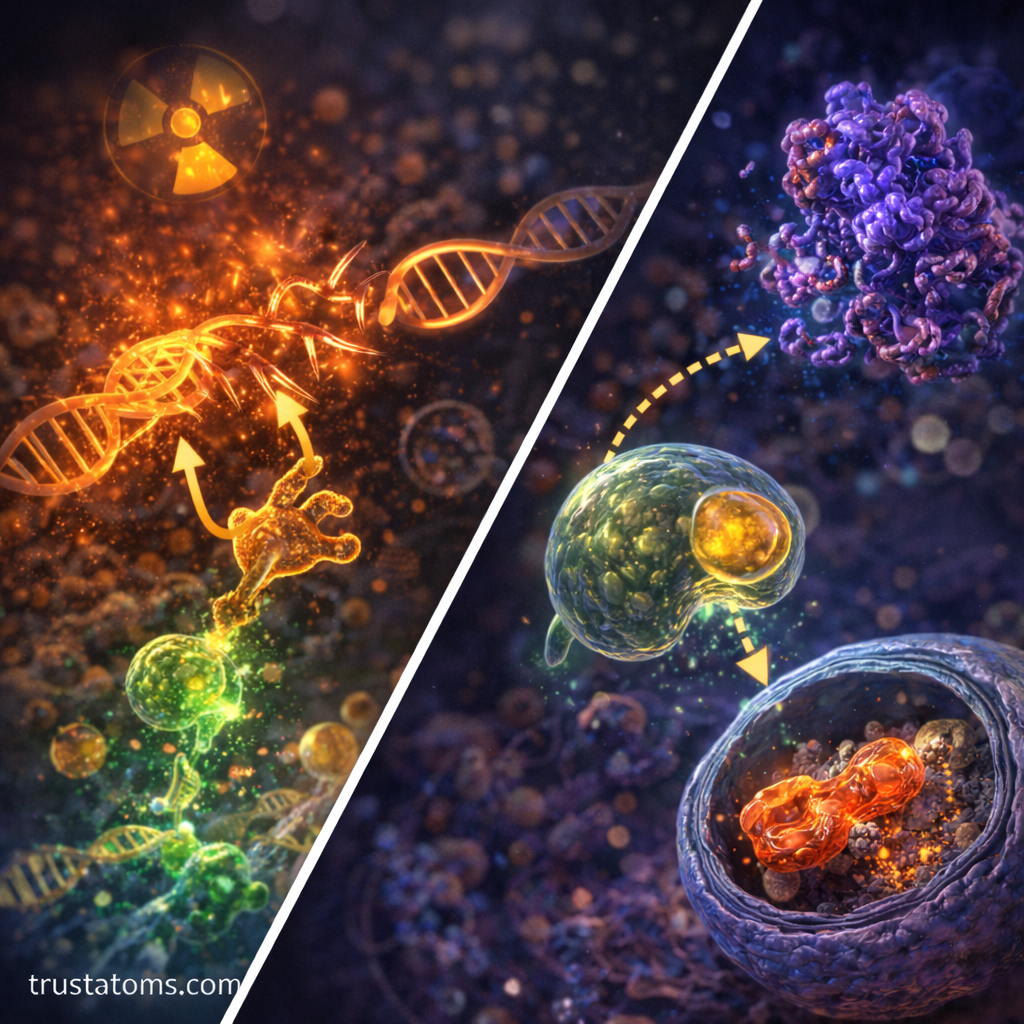
Cells use several well-studied pathways to detect and respond to stress.
Heat Shock Response
The heat shock response protects cells from damage caused by high temperatures and other stresses that affect protein stability.
When proteins begin to unfold due to stress, the cell produces heat shock proteins (HSPs).
Heat shock proteins act as molecular chaperones that:
- Assist in protein folding
- Prevent protein aggregation
- Help refold damaged proteins
This response helps maintain protein stability during stressful conditions.
Oxidative Stress Response
Oxidative stress occurs when cells produce too many reactive oxygen species (ROS).
ROS are chemically reactive molecules that can damage:
- DNA
- Proteins
- Lipids
Cells activate antioxidant defense systems to neutralize these molecules.
Key antioxidant mechanisms include:
- Enzymes that break down ROS
- Protective proteins that stabilize molecules
- Metabolic adjustments that reduce ROS production
These responses help protect cells from oxidative damage.
DNA Damage Response
DNA damage can occur from radiation, chemical exposure, or errors during DNA replication.
Cells respond through the DNA damage response (DDR) pathway.
This pathway activates several protective mechanisms:
- Detect damaged DNA.
- Pause the cell cycle to prevent further errors.
- Activate DNA repair systems.
- Resume normal cell division after repair.
If the damage cannot be repaired, the pathway may trigger programmed cell death (apoptosis) to prevent the spread of damaged genetic material.
Unfolded Protein Response
The unfolded protein response (UPR) occurs when misfolded proteins accumulate in the endoplasmic reticulum.
This response attempts to restore protein balance by:
- Increasing production of protein-folding enzymes
- Reducing overall protein synthesis
- Removing misfolded proteins
If these corrective actions fail, the cell may activate apoptosis to prevent further damage.
Autophagy and Cellular Recycling
Cells also respond to stress through a process called autophagy, which means “self-eating.”
Autophagy helps cells survive by recycling damaged components.
During this process:
- Damaged proteins and organelles are enclosed in vesicles.
- These structures fuse with lysosomes.
- Cellular waste is broken down and recycled.
Autophagy helps maintain cellular health during nutrient shortages or other stress conditions.
Cellular Signaling in Stress Responses
Stress responses rely heavily on cellular signaling pathways that detect problems and coordinate responses.
Key signaling components include:
- Protein kinases that activate signaling cascades
- Transcription factors that regulate stress-response genes
- Secondary messengers that amplify signals
These networks allow cells to rapidly detect damage and activate protective mechanisms.
Cellular Stress and Disease
When stress responses fail or become dysregulated, disease can occur.
Neurodegenerative Diseases
Protein misfolding and oxidative stress contribute to disorders such as:
- Alzheimer’s disease
- Parkinson’s disease
- Huntington’s disease
These diseases involve accumulation of damaged proteins that cells cannot properly remove.
Cancer
Cancer cells often manipulate stress response pathways to survive conditions that would normally kill cells.
For example, tumor cells may:
- Increase antioxidant defenses
- Activate stress-tolerant metabolic pathways
- Avoid apoptosis
Understanding these adaptations helps researchers develop new cancer treatments.
Aging
Over time, cells accumulate damage from environmental stress and metabolic processes.
Declining stress response efficiency contributes to aging by allowing damage to accumulate in cells and tissues.
Research into cellular stress responses is helping scientists explore ways to slow age-related decline.
Methods Used to Study Stress Pathways
Scientists use many techniques to investigate cellular stress responses.
Common research approaches include:
- Gene expression analysis to identify stress-activated genes
- Protein studies to examine stress-response proteins
- Microscopy to observe cellular changes during stress
- Biochemical assays to measure oxidative damage or protein folding
These tools help researchers understand how cells detect and respond to environmental challenges.
Future Directions in Stress Biology
Research into cellular stress responses continues to expand with advances in technology.
Important areas of ongoing study include:
- Single-cell analysis of stress responses
- AI-assisted modeling of cellular signaling networks
- Therapeutic strategies targeting stress pathways
- Understanding stress responses in aging and longevity
These studies may lead to new treatments for diseases related to cellular damage.
Final Thoughts
Cellular stress response pathways are essential for protecting cells from environmental damage, metabolic disruptions, and molecular errors. Through complex signaling networks, cells detect stress, activate protective mechanisms, and restore normal function whenever possible.
These pathways play crucial roles in maintaining cellular health and preventing disease. Continued research into stress biology is expanding our understanding of how cells survive in challenging environments and how these mechanisms influence aging and human health.