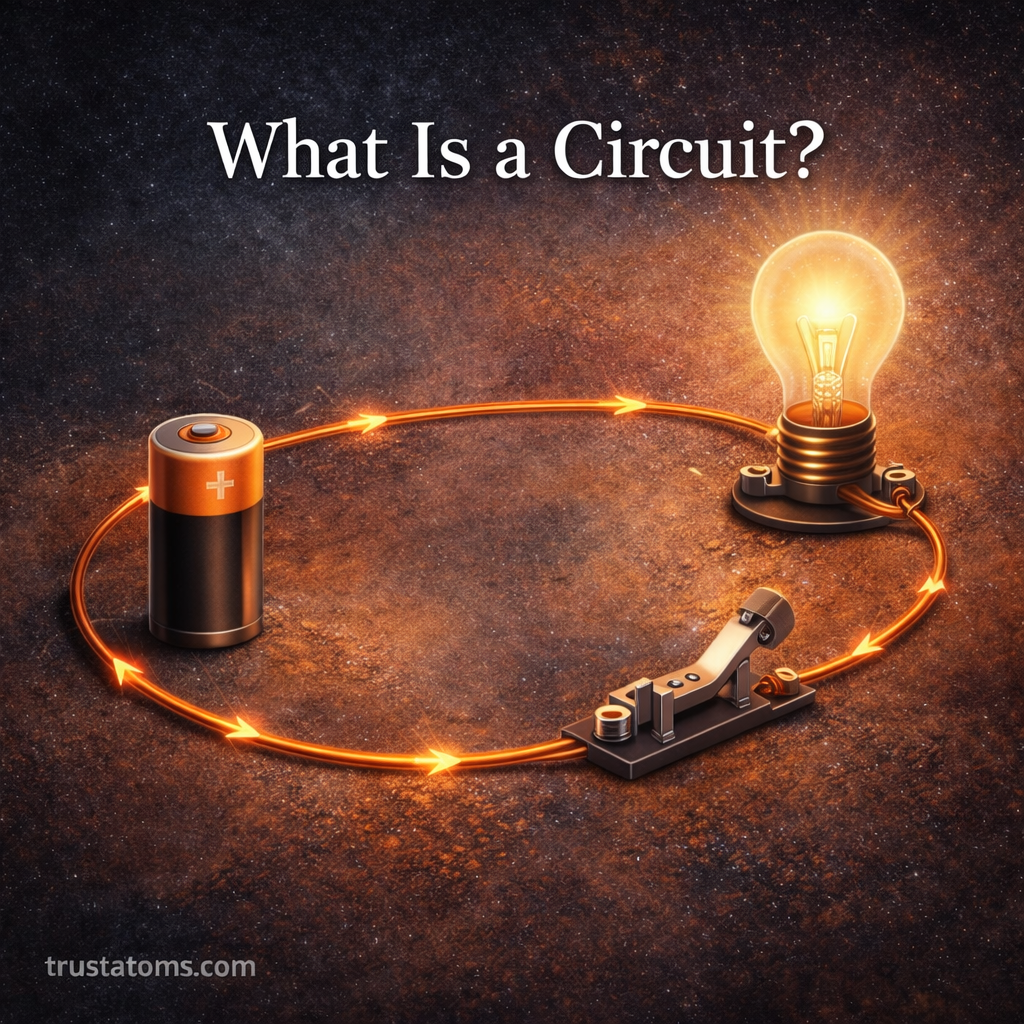
A circuit is a closed loop that allows electric current to flow.
Without a complete path, electricity cannot move. Circuits are the foundation of all electronic devices — from flashlights and smartphones to power grids and computers.
In physics, understanding circuits helps explain how electrical energy moves, how devices function, and how power is controlled.
Simple Definition of a Circuit
A circuit is a continuous pathway that connects electrical components and allows electric charge to flow.
For current to flow, a circuit must be:
- Closed (complete loop)
- Connected to a power source
- Made of conductive materials
If the loop is broken, the current stops.
The Basic Parts of a Circuit
Most simple circuits include four main components:
1. Power Source
Provides electrical energy.
Examples:
- Batteries
- Power supplies
- Generators
The power source creates a difference in electric potential (voltage) that pushes electrons through the circuit.
2. Conductors
Wires that carry electric current.
- Usually made of copper or aluminum
- Allow electrons to move freely
Conductors form the path that connects all parts of the circuit.
3. Load
A device that uses electrical energy.
Examples:
- Light bulbs
- Motors
- Resistors
- Fans
The load converts electrical energy into another form, such as light, heat, or motion.
4. Switch
Controls whether the circuit is open or closed.
- Closed switch → current flows
- Open switch → current stops
A light switch in your home is a simple example.
What Does “Closed Loop” Mean?
Electric current must travel in a full circle:
- From the power source
- Through the wires
- Through the load
- Back to the power source
If any part of the loop is disconnected, the circuit becomes open and stops working.
This is why a loose wire can cause a device to fail.
Types of Circuits
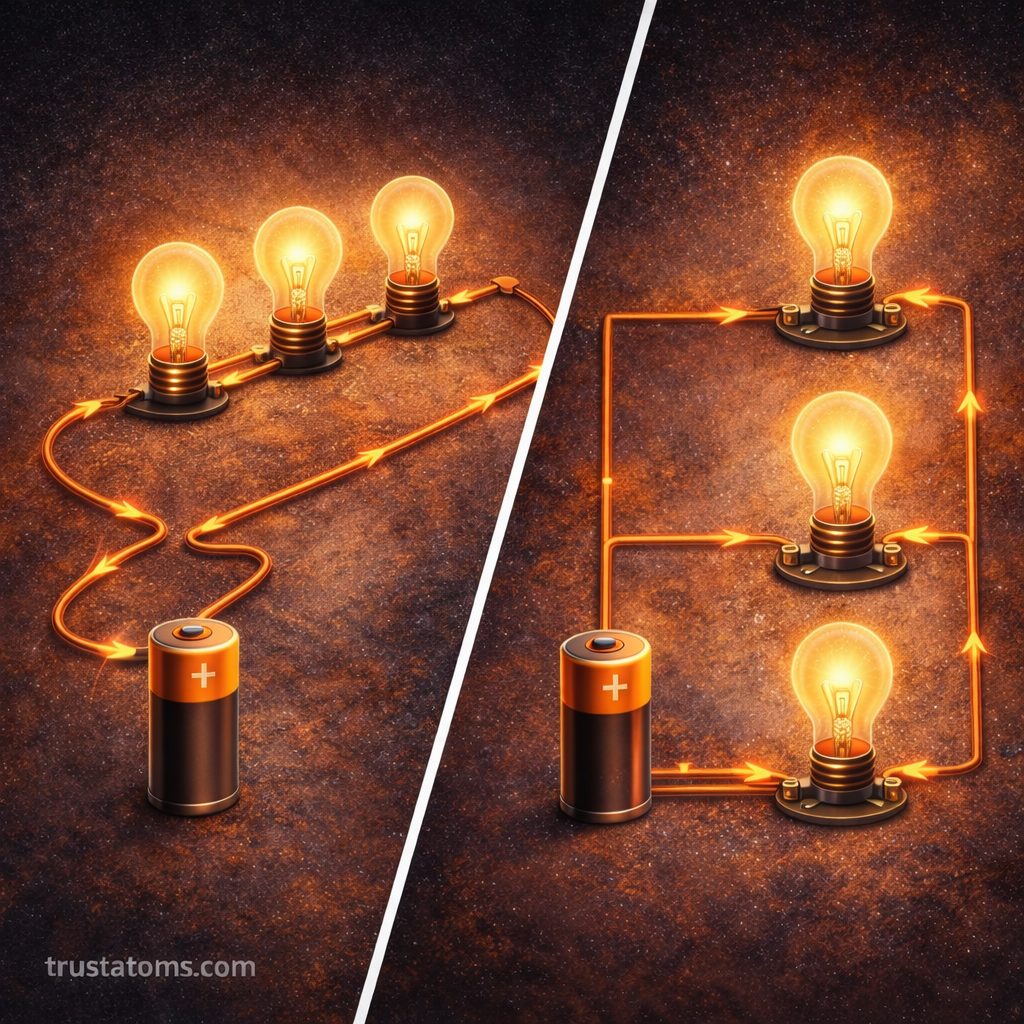
There are three primary types of circuits in basic physics.
Series Circuit
In a series circuit:
- Components are connected one after another
- There is only one path for current
If one component fails, the entire circuit stops working.
Example: Older-style Christmas lights.
Parallel Circuit
In a parallel circuit:
- Components are connected across multiple paths
- Each component has its own branch
If one device fails, others continue working.
Most household wiring uses parallel circuits.
Combination Circuit
A combination (or series-parallel) circuit includes both types.
These are common in more complex electronic systems.
What Makes Current Flow?
Current flows because of voltage.
Voltage is the electric “pressure” that pushes electrons through the circuit.
Three key electrical quantities define circuits:
- Voltage (measured in volts)
- Current (measured in amperes)
- Resistance (measured in ohms)
Resistance limits how easily current flows. Materials with high resistance reduce current.
Direct Current vs. Alternating Current
Circuits can use two main types of current:
Direct Current (DC)
- Flows in one direction
- Used in batteries and small electronics
Alternating Current (AC)
- Changes direction periodically
- Used in homes and power grids
Both require complete circuits to function.
Why Circuits Are Important
Circuits make modern life possible.
They power:
- Lighting systems
- Appliances
- Computers
- Medical equipment
- Transportation systems
Even the human nervous system works in ways similar to electrical circuits, transmitting signals through pathways.
Common Everyday Examples
You use circuits constantly without thinking about them:
- Turning on a lamp
- Charging your phone
- Starting your car
- Using a microwave
Each of these actions completes a circuit and allows electricity to flow.
Safety and Circuits
Electric circuits can be dangerous if not designed properly.
Key safety features include:
- Circuit breakers
- Fuses
- Grounding systems
These prevent overheating, electrical fires, and shock hazards.
Final Thoughts
A circuit is a closed loop that allows electric current to flow from a power source, through a device, and back again.
Understanding circuits is essential in physics because they explain how electricity is controlled and used. Whether simple or complex, every electronic system depends on complete, properly designed circuits.
Without circuits, modern technology would not exist.