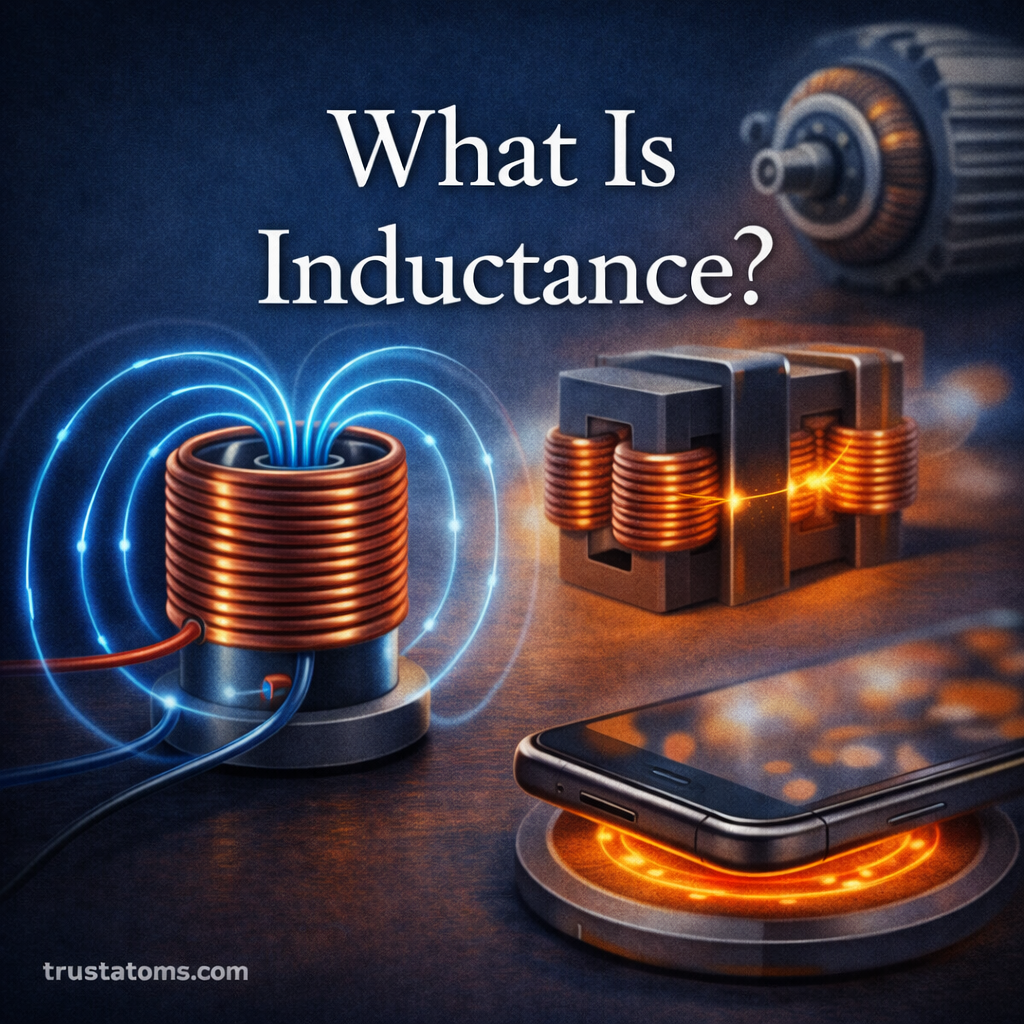
Inductance is a fundamental concept in physics that explains how electrical energy can be stored in a magnetic field. It plays a central role in circuits, power systems, motors, transformers, and wireless charging technologies.
In simple terms, inductance describes how a conductor resists changes in electric current by generating a magnetic field.
This guide explains what inductance is, how it works, the formula behind it, and why it matters in real-world applications.
What Is Inductance in Simple Terms?
Inductance is the property of an electrical conductor that causes it to oppose changes in current.
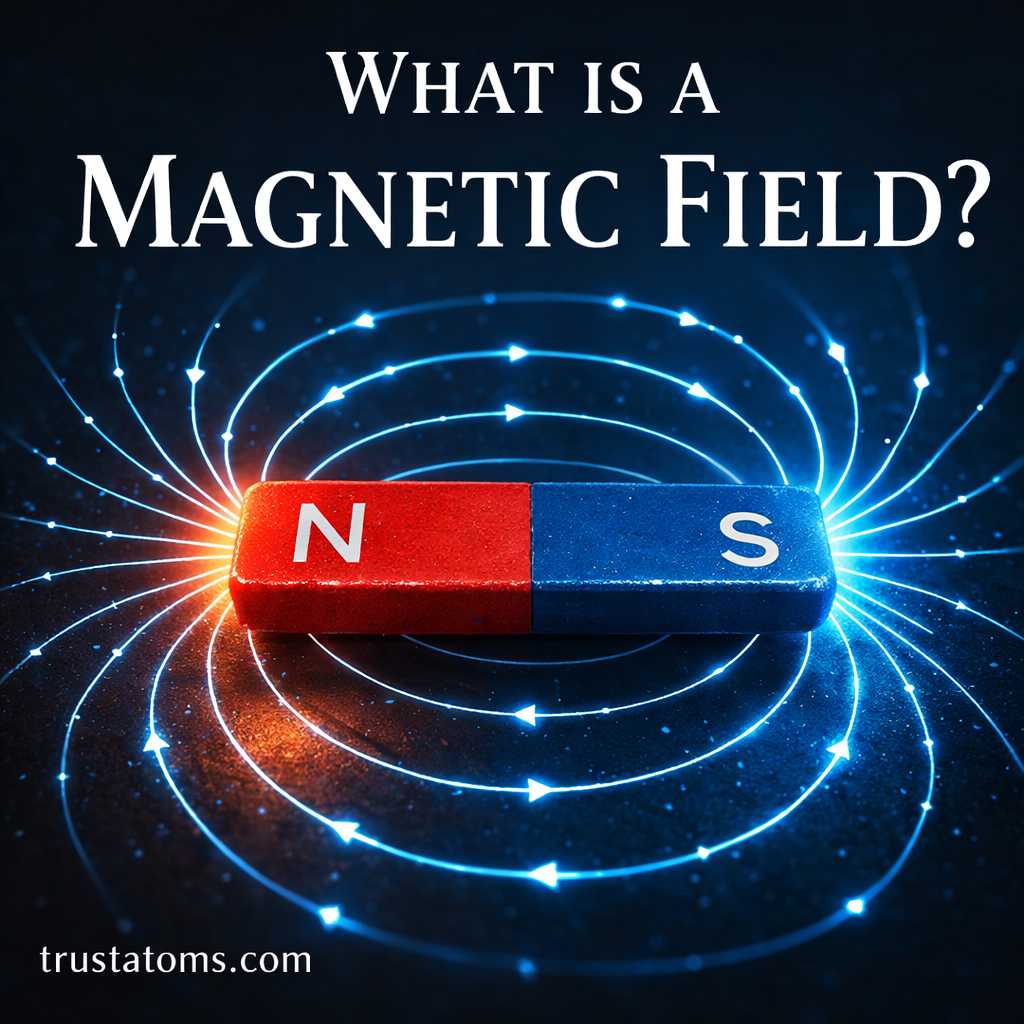
When current flows through a wire, it creates a magnetic field around it. If the current changes, the magnetic field changes as well. That changing magnetic field induces (creates) a voltage that opposes the change in current.
This effect is called electromagnetic induction.
The greater this opposition to current change, the higher the inductance.
The Basic Definition
Inductance is defined as:
L = V / (dI/dt)
Where:
- L = Inductance (measured in henrys)
- V = Induced voltage
- dI/dt = Rate of change of current
This formula shows that inductance relates the induced voltage to how quickly the current changes.
If a small change in current produces a large opposing voltage, the system has high inductance.
The Unit of Inductance: The Henry
Inductance is measured in henrys (H), named after physicist Joseph Henry.
One henry is defined as:
The inductance that induces one volt when the current changes at a rate of one ampere per second.
In practical circuits, inductance is often measured in:
- Millihenrys (mH) – one thousandth of a henry
- Microhenrys (µH) – one millionth of a henry
What Is an Inductor?
An inductor is a device designed to introduce inductance into a circuit.
It typically consists of:
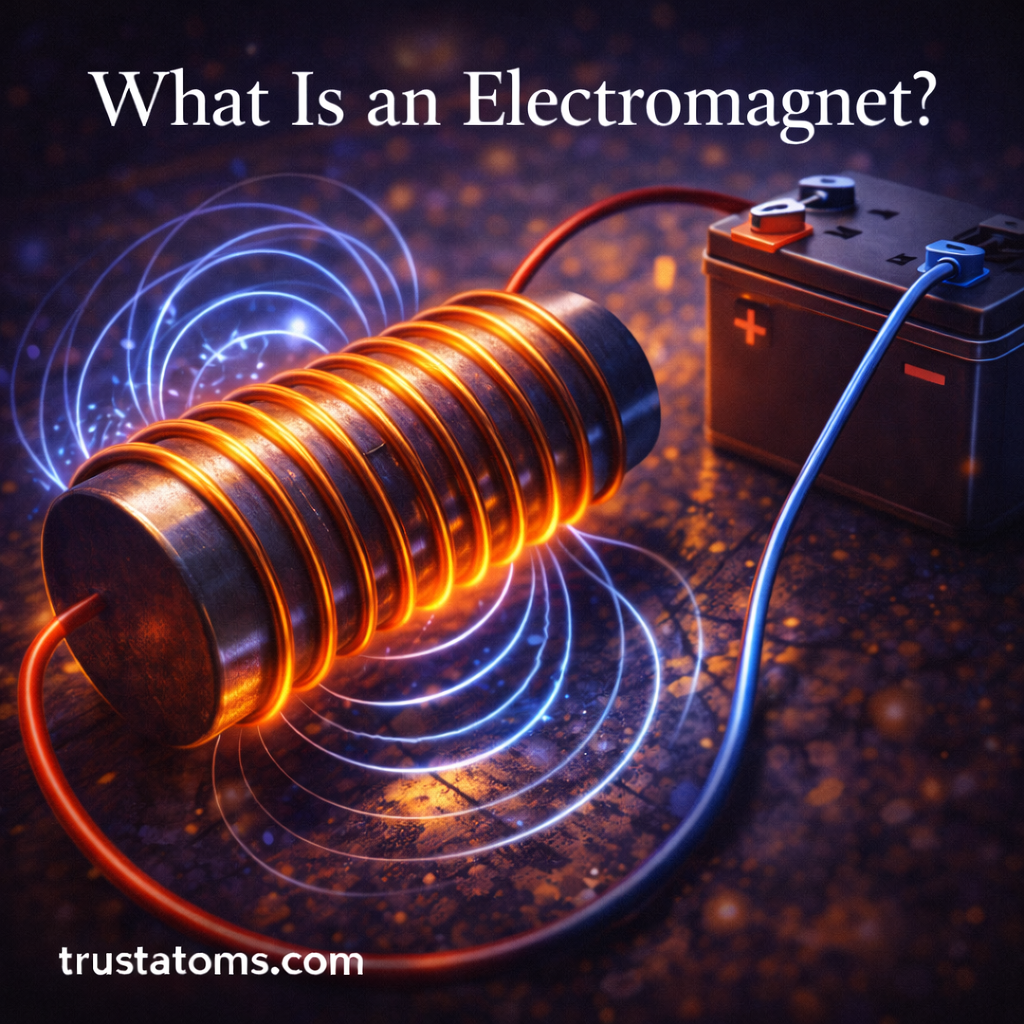
- A coil of wire
- Sometimes wrapped around a core material (such as iron or ferrite)
When current flows through the coil:
- A magnetic field forms around it
- Energy becomes stored in that magnetic field
- Any change in current generates a voltage opposing that change
This behavior follows Lenz’s Law, which states that induced effects oppose the change that caused them.
How Inductance Works Physically
Inductance works because moving electric charges create magnetic fields.
When current increases:
- The magnetic field strengthens
- A voltage is induced that resists the increase
When current decreases:
- The magnetic field collapses
- A voltage is induced that tries to keep current flowing
This natural resistance to change makes inductors useful for controlling current flow in circuits.
Energy Stored in an Inductor
Inductors store energy in magnetic fields, not electric fields (like capacitors).
The energy stored in an inductor is calculated using:
E = ½ L I²
Where:
- E = Energy (joules)
- L = Inductance
- I = Current
Notice that energy depends on the square of the current. Doubling the current increases stored energy by four times.
Factors That Affect Inductance
Several factors determine how much inductance a coil has.
1. Number of Turns
More loops of wire increase inductance.
2. Core Material
Materials like iron concentrate magnetic fields and increase inductance.
3. Coil Area
Larger loop area strengthens the magnetic field.
4. Coil Length
Longer coils typically have lower inductance compared to tightly wound coils.
Self-Inductance vs. Mutual Inductance
There are two main types of inductance.
Self-Inductance
This occurs when a changing current in a coil induces a voltage in the same coil.
Mutual Inductance
This occurs when a changing current in one coil induces a voltage in a nearby coil.
Mutual inductance is the principle behind transformers.
Real-World Applications of Inductance
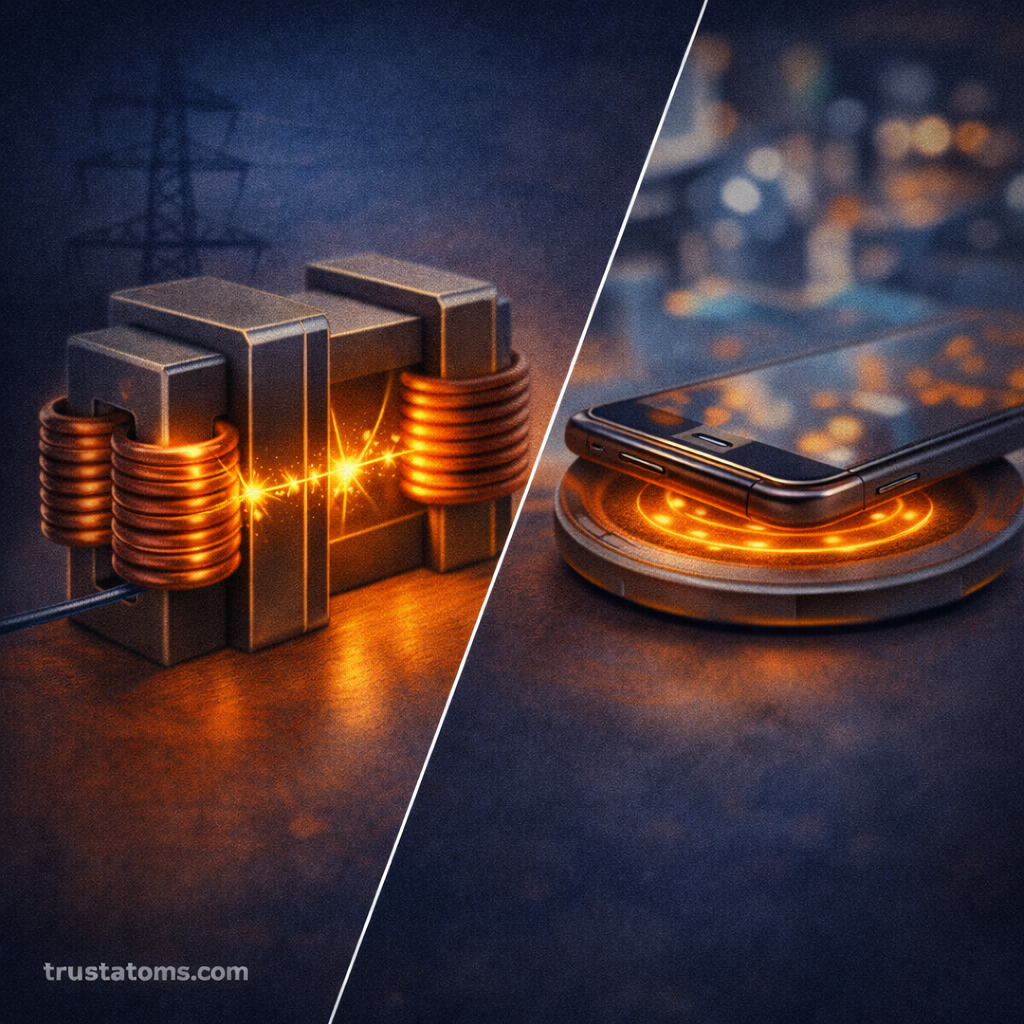
Inductance is essential in modern electrical systems.
Transformers
Transformers rely on mutual inductance to transfer electrical energy between coils.
Electric Motors
Inductance helps control current and magnetic fields in motor windings.
Power Supplies
Inductors smooth current and filter electrical noise.
Wireless Charging
Inductive coupling allows energy transfer without direct electrical contact.
Radio and Signal Processing
Inductors help tune circuits to specific frequencies.
Inductance vs. Capacitance
Inductance and capacitance are often discussed together but behave differently.
- Inductance stores energy in magnetic fields.
- Capacitance stores energy in electric fields.
- Inductors resist changes in current.
- Capacitors resist changes in voltage.
Together, they shape how circuits respond to time-varying signals.
Why Inductance Matters in Physics
Inductance connects directly to key physical principles:
- Electromagnetism
- Magnetic fields
- Energy conservation
- Maxwell’s equations
It explains how electric currents interact with magnetic fields and how energy moves through electrical systems.
Understanding inductance is essential for studying electronics, power engineering, and electromagnetic theory.
Final Thoughts
Inductance is the property of a conductor that resists changes in current by generating a magnetic field.
It allows energy to be stored magnetically and released back into circuits. From power grids to smartphones, inductance is a core building block of modern technology.
By understanding inductance, you gain insight into how electromagnetic systems function and how engineers design stable, efficient electrical devices.