Quantum mechanics describes the behavior of matter and energy at the smallest scales — atoms, electrons, photons, and other subatomic particles.
Unlike classical physics, which predicts exact outcomes, quantum physics works with probabilities. At the heart of this framework are two key ideas:
- Quantum states
- Probability amplitudes
In this guide, we’ll break down what these concepts mean, how they relate to measurements, and why they are essential to understanding modern physics.
What Is a Quantum State?
A quantum state contains all the information about a quantum system.
It describes properties such as:
- Position
- Momentum
- Energy
- Spin
- Polarization
But unlike classical objects, quantum systems do not have definite values for these properties until measured.
Instead, the quantum state encodes probabilities for possible outcomes.
Wavefunctions: The Mathematical Description
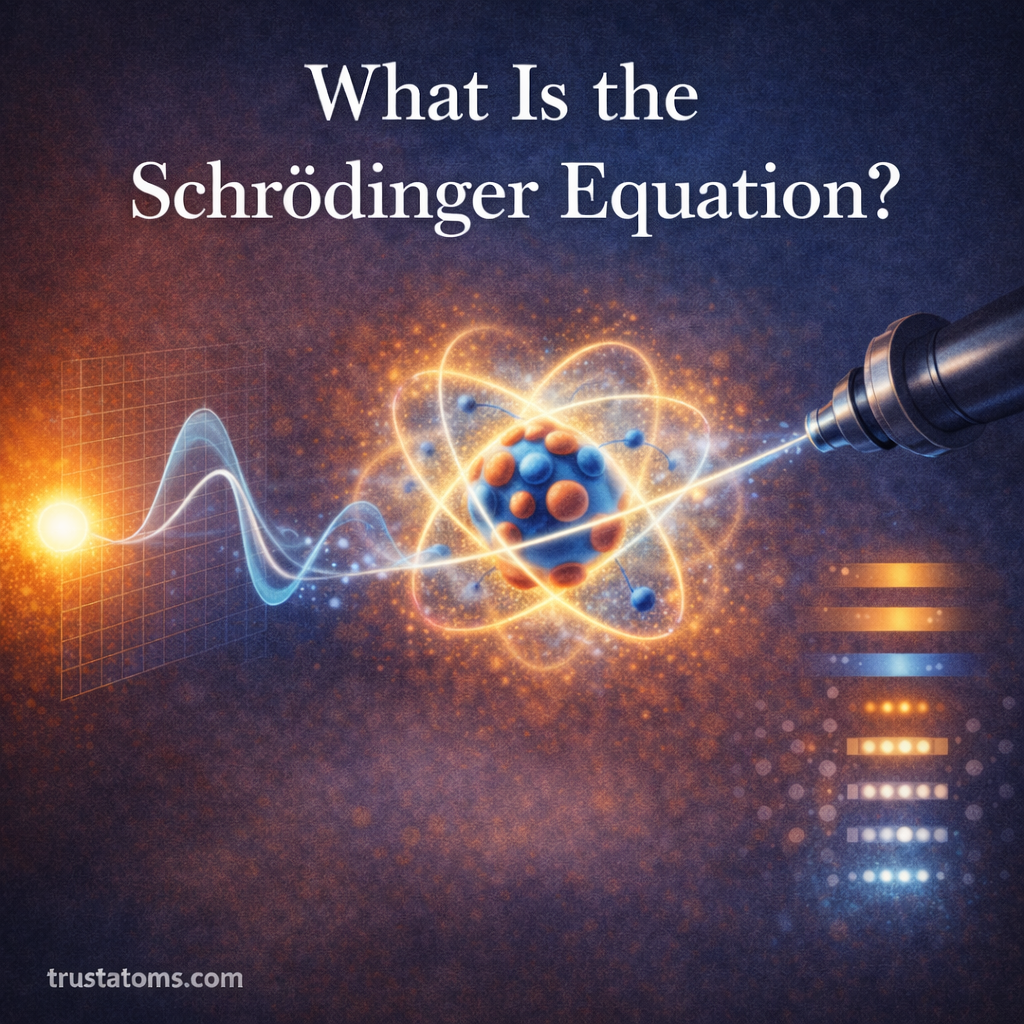
For many systems, a quantum state is described by a wavefunction.
The wavefunction:
- Is usually represented by a mathematical symbol
- Can take complex number values
- Changes over space and time
The wavefunction itself does not directly represent a physical wave like water or sound. Instead, it encodes probability information.
What Is a Probability Amplitude?
A probability amplitude is a complex number associated with a possible measurement outcome.
It has two important features:
- Magnitude
- Phase
The magnitude squared of a probability amplitude gives the probability of observing a particular result.
This is one of the central rules of quantum mechanics.
From Amplitude to Probability
Here’s the key idea:
- A quantum system is described by amplitudes for different outcomes.
- Each amplitude can interfere with others.
- To find the probability, you square the magnitude of the amplitude.
This is different from classical probability, where probabilities are added directly.
In quantum mechanics:
- Amplitudes add first.
- Probabilities are calculated afterward.
This distinction leads to interference effects.
Superposition of Quantum States
One of the most famous quantum principles is superposition.
A system can exist in multiple possible states simultaneously.
For example:
- An electron can be in a combination of energy levels.
- A photon can take multiple paths at once.
The overall quantum state is a combination (or superposition) of these possibilities.
Each possibility has its own probability amplitude.
Interference and Phase
Because amplitudes are complex numbers, they have phase information.
When amplitudes combine:
- They can reinforce each other (constructive interference).
- They can cancel each other (destructive interference).
This explains phenomena like:
- The double-slit experiment
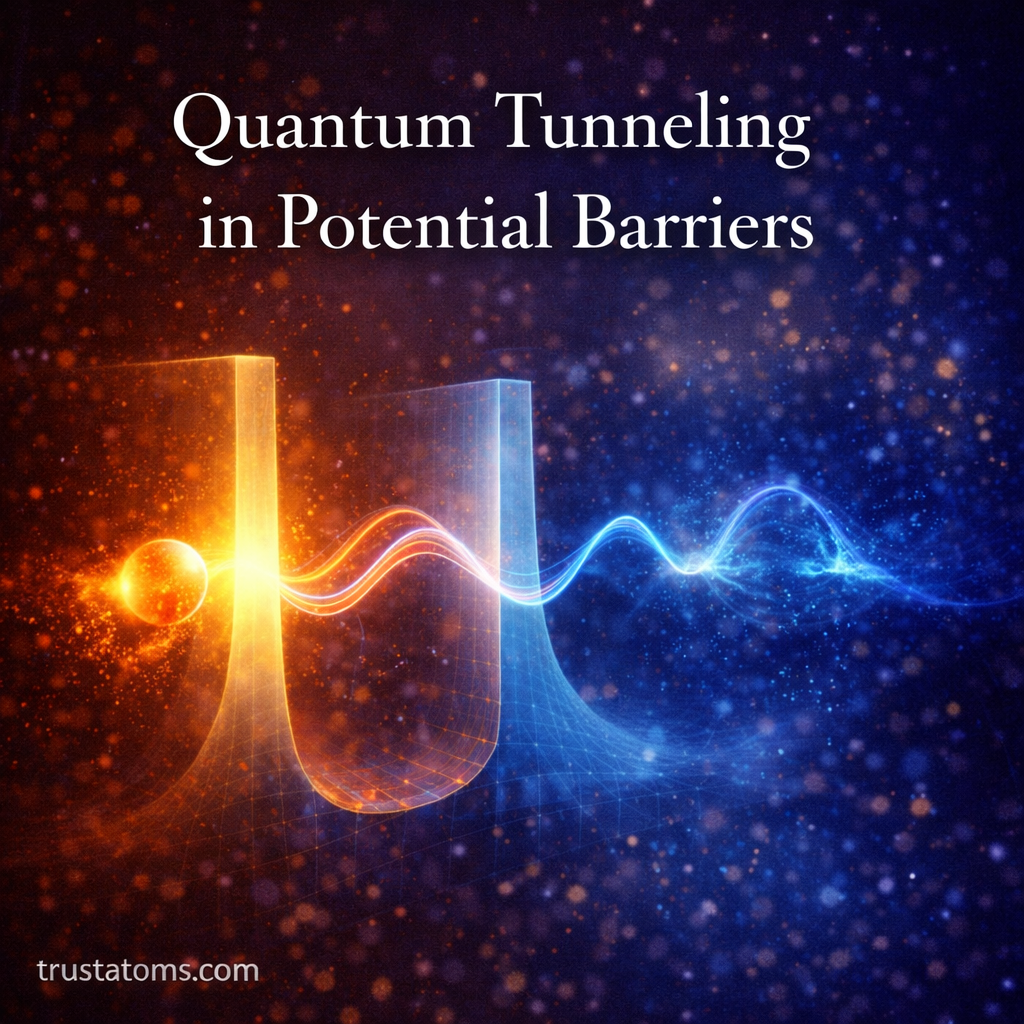
- Quantum tunneling
- Interference patterns in light and electrons
Interference is a uniquely quantum effect that has no classical equivalent.
Measurement and Collapse

When a measurement is made:
- The quantum state appears to “collapse.”
- Only one outcome is observed.
- The probability of that outcome is determined by the squared amplitude.
Before measurement, the system exists in superposition. After measurement, it appears in a definite state.
The exact mechanism of this collapse is still debated in interpretations of quantum mechanics.
Quantum States in Different Systems
Quantum states can describe many types of systems.
1. Single Particles
An electron’s state may include:
- Position probabilities
- Momentum distribution
- Spin orientation
2. Atoms
Atomic states describe:
- Energy levels
- Orbital configurations
- Magnetic properties
3. Photons
Photon states can include:
- Polarization
- Frequency
- Direction of travel
4. Multi-Particle Systems
In systems with multiple particles:
- States can become entangled.
- The quantum state describes the entire system, not individual particles separately.
Quantum Entanglement
Entanglement occurs when two or more particles share a single quantum state.
In entangled systems:
- Measuring one particle instantly affects the description of the other.
- Their probability amplitudes are linked.
Entanglement plays a central role in:
- Quantum computing
- Quantum cryptography
- Tests of fundamental physics
Mathematical Structure of Quantum States
Quantum states are represented using vectors in abstract spaces called Hilbert spaces.
Key characteristics include:
- States can be added together (superposition).
- States can be scaled.
- Inner products determine probabilities.
Although the mathematics can be complex, the physical interpretation revolves around probability amplitudes and measurement outcomes.
Why Quantum Mechanics Uses Amplitudes Instead of Probabilities
Using amplitudes instead of probabilities allows:
- Interference effects
- Wave-like behavior
- Accurate experimental predictions
If quantum mechanics only used probabilities, it could not explain:
- Diffraction patterns
- Atomic stability
- Quantum interference
The amplitude framework is essential to match experimental observations.
Real-World Applications
Quantum states and probability amplitudes are not just theoretical concepts.
They are essential in:
- Semiconductor physics
- Laser technology
- MRI machines
- Quantum computing
- Particle accelerators
Modern electronics and digital systems rely on quantum principles at the microscopic scale.
Classical vs Quantum Probability
In classical systems:
- Probabilities add directly.
- Outcomes are deterministic if enough information is known.
In quantum systems:
- Amplitudes combine first.
- Probabilities emerge from squared magnitudes.
- Some outcomes can cancel out entirely due to interference.
This difference is what makes quantum physics fundamentally distinct from classical physics.
Why Understanding Quantum States Matters
Quantum states and probability amplitudes form the foundation of:
- Atomic theory
- Modern chemistry
- Solid-state physics
- Information science
Without these ideas, technologies like microchips, lasers, and quantum processors would not exist.
Understanding quantum states helps explain how matter behaves at the smallest scales.
Final Thoughts
Quantum states describe all possible behaviors of a quantum system, while probability amplitudes determine the likelihood of each outcome.
Unlike classical physics, quantum mechanics works through interference, superposition, and complex amplitudes. The probability of an event emerges only after squaring the amplitude.
These concepts may seem abstract, but they power the deepest and most accurate physical theory ever developed — one that underlies much of modern technology.