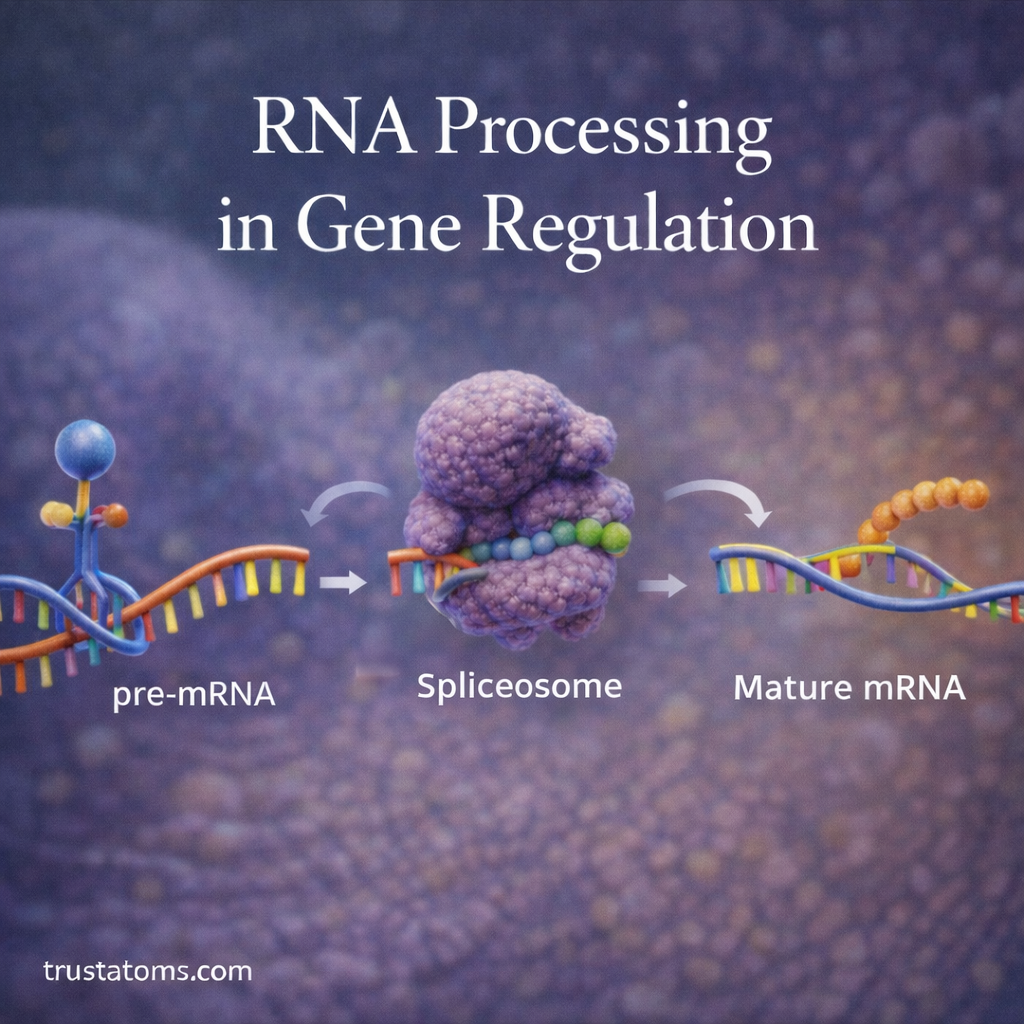
RNA processing is a set of cellular steps that modify newly made RNA molecules before they are used to produce proteins. These modifications are especially important in eukaryotic cells and play a major role in gene regulation, which is the control of when and how genes are expressed.
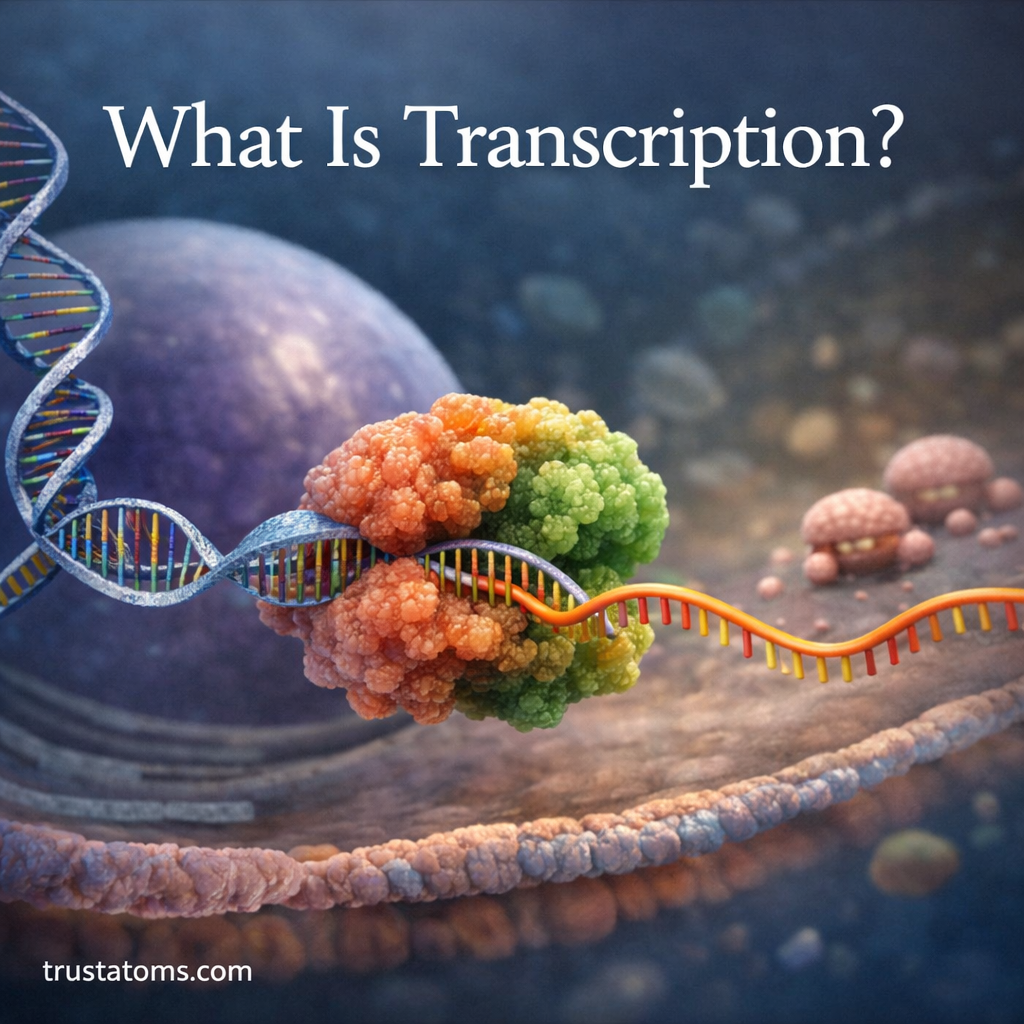
After DNA is transcribed into RNA, the resulting molecule—called pre-messenger RNA (pre-mRNA)—cannot immediately guide protein production. It must first undergo several processing steps that prepare it for translation.
Through RNA processing, cells can control which genetic instructions are used, how often they are used, and how proteins are ultimately produced. This makes RNA processing an essential layer of regulation in gene expression.
Continue reading “RNA Processing in Gene Regulation”